Obama in secret negotiations with Iran over ISIS threat
November 7, 2014 Leave a comment
 By IAN ALLEN | intelNews.org
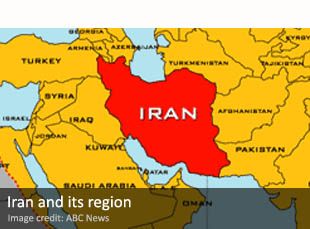
The president of the United States reportedly sent a secret letter to the supreme leader of Iran, in which he proposes cooperation against the Islamic State of Iraq and Syria (ISIS) in exchange for a nuclear deal. The New York-based Wall Street Journal newspaper reported on Thursday that Barack Obama reached out to Iranian leader Ayatollah Ali Khamenei in October. In the letter, Obama allegedly proposes a nuclear agreement between Washington and Tehran and emphasizes the common threat the two nations face from ISIS, the Sunni Islamist group also known as the Islamic State. The paper said Obama’s letter stresses that any cooperation between America and Iran against the Islamic State is directly contingent on a nuclear agreement between the two governments, which would have to be reached before November 24 of this year. If the Journal’s information is accurate, it would appear that the US president’s move is connected with the latest round in bilateral negotiations between Washington and Tehran, which is scheduled to begin on November 8. US Secretary of State John Kerry and Iran’s Minister of Foreign Affairs Javad Zarif will be leading their respective teams, as the two delegations meet in Muscat, capital of Oman, to explore ways of normalizing their diplomatic relations. If it is real, Obama’s purported letter would not mark the first instance in which the US president wrote to his Iranian counterpart. There are at least three other letters that Obama is known to have sent to various Iranian leaders since 2009, when he assumed the presidency of the US. However, if the proposal in the letter, as outlined in The Wall Street Journal article, is authentic, the move can be seen to highlight the view of the White House that Iran must inevitably be part of a solution regarding ISIS. Nevertheless, the revelation that America is seeking an alliance with Shiite Iran will undoubtedly frustrate America’s Arab allies in the region, especially Saudi Arabia, Bahrain, Kuwait, and other Sunni oil monarchies, which are participating in the ongoing international military campaign against the Islamic State. The Journal contacted the White House but officials there refused to comment on what they said was Obama’s “private correspondence”. When asked by journalists on the matter, White House spokesman Joshua Earnest said only that “the policy that the president and his administration have articulated about Iran remains unchanged”.
 By JOSEPH FITSANAKIS | intelNews.org |








 intelNews.org
Iran’s coronavirus crisis exacerbates internal struggle between government and IRGC
May 15, 2020 by Joseph Fitsanakis Leave a comment
The secrecy with which the government is treating the coronavirus epidemic may be masking an increasingly tense turf war between Iran’s civilian leaders, led by President Hassan Rouhani, and the IRGC. The latter is controlled by Iran’s Supreme Leader, Ali Khamenei. Iran watchers describe the IRGC as a ‘praetorian guard’ whose members possess immense power and often wealth. Today the IRGC is a military force with a command structure that is distinct from that of Iran’s regular Armed Forces. It maintains its own army, navy and air force, has its own paramilitary and political protection units, and is in charge of Iran’s nuclear program.
The IRGC has seen its income fall drastically in the past two years, partly due to the continuing economic pressure that Iran is facing from strict sanctions imposed on it by the United States. The effects of the dramatic reduction in the value of Iran’s currency —down nearly 2/3 since 2018— have only been exacerbated by the monumental drop in global oil prices, which has practically decimated Tehran’s main source of foreign income.
According to sources, Khamenei and the IRGC forced the country’s civilian leadership to re-open the economy last month, fearing an absolute economic collapse. But this only resulted in a dramatic uptick in COVID-19 cases in nearly every region of the country. The IRGC is now reportedly trying to take control of Iran’s civilian healthcare system, in an effort to prevent the government from disclosing the extent of the re-emergence of the virus throughout the country.
Meanwhile, the IRGC’s prestige has suffered greatly this year, following the accidental shoot-down of a Ukrainian civilian airliner over Tehran in January, which killed nearly 180 people, most of them Iranians. Last week, the IRGC was believed to behind a missile test that went terribly wrong, resulting in the destruction of an Iranian navy ship that killed as many as 31 sailors. These fatal errors are for the time being giving President Rouhani the right to question the IRGC’s competence and resist giving away his administration’s control of the national response to COVID-19. The turf war continues to intensify, however, and it is difficult to forecast which side will prevail.
► Author: Joseph Fitsanakis | Date: 15 May 2020 | Permalink
Filed under Expert news and commentary on intelligence, espionage, spies and spying Tagged with Ali Khamenei, Analysis, Coronavirus, COVID-19, disease intelligence, Hassan Rouhani, Iran, Islamic Revolutionary Guard Corps