Opinion: America in deep and profound security crisis as Michael Flynn resigns
February 14, 2017 1 Comment
 The ongoing security crisis in the United States reached new heights last night as Michael Flynn, President Donald Trump’s national security advisor, resigned. In his letter announcing his decision, the former general admitted that he “inadvertently” gave members of the Trump administration “incomplete information” about his conversations with the Russian ambassador to the US in December of last year. This development is only the latest in a series of unprecedented incidents in Washington. The city, and by extension the country, are now in a deep and profound security crisis with unpredictable consequences for the US and its allies.
The sense of normality in America’s capital, the seat of government of the world’s most powerful nation, is becoming increasingly scarce, as the country faces one astonishing situation after another. Today, three weeks after Donald Trump assumed the reins of power in DC, the relationship between the Executive and the Intelligence Community is almost nonexistent. A growing  number of former insiders warn that senior intelligence officials are —in the words of former National Security Agency officer John Schindler— “beginning to withhold intelligence from a White House which our spies do not trust”. Last month, Steve Hall, a former senior member of the Central Intelligence Agency’s National Clandestine Service, cautioned that officers at Langley are suspicious of the White House’s links with Russia. Currently, Michael Flynn, who served as director of the Defense Intelligence Agency, and the man chosen by the president to serve as his national security advisor, is being investigated as part of a counterintelligence probe by the Federal Bureau of Investigation and is facing a separate set of questions from the military. On Tuesday, Senior Republican lawmakers called for a Congressional investigation into Moscow’s alleged proximity with the Trump White House.
Meanwhile, the (now former) acting attorney general and several judges have sought to stop the president from violating Constitutional norms with the imposition of an ill-fated travel ban. In response,  Mr. Trump summarily fired the head of the Department of Justice and openly challenged the legitimacy of a judge who ruled against his executive order. The president did not even address the concerns of the Intelligence Community, which largely views the travel ban as nonsensical, unworkable and counterproductive. Mr. Trump also dismissed the significance of a “Dissent Channel” memorandum, signed by over 1,000 State Department employees —an unprecedented number with no parallel in American diplomatic history— who openly objected to the violation of “core American and constitutional values that we, as federal employees, took an oath to uphold”.
Discord and disharmony are not novel concepts in American political life. But the current situation is anything but conventional. It is not normal for the president to summarily fire the chief legal counsel to the US government —acting or not. Nor is it normal for his national security advisor, a man who is privy to the most sensitive secrets of the US government, to be the subject of a counterintelligence investigation, and for one of his senior aides to be denied a security clearance by the CIA. It is unprecedented for a US president to question the usefulness of the North Atlantic Treaty Organization while seemingly consenting to Russia’s annexation of an important American ally —namely Ukraine. It is equally remarkable to watch conservative governments in Western Europe warn against US policies and even refuse to have Mr. Trump address their parliaments. We are witnessing unparalleled developments of inconceivable magnitude, with implications that may well shape the future of America and its place in the world.
These are not partisan considerations, which this website shies away from as a matter of policy. Rather, they are political observations that go to the very heart of America’s ability to govern itself, provide security to its citizens and lead the Western world in our century. Anyone who rejects the notion that the US is currently at the onset of one of the most serious crises in its modern political history is simply disconnected from empirical reality. Anyone —Republican or Democrat— who tries to exploit the current crisis for narrow political gain is not simply foolish, but dangerous to the wellbeing of this country. Mr. Trump’s many friends and adversaries within and without his political party must reach out to him and attempt to mend the damage he has inflicted on America’s government, while preventing further injury to the machinery of national administration. It is every sane person’s hope that the president will take heed at this crucial time, and introduce the much-needed qualities of caution and prudence to his inexperienced administration. History will be particularly unkind to him and his colleagues if they fail to act responsibly. The world is watching.
► Author: Joseph Fitsanakis | Date: 14 February 2017 | Permalink
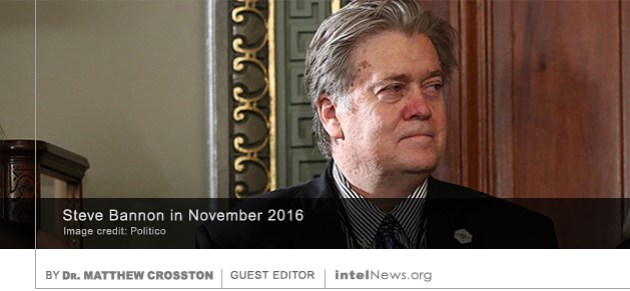 There has been much consternation and confusion over the maneuverings engineered by United States President Donald Trump with the National Security Council (NSC). By now everyone knows the Chairman of the Joint Chiefs of Staff and the head of the Office of the Director of National Intelligence (ODNI) have been essentially demoted down to Principals Committee meetings, with the no-doubt unsatisfying caveat that “when their specific expertise” is needed they will be asked to attend the main Principals meeting with the President. The irony, of course, is that both of these offices have always been oversight and unifying leadership positions: the Chairman of the Joint Chiefs oversees and coordinates discussion and debate between the heads of all the military branches while the ODNI was basically created to go do the thing the Department of Homeland
 Security was initially meant to do after 9/11 —coordinate and improve communication and cooperative transparency across the entire US Intelligence Community. It is therefore somewhat mystifying as to why two deeply experienced actors with comprehensive knowledge of military and intelligence affairs writ large would be inexplicably categorized as ‘knowledge specialists’, not required for the big general meeting. It is not like the ODNI came into the NSC meetings pre-Trump as the ‘Basque subject matter expert’ alone, or the Chairman of the Joint Chiefs laid claim to being the world’s only ‘Gulf of Aden’ maritime security specialist. While it is still too early to know, it seems a logical bet that there is some personality conflict or discomfort between these two men and the incoming member(s) that Trump has designated. Safe money is on General Michael Flynn. But since that right now will remain unsubstantiated rumor and gossip, we are left with nothing but conjecture.
 There is no doubt whatsoever that Russia has compiled ‘information’ on United States President Donald Trump. Russian intelligence considers it a rightful duty to compile information on persons of relevance, especially when they are conducting significant business or maintain political relations with Russia. Trump qualified under that definition long before he even thought about running for president. Even I have been followed, during my numerous times in Russia, both openly and tacitly. I have had my computer hacked and hotel phone bugged. And my affairs in Russia have come nowhere near to the financial or political relevance of Donald Trump.
 intelligence on Trump has nothing to do with American celebrity culture. If it truly exists, this would have been done under the edict of ‘national security’ for Russian geopolitical interests. As such, the proper Russian intelligence behavior would be to deny its existence and hold on to anything it has until a time deemed strategically best. The least efficient usage of that compromising material would be to just embarrass him publicly before he is inaugurated, TMZ ‘gotcha’ style. Russians simply don’t work that way. Rather, keeping it secret and using it in a non-public but strategically effective manner for their national interests is the Russian way.
 Since 2008, when we launched intelNews, it has been our end-of-the-year tradition to take a look back and highlight what we think were the most important intelligence-related stories of the past 12 months. In anticipation of what 2017 may bring in this highly volatile field, we present you with our selection of the top spy stories of 2016. They are listed below in reverse order of significance. This is part two in a two-part series; you can access part one
  There had been rumors for some time about a possible expulsion of Russian diplomats from the United States, in response to alleged Russian interference in the 2016 US Presidential election. The White House confirmed the rumors on Thursday morning, by
  Since 2008, when we launched intelNews, it has been our end-of-the-year tradition to take a look back and highlight what we think were the most important intelligence-related stories of the past 12 months. In anticipation of what 2017 may bring in this highly volatile field, we present you with our selection of the top spy stories of 2016. They are listed below in reverse order of significance. This is part one in a two-part series; part two is
 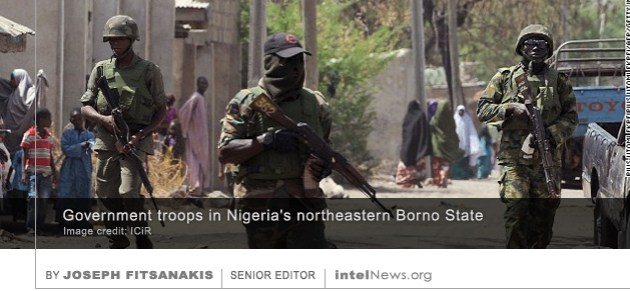 On Saturday, Nigerian President Muhammadu Buhari made a
 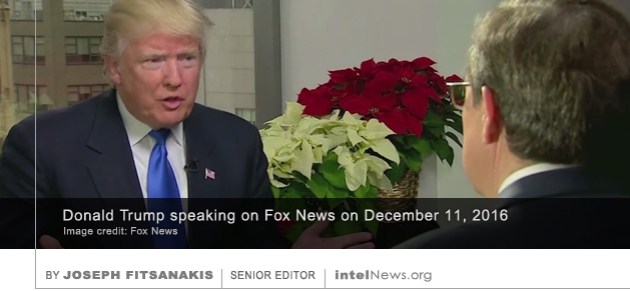 No person familiar with the theory and practice of intelligence will be shocked by allegations that Russia interfered in the recent American presidential election. On the contrary, the claim will strike experienced observers as a textbook case of covert operation —an intelligence activity designed to influence foreign political, military or economic developments. Far from being physically violent, most covert operations involve actions like secretly funding political parties, planting misinformation or propaganda in foreign media outlets and —in more extreme cases— bribing or extorting key political actors. During the Cold War, hardly a national election took place without attracting the
 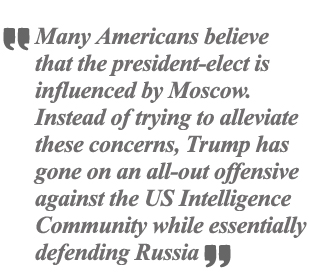 in last month’s US election. Indeed, the opposite would be strange.
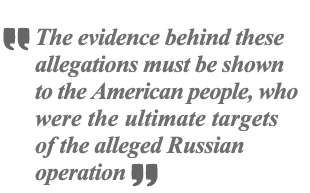 candidates. This was about the reputation of the American electoral process. In fact, the primary goal of Russia’s involvement in the US election —which, again, must be presumed— was not to empower a particular candidate, but to weaken the reputation of American political institutions as a whole. Those who claim that the Kremlin tried to promote Trump because the Republican candidate appears to be more favorably disposed toward Russia are wrong. They misunderstand the complex nature of Russian-American relations and underestimate Russian strategy. Moscow understands that its bilateral relationship with Washington rests on a set of longstanding geopolitical variables and does not depend on ephemeral personal relations between individual leaders. Furthermore, the Kremlin views Trump as an inherently unpredictable actor that is not to be trusted. The Russian plan, therefore, was not to help elect Trump. Rather, it was to sow mistrust between American –and by extension Western– civil society and its political institutions. Given the challenges currently being faced by European and American democracy, that is not a far-fetched goal.
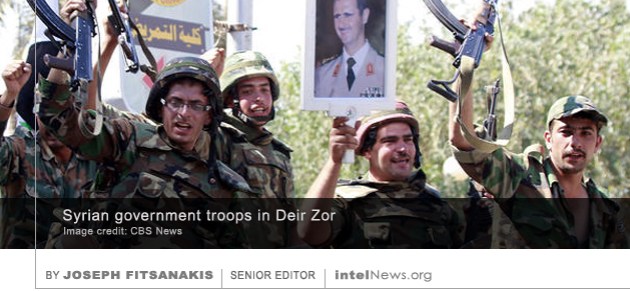 Ever since 2011, when the Syrian Civil War erupted, Turkey has refrained from directly intervening in the conflict, other than to provide material support to opponents of Syrian President Bashar al-Assad. The hope in Ankara was that Islamist and pro-Assad forces would exhaust each other. There is no evidence that Turkey was at any point seriously alarmed about the rise of Sunni militancy in Syria. Instead, the Turkish government of President Recep Tayyip Erdoğan made no secret of its primary concern, which was the rise of Kurdish nationalism in northern Syria.
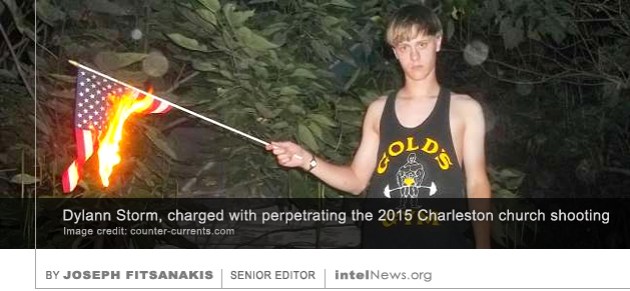 Many in the United States associate terrorism with contemporary versions of militant Islam. The data, however, tells a different story: since 2002, domestic extremists who hold far-right ideologies have struck more often and have killed more people than Islamic-inspired radicals. This blog has
 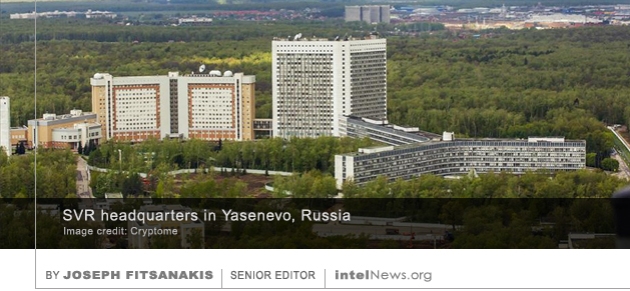 Last week, following the results of Russia’s parliamentary election, Russian media run a story suggesting that the Kremlin is planning to implement far-reaching changes to the country’s intelligence apparatus.
  Saturday’s suicide bombing, which killed over 50 and injured dozens at a wedding in Gaziantep, Turkey, was without doubt the work of the Islamic State. It was yet another attempt by the militant Sunni group to discourage the Kurds from confronting it in battle, by pointing to the deadly consequences. It was also fueled by the desire for vengeance against a population that has consistently resisted the Islamic State’s ideology. Additionally, if confirmed, the use of a child as a suicide bomber by the Islamic State may form a pattern of operational activity that can lead to broader conclusions about the current state of the organization.
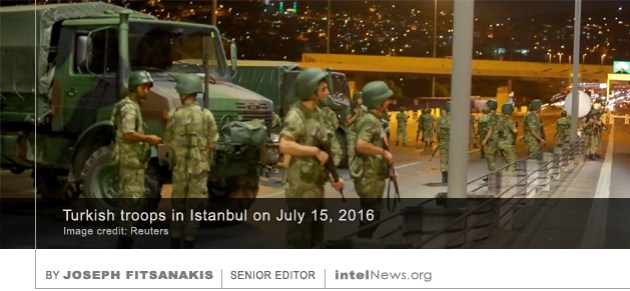 After the failure of the recent military coup d’état in Turkey, much attention has been given to the country’s armed forces, the police, even the judiciary. In contrast, little to no information has surfaced about Turkey’s intelligence establishment, which is led by MİT, the National Intelligence Organization. Did it anticipate the plot, and how did it fare as the crisis unfolded in the early hours of July 16?
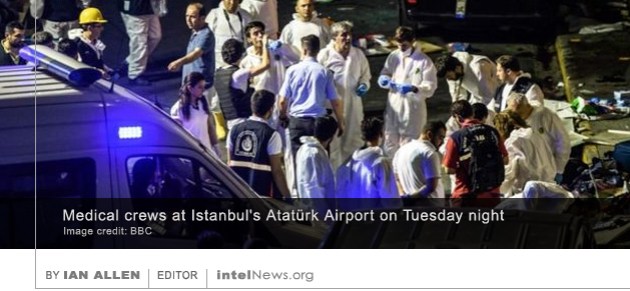 Turkish security and counterterrorism officials are blaming the Islamic State of Iraq and Syria for Tuesday’s bloody attack at Istanbul’s Atatürk airport, which left at least 41 people dead and nearly 300 injured. But will ISIS claim responsibility for the attack? And if not, why not? ISIS is indeed the








Analysis: African intelligence run amok and prospects for reform in The Gambia
February 28, 2017 by intelNews 1 Comment
There has been slow but gradual progress in getting the discipline to understand this fact, to understand how important the study of intelligence is outside of the Five Eyes. In recent years, particular emphasis has been paid to Russia, China, Pakistan, Iran, and Israel, just to name several case studies. But the countries of Africa, unfortunately, have largely remained a near-blank analytical slate when it comes to deeper work on the continent’s various intelligence communities. As recent events in The Gambia show, that absence needs to be rectified at a time when some deeply disturbing aspects of state development and political stability hang in the balance.
A few days ago, nine intelligence officers, among them the ex-head of the Gambian National Intelligence Agency (NIA), were arrested and charged with the murder of Ebrima Solo Sandeng, a top political opposition figure. Sandeng, the National Organizing Secretary of the United Democratic Party (UDP), died in custody after being arrested for his participation in a protest demanding electoral reforms back in April of 2016. The protests were geared to influencing the December 2016 presidential election, which ultimately saw the defeat of incumbent President/Strongman Yahya Jammeh to Adama Barrow. Jammeh had corruptly governed the country since rising to power as a young military officer in a bloodless military coup in 1994.
The official docket accused Yankuba Badjie and eight other members of the NIA of “conspiring amongst themselves to take part in the murder of Solo Sandeng”. Back on April 14, 2016, Sandeng and five other members of the UDF party were arrested by police and taken to Mile 2 Prison where, after two days of torture, Sandeng died of shock and respiratory failure. Read more of this post
Filed under Expert news and commentary on intelligence, espionage, spies and spying Tagged with Adama Barrow, Africa, Analysis, Gambia, Matthew Crosston, National Intelligence Agency (Gambia), State Intelligence Services (Gambia), Yahya Jammeh