Year in review: The biggest spy-related stories of 2017, part I
January 1, 2018 Leave a comment
 Since 2008, when we launched intelNews, it has been our end-of-year tradition to take a look back and highlight what we see as the most important intelligence-related stories of the past 12 months. In anticipation of what 2018 may bring in this highly volatile field, we give you our selection of the top spy stories of 2017. They are listed below in reverse order of significance. This is part one in a three-part series; parts two and three will be posted on Tuesday and Wednesday of this week.
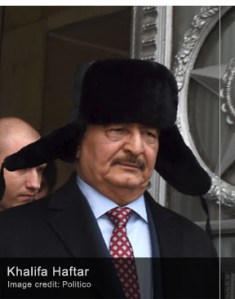 10. Saudis, Israelis, are illegally funding a CIA-backed warlord in Libya. The strongest faction in the ongoing Libyan Civil War is the eastern-based Tobruk-led Government, which is affiliated with the Libyan National Army (LNA). The commander of the LNA is Field Marshal Khalifa Haftar, an old adversary of Colonel Gaddafi, who lived in the United States under CIA protection for several decades before returning to Libya in 2011 to launch his military campaign. American legal experts, including a former special counsel to the United States Department of Defense and a Harvard University law professor, accuse Haftar of ordering his troops to commit war crimes. But there is much evidence to suggest that Israeli, Saudi and Emirati intelligence agencies are illegally breaking a United Nations-imposed arms embargo on Libya and arming Haftar with advanced weaponry.
09. Why are American, Canadian diplomats in Havana going deaf? In 2015, relations between Cuba and the United States experienced an unprecedented rekindling, which culminated with the reopening of the US embassy in Havana after more than half a century. But in the past year, US authorities became enraged with the Cuban government after American diplomats reportedly suffered hearing loss and brain trauma as a result of a mysterious so-called “covert sonic weapon” that was directed against the American embassy. The US State Department blamed Cuba for the incident, but some believe that 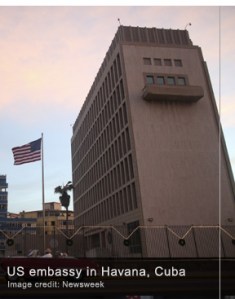 the alleged device may have been deployed by an intelligence service of a third country —possibly Russia— without the knowledge of the Cuban authorities. In October, the White House expelled 15 Cuban diplomats from the US in response to the incident. But the question of what harmed the health of at least 20 employees at the US embassy in Havana remains largely unanswered.
08. Role of spies in German-Swiss economic war revealed. In the wake of the Panama and Paradise leaks, offshore tax havens have faced intensifying worldwide calls for the introduction of transparency and accountability safeguards. Predictably, they are resisting. In April of 2017, German authorities announced the arrest of an employee of the Swiss Federal Intelligence Service (NDB) in Frankfurt. It appears that the Swiss man, identified only as Daniel M., was monitoring the activities of German tax-fraud investigators who have been trying for years to prevent German citizens from having secret bank accounts abroad. It is believed that he was arrested while monitoring German efforts to approach potential whistleblowers working in the Swiss banking sector. A few months after Daniel M.’s arrest, Germany announced an unprecedented investigation into three more officers of the NDB, on suspicion that they spied on German tax investigators who were probing the activities of Swiss banks.
This is part one in a three-part series. Part two is available here. Part three is available here.
► Authors: Joseph Fitsanakis and Ian Allen | Date: 01 January 2018 | Permalink
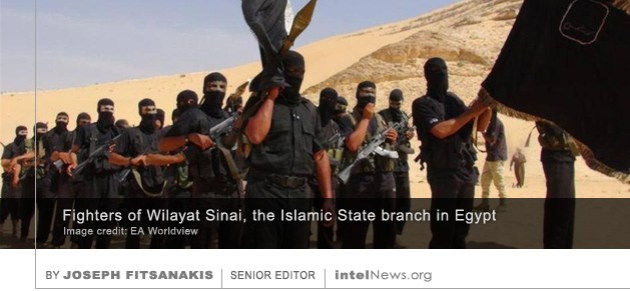 Through a series of meticulously planned terrorist strikes and assassinations, Wilayat Sinai has emerged as the strongest international arm of the Islamic State of Iraq and Syria (ISIS), according to some experts. Known officially as ISIS – Sinai Province, Wilayat Sinai claimed responsibility for the October 2015 downing of Metrojet Flight 9268. All 224 passengers and crew, most of them Russians, died when the plane blew up in midair over Egypt’s Sinai Peninsula. The incident marked the worst aviation disaster in Russian history. The same group, Wilayat Sinai, was behind last month’s attack on the Al Rawda Sufi mosque in bir al-Abed, Egypt. The massacre resulted in the deaths of 311 people, making it the worst terrorist attack in the history of modern Egypt.
 Dozens of Saudi senior figures, some of them among the world’s wealthiest people, have been fired or arrested, as the king and his son appeared to be removing their last remaining critics from the ranks of the security services. The unprecedented arrests took place without warning less than two hours after state-run media announced the creation of a new “supreme committee to combat corruption”. A
 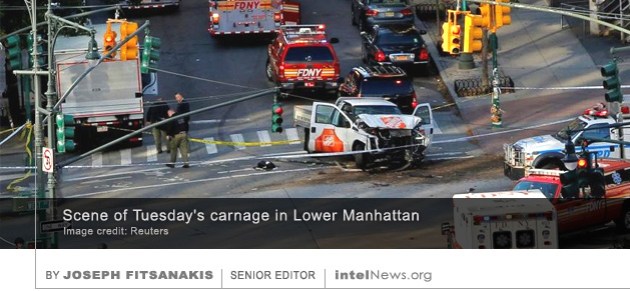 News reports hastened to
  violence, rather than risk failure by breaking new ground. But at a time like this, when the very existence of the Islamic State hangs in the balance, one would think that the group would consciously try to intimidate its opponents by showing off some kind of revolutionary new weapon. That did not happen on Tuesday.
 the heavily attended annual Village Halloween Parade was scheduled to take place on the very same street, just two hours after he launched his deranged attack.
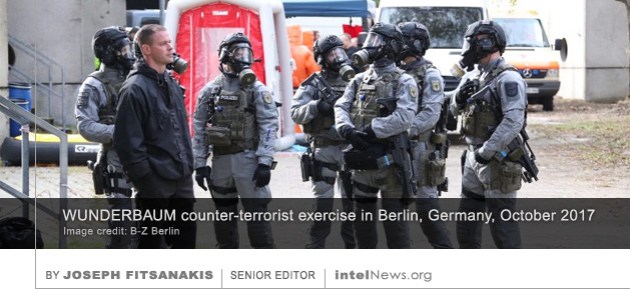 A German newspaper reported last week that at least one European intelligence agency has already warned that the Islamic State is exploring the use of chemicals for attacks in Europe. Such an eventuality would be a radical departure from prior attacks by the Islamic State in the West. In the past, the militant group has shown a strong preference for low-tech means of dispensing violence, such as firearms, vehicles and knives. But it has utilized chemical substances in Iraq and Syria, and its technical experts have amassed significant knowledge about weaponized chemicals.
 There’s a reason why America has not experienced another 9/11, and it’s not because militants are not trying. Through a series of sweeping reforms prompted by the tragic events of that day, United States intelligence and security agencies have become extremely efficient at preventing large-scale terrorist and criminal violence. Using increasingly sophisticated methods of intelligence collection, analysis and even prediction, counter-terrorism and security experts have neutralized countless attempts to replicate —or even surpass— the horror of 9/11.
 Montana. Most important of all, they work alone, which makes it immensely difficult to sense their murderous intentions. Counter-terrorism and security experts are trained to detect possible attacks by penetrating the communications between members of a conspiracy. When the operative is a lone wolf, and does not communicate his or her plans, the points of possible penetration diminish, as does the possibility of detection.
 The security map of the Middle East changed within a few hours on Wednesday, when the Islamic State managed to strike Iran for the first time. Six assailants —five men and a woman— stormed the Islamic Consultative Assembly, which serves as the parliament of Iran, and the mausoleum of the founder of the Islamic Republic, Ayatollah Khomeini. By the time they killed themselves, or were killed by security forces, the six had murdered 12 people and injured over 60. The Islamic State, which carried out the attack, had warned for several months that it would launch a direct assault at the heart of
  the world’s largest Shiite state. It tried to do so before, several times, and failed. But
 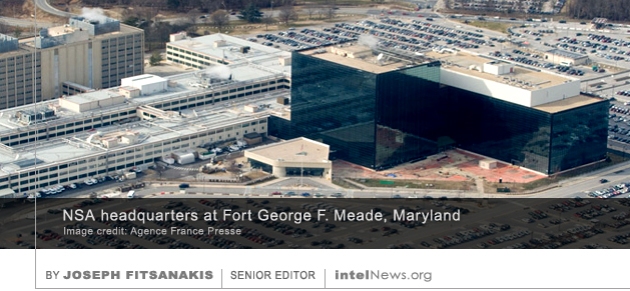 At first sight, the case of Reality Leigh Winner, a United States federal contractor who has been
  between leakers based on their motives. It does, however, distinguish between simple leakers and whistleblowers. If a US government employee uncovers evidence of abuse of power, or becomes aware of a specific and critical threat to the security of Americans, he or she is required to notify his or her superiors. If the latter refuse to take action, then the employee is justified under the law in taking all necessary actions to warn the public of impending peril. That is precisely the function of the 1989 Whistleblower Protection Act, which affords protection to insiders who expose abuses of authority, or a concrete and critical threat to public safety.
 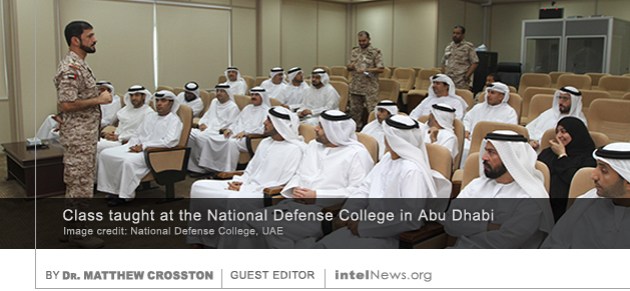 Emirati intelligence has to be seen in two disparate tiers: actual home-grown intelligence efforts, which usually revolve within the small policing and military forces of the United Arab Emirates (UAE); and more elaborate, highly secretive, outsourced activities that use the UAE as a facilitating conduit or go-between with a clear advantage to Emirati interests.
 ultra-modern intelligence capabilities, and cooperates with international organizations, other countries, and policing agencies. In addition, the UAE leadership has taken initiatives recently to create a domestic level of intelligence scholarship and professionalization, namely in the form of the
 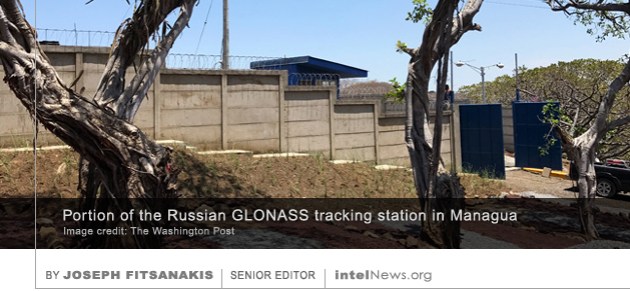 A Russian facility built on a hillside facing the United States embassy in the Nicaraguan capital Managua is seen by some experts as symptomatic of Russia’s renewed presence in the Americas. The official Russian explanation for the heavily protected facility, which is surrounded by high walls, is that it is meant to operate as a tracking station for GLONASS, Russia’s version of the global positioning system (GPS). The Russians do not use GPS, because it is owned by the US government and operated by the US Air Force. But some believe that only part of the compound is dedicated to GLONASS activities, and that a major portion is a Russian listening base that sweeps US communications from throughout the region.
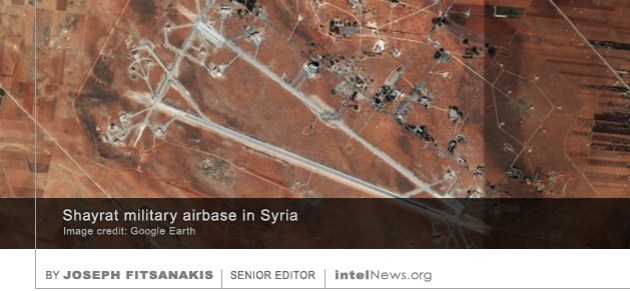 The nearly 60 Tomahawk missiles that the United States fired at Syria in the early hours of Friday local time were not the first. Nor were they the first that struck a Syrian government installation. In September of 2016, for example, a United States airstrike hit a
  given that Washington’s attack took place during the official visit to the United States by Xi Jinping, premier of China, another strong Syrian ally. Finally, it is worth considering possible Iranian responses to the US attack, especially if Iranian citizens end up on the casualty list.
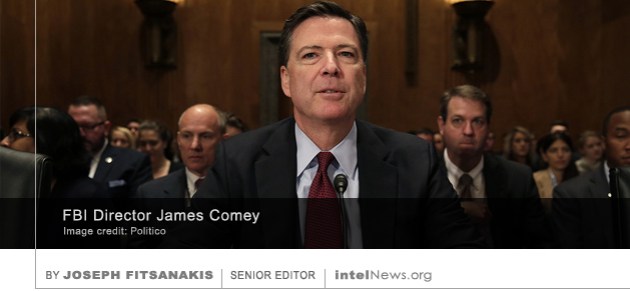 Monday’s official announcement that an investigation is underway into alleged Russian involvement in the 2016 United States presidential election was an important moment in American political history. It exposed the chaotic state of American politics and added yet another layer of complexity in an already intricate affair, from which the country’s institutions will find it difficult to recover for years to come. This is regardless of the outcome of the investigation, which is being conducted by the Federal Bureau of Investigation. Even if it fails to produce a ‘smoking gun’, the very fact that the country’s chief counterintelligence agency is examining the possibility that a US president was elected with help from Russia, is an astonishing development without parallel in modern American history.
 The sensational assassination of Kim Jong-nam, half-brother of North Korea’s Supreme Leader Kim Jong-un, on February 13, revealed much about the current operational mindset of Pyongyang. But it also brought to light the shady network of front companies set up by the North Korean regime to facilitate the country’s illicit financial activities around the world. This extensive network permits Pyongyang to evade international sanctions against it, and to coordinate the activities of hundreds of clandestine operatives around the world. Through these activities, the reclusive country has been able to develop its weapons of mass destruction program unabated, despite concerted efforts by the United Nations to prevent it from doing so.
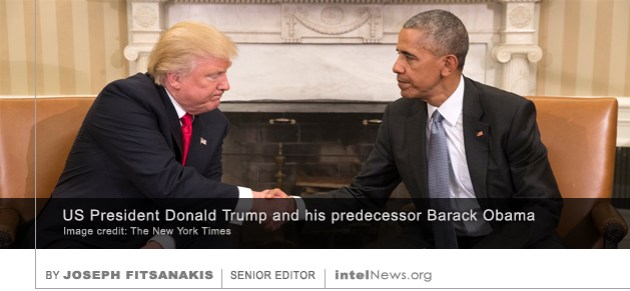 The absurdity of American politics reached new heights over the weekend, as President Donald Trump dramatically alleged on Twitter that his predecessor, Barack Obama, wiretapped his telephones last year. Even for a highly impulsive public figure known for his sensational and often-unsubstantiated allegations, Mr. Trump’s latest claims prompted a new sense of abnormality and astonishment in Washington. If the president is unable to prove his dramatic claims, his reliability will be further-eroded, and what little is left of his relationship with the American intelligence and national-security communities will disintegrate. If his allegations are proven, they will cause a scandal of unprecedented proportions from which American political institutions —including the presidency— will find it difficult to recover.
 order at the highest levels of the American government, Mr. Trump’s claims cannot possibly be true. American presidents have not been legally allowed to order wiretaps since 1978, when the Foreign Intelligence Surveillance Act (FISA) was established. Prompted by the abuse of executive power revealed through the Watergate scandal, FISA forces government agencies to seek the approval of specially mandated judges before installing wiretaps. If an agency like the Federal Bureau of Investigation (FBI) wants to wiretap an individual or group suspected of acting as agents of a foreign power, it must convince one of 11 federal district judges who rotate on the FISA court that the case warrants a wiretap order. Thus, before authorizing the wiretap, a FISA judge must be convinced by examining the available evidence presented before him or her.







Year in review: The biggest spy-related stories of 2017, part II
January 2, 2018 by intelNews Leave a comment
07. 2017 was marked by high-profile assassinations and suspicious deaths. There was no shortage of assassinations, assassination attempts, and suspicious deaths in 2017. In January, Brazilian authorities launched an investigation into a suspicious plane crash that killed Supreme Court judge Teori Zavascki, who died while leading the largest corruption probe in the nation’s history, involving government officials and two giant companies. In February, Vladimir Kara-Murza, a leading member of Open Russia, a think tank founded by Russian oligarchs opposed to Russian president Vladimir Putin, nearly died as a result of “acute poisoning from an undefined substance”, according to his doctors. Also in February, Kim Jong-nam, half-brother of North Korean Supreme Leader Kim Jong-un, was killed in an audacious attack in Malaysia by two female assassins, who used a poisonous substance to murder him. Some alleged that Kim, who was a critic of his brother’s policies in the DPRK, had made contact with US intelligence prior to his assassination. In March, the Israeli military alleged that Amine Badreddine, 55, an explosives expert and senior military commander in the military wing of Hezbollah, was murdered by his own people while fighting in Syria. Allegedly the Iranians wanted him killed because he disputed the authority of Major General Qasem Soleimani, commander of Iran’s Revolutionary Guard Corps, who is often credited with having saved the Syrian government from demise during the Syrian Civil War. In October, Malta’s best known investigative journalist, Daphne Caruana Galizia, whose reporting about offshore tax evasion revealed in the Panama papers prompted a major political crisis in Malta, was killed when the rented Peugeot 108 car she was driving exploded near her home in central Malta. Eyewitnesses said that the explosion was so powerful that it tore apart the vehicle and was heard from several miles away. Finally, in November, Zhang Yang, one of the highest-profile generals in the Chinese People’s Liberation Army, committed suicide according to Chinese state media. Zhang Yang had seen a meteoric rise to power, but unceremoniously fell from grace as a result of President Xi Jinping’s nationwide campaign against corruption.
06. CIA ends its support for opposition rebels in Syria. In February, the White House instructed the CIA to halt military support to armed groups that are associated with the Free Syrian Army (FSA), a group opposed to Syrian President Bashar al-Assad. The move ended a policy that begun under US President Donald Trump’s predecessor, Barack Obama. Some analysts warned that the decision by the White House to terminate US support for the rebels could backfire by causing the suddenly unemployed fighters to join jihadist organizations. In August, there were reports that US troops exchanged fire with former FSA rebels in Manbij, a Syrian city located a few miles from the Turkish border.
05. Britain accused Russia of trying to kill Montenegro prime minister. In late 2016, authorities in the former Yugoslav Republic of Montenegro alleged that “nationalists from Russia and Serbia” were behind a failed plot to kill the country’s prime minister, Milo Dukanović, and spark a pro-Russian coup in the country. Remarkably, in March of 2017, British Foreign Secretary Boris Johnson said in an interview that Russian spies may have indeed orchestrated the failed attempt to kill Dukanović, as part of a broader plan to prevent the former Yugoslav republic from entering NATO. It is not every day that a senior cabinet official of a NATO member-state accuses the Kremlin of carrying out an assassination attempt against a European head of state.
This is part two in a three-part series. Part one is available here. Part three is available here.
► Authors: Joseph Fitsanakis and Ian Allen | Date: 02 January 2018 | Permalink
Filed under Expert news and commentary on intelligence, espionage, spies and spying Tagged with Analysis, espionage, intelligence, year in review