Analysis: Strasbourg attack raises serious security concerns in Europe
December 13, 2018 Leave a comment
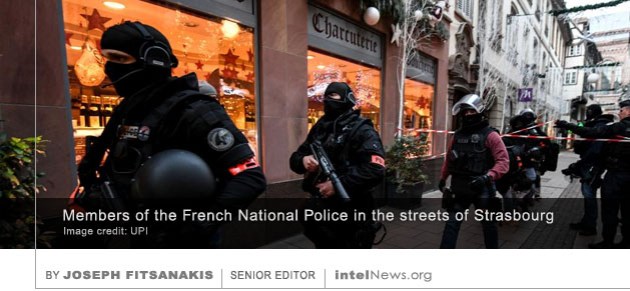 The terrorist attack in the French city of Strasbourg on December 11 raises important security concerns for Europe’s ability to defend itself against a rapidly evolving Islamist insurgency. The attack lasted 10 minutes, from 7:50 to 8:00 p.m. on Tuesday evening, and targeted shoppers in Christkindelsmärik, a large Christmas market held annually in Strasbourg. The lone shooter, who has since been identified as Chérif Chekatt, a French citizen, was reportedly heard shouting “Allahu Akbar” (God is great) repeatedly as he opened fire on the unsuspecting shoppers. He also tried to stab some of them using a knife. Chekatt eventually exchanged fire with French soldiers and officers of the National Police before fleeing the scene of the attack in a taxi cab. Three people were declared dead at the scene, while 12 others were urgently transported to nearby hospitals. Six of them remain in critical condition. Chekatt remained at large until Thursday evening, when he was shot dead by police in Strasbourg.
It is important to stress that the choice of Strasbourg as the site of the terrorist strike was not accidental, nor was the attack spontaneous. A city and of nearly 500,000 inhabitants in its greater district, Strasbourg is one of the European Union’s de facto capitals. It hosts several European institutions, including the building of the European Parliament. Its geographical location on the French-German border epitomizes the crossroads of Franco-German cultural traditions. Its distinct character symbolizes the coexistence of Europe’s two leading powers, which forms the cornerstone of the European Union project. The majority of Strasbourg’s residents are bilingual and communicate in Alsacien, a peculiar mixture of French and German. The city also exemplifies a distinctive brand of 21st-century Christian unity through the balanced coexistence of Catholic and Protestant religious cultures. The Christkindelsmärik —the venue that was attacked on Tuesday— is Europe’s largest Christmas market and symbolizes precisely that coexistence. Providing that Tuesday’s attack was sanctioned and/or planned by the Islamic State or one of its affiliate organizations, its strong symbolism is apparent.
As Washington Examiner commentator Tom Rogan noted on Wednesday, it appears that the perpetrator of the attack was able to acquire a semi-automatic weapon, as well as grenades. Unlike the United States, accessing these types of weapons in Western Europe is exceedingly difficult. This is so especially in France, a country that has remained in a perpetual state of heightened security since the Paris attacks of November 2015. It is even more perplexing that Chekatt was able to acquire this type of weaponry, given that his name featured on the terrorism watch lists of France’s security and intelligence services. Additionally, says Rogan, one of the operational trademarks of the Islamic State centers on adhering to a sharp division between its arms procurement networks and the individuals who carry out terrorist attacks. This means that a wider Islamist network in France, Switzerland or Germany, was able to armed and possibly trained Chekatt in Europe, since the attacker is not believed to have visited the Middle East or North Africa.
Rogan also points out that Chekatt —a French-born 29-year-old petty criminal— was radicalized while serving time in prison. This raises important questions about Salafist-Jihadi radicalization networks inside Western European prison systems. The security implications of this realization inevitably widens the security considerations of Europe’s counterterrorism agencies. The latter have so far focused primarily on the danger posed by the return of European Islamic State volunteers from the Middle East. The problem, however, appears to be more complicated.
Ultimately, the Strasbourg attack demonstrates that, despite several years of concerted efforts, the ability of European counterterrorism agencies to prevent strikes by Islamist groups on European soil is limited. Meanwhile, European streets are busy during the Christmas season, with indoor and outdoor markets and festivals, concerts, as well as a host of religious observances taking place in thousands of different locations across the continent. Should Tuesday’s attack in Strasbourg mark the beginning of a sustained terrorism campaign by the Islamic State, December could prove to be a deadly month in Europe.
► Author: Joseph Fitsanakis | Date: 13 December 2018 | Permalink
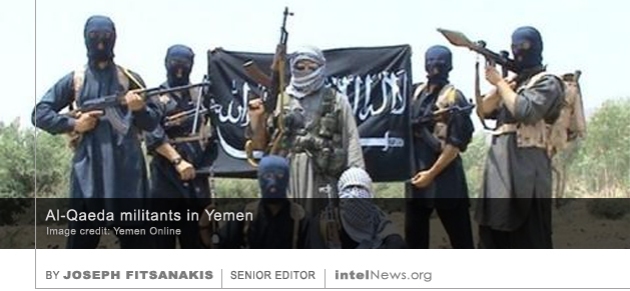 There are four times as many Sunni Islamist militants today in the world than on September 11, 2001, despite an almost 20 year-long war campaign by the United States and its allies, according to a new report. Washington launched the ‘global war on terrorism’ in the aftermath of the 9/11 attacks that were perpetrated by al-Qaeda. In the ensuing years, American and other Western troops have engaged militarily in over a dozen countries, including Afghanistan, Iraq, Pakistan, Syria, Libya, Yemen, Somalia, Sudan, and the Philippines. But a
  With nearly 53 million Twitter followers, United States President Donald Trump could easily be described as the most social-media-friendly American leader in our century. It is clear that Trump uses Twitter to communicate directly with his followers while circumventing mainstream media, which he views as adversarial to his policies. However, according to former Central Intelligence Agency analyst Nada Bakos, foreign intelligence agencies are among those paying close attention to the president’s tweets. Bakos spent 20 years in the CIA, notably as the Chief Targeter of the unit that tracked down Abu Musab al-Zarqawi, the founder of al-Qaeda in Iraq, which later evolved into the Islamic State of Iraq and Syria. In a June 23
 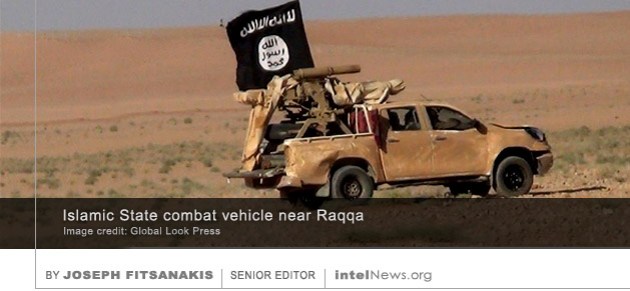 In a recent series of interviews to promote his new book, Anatomy of Terror, former FBI special agent and current counterterrorism expert Ali Soufan insists that the Islamic State remains potent and dangerous.
  way out. The group’s meteoric rise marked a watershed moment in the modern history of militant Sunni Islam. Even if it is militarily annihilated —a prospect that is far from certain— its physical absence will in no way erase its impact and influence among its millions of supporters and sympathizers. In fact, experts warn that the group is —like al-Qaeda before it— proving to be resilient and able to withstand intense military pressure from its enemies. Currently, all signs show that the Islamic State is actively reorganizing under the command of its leader, Abu Bakr al-Baghdadi. The prolonged absence of the Iraqi-born al-Baghdadi has prompted wild speculation about this supposed demise or severe incapacitation. There are even some who
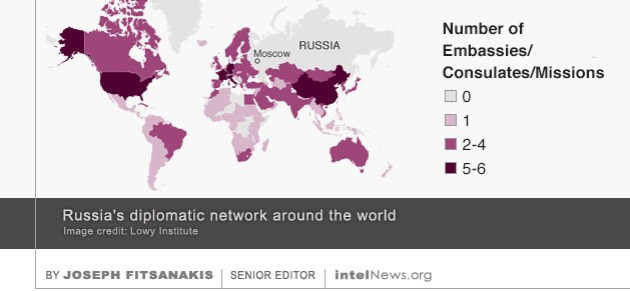 Though unprecedented in size, the recent expulsions of over 150 diplomats by nearly 30 countries and organizations around the world have hardly made a dent on Russia’s huge diplomatic footprint. The
 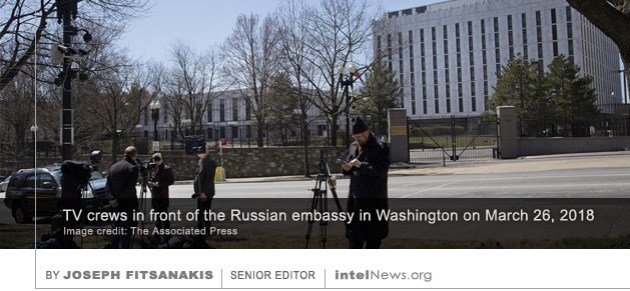 Relations between Russia and much of the West reached a new low on Monday, with the expulsion of over 100 Russian diplomats from two dozen countries around the world. The unprecedented expulsions were publicized on Monday with a series of coordinated announcements issued from nearly every European capital, as well as from Washington, Ottawa and Canberra. By the early hours of Tuesday, the number of Russian diplomatic expulsions had reached 118 —not counting the 23 Russian so-called “undeclared intelligence officers” that were expelled from Britain last week. Further expulsions of Russian diplomats are expected in the coming days.
 predecessor, Barack Obama, and his Secretary of State Hillary Clinton, who is known for her hardline anti-Russian stance. In Europe, the move to expel dozens of Russian envoys from 23 different countries —most of them European Union members— was a rare act of unity that surprised European observers as much as it did the Russians.
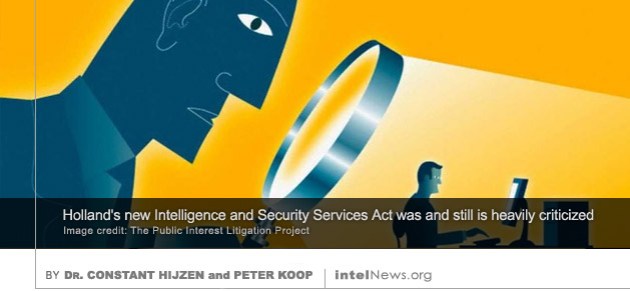
 For the past year, the Netherlands has had a new law governing its two secret services, the AIVD and the MIVD. The new Intelligence and Security Services Act (Wet op de inlichtingen- en veiligheidsdiensten or Wiv) was and still is heavily criticized, especially because it allows untargeted access to cable-bound telephone and internet traffic. Under the previous law, which dates from 2002, the intelligence services were only allowed to conduct bulk interception of wireless transmissions, like satellite and radio communications —besides of course the traditional targeted telephone and internet taps aimed at individual targets.
 With
With 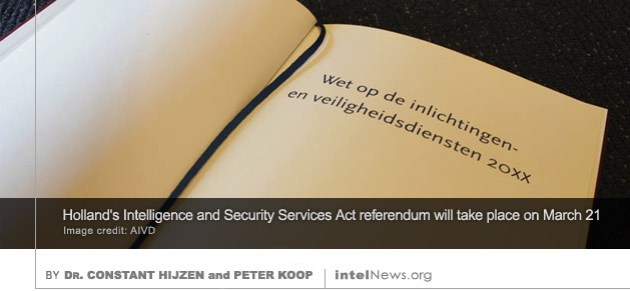 On March 21, the Dutch public cast their vote about the new Intelligence and Security Services Act, in Dutch
 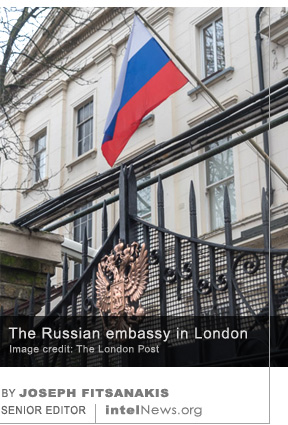 As expected, Moscow snubbed the British government’s demand for information into how a Russian-produced military-grade nerve agent ended up being used in the streets of Salisbury, England. As British Prime Minister Theresa May addressed the House of Commons on Wednesday afternoon, Sergei Skripal continued to fight for his life in a hospital in southern England. His daughter, Yulia, was also comatose, having been poisoned with the same Cold-War-era nerve agent as her father. This blog has
  the latest expulsions are dwarfed by the dramatic expulsion in 1971 of no fewer than 105 Soviet diplomats from Britain, following yet another defection of a Soviet intelligence officer, who remained anonymous.
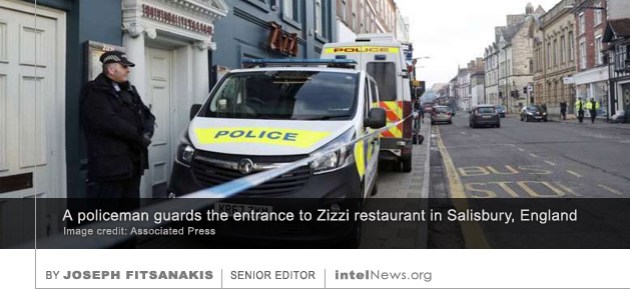 Most state-sponsored assassinations tend to be covert operations, which means that the sponsoring party cannot be conclusively identified, even if it is suspected. Because of their covert nature, assassinations tend to be extremely complex intelligence-led operations, which are designed to provide plausible deniability to their sponsors. Consequently, the planning and implementation of these operations usually involves a large number of people, each with a narrow set of unique skills. But —and herein lies an interesting contradiction— their execution is invariably simple, both in style and method. The
  Skripal, who continued to provide his services to British intelligence as a consultant while living in the idyllic surroundings of Wiltshire. Like the late Russian defector Alexander Litvinenko, who died in London of radioactive poisoning in 2006, Skripal entrusted his personal safety to the British state. But in a country that today hosts nearly half a million Russians of all backgrounds and political persuasions, such a decision is exceedingly risky.
 from abroad. It is, in other words, a simple weapon that can be dispensed using a simple method, with little risk to the assailant(s). It fits the profile of a state-sponsored covert killing: carefully planned and designed, yet simply executed, thus ensuring a high probability of success.
 Since 2008, when we launched intelNews, it has been our
  04. Unprecedented security changes are taking place in Saudi Arabia. Analysts agree that the Kingdom of Saudi Arabia is undergoing its most important political changes in generations. On November 4, 2017, nearly 50 senior Saudi officials, including at least 11 princes, some of them among the world’s wealthiest people, were suddenly
 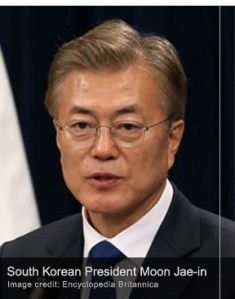 taking place in the intelligence infrastructure of South Korea, which are arguably as important as developments north of the 38th parallel. In June, the new center-left government of President Moon Jae-in
  assist policy-makers, including the president. So when the CIA and the FBI conclude that the Russian government launched an extensive and sophisticated campaign to undermine the 2016 US presidential election, one expects the president to take that advisement under serious consideration. However, the US leader has openly dismissed the conclusions of his own Intelligence Community and has








Analysis: Iraq’s revenge campaign against Sunnis fuels new pro-ISIS wave
December 18, 2018 by Joseph Fitsanakis 1 Comment
Today, after the destruction of the Islamic State’s self-declared caliphate, Iraq’s Shiite-dominated security and intelligence services have returned to Sunni-majority regions that were once ruled by ISIS. But their systematic campaign of human-rights violations against Sunnis, whom they see as ISIS collaborators, is playing into Islamist propaganda and fueling a new wave of rebellion against Baghdad, according to a new report by the Washington-based Pulitzer Center on Crisis Reporting. The report, authored by The New Yorker staff writer Ben Taub, warns that the Iraqi government has no strategy on how to reach out to Iraq’s disaffected Sunni Arabs. Even worse, a state-sanctioned campaign of revenge and intimidation is taking place throughout western Iraq, in which “hundreds of thousands of civilians are suffering at the hands of their liberators”, says Taub.
In areas that until a few months ago were ruled by ISIS, anyone —regardless of age or sex— perceived as having previously supported ISIS is outright killed or sent to concentration camps. For Iraqi security forces, says Taub, civilians who did not flee ISIS are seen as inherently suspicious. Bearded men are often viewed as displaying evidence of ISIS support, even though the militant group had a policy of punishing any man who did not grow a beard in accordance with Quranic directives. Most of these people, says Taub, are fired from their jobs, sent to prison, or worse are executed by the dozens and even hundreds. A handful are tried in a court of law each month, but these are usually show trials with a conviction rate of 98 percent, he adds. Family members of the accused rarely show up in court, fearing immediate arrest and imprisonment, which appears to be a regular occurrence. It is “not uncommon for relatives [of accused ISIS supporters] to be rounded up by the security forces and sent to remote desert camps, where they are denied food, medical services, and access to documents”, reports Taub.
These arbitrary arrests are happening alongside an untold number of battlefield executions —many captured on video by jubilant Shiite soldiers and militia members— and killings of prisoners in detention centers. Taub quotes an anonymous senior official in the Iraqi intelligence services who says that “this is not just revenge on ISIS. It is revenge on Sunnis”. The widespread criminality and brutality of the Iraqi security and intelligence forces “plays directly into the jihadis’ narrative”, says Taub, by convincing Sunni Arabs that they “cannot live safely under a government dominated by Shiites”. Ultimately, what is at stake is “whether the Iraqi government can win over the segment of the population for whom ISIS seemed a viable alternative”, concludes Taub, and warns of the possibility of another armed rebellion against Baghdad by what is left of Iraq’s Sunni minority.
► Author: Joseph Fitsanakis | Date: 18 December 2018 | Permalink
Filed under Expert news and commentary on intelligence, espionage, spies and spying Tagged with Analysis, corruption, Iraq, Islamic State, Islamist extremism