Opinion: Saudi Arabia will not go to war with Iran, but it may pay others to do so
September 25, 2019 1 Comment
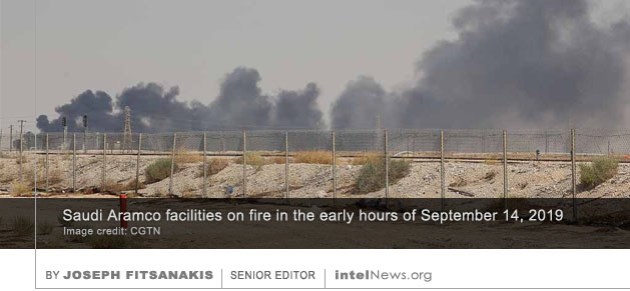 Ever since a barrage of drone and missile attacks struck Saudi Arabia on September 14, many have wondered whether the oil kingdom will go to war with Iran. Riyadh has directly accused the Islamic Republic of being behind the attacks. But the speculation about a possible war is baffling, argues Nesrine Malik in a well-argued article published last Sunday in Britain’s Guardian newspaper. Saudi Arabia does not “go to war”, she says —it pays others to do so on its behalf.
The war in Yemen is a perfect example, argues Malik. Even though the Saudi monarchy is leading the foreign military involvement in that war, Saudi Arabia is supplying almost no ground troops in that war. There are only Saudi commanders who are managing groups of mercenaries from Morocco, Jordan and Egypt. A large portion of the Saudi-led force consists of Sudanese child soldiers, whose families are paid handsomely for supplying the oil kingdom’s force in Yemen with what Malik describes as “cannon fodder”. The Saudi commanders communicate their battle orders to their hired troops via satellite phones and use unmanned drones and high-flying planes to attack the predominantly Shiite Houthi rebels. That largely explains the high civilian toll in that war.
Meanwhile, the United States government announced last week that it will be sending several hundred troops to the oil kingdom and will be beefing up its air defense systems. But Malik wonders why it is that Saudi Arabia, which has been the world’s largest weapons importer since 2014, and whose 2018 arms purchases accounted for 12 percent of global defense spending last year, requires the presence of American troops on its soil for its protection. The answer is simple, she says: the Saudi regime purchases weapons, not to use them, but to make Wester defense industries dependent on its purchasing power. In other words, the Saudi monarchy buys Western weapons for political reasons. These purchases enable it to get away with its abysmal human-rights record at home, as well as its kidnappings and assassinations abroad.
In the meantime, says Malik, if Saudi Arabia goes to war against Iran, it will do so the way it always does: it will hire proxies —including the United States— to fight on its behalf.
► Author: Joseph Fitsanakis | Date: 25 September 2019 | Permalink
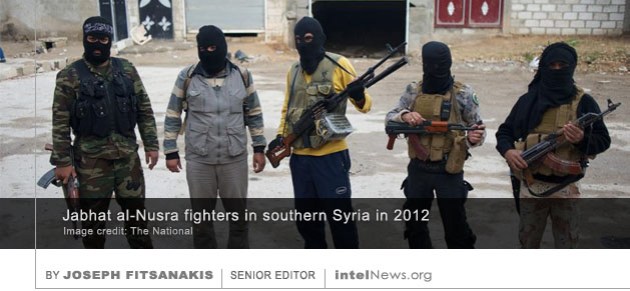 In an effort to remain relevant, al-Qaeda has shifted its strategic focus from Yemen to Syria but continues to pursue a globalist agenda by seeking ways to attack Western targets, according to an expert report. Following the meteoric rise of the Islamic State in 2014, al-Qaeda found it difficult to retain its title as the main representative of the worldwide Sunni insurgency. But in an
  The state-owned energy sector of Iran, one of the world’s most lucrative, has become a major target of international espionage since the imposition of new sanctions by the United States this year. The purpose of Washington’s sanctions is to limit the Islamic Republic’s ability to export energy, and by doing so end the country’s reliance on its primary source of income. It is estimated that Tehran’s energy exports have fallen by about 80 percent during the past year, and may continue to fall if the US has its way. This means that American and Iranian intelligence agencies are currently engaged in an intense war of espionage that concentrates on what remains of Iran’s oil exports. Iran continues to entice international buyers by selling energy at below-market prices, while sales are facilitated through the use of throwaway bank accounts that are difficult to trace. Exports are then carefully smuggled into overseas destinations through a variety of means.
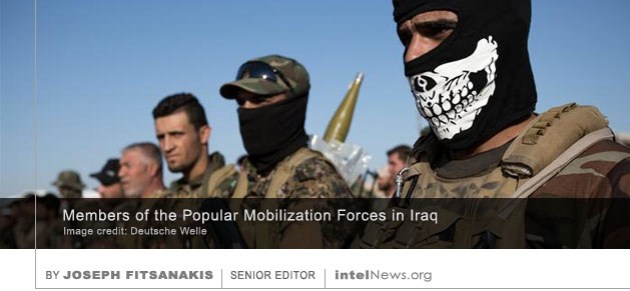 A powerful alliance of about 50 Shiite militias, who helped Iraq defeat the Islamic State, is resisting calls by the Iraqi government to surrender its weapons and join civilian life, according to observers on the ground. Much of the territory captured from the Islamic State (known also as the Islamic State of Iraq and Syria, or ISIS) in northern Iraq is currently controlled by the Popular Mobilization Forces (PMF), a collection of around 40 different Shiite militias consisting of over 150,000 armed fighters. The militias began to form in the summer of 2014, after Sayyid Ali al-Husseini al-Sistani, the spiritual leader of the Iraqi Shiite community, issued a fatwa (religious degree) that called or the destruction of ISIS. The Iranian-supported PMF proved instrumental in the territorial defeat of ISIS. However, the group’s leadership is ideologically aligned with Iran, and many of its members will not cooperate with the Iraqi Armed Forces, because of the latter’s proximity to the United States.
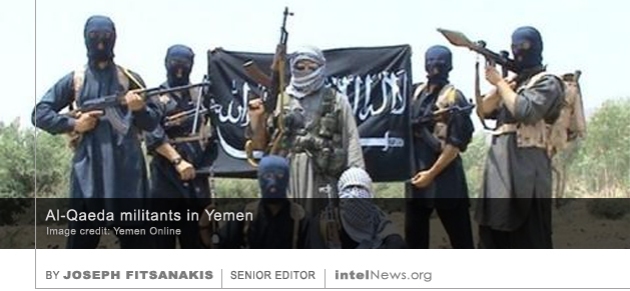 Al-Qaeda and its affiliate groups continue to be the most persistent transnational threats to the security of the West, according to experts who spoke after the alleged death of Osama bin Laden’s son, Hamza. Last week The New York Times
 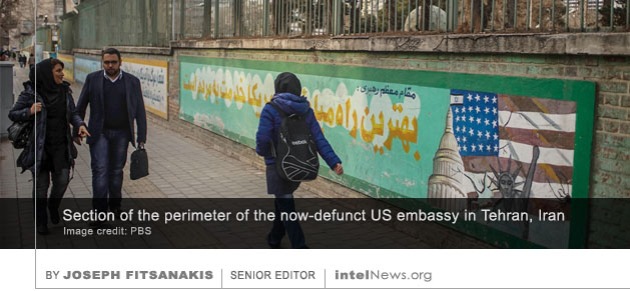 If the announcements from Tehran are to be believed, the United States Central Intelligence Agency lost at least 17 spies in Iran in the months leading up to March 2019. According to Iran’s Ministry of Intelligence, the Islamic Republic busted an alleged “CIA network” operating in sensitive private sector companies and government agencies that relate to defense, aerospace and energy. At least some of the 17 alleged spies have reportedly been sentenced to death, though their exact number remains unknown.
 made to look like rocks, which were located “in parks and other mountainous areas” in Iran and elsewhere in the Middle East, according to Iranian officials. Some of the assets communicated with their handlers while attending science conferences through- out Europe, Africa and Asia.
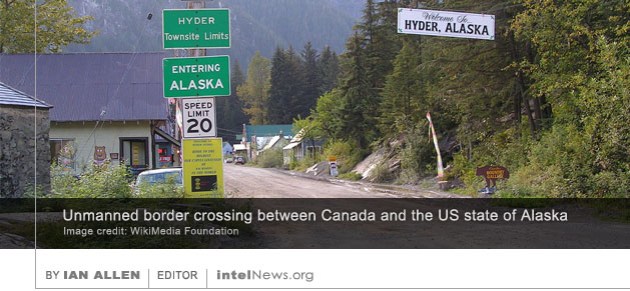 Since the election of President Donald Trump, the issue of border security between the United States and Mexico has been a major topic of national debate. But is the incessant focus on America’s southern border by the news media and politicians ignoring security concerns emanating from the country’s northern neighbor, Canada? In a thought-provoking
 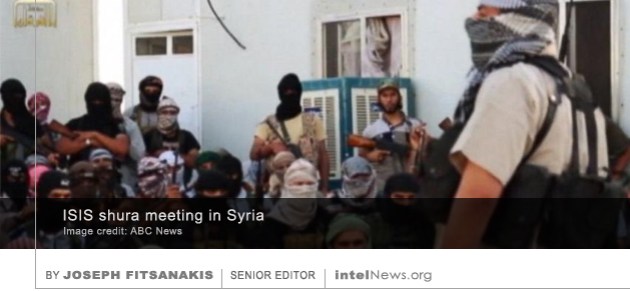 The Islamic State is capable of make a sudden comeback in the Middle East that could be “faster and even more devastating” than 2014, when the group quickly conquered territory the size of Britain, according to a new report from the Institute for the Study of War (ISW). The Washington-based think-tank’s report is based on the most recent data about the presence in the Middle East of the militant Islamist group, which is also known as the Islamic State of Iraq and Syria. The 76-page
 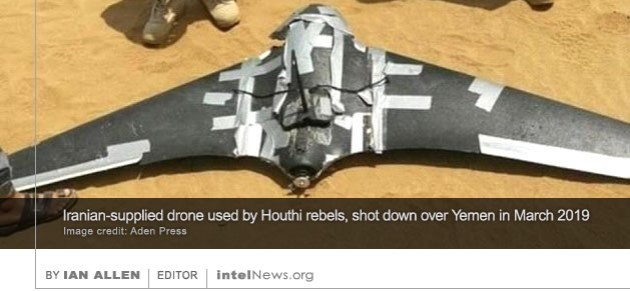 The current wars in the Middle East, especially the ongoing conflict in Yemen, are proof that the use of small drones in insurgencies is now a permanent phenomenon of irregular warfare, according to experts. Drones have been
 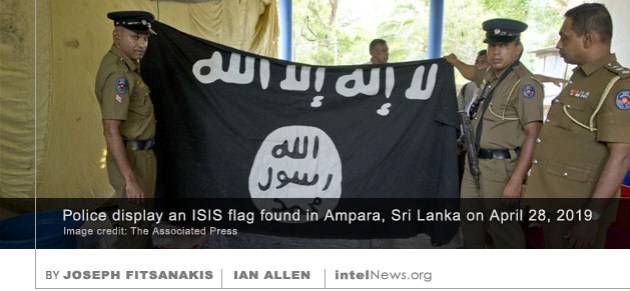 The April 21 suicide attacks in Sri Lanka, which were claimed by the Islamic State, may indicate that the militant group is moving east in search of fertile recruiting ground, according to some observers. In
  ranks. It follows that Sri Lanka is one of several East Asian countries that face major threats by the group, as the latter tries “to ignite creating fear in societies already battling so much division”, says Ash Gallagher, an American war correspondent based in East Asia. Writing for the British newspaper The Independent, Gallagher notes that not only is the Islamic State already established in Afghanistan (where it has “swallowed whole units of Taliban fighters”,
 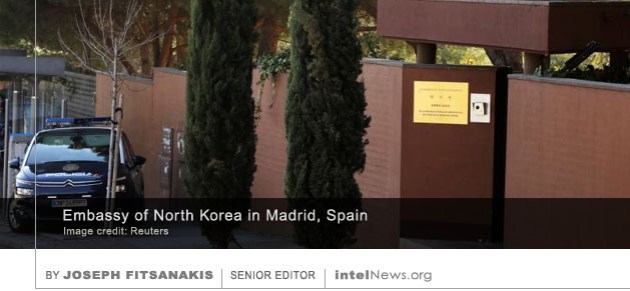 An obscure North Korean dissident group was most likely behind a violent raid on North Korea’s embassy in Madrid on February 22, which some reports have pinned on Western spy agencies, including the Central Intelligence Agency. The group, known as the Cheollima Civil Defense, is believed to be the first North Korean resistance organization to declare war on the government of Supreme Leader Kim Jong-un.
 said in English that all was fine inside the embassy. But a few minutes later, two luxury cars belonging to the North Korean embassy sped away from the building with the ten assailants inside, including the man who had earlier appeared at the front door.
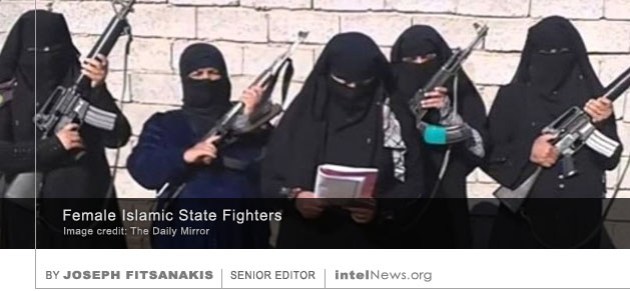 The role of women inside the Islamic State is growing, as the Sunni militant group is transmuting into an underground organization, according to a Harvard University terrorism expert. Since its meteoric rise in Iraq and Syria, the Islamic State has been known for advocating for strict segregation between men and women. In the early stages of the group’s emergence, combat roles were exclusively performed by men, while women’s roles were limited to childbearing and housework. But according to Vera Mironova, Visiting Scholar in the Economics Department at Harvard University, and former Associate of the International Security Program at Harvard’s Belfer Center, the Islamic State’s policy on gender roles is shifting rapidly.
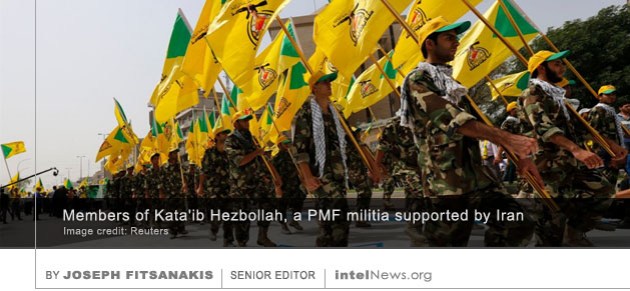 The Shiite militias that fought in the war against the Islamic State are now “engaged in mafia-like practices” in former Islamic State strongholds, enraging Iraqi Sunnis and sparking fears of another Islamist insurgency, according to a
  On the heels of chaotic scenes at Britain’s Gatwick Airport, which







Analysis: ISIS leader’s hideout in Turkish-controlled part of Syria raises questions
October 31, 2019 by Joseph Fitsanakis 1 Comment
The self-proclaimed caliph of the Islamic State was found hiding in Barisha, a village in the Syrian province of Idlib, which is located just two miles from the Turkish border. The region that surrounds Barisha is under the control of Turkey and can most accurately be described as a Turkish protectorate inside Syria. The area north of Barisha has been under Turkish control since August of 2016, when Ankara launched Operation Euphrates Shield, a cross-border operation conducted by the Turkish Armed Forces in cooperation with Turkish-baked militias in Syria. In early 2018, Turkish and pro-Turkish forces extended their territorial control further south, capturing Barisha and all surrounding regions. They remain in control of the area to this day.
Turkish-occupied northern Syria is often described as a “proto-state”. It is governed by a collection of local councils of Turkmens and Arabs, with some Kurds and Yazidis also present. These councils elect representatives to the self-proclaimed Syrian Interim Government, which was formed in Turkey by Turkish-backed Syrian exiles and is currently headquartered in Azaz, an Arab-majority city of 30,000 that is under direct Turkish military control. Azaz is also the headquarters of the Turkish-backed “Free Police”, a gendarmerie-style militia that is funded, trained and equipped by the Turkish government.
In addition to the Turkish troops, the region is controlled by the Turkish-funded Syrian National Army. The 25,000 troops of the SNA —which is jokingly referred to by the locals as the “Turkish Syrian National Army”— operate completely under Turkish command. A substantial portion of the SNA’s force consists of former Islamic State fighters who switched their allegiance to the SNA once they saw the writing on the wall. Others are former members of the group that used to call itself Jabhat al-Nusra, an al-Qaeda affiliate that has become the most powerful Salafi-jihadist force in Syria after the demise of the Islamic State.
Turkish-occupied northern Syria is also the base of Ahrar al-Sham, a Salafi-jihadist group consisting of over 20,000 fighters, which is not officially aligned with al-Qaeda, but has similar goals. Since at least 2017, Ahrar al-Sham has effectively operated as a Turkish proxy militia and is in charge of dozens of check points and observation posts throughout the region. Lastly, the area is home to Hurras al-Din, yet another Salafi-jihadist group that is affiliated with al-Qaeda —though its leaders deny it. The group is able to operate in Turkish-controlled areas of Syria with suspicious ease. It was this group, Hurras al-Din, that sheltered al-Baghdadi in Barisha in return for cash.
Given Turkey’s military and political control of Idlib province, the question arises of how the world’s most high-profile terrorist leader was able to enter the region and receive protection from a militia that operates there under the watchful eye of the Turkish military. The New York Times reports that al-Baghdadi had been living in Barisha for several months before last week’s raid, and that Washington had been aware of his hideout location since the summer. Was Turkish intelligence also aware of the Islamic State leader’s whereabouts? If not, how could that be? If yes, why did it take a Kurdish spy, handled by Syrian Kurdish intelligence, to locate him and provide information to the Untited States? More importantly, what exactly is the relationship between Turkey and the al-Qaeda-linked Islamists who seem to operate freely in Idlib and provide protection to senior Islamic State officials in exchange for cash?
There are clearly more questions than answers here. If the United States is serious about combating Islamist extremism in the Middle East, it must press Ankara on these questions as a matter of urgency.
► Author: Joseph Fitsanakis | Date: 31 October 2019 | Permalink
Filed under Expert news and commentary on intelligence, espionage, spies and spying Tagged with Abu Bakr al-Baghdadi, Ahrar al-Sham, Analysis, Hurras al-Din, Islamic State, Jabhat al-Nusra, Joseph Fitsanakis, Newstex, Syria, Syrian Civil War, Turkey