News you may have missed #826 (suspicious deaths edition)
March 14, 2013 4 Comments
 By IAN ALLEN | intelNews.org |
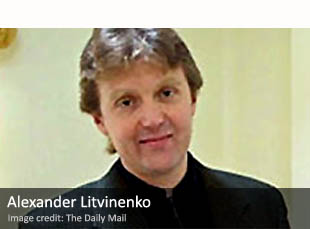
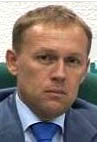
►►Key suspect in Russian spy murder refuses to cooperate. Andrey Lugovoi, who is now an elected official in Russia, says he will not talk even by video to British investigators about the poisoning of Alexander Litvinenko in London just over six years ago. The murder of former Russian spy Alexander Litvinenko in London in 2006, has never been solved and remains the subject of conflicting narratives and still-deepening intrigue over who may have killed him and why.
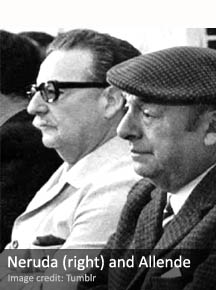
►►Exhumation of Neruda’s remains set for April. A court in Chile has set April 8 as the date for the exhumation of the remains of the Nobel Prize-winning poet Pablo Neruda, as part of an inquest into his death. The poet and leftwing activist died 12 days after a military coup replaced the socialist President Salvador Allende with General Augusto Pinochet. The poet’s family maintains that he died at 69 of advanced prostate cancer. But in 2011, Chile started investigating allegations by his former driver, Manuel Araya Osorio, that the poet had been poisoned.
►►Venezuela to investigate Chavez murder allegations. Venezuelan officials have said they will set up an inquiry to investigate suspicions that President Hugo Chavez was “murdered by foreign agencies”. Venezuelan Oil Minister Rafael Ramirez told the BBC the United States and Israel were to blame for Chavez’s death, and that he had no doubt that Chavez’s death was an act “similar to Yasser Arafat’s“. Earlier this week, the US expelled two Venezuelan diplomats following the expulsion of two American officials from Caracas.








 intelNews.org
Murder suspect to give evidence on death of ex-KGB spy in London
June 16, 2015 by Joseph Fitsanakis Leave a comment
In July of 2007, after establishing the cause of Litvinenko’s death, which is attributed to the highly radioactive substance Polonium-210, the British government officially charged 1 Kovtun and Lugovoy with murder and issued international arrest warrants for their arrest. Soon afterwards, Whitehall announced the expulsion of four Russian diplomats from London. The episode, which was the first public expulsion of Russian envoys from Britain since end of the Cold War, is often cited as marking the beginning of the worsening of relations between the West and post-Soviet Russia.
Since 2007, when they were officially charged with murder, Kovtun and Lugovoy deny the British government’s accusations, and claim that Litvinenko poisoned himself by accident while trading in illegal nuclear substances. The administration of Russian President Vladimir Putin refuses to extradite the two former KGB officers to London, and has denounced the British public inquiry into Litvinenko’s death as “a sham”. However, last March Kovtun unexpectedly wrote to the presiding judge at the inquiry, Sir Robert Owen, offering to testify via a live video link from Moscow. On Monday, Sir Robert issued a statement 2 saying an agreement had been struck between Kovtun and the inquiry, and that the Russian businessman would testify from Moscow, “most likely towards the end of next month”. Kovtun is expected to confirm that he met Litvinenko in London on the day the former KGB spy fell ill, but to insist that he had no role in poisoning him.
► Author: Joseph Fitsanakis | Date: 16 June 2015 | Permalink: https://intelnews.org/2015/06/16/01-1715/
Filed under Expert news and commentary on intelligence, espionage, spies and spying Tagged with Alexander Litvinenko, Andrey Lugovoy, Dmitri Kovtun, KGB, News, poisoning, Russia, Sir Robert Owen, suspicious deaths, UK