News you may have missed #657
January 2, 2012 1 Comment
 By IAN ALLEN | intelNews.org |
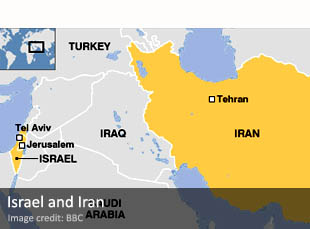
►►Israeli company exported Internet-monitoring hardware to Iran. Israel bans all trade with its enemy, Iran. It turns out, however, that Israeli Internet-monitoring equipment has been finding its way to Iran for years, through Denmark. An Israeli company shipped the equipment to Denmark, where workers stripped away the packaging and removed the labels, before forwarding it to Iran. Now Israeli trade, customs and defense officials say they “did not know” that the systems were ending up in Iran.
►►Court decision revives NSA lawsuits. The 9th US Circuit Court of Appeals has ruled that the case of Jewel v NSA, which claims that after the 2001 terrorist attacks the NSA began large-scale monitoring of digital traffic, with the assistance of AT&T and others, can proceed. At the same time, the court denied leave to continue on a linked case against AT&T, for aiding and abetting the surveillance. The court upheld the 2008 Foreign Intelligence Surveillance Act (FISA) revision, voted for by the current president, which grants the telecommunications companies retroactive immunity from any actions carried out during the period.
►►Czechs charged with espionage in Zambia sent home. Three Czech citizens, who were detained in Zambia on October 12, 2011, and charged with espionage, have returned home, the Czech Foreign Ministry said Sunday. A ministry spokesman declined to give any details on the return of the three Czechs, who were arrested after they were found taking pictures near military sites.








 intelNews.org
White House holds emergency meeting with telecoms over ‘massive’ Chinese breach
November 25, 2024 by Joseph Fitsanakis 1 Comment
On Thursday, following a briefing provided by intelligence officials, Senator Mark Warner (D-VA), who chairs the United States Senate’s Select Committee on Intelligence, referred to the Chinese breach as “far and away the most serious telecom hack in [American] history”. Warner added that the volume of data the Chinese hackers were able to collect on “important American officials” was alarming, but that the extent of the intrusion was significantly broader than initially thought and compromised the privacy of telephone users across the United States.
According to reports, the breach affected a host of American telecommunications service providers (TSPs), including the three largest —T-Mobile, Verizon, and AT&T. The initial breach compromised the system employed by the TSPs to facilitate communications interception requests by government agencies following the issuance of court warrants. Eventually, however, the hackers were eventually able to exploit antiquated software and hardware in the United States’ national telecommunications network in order to target a wide array of users.
The extent of the damage caused by the breach remains unknown, as very little about it has been shared by the White House or the telecommunications industry. Nevertheless, it appears that the hackers selected telephone service users with senior current or former posts in government, including President-Elect Donald Trump. The hackers were reportedly able to access the metadata, and even content, of all unencrypted telephone calls and text messages to and from these users.
Friday’s meeting at the White House was reportedly convened by National Security Adviser Jake Sullivan and co-led by Anne Neuberger, who is serving as Deputy National Security Adviser for Cyber and Emerging Technology. The names of telecommunications industry executives that attended the closed-door meeting were not provided to the media.
► Author: Joseph Fitsanakis | Date: 25 November 2024 | Permalink
Filed under Expert news and commentary on intelligence, espionage, spies and spying Tagged with AT&T, China, News, Salt Typhoon, T-Mobile, telecommunications industry, Verizon