Analysis: Israel’s misjudgment of Hamas caused the October 7 intelligence failure

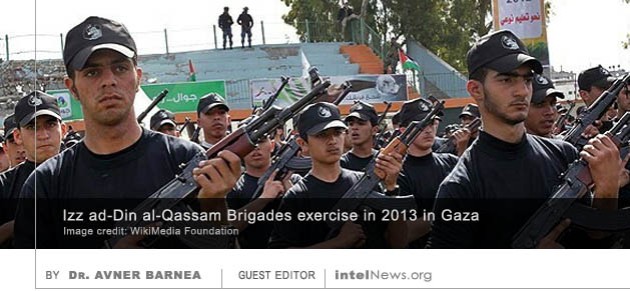
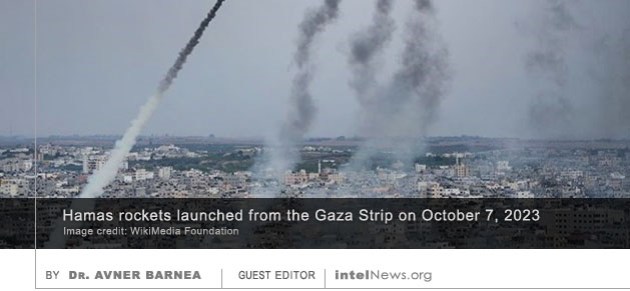
Gaza StripSINCE OCTOBER 7, WHEN Hamas launched its surprise attack on Israel, many more details about the intelligence failure have emerged. It appears that Israeli intelligence officials have warned for years about military exercises held by Hamas in the Gaza Strip, which have included practice raids on cities deep inside Israel. However, the Israel Military Intelligence (IMI) did not heed to the warnings, because it considered Hamas operationally incapable of carrying out such raids. Instead, the IMI estimated that the Hamas leadership aimed to arrive at a settlement with Israel. That seems like the result of a highly successful disinformation operation, which added significantly to the effectiveness of the sudden attack on Israel on October 7.

It now appears that several months after the Israel Defense Forces (IDF) Operation Guardian of the Walls, which targeted Hamas in the Gaza Strip in May of 2021, Hamas began to train for a large-scale operation against Israel. However, the IMI estimated that Hamas was not capable of attacking aQ Quote large number of settlements simultaneously. It also believed that such an operation would go against the spirit of Hamas leadership’s spirit intention to settle with Israel.

As early as 2022, the IMI had analyzed videos of Hamas’ military exercises, which Hamas itself had made available on social media networks. Meanwhile, the intelligence information that emerged from the Gaza Strip showed that the professionalization of Hamas’ military arm, the Izz ad-Din al-Qassam Brigades, was improving. However, IMI officials rejected the need to build an operative response to the mass-attack scenario that these exercises pointed to, because they saw them simply as exercises.

Israeli intelligence also analyzed the communications discourse between the commanders of Hamas, which it had acquired through intercepts. It purportedly indicated that Hamas intended to carry out raids on Israeli communities located near the fence between Israel and Gaza, but also on targets located deeper inside Israel. The communications discourse also indicated that such attacks could occur, not only using tunnels, but with incursions above ground and even through aerial methods.

One of the methods that Hamas trained on, and one that was known to Israeli intelligence, focused on disabling the highly sophisticated observation posts, sensors and remote-controlled machine guns, which Israel has installed along the border fence with the Gaza Strip. The purpose of these exercises was to enable an attack on the fence and overtake it these sophisticated tools with Hamas operatives, thus effectively blinding the Israeli forces. However, Israeli authorities made no effort to prepare for such a scenario by protecting these installations.

The broad picture that is emerging raises serious questions about why the IDF did not take a reasonable course of action against Hamas’ operational plan —and why it failed to do so despite being aware of the intensity of the Hamas exercises, and despite being aware of the group’s stated intentions. Q QuoteIndeed, a preventive course of action should have been in place even in the absence of specific intelligence warnings —if only to enable the IDF to repel a surprise attack by Hamas. There was no need to estimate what Hamas would do in order to prepare for a surprise attack.

Yet it is now patently obvious that there was ample intelligence about Hamas’ intentions. The latter were both apparent and known. Even without the wisdom of hindsight, it is clear there was enough intelligence to enable Israel to act in a timely manner against Hamas’ plan. Yet Israel severely misjudged Hamas’ intentions. In retrospect, it appears that ample intelligence about Hamas’ intentions had been gathered, that the IMI and Shin Bet were severely underprepared for a surprise attack, that the precise details of Hamas’ attack were missed, and that Hamas’ intentions were misjudged. These are the reasons why Israel was caught unprepared and suffered a catastrophic surprise on October 7.

Author: Dr. Avner Barnea | Date: 10 November 2023 | Permalink

Dr. Avner Barnea is research fellow at the National Security Studies Center of the University of Haifa in Israel. He served as a senior officer in the Israel Security Agency (ISA). He is the author of We Never Expected That: A Comparative Study of Failures in National and Business Intelligence (Lexington Books, 2021).

Analysis: How Israeli Intelligence Failed to Anticipate the Hamas Attack

Hamas GazaSEVERAL DAYS HAVE PASSED since October 7, the day when Hamas stunned Israel with a surprise attack against several settlements near the Gaza border. It is now clear that Israeli intelligence was in possession of warning indicators about the attack, and that these indicators were misjudged.
The IMI and ISA Assessment

It is important to note that the intelligence division of the Israel Defense Forces (IDF), known as Israeli Military Intelligence (IMI), and the  Israel Security Agency (ISA), have been monitoring Hamas for years. These two agencies are believed to have conducted a situation assessment approximately two weeks before the October 7 attack. The assessment concluded that Hamas was deterred and had no interest in changing the status quo by attacking Israel in the short run. This assessment was communicated to Prime Minister Benjamin Netanyahu and Minister of Defense Yoav Gallant.

It appears that this assessment was not supported by concrete intelligence. The agencies that produced it relied primarily on monitoring the recent behavior of Hamas, including the fact that it was allowing Palestinians living in Gaza to work inside Israel. Additionally, the assessment noted the fact that Hamas was receiving funds from Qatar to help the poverty-stricken residents of Gaza. In retrospect, this assessment appears to have been based on wishful thinking.

The Egyptian Warning

It is now known that Abbas Kamel, Director of the Egyptian General Intelligence Directorate, sent a warning to Israel a few days before Hamas’ attack. Kamel allegedly warned of “something unusual, a terrible operation”, which was about to take place from the direction of Gaza. The warning was forwarded to Prime Minister Netanyahu’s office. The Israeli newspaper that published this report, Yedioth Ahronot, is known for its serious reputation and quality sources inside the Egyptian establishment. According to the report, Kamel was told by the Israelis that they were focused on preventing terrorist attacks in the West Bank.

Yet, in a speech that Netanyahu delivered immediately after the October 7 attack broke out, he denied claims about the Egyptian warning and claimed that they were fake news. However, American Congressman Michael McCaul, Chairman of the House Foreign Affairs Committee, said on October 11: “We know that Egypt […] warned the Israelis three days prior that an event like this could happen”. Speaking to reporters following a closed-door intelligence briefing on the crisis for American lawmakers, McCaul added: “I don’t want to get too much into classified [details], but a warning was given”. An Egyptian government source also asserted that Egyptian intelligence officials warned their Israeli counterparts that Hamas was planning “something big” ahead of the October 7 surprise onslaught. But this intelligence appears to have been ignored. Read more of this post

Analysis : Attack on Israel Points to Systemic Failure at All Levels

Hamas Israel - BarneaTHE COMPARISON BETWEEN THE October 2023 attack on Israel and the Yom Kippur War is reasonable. We still have an obscured perspective on what happened on October 7. But even this partial picture makes it possible to draw a preliminary comparison. Undoubtedly, there is no precedent for such a monumental failure in the history of Israeli intelligence.

The most striking difference between the two case studies is that in 1973 the system as a whole did not fail. The failure was personal, on the part of several key people, who did not perform according to expectations. The events of 2023 point to a systemic failure at all levels, not personal mistakes. The failure is at the level of intelligence warning, the military response to the attack, and even the actions of Israel’s political leadership.

An Intelligence and Military Failure

In 1973, the intelligence-gathering system was working well, and Egypt’s war intentions were known. Thousands of reports from observations along the Suez Canal spoke of the Egyptian preparations. The wireless transmissions that were issued testified to preparation for war in the Egyptian army. All this did not translate into a warning of war, due to the failed performance of some senior officers in the Israeli Military Intelligence (IMI), who stuck to their preconceived notions until the last moment.

In 2023, the failure is systemic. It involves both the level of collection and at the level of assessment. It relates both to the IMI and the Israel Security Agency (ISA). It has already become clear that the intelligence collection mechanisms failed to detect large-scale preparations for an all-out attack from the Gaza Strip. A massive intelligence system failed to detect the preparatory actions of the assailing forces.

When the perceived enemy is Palestinian civilians and when Israel Defense Forces (IDF) soldiers spend their time guarding settlements and worshipers, instead of engaging in hard training, the result is catastrophic. On October 7, we witnessed the operations of an army whose main mission is occupation. Given what we saw on that day, namely more than 1,000 civilian and military casualties and approximately 150 kidnapped Israelis, it is not clear how this army will be able to face the upcoming challenges in this war. The need for the professionalism and resilience of the IDF, which was there in 1973, continues to exist.
A Political Failure

The comparison between the political leadership of 1973 and 2023 is also discouraging. Back then, the root of the failure was that the intelligence information the leadership received from Eli Zeira, the director of IMI, who was the nation’s most senior intelligence officer, was distorted and false. It is now understood that the IMI’s assessments were based on the concept of reassuring the political leadership. Yet, Prime Minister Golda Meir and Minister of Defense Moshe Dayan were challenged after the war, and were eventually removed from their positions. However, they acted responsibly.

In contrast, there is not much to say about Israel’s current political leadership. It suffices to look at the composition of the Security Cabinet and the first leaks that have already begun to emanate from it, or at the surge of slander that members of the governing coalition have begun to heap on the finest of the IDF’s officers. It is nothing short of a disgrace and a disaster.

This war has just begun. It is still too early to draw conclusions. But we can examine the conclusions from the Yom Kippur War and assess their relevance to today. When Israeli Prime Minister Benjamin Netanyahu talks about revenge, it is advisable to remember those lessons. The conflict with the Palestinians is long and bitter. They will not give up their ambition for their state. It is now time to comprehend the full cost of the continuation of the conflict.

► Author: Avner Barnea | Date: 11 October 2023 | Permalink

Dr. Avner Barnea is research fellow at the National Security Studies Center of the University of Haifa in Israel. He served as a senior officer in the Israel Security Agency (ISA). He is the author of We Never Expected That: A Comparative Study of Failures in National and Business Intelligence (Lexington Books, 2021).

Alleged Israeli spies with Russian citizenship arrested in Lebanon

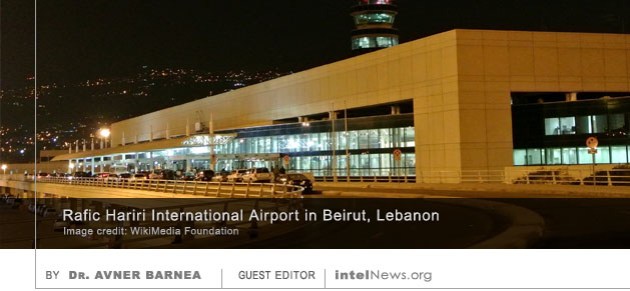
Rafic Hariri International Airport Beirut LebanonLAST WEEK, LEBANON’S GENERAL Security Directorate charged two Russian citizens with spying for Israel. The two Russians, who appear to be legally married to each other, were detained by authorities at Beirut’s Rafic Hariri International Airport as they were attempting to leave the country. The detentions were reported by the Lebanese newspaper Al-Akhbar, which is affiliated with the Lebanese militant group Hezbollah.
According to the Al-Akhbar report, one of the suspects admitted that he had been recently recruited into Israeli intelligence. He also reportedly admitted that, as part of his espionage activities, he received maps of sites and instructions about gatherings at facilities in Lebanon belonging to the Hezbollah organization. He added that he had been instructed to access, inspect and, if possible, photograph these facilities. He also reportedly admitted that he had visited southern Lebanon and entered Hamas-controlled areas of southern Beirut, where he had collected data and verified it against the information available to his handlers.

The report added that the suspect’s wife, who was also arrested, admitted under interrogation that she was aware of her husband’s work and that she had assisted him in his tasks. According to the report the General Security Directorate had suspected the Russian citizen, because he had traveled in southern Lebanon several times. Lebanese authorities were able to track his movements and connections, eventually tracing his place of residence. He was arrested along with his wife soon after being notified by his handlers that he should leave the country immediately.

Al-Akhbar added that, prior to the arrest, the General Security Directorate had informed the Russian Embassy in Beirut of its intention to arrest the Russian citizens. The agency’s Director, Elias Elbisri, said following the arrest: “A spy ring for the benefit of the Israeli enemy was foiled at the Beirut airport, consisting of two people who tried to leave Lebanon”. According to Elbisri, “we carried out the necessary investigations; this cell posed a threat to Lebanon”.

Israeli authorities did not respond to news about the incident. It should be noted that, if Russian citizens were indeed recruited and employed by Israeli intelligence, this development could further-damage the relationship between Israel and Russia, which is already fragile due to ongoing developments in Syria and Ukraine. Israel regularly launches attacks on Iranian facilities and equipment in Syria —a Russian ally. Israel is also believed to provide security assistance to Ukraine, which is engaged in a bloody war over territory with Russia.

In recent days, there have been leaks in Israel that an intense debate took place in the Israeli Security Cabinet, following the rise in Palestinian acts of terrorism in Israel, which, according to Israeli security agencies, are guided by Hezbollah and Hamas. As a result, Hamas operatives in the Gaza Strip are taking protective actions, fearing the renewal of targeted killings by Israeli forces. Salah al-Aruri, commander of Hamas’ Izz ad-Din al-Qassam Brigades, who is directing his forces against Israel from abroad, could also be a target for the Israeli intelligence community.

Author: Avner Barnea | Date: 04 September 2023 | Permalink

Dr. Avner Barnea is research fellow at the National Security Studies Center of the University of Haifa in Israel. He served as a senior officer in the Israel Security Agency (ISA). He is the author of We Never Expected That: A Comparative Study of Failures in National and Business Intelligence (Lexington Books, 2021).

Probing the intelligence failure behind the assassination of Israeli PM Yitzchak Rabin

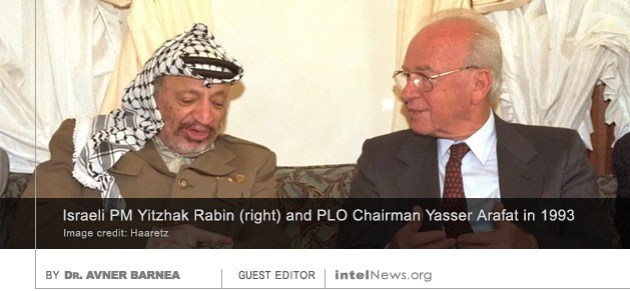
Rabin ArafatLAST WEEK, THE CHAIRMAN of the Israeli Religious Zionist Party, Bezalel Smotrich, who will soon be appointed as a cabinet minister, alleged that the Israel Security Agency (ISA) encouraged the killer of the late Israeli Prime Minister, Yitzhak Rabin. Smotrich’s allegation shocked many Israelis, because of the unfortunate timing —it was uttered close to the annual Remembrance Day for Prime Minister Rabin, who was assassinated by radical rightwing activist Yigal Amir 27 years ago. But also because of the unacceptable content, which echoes conspiracy theories that have accompanied Rabin’s assassination for many years. To counter these conspiracy theories, it is fitting to discuss the failure to defend Rabin that did occur under the responsibility of the ISA.
The failure that caused Rabin’s assassination was investigated by a National Inquiry Commission (known as the Shamgar Commission), which found the ISA responsible. In fact, it was deemed a double failure: the first by the personnel of the VIP Security Unit of the ISA, and the second by the intelligence personnel of the ISA, whose job it was to thwart in advance murderous intentions by extreme rightwing elements in Israel. The intelligence failure was not investigated in depth by the Shamgar Committee. It dealt mainly with the security failure and only partially with the intelligence failure. Its investigation focused on the activities of ISA agent Avishi Raviv (code name CHAMPAGNE) who was tasked by the ISA to infiltrate extreme rightwing groups. The Committee did not ask: could the ISA’s intelligence have prevented the murder?

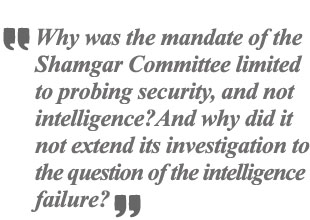
It is also possible to ask: why was the mandate of the Shamgar Committee limited to investigating the area of security, and not intelligence? And why did its members refrain from extending their investigation to the issue of the intelligence failure? There are no answers to this question, even in the autobiographical book of the Committee’s chairman, the late Supreme Court Chief Justice Meir Shamgar.

A Key Piece of Intelligence

Smotrich referred to agent Raviv, who was indeed run in a deficient and unprofessional manner. Yet no malicious intentions can be attributed to the ISA. In any case, Raviv’s defense attorney convinced the court that Raviv did not know about the assassin’s intentions before the murder. The key piece of intelligence, which the ISA had received six months before Rabin’s murder, regarding Amir’s intentions, was handled extremely poorly: an asset of the IDF Central Command’s intelligence department told his commander that he had heard “a small, rotund and armed Yemeni” speaking at a bus stop about his intention to assassinate Rabin. The intelligence was immediately passed on to the head of the appropriate department in the ISA. Unfortunately, however, instead of the source being interrogated by trained ISA personnel, a police investigation was conducted that did not reveal any significant additional information. Read more of this post

Israel Security Agency uses Facebook to reach out to young Palestinians – report

Israeli West Bank barrier

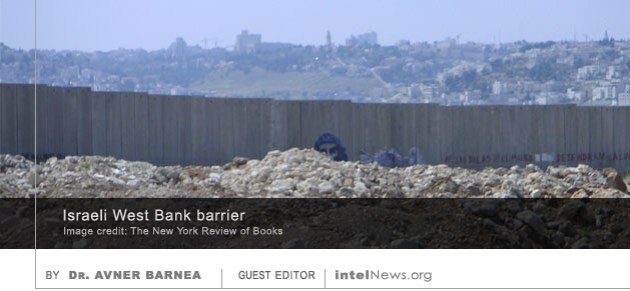
AN ARTICLE PUBLISHED LAST month in one of Israel’s leading newspapers, Haaretz, shed light on how the Israel Security Agency (ISA) is using Facebook to combat militant groups in the Palestinian occupied territories, namely the West Bank and the Gaza Strip. According to the article’s author, Amira Hess, the ISA operates about 35 Arabic-language profile pages on Facebook, which are accessible in the various Palestinian areas under Israeli occupation.

ISA case officers (agent handlers) with Arabic monikers are in charge of various regions. For example, the officer in charge of the Hebron area is known as “Captain Eid”, the officer in charge of the Al-Amari refugee camp is known as “Captain Zaker”, and so on. Every Facebook profile page has a telephone number for users to send messages using WhatsApp. In addition, a general Facebook page of the ISA was opened under the heading in Arabic, “Badna Naish” (“Want to Live” in Arabic).

The transition to using Facebook pages is in the spirit of the times, and reflects the fact that many younger Palestinians receive their daily news through social networks, and not through traditional media, such as radio or television. The purpose of the ISA’s open-referral method using Facebook is to talk to the Palestinian population directly, and especially to the younger generation, who is very active on social networks. This also allows social media users to pass on security information to thwart terrorist attacks without disclosing their identity. The Facebook pages also serve the ISA as a tool for recruiting Palestinians who are willing to help Israel.

Additionally, the ISA uses Facebook’s pages to warn Palestinians who plan terrorist acts before they go into action. Here are some examples of the use of Facebook’s pages: In March of this year, an ISA case officer using the moniker “Captain Eid” wrote on his Facebook page covering the Hebron area that he called several masked men who fired shots in the air while welcoming the released terrorist Mahmoud Hushia, and warned them that their identities were known. “In their deeds, they will be punished. Please stay away from unnecessary problems”, wrote Captain Eid. Read more of this post

Book review of “We Never Expected That” by Avner Barnea

Barnea We Never Expected ThatIN HIS NEW BOOK, We Never Expected That: A Comparative Study of Failures in National and Business Intelligence (Lexington Books), Dr. Avner Barnea has coined two new terms in the field of strategic surprise. One is diffused surprise and the other is concentrated surprise, two terms that help us to better understand why intelligence failures occur. In a diffused surprise there is difficulty in identifying the intelligence target and therefore the chance of a surprise increases; while in a concentrated surprise the intelligence target is usually a recognized organization. At the same time, the mistake lies in the assessment of the target’s abilities and intentions.
To illustrate the difference between the types of strategic surprises in the two areas, the author analyzes these types of surprises through a discussion of four test cases. Two of them are from the field of national intelligence and two from the field of competitive intelligence. In the field of national intelligence, Barnea analyzes the surprise of the outbreak of the First Intifada (Palestinian uprising) in 1987 and the surprise of the attacks of September 11, 2001. The first Intifada was a strategic surprise for the State of Israel and broke out as a result of a popular uprising. Therefore Barnea defines it as a diffused surprise. The September 11 terror attack is defined by Barnea as a concentrated surprise, since the terrorist organization, al-Qaeda, which was known to American intelligence, initiated and carried out the terrorist attack. One of the reasons for the surprise was that the American intelligence agencies did not properly assess al Qaeda’s intentions and capabilities, nor did they share the intelligence information that had accumulated.

In competitive intelligence and the business world, units within an organization share intelligence information. One of the lessons of the September 11 surprise in the United States is that intelligence information needs to be shared between the various intelligence organizations. The test cases that Barnea discusses in the field of competitive intelligence include the process of deterioration of the IBM Corporation that almost led to its demise in 1993. This is a classic case of concentrated surprise. IBM’s board  of directors did not internalize the processes and transformations in the field of computer hardware, while competing companies like Dell, Toshiba, and others were aware of the changing needs of customers in this field and also offered customers appropriate solutions. As a result of this failure of a concentrated surprise, IBM’s revenue fell sharply and the company almost declared bankruptcy. The new CEO of IBM, who took office during the crisis, has since adapted the company to changes in the competitive environment. Read more of this post

Analysis: Counterintelligence dimensions of the Gilboa prison break in Israel

Gilboa Prison break

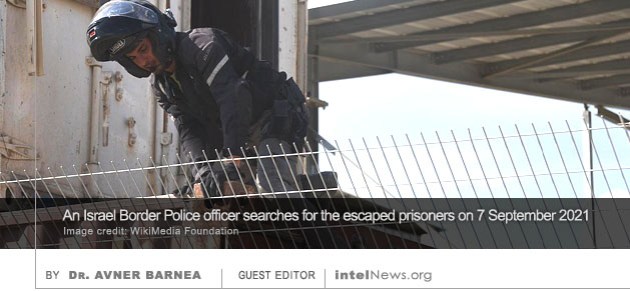
EARLIER IN SEPTEMBER, FIVE members of Palestinian Islamic Jihad and one member of Fatah escaped from the Gilboa Prison in Israel, by digging a tunnel under the prison walls. The escape was a dramatic surprise and caused wonder in the Israeli defense establishment, since the Gilboa Prison is one of the most secure prisons in the country. The Israeli police, together with the Israeli Defense Forces (IDF) and the Israeli Security Service (ISA), immediately began an intense pursuit. About five days later, four of the six men were arrested inside Israel’s borders, after they asked for assistance from Israeli Arabs, who reported them to the Police. The remaining two were arrested a week later in the city of Jenin in the Occupied Territories.

The initial investigation revealed serious misconduct in the Israel Prison Service. Following these findings, the Israeli government decided to establish a state inquiry commission headed by a judge, in order to investigate the prison break and the conduct of the Prison Service. There are already indicators showing a lack of intelligence before and after the prison break.

The Israel Prison Service has a large intelligence unit, whose main purpose is to prevent 6,500 Palestinian prisoners from escaping. In the nine months during which the tunnel was excavated, the Israel Prison Service’s intelligence unit had no information about this activity. Throughout that time, there were various indications that suspicious activity was taking place in the prison, such as blockages of the prison’s sewer pipe with sand. Also, after the six prisoners got out of the prison walls, a system of cameras and sensors did give various signals, but these failed to get the attention of the guards. Serious endemic problems have been found in the intelligence unit, which include its senior director. This individual was allegedly appointed despite having no experience in intelligence and having taken no courses on the subject. Additionally, it is alleged that he does not speak Arabic and is not acquainted with Palestinian culture and outlook.

The second intelligence issue relates to intelligence collection after the prison break. Although some of the most advanced collection tools and significant search resources were used to locate the fugitives, the information that eventually led to their capture came from human intelligence (HUMINT) —namely Israeli Arab citizens, whom the escapees met by chance and asked for help. These Israeli Arabs have demonstrated, contrary to the opinion of right-wing political elements in Israel, their loyalty to the state. Two of the fugitives managed to cross the security fence between Israel and the Occupied Territories and reached the city of Jenin. It then took only a short time for them to be caught, as the ISA has a highly efficient HUMINT system there. Additionally, the two escapees made serious errors, such as when one of them called his father on a cell phone.

Although all six fugitives were captured, they are now considered heroes on the Palestinian street, not just among Islamic Jihad and Hamas supporters.

Dr. Avner Barnea is research fellow at the National Security Studies Center of the University of Haifa in Israel. He served as a senior officer in the Israel Security Agency (ISA).

Author: Avner Barnea | Date: 24 September 2021 | Permalink

Analysis: The mysterious case of IDF ‘Officer X’ who died in an Israeli prison

Aviv Kochavi

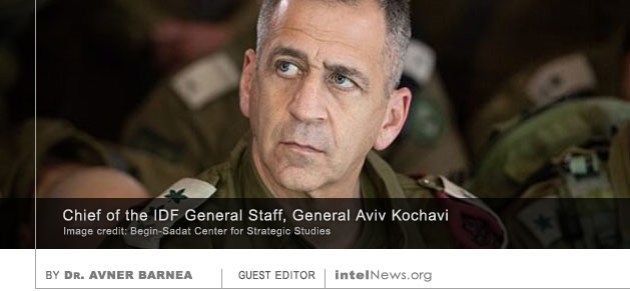
The State of Israel has been in turmoil for several weeks, after it became known that an outstanding officer in one of the elite technological units of the Israel Defense Forces (IDF) Intelligence Division (Israel Military Intelligence, or IMI) was found dead while in custody in a military prison. He had been serving an eight-month sentence on suspicion of causing serious security damage to a critical intelligence technological system. The IDF’s chief of staff, Major General Aviv Kochavi (pictured), said in relation to the case: “The officer from the IMI committed very serious offenses. He committed them on purpose, for reasons I cannot describe. He almost [revealed] a big secret and we stopped it in the [last] minute”.

After the officer’s death, it was revealed by the IDF that his arrest was not a case of treason, or espionage and that he acted for personal, rather than for ideological, nationalistic or financial motives. Following public pressure about IDF’s handling of the matter and the unclear circumstances of the officer’s death, the IDF has provided some more details.

Officer X, who, according to an American website was named Tomer Aiges, was a 25-year-old captain with three honorary awards by the IMI. He had graduated from high school while simultaneously receiving a BSc in computer sciences at the age of 18. Before enlisting in the IDF, he worked in several hi-tech companies in Israel. People who worked with him there testified that he was a young man with extraordinary technical abilities, which is why he was recruited to the technology unit of the IMI.

There are two main issues of concern among the Israeli public. One is how the officer was held in custody for a long time without being brought to trial, even though a serious indictment —the details of which are not known— was filed against him, and when no one except his parents knew about it. To the young man’s acquaintances it seemed that he had mysteriously disappeared. What is more, much of his page on Facebook was deleted and no further updates appeared following his arrest. It was reported that during his arrest, there was a process of criminal mediation, in which the State of Israel sought to sentence him to ten years in prison.

The second problematic issue concerns the circumstances of his death. There are many questions about to how he could have died when his detention cell was under non-stop surveillance by closed-circuit cameras. Further questions remain as to why the investigation into the circumstances of his death has yet to be completed. There have been demands by Israeli former intelligence officers to hand over the investigation to a civilian inquiry committee headed by a Supreme Court judge, as there is grave concern that the IDF could be hiding information that could demonstrate it was negligent in protecting the officer’s life.

The publication of additional details about this case is subject to a strict ban by the Israeli military censorship —it should be noted that Israel is the only Western country that exercises security censorship. The Israeli public is eagerly awaiting the publication of further details about the circumstances of the death of the intelligence officer, Officer X.

Dr. Avner Barnea is research fellow at the National Security Studies Center of the University of Haifa in Israel. He served as a senior officer in the Israel Security Agency (ISA).

Author: Avner Barnea | Date: 18 June 2021 | Permalink

Operation Guardian of the Walls: Israel’s double intelligence failure

Lod Israel

For several days now, a war has been going on between the State of Israel and the Hamas organization that controls the Gaza Strip. The confrontation began after unrest broke out among Palestinians in Judea and Samaria, who raised allegations of Israeli damage to the Temple Mount and the Al-Aqsa Mosque. In firing missiles at Israel, Hamas tries to portray itself as protecting the sanctuaries of Islam in Jerusalem. In doing so, it seeks to strengthen its political position in Judea and Samaria against the Palestinian Liberation Organization (PLO), which is leading the Palestinian Authority. Since then, Israel has been using airstrikes against targets in Gaza, while Hamas has been firing hundreds of missiles at Israel daily. Israel is desperately trying to undermine Hamas’ military and operational capabilities, including armaments factories, while also eliminating senior commanders of the organization.

Hamas’ missile attacks managed to surprise Israel. Israeli intelligence (the Israeli Military Intelligence, known as IMI, and the Israeli Security Agency, ISA) previously estimated that Hamas’ goal was to maintain the status quo, and was not ready to initiate attacks against Israel. Not only did Israeli intelligence err in assessing Hamas’ intentions, but Hamas Q Quotesurprised observers with its range of weapons, such as long-range missiles with a reach that is in excess of 150 miles. This constitutes a strategic surprise for Israel. So far (May 13, 2021), Hamas has fired about 1,500 missiles at Israel, most of which have been intercepted by Israel’s air defense system called the Iron Dome.

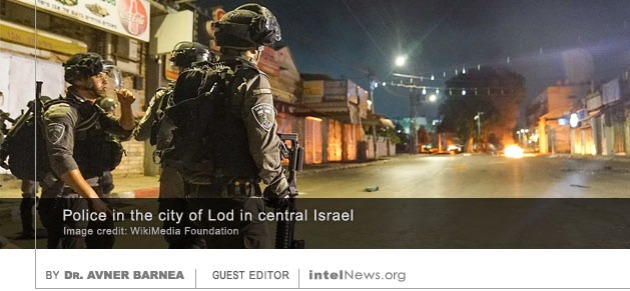
At the same time, extensive riots broke out within Israel between Palestinian Israeli Arabs and Israeli far-right groups. The attacks have spread throughout the country, and the Israeli police appear unable to control them. The ISA is responsible for monitoring terrorism-related developments in the area of political subversion, including assessing the intentions of Israeli Arabs and the level of threat posed by these intentions. It appears that the ISA, was completely surprised by recent developments. The spontaneous mobilization of Israeli Arabs stems from fears that Israel intends to harm the Temple Mount and the Al-Aqsa Mosque. It is also a form of identification with their brethren in the Gaza Strip. At present, the government of Israel has not managed to restrain the mobilization of the Israeli Arabs.

In conclusion, Israeli intelligence demonstrates two blind spots. One concerns Hamas’ intentions and offensive capabilities. The other concerns misreading the intentions and degree of threat to public order in Israel by Israeli Arabs. This is why the military clash between Israel and Hamas, as well as the riots by Israeli Arabs, have not yet ended.

Dr. Avner Barnea is research fellow at the National Security Studies Center of the University of Haifa in Israel. He served as a senior officer in the Israel Security Agency (ISA).

Author: Avner Barnea | Date: 14 May 2021 | Permalink

Opinion: Israel Security Agency should tackle organized crime in the Arab sector

Israeli policeLAST MONTH I WROTE an article on Ynet, Israel’s most popular news website, calling on the Israel Security Agency (ISA) to prevent organized crime in the Arab sector in Israel, which has reached a level that the police cannot deal with. The article caused a broad public debate in Israel, as it marked the first time that the ISA was urged to take responsibility outside its security jurisdiction. It elicited public support, as well as opposition against perceived further invasion of privacy and granting additional powers to the ISA.

Crime in the Arab sector in Israel —especially murders— has reached record highs and is rising year after year. In 2020, over 100 people were killed in the Arab sector. There are many allegations that the police are failing to stop this murky wave of crime. The police are at a loss. The opening of more police stations in the Arab sector and increases in the forces allocated to the Arab sector have not made an impact on this gloomy picture.

The most serious crime in the Arab sector, especially organized crime, requires making out-of-the-box, inventive decisions. The Israel Police is not succeeding in this for several reasons: it has no quality intelligence; there is public distrust in the police that prevents citizens from cooperating with it; the police are perceived as an unreliable body that cannot maintain the confidentiality of sources; and mainly because the police is not an intelligence-oriented organization. The issue of crime in this sector, much of which is organized, requires advanced intelligence capabilities and only the ISA knows how to deal with organizations and individuals operating in secret. This is because the ISA has gained vast experience in covering the Arab sector in Israel for counterintelligence reasons. Read more of this post

Opinion: Mishandled analysis of 1982 Tyre attack had implications for US, France

1983 Beirut barracks bombings

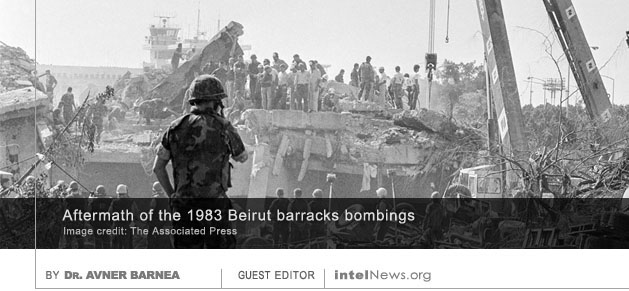
BETWEEN 1982 AND 1983, 450 defense personnel and civilians from Israel, the United States and France were killed in Lebanon as a result of four consecutive terrorist attacks conducted by Hezbollah. For years, questions have been raised whether these attacks could have been prevented.

In 2000, a senior Israel Security Agency (ISA) official wrote a report on the huge explosion in the Israeli compound in Tyre, Lebanon, in 1982. Based on the available intelligence, he reached a firm conclusion: it was a suicide bombing by a Shiite terrorist inside a booby-trapped vehicle, and not a gas balloon explosion, as was officially claimed. Requests to publish the new report with the recent conclusions were denied by ISA senior officials, for reasons that remain unknown. This prompted questions and strong doubts among counterterrorism experts and the Israeli the public, about whether the initial report from 1982 was actually a serious mistake of judgement, or even a cover-up.

Twenty years later, in November 2020, an investigative article was published in Israel by Ronen Bergman, which shed light on new details indicating a high probability that the attack in Tyre was a Hezbollah terrorist attack and not a result of an explosion of gas balloons. The article stated that in 1982 Israeli authorities, especially the ISA, were not ready to admit that their intelligence missed the attack and did not stop it in time. As a result, lessons were not learned regarding the immediate need to strengthen the security of foreign compounds in Lebanon against possible threats from Hezbollah. In 1983 Hezbollah used the same modus operandi of car bombs to attack US and French forces in Beirut and later the —then new— Israeli compound of Tyre.

Read more of this post

Opinion: Yitzhak Rabin’s assassination 25 years ago was an intelligence failure

Rabin Arafat

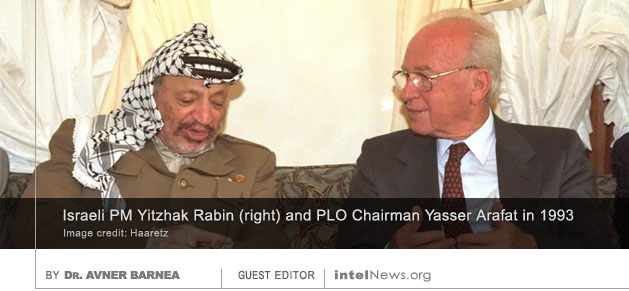
THE ASSASSINATION OF YITZHAK Rabin, Prime Minister of Israel, on the evening of November 4, 1995, by an extreme right-wing Jew was one of the most traumatic events in the history of the State of Israel. Contrary to the public perception that the assassination happened as a result of a security failure and poor management of the Israel Security Agency (ISA), I argue that the murder was mainly due to an ISA intelligence failure.

“The Shamgar Inquiry Commission”, as it was known because it was chaired by Meir Shamgar, former president of the Supreme Court, submitted its report in March 1996. This commission found significant failures in the security measures taken by the ISA to protect the late Prime Minister. But, in my opinion, its findings were seriously wrong, as it avoided diving into the major intelligence failure that led to this tragic incident.

On the evening of November 4, 1995, Israeli Prime Minister Yitzhak Rabin was killed by Yigal Amir, a 27-year-old student who was known as an extreme rightwing activist. Amir was waiting for the prime minister next to his car and shot Rabin three times from a close distance, in spite of the fact that four of Rabin’s bodyguards were surrounding the prime minister. Amir claimed to have done it “for Israel, for the people of Israel and the State of Israel”. He was found guilty and was sent to serve a life sentence in prison.

The progress in the peace process with the Palestinians, known as the Oslo Accords of 1993, allowed the political breakthrough of a peace agreement with Jordan in October 1994. Rabin was awarded the 1994 Nobel Peace Prize, along with Yasser Arafat and Shimon Peres, for their role in the creation of the Oslo Accords.

Read more of this post

Analysis: The second intifada, a spontaneous act that shocked Israelis and Palestinians

Guest Ed PostOn the 20th anniversary of the outbreak of the second intifada (October 2000), the debate arises again in Israel as to whether the Palestinian move was an initiative of Chairman Arafat and the Palestinian Authority or whether it was a spontaneous evolution on the Palestinian side that largely surprised not only Israel but also the Palestinians.

One opinion in Israel states that the intifada was the result of an initiative by the head of the Palestinian Authority, Yasser Arafat, and that Israeli intelligence knew about it in advance and warned Prime Minister Ehud Barak, who did not listen. This opinion was expressed in the memoirs of Maj. Gen. Res. Amos Gilad, formerly the head of the research division in the Israeli Military Intelligence (IMI) and former Israel Defense Forces (IDF) chief of staff, Lieutenant Gen. Res. Moshe (Boogie) Ya’alon. However, the picture presented by the two former IDF senior personalities seem to be wrong, and in this article, I’ll present another view showing that actually, the IMI (which is responsible for Israel’s national intelligence estimates), contrary to its allegation, failed to predict the Palestinian moves and did not warn the IDF and the Prime Minister to prepare for the intifada.

The different and probably correct opinion has been argued by the ISA (Israel Security Agency, known also as Shabak or the Shin Bet) former managing directors at the time, who discussed the event very openly and presented a clear conclusion: namely that Palestinian Authority Chairman Arafat did not initiate the intifada but was as much surprised by it as was Israel. The source of the views presented by ISA leaders is the book The Gatekeepers (in Hebrew) by David Moreh (2014), in which six former ISA leaders were interviewed. Among other things, the book raised the question of how the second intifada broke out. It is important to mention that there is no doubt in Israel that the ISA is the organization that has the best intelligence on the Palestinian territories. Read more of this post