Serbia recalls all staff from embassy in Macedonia, alleges espionage
August 22, 2017 1 Comment
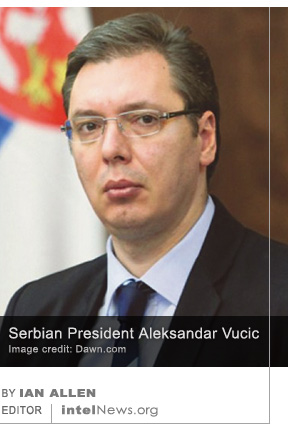 Serbia recalled its entire diplomatic staff from its embassy in the Former Yugoslav Republic of Macedonia on Monday, claiming that it wanted to protect its diplomats from “offensive intelligence activities” directed against them. The move came without warning and surprised journalists in the two former Yugoslav republics. No official reason was given for the recall on Monday morning. Later, however, Serbian President Aleksandar Vučić said that he had decided to recall the diplomats back to Belgrade due to “sufficient evidence of highly offensive intelligence activities against certain bodies and institutions in Serbia”. He did not specify what he meant, but added that the duty of the government of Serbia was to ensure that “our people be prepared and ready”.
Some reports in Macedonia media suggested that Serbia’s move was related to rumors in Skopje that the Macedonian government plans to support an expected attempt by the Republic of Kosovo to join the United Nations Educational, Scientific and Cultural Organization (UNESCO). Kosovo was a province of Serbia until 2008, when it proclaimed its independence, a move that was backed by many Western powers, including the United States. However, Serbia has not recognized Kosovo’s independence and has actively opposed Kosovo’s attempts to become a full member of international bodies. Belgrade successfully blocked Kosovo’s entry into UNESCO in 2015. At that time, the former Serbian province country did not receive enough votes to join the organization. But there are concerns in Serbia that, Kosovo might apply again this year and that this time it may be successful.
Serbia has kept a cautionary stance on the current political crisis in Macedonia, which began in 2015 when thousands of people took to the streets in Macedonian capital Skopje to protest against the conservative government of Prime Minister Nikola Gruevski. The crisis deepened in late 2016, when many intelligence officers, including a former director of the national spy service, were accused of illegally wiretapping thousands of people on orders of the government. Under growing pressure, Gruevski stepped down and was eventually replaced by the leader of the center-left opposition, Zoran Zaev, who is now prime minister. During his election campaign last spring, Zaev was critical of Serbia, which he accused of behaving nationalistically against other former Yugoslav republics.
Speaking to reporters in Belgrade on Monday, Serbia’s Minister of Foreign Affairs, Ivica Dačić, said he believed Serbian diplomatic staff would be back in Skopje by the end of August. Mr. Vucic simply commented that there was a “different, new atmosphere” in the Macedonian capital and said he hoped that the situation would become clearer in the coming days.
► Author: Ian Allen | Date: 22 August 2017 | Permalink
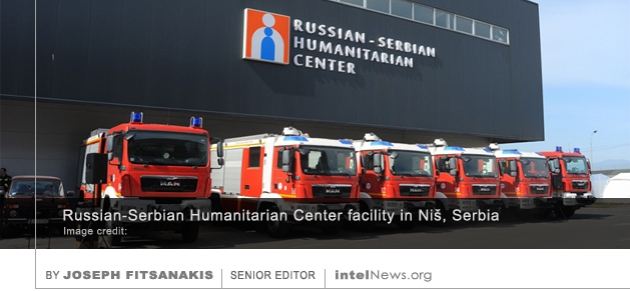 Staff at a Russian disaster relief center in southern Serbia have rejected claims by American officials that the facility operates as an espionage arm of Moscow’s foreign policy in the Balkans. The Russian-Serbian Humanitarian Center was built in 2012, at a cost of nearly $40 million, following an agreement between Belgrade and Moscow. Its
 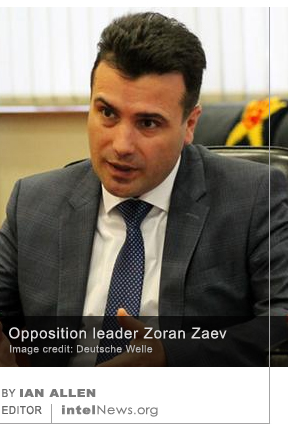 Several former and current intelligence officers, including a former director of the national spy service, have appeared in court in Macedonia, accused of illegally wiretapping thousands of people on orders of the government. The wiretap scandal has sparked the deepest political crisis in the impoverished Balkan country, which has existed since declaring independence from Yugoslavia in 1991.
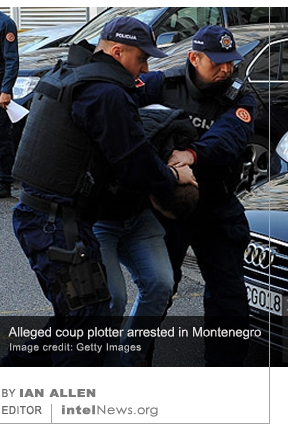 Authorities in the former Yugoslav Republic of Montenegro say that “nationalists from Russia” and Serbia were behind a failed plot to kill the country’s prime minister and spark a pro-Russian coup in the country. As intelNews
 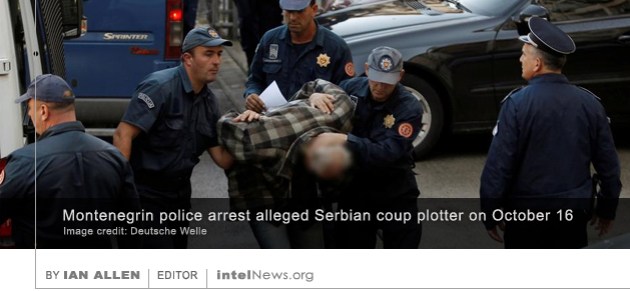 A weapons cache that was found buried last week near the apartment of Serbia’s prime minister has fuelled tensions in the Balkan country, amid rumors that a failed coup in neighboring Montenegro was planned in Serbia by Russian spies. Serbian authorities announced the discovery of the stockpile on October 29; it included ammunition, hand grenades and a portable missile launcher and was located near the residence of Prime Minister Aleksandar Vučić. The government later said that the weapons find dated back to the Balkan wars of the 1990s and was not connected with at Vučić’s administration. But politics in the country remain tense, following allegations made earlier in October that Russian intelligence agents used Serbia as a base to plan a military coup in Montenegro.
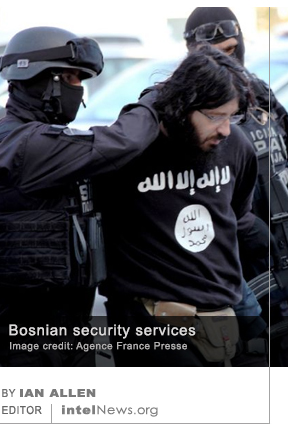 Authorities in Bosnia and Herzegovina have announced the arrest of several people on suspicion of having direct links with the Islamic State and other militant groups fighting in Iraq and Syria. At least 11 people were arrested by police in simultaneous raids at a number of locations on Tuesday, including businesses and private homes, across the Bosnian capital Sarajevo. A police spokeswoman said the eleven men had been charged with having links to terrorist groups, financing terrorist groups, or inciting and helping organize criminal acts. A number of them were also charged with recruiting young men and women to join militant groups in Syria and Iraq, she said.







 intelNews.org
Montenegro seeks arrest of ex-CIA officer accused of role in pro-Russian coup
August 13, 2018 by Joseph Fitsanakis Leave a comment
Russia has vehemently denied the allegations. But in March of last year, the then British foreign secretary Boris Johnson appeared to validate the Montenegrin government’s allegations. Since then, a sensational trial has been taking place in the Montenegrin capital Podgorica of the 20 men who were arrested in October 2016, in addition to two Russians who are being tried in absentia. During the trial, prosecutors fingered Joseph Assad, a former CIA officer, as a co-conspirator in the coup plot. The Egyptian-born Assad served as a counter-terrorism expert in the CIA after arriving in the US in 1990, but eventually left the agency to launch his own security firm. It is believed that at the time of the alleged coup plot, Assad’s firm was employed by Aron Shaviv, a political strategist connected with the Democratic Front, a vocal pro-Russian opposition party in Montenegro. Shaviv, who has joint British and Israeli citizenship, said he hired Assad’s firm to provide counter-surveillance against Montenegro’s security services. According to Shaviv, the Montenegrin authorities spied on him and harassed him because of his connections to a domestic political party that is seen as pro-Russian.
But prosecutors in the trial of the alleged coup plotters claim that Assad’s role was to organize and provide escape routes and methods for the coup plotters. In light of these allegations, a warrant has been issued for Assad, accusing him of “operating a criminal enterprise”, according to Britain’s Guardian newspaper. Assad has rejected the charges as a “deception campaign”. In a statement issued on Saturday, he said he was “a loyal American who had no role in any crimes or coup in Montenegro”. Meanwhile, the Democratic Front and a number of other opposition parties in Montenegro denounced the government’s claims of a failed coup as “publicity stunts” aimed at distracting the country’s citizens from the state of the economy and other domestic concerns.
► Author: Joseph Fitsanakis | Date: 13 August 2018 | Permalink
Filed under Expert news and commentary on intelligence, espionage, spies and spying Tagged with assassinations, Balkans, CIA, coup plots, Joseph Assad, Milo Đukanović, Montenegro, News, Russia