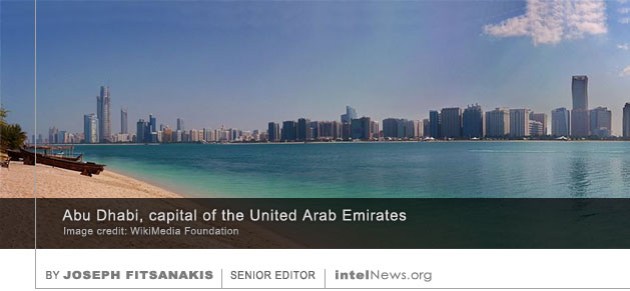
 The embassy of the United States in the United Arab Emirates declined free COVID-19 testing kits for its staff, because of concerns that the private labs offering the kits had ties to China, according to a new report. The testing kits were offered by a testing facility that was set up in March in Abu Dhabi, which is the capital of the oil-rich UAE —a close American ally in the Middle East.
The facility was built in record time, through a collaboration between two private companies. The main partner in the scheme is Group42, a privately owned artificial intelligence firm, which is based in the UAE and is believed to be partly owned by members of the kingdom’s royal family. Its partner in the venture is BGI Group, a Chinese company —formerly known as the Beijing Genomics Group— that specializes in genomics research. Since its establishment, the facility has reportedly delivered over 2 million COVID-19 testing kits —complete with reagents— for the population of the UAE, which numbers just over 9 million. Given these numbers, local officials have hailed the initiative as a success and credit it with having produced “one of the largest per capita testing rates in the world”. The oil-rich kingdom has so far reported about 36,000 confirmed coronavirus cases, which have resulted in 270 deaths —about 2.5 deaths per 100,000 UAE residents.
But, according to The Financial Times, the United States embassy in Abu Dhabi turned down an offer for free COVID-19 testing kits for its employees by Group42. The paper quoted an anonymous United States government official, who said that the offer was “politely declined” last month by the embassy leadership. American State Department officials were allegedly concerned that the DNA information of tested embassy employees could be compromised and “find its way to Beijing”, said the source. “Concerns were raised about patient privacy and the way that the tests could be used”, added the official, and described the involvement of BGI in the venture as “a red flag” for Washington.
BGI Group told the paper that it had no links to the government of China and no access to the data of patients, which were stored in Group42 facilities in the Emirates. The UAE-based company said that it followed “strict information security and data privacy protocols are in place” to protect sensitive information. The firm refused to divulge information about its owners, citing strict laws that are in place in the kingdom.
But the incident illustrates the growing suspicion in relations between the US and China. This poses difficult dilemmas for third countries, like the UAE. The oil-rich state is among several monarchies in the Gulf that have deepened their relations with China in recent years, in both the political and economic domains. Since 2000, the value of bilateral trade between Abu Dhabi and Beijing has grown from $2 billion to nearly $70 billion per year. At the same time, the UAE is one of the largest purchasers of US military technology in the world. The oil-rich monarchy spends on average $3 billion annually to acquire American weapons. Recently, however, Abu Dhabi has shown an increasing interest in Chinese-made weapons. Its armed forces and police departments now use several Chinese weapons and surveillance systems. At the same time, Huawei, a Chinese-owned telecommunications hardware producer, is scheduled to build the nation’s 5G cellular network. Washington has expressed serious concerns about that decision.
Speaking to The Financial Times, the anonymous US government official said that these steps by the UAE leadership, which are bringing it closer to China, “risk rupturing the long-term strategic relationship [the country has] with the US”.
► Author: Joseph Fitsanakis | Date: 04 June 2020 | Permalink
 • French forces kill al-Qaeda head and capture ISIS leader in Mali. In the past few days, the French military successfully conducted two key operations in the Sahel, killing the emir of al-Qaeda in the Islamic Maghreb (AQMI), Abdelmalek Droukdal, and capturing Mohamed el Mrabat, a leader of the Islamic State in the Greater Sahara (EIGS) group. The US military assisted the French special operations forces by providing intelligence that helped locate the target.
 •
• 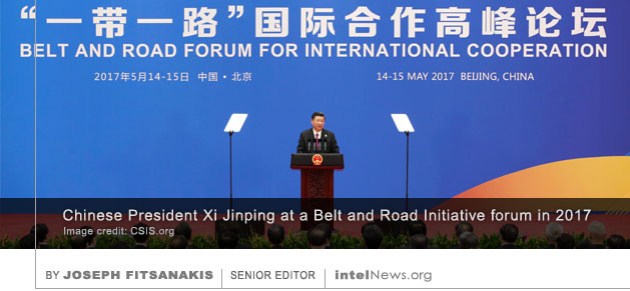 The United States has warned that it might be forced to stop sharing intelligence with Australia if the country’s second most populous state enters into a much-heralded investment agreement with China. The Australian state of Victoria has said it intends to join Beijing’s Belt and Road Initiative, a worldwide investment venture that was announced with much fanfare by Chinese President Xi Jinping in 2013.
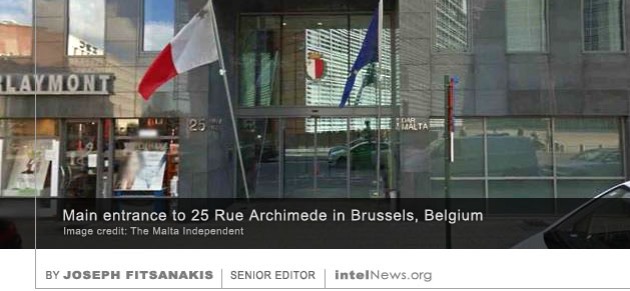 The Maltese government has strongly denied allegations, made by a leading French newspaper, that the island nation’s embassy in Brussels is being used by China to spy on European Union institutions. The allegations concern a nine-story building located at 25 Rue Archimede, in one of downtown Brussels’ most desirable areas. The building houses the Embassy of Malta in Belgium, as well as Malta’s Permanent Representation to the European Union. It is conveniently located across the street from Le Berlaymont —the headquarters of the European Commission, which is the European Union’s executive branch. It is also around the corner from the headquarters of the European Council, which operates as the collective presidency of the European Union.
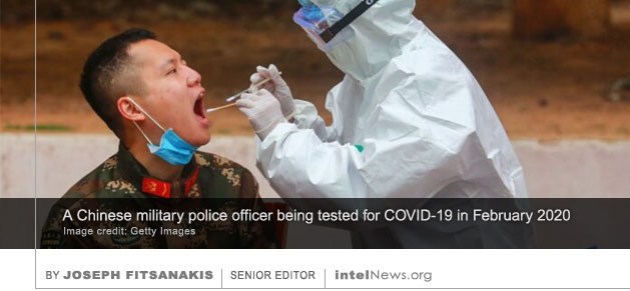 In a rare public statement, the Intelligence Community of the United States has said that the novel coronavirus “was not manmade or genetically modified”. The statement was issued on Thursday by the Office of the Director of National Intelligence, which manages the US National Intelligence Program and whose director serves as the country’s most senior intelligence officer.
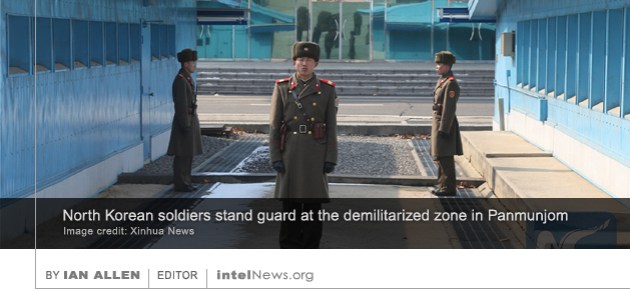 Officials in South Korea and China have cast doubt on rumors circulating in recent days that North Korean Supreme Leader Kim Jong-un may be dead or close to dying. The rumors about Kim’s demise began to circulate on April 15, when the North Korean leader failed to participate at an official ceremony held to mark the birthday of his grandfather. Known as the Day of the Sun —a public holiday in North Korea— the annual event commemorates the birth of the country’s founder, Kim il-Sung.
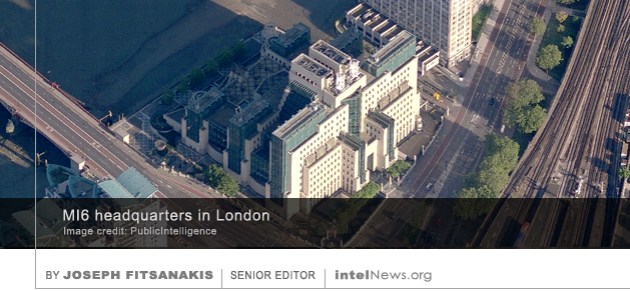 British intelligence agencies are advising policymakers that China will become “more assertive” after the world emerges from the coronavirus pandemic, while some government officials are urging a re-examination of London’s relationship with Beijing.
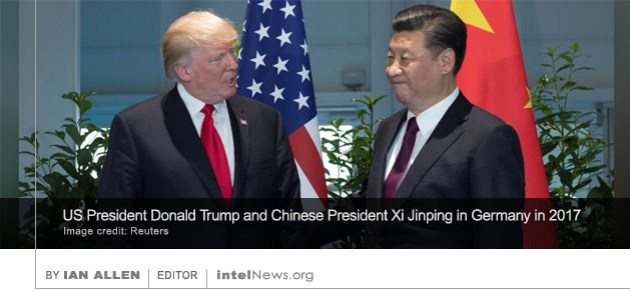 The United States Intelligence Community has concluded that the Chinese government intentionally withheld and even fabricated crucial data about infections and deaths from COVID-19, according to reports. Consequently, the official numbers relating to the novel coronavirus outbreak in China allegedly represent a considerable under-reporting of both total cases and total deaths.
 The administration of United States President Donald Trump is considering the possibility of expelling from the country dozens of Chinese diplomats, journalists, and others, who are believed to be undercover spies. The expulsions relate to a spiraling information war between Washington and Beijing, which has erupted in recent weeks as a result of the COVID-19 pandemic.
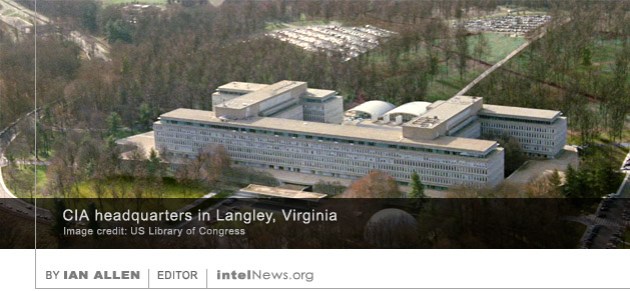 A leading Chinese cybersecurity firm has accused the United States Central Intelligence Agency of using sophisticated malicious software to hack into computers belonging to the Chinese government and private sector for over a decade.
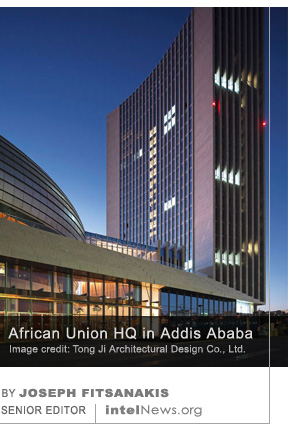 The United States has threatened to pull its funding for an Africa-wide disease control program if the African Union decides to accept an offer from China to build the program’s new headquarters. The dispute accentuates a growing competition between Washington and Beijing to exert political control in Africa and places the African Union at the center of a difficult dilemma.
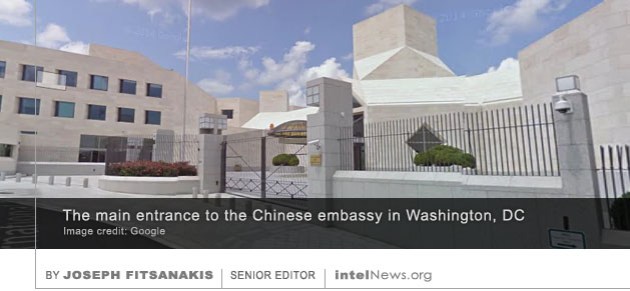 The United States quietly expelled two Chinese diplomats in October of this year, a move that neither Washington nor Beijing chose to make public, according to a report published on Sunday. If true, the incident would signify the first known expulsions of Chinese diplomatic personnel from the US since 1987.






 intelNews.org
Russia accuses its top Arctic scientist of giving China submarine secrets
June 16, 2020 by Joseph Fitsanakis Leave a comment
The scientist in question is Dr. Valery Mitko, a St. Petersburgh-based hydroacoustics researcher, who is also president of Russia’s Arctic Academy of Sciences. Investigators with the Federal Security Service (FSB), Russia’s domestic security and counterintelligence agency, are accusing Dr. Mitko, 78, of having provided classified documents to Chinese intelligence.
The FSB first detained Dr. Mitko in February, when he returned from a stint as a visiting professor at Dalian Maritime University. Located in China’s northeastern Liaoning province, near the North Korean border, Dalian Maritime University is considered China’s foremost higher-education institution on maritime subjects, with many of its research projects funded directly by the Chinese Ministry of Transport. According to sources, Dr. Mitko gave a series of lectures at Dalian University in early 2018.
Upon arriving back to Russia from China, Dr. Mitko was detained and placed under house arrest. The FSB now claims that the Russian scientist gave the Chinese classified information relating to the underwater detection of submarines. The agency alleges that Dr. Mitko received payments in return for sharing this information with Chinese spies. However, Dr. Mitko’s lawyers argue that the information he shared with the Chinese “came from open sources”, and that he never knowingly came in contact with Chinese intelligence operatives.
There have been several arrests of Russian academics in recent years, who have been accused by the FSB of providing China with classified information. Last week saw the release from prison of Vladimir Lapygin, a 79-year-old avionics researchers, who was jailed in 2016 for allegedly giving China classified information on Russian hypersonic aircraft designs. In 2018, Russian authorities charged Viktor Kudryavtsev, a researcher at a Russian institute specializing in rocket- and spacecraft design, with passing secret information on spacecraft to researchers at the Von Karman Institute for Fluid Dynamics in Belgium. The FSB claimed that some of that information ended up in Chinese hands.
If convicted of the crime of espionage against the Russian state, Dr. Mitko faces a prison sentence of up to 20 years. He denies the charges against him.
► Author: Joseph Fitsanakis | Date: 16 June 2020 | Permalink
Filed under Expert news and commentary on intelligence, espionage, spies and spying Tagged with China, espionage, News, Russia, scientific intelligence, Valery Mitko, Viktor Kudryavtsev, Vladimir Lapygin