Trump administration considering mass expulsions of alleged Chinese spies
March 27, 2020 3 Comments
 The administration of United States President Donald Trump is considering the possibility of expelling from the country dozens of Chinese diplomats, journalists, and others, who are believed to be undercover spies. The expulsions relate to a spiraling information war between Washington and Beijing, which has erupted in recent weeks as a result of the COVID-19 pandemic.
Earlier this month, the Chinese government announced that it would expel 13 American journalists from three major newspapers, The Wall Street Journal, The New York Times and The Washington Post. Beijing also stipulated that all American news organizations operating in China had to provide its government with detailed information about their financial assets, employee structure and other organizational information. The journalists claimed that they were expelled for trying to report about the status of the COVID-19 pandemic inside China.
Around the same time, President Trump and senior members of his administration, including Secretary of State Mike Pompeo, began referring to the severe acute respiratory syndrome coronavirus 2 (SARS-CoV-2, known as novel coronavirus) as “the Chinese virus” or “the Wuhan virus”. The term refers to the Chinese province where the virus is believed to have originated. President Trump claims that he decided to use the term “Chinese virus” in response to unsubstantiated claims by government officials in Beijing that the novel coronavirus was brought to China by members of the US military.
On Thursday The New York Times reported that the Trump administration was considering expelling from the US a large number of Chinese citizens who work as diplomats or journalists. In some cases, the White House is reportedly considering shutting down the bureaus of some Chinese media outlets in the US. According to a number of administration officials, many Chinese journalists based in the US are in reality undercover intelligence officers, who regularly report to the Ministry of State Security —China’s primary external intelligence agency. Some of these alleged undercover intelligence officers —known in the world of intelligence as ‘non-official cover’— are allegedly embedded with China Global Television Network, the foreign-language arm of the state-owned China Central Television (CCTV), according to some American officials.
On March 2, the Trump administration abruptly imposed quotas on the number of foreign citizens who are permitted to work for Chinese media organizations in the US. The Chinese media groups complied with the new directive in a timely manner, by recalling over 60 of their staff members to China. However, the White House now believes that a significant number of the 100 Chinese journalists who continue to operate in the US are undercover intelligence officers.
Meanwhile, on March 25, China’s English-language government-owned newspaper The Global Times raised eyebrows by repeating allegations that the novel coronavirus was brought to China by an American cyclist, who visited Wuhan in October of last year to compete in the Military World Games. Such allegations, which propagate the view that the novel coronavirus originated in the US, are quickly growing in popularity in Chinese social media platforms.
► Author: Joseph Fitsanakis | Date: 27 March 2020 | Permalink
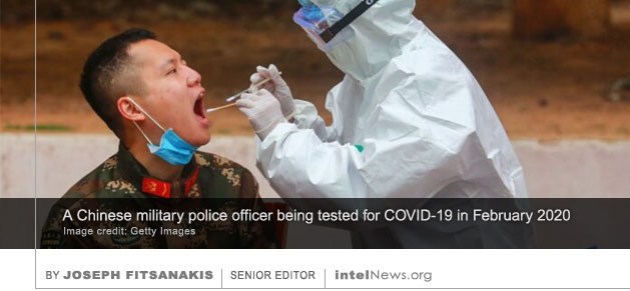 Military forces around the world are scrambling to contain the impact of COVID-19 on military readiness, as the virus continues to infect troops and commanders at an alarming rate. On Tuesday, the Polish government
 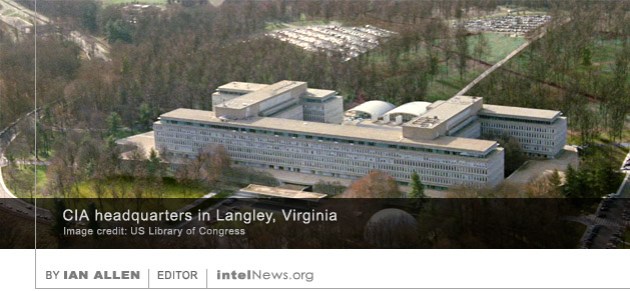 A leading Chinese cybersecurity firm has accused the United States Central Intelligence Agency of using sophisticated malicious software to hack into computers belonging to the Chinese government and private sector for over a decade.
 The United States has threatened to pull its funding for an Africa-wide disease control program if the African Union decides to accept an offer from China to build the program’s new headquarters. The dispute accentuates a growing competition between Washington and Beijing to exert political control in Africa and places the African Union at the center of a difficult dilemma.
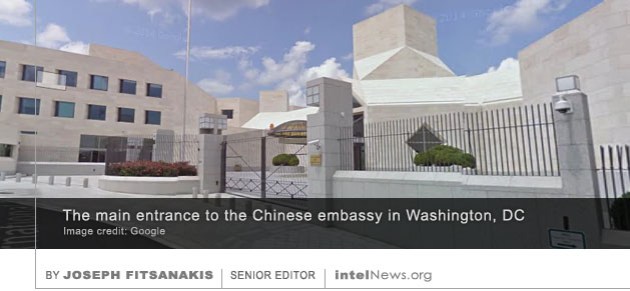 The United States quietly expelled two Chinese diplomats in October of this year, a move that neither Washington nor Beijing chose to make public, according to a report published on Sunday. If true, the incident would signify the first known expulsions of Chinese diplomatic personnel from the US since 1987.
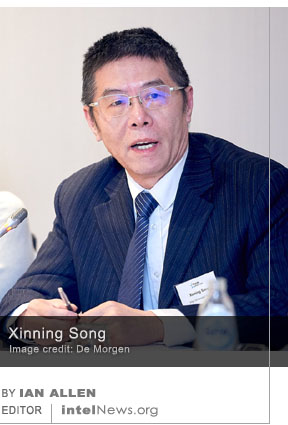 One of Belgium’s leading universities has decided to shut down a research institute funded by the Chinese government, after the Belgian intelligence service accused its director of spying on behalf of Beijing. The news was
  As the Australian government has launched an official investigation into the claims made by a self-styled Chinese intelligence defector, some skeptics have begun to cast doubts about his revelations. The claims of Wang “William” Liqiang have dominated news headlines in Australia for over a week. The 26-year-old from China’s eastern Fujian province reportedly defected to Australia in October, while visiting his wife and newborn son in Sydney. He is currently reported to be in a safe house belonging to the Australian Security Intelligence Organization (ASIO).
 A Chinese intelligence defector has reportedly given the Australian government information about entire networks of Chinese undercover spies in Hong Kong, Taiwan and Australia, according to reports. The story of Wang “William” Liqiang, made headlines all over Australia during the weekend, culminating in an entire
 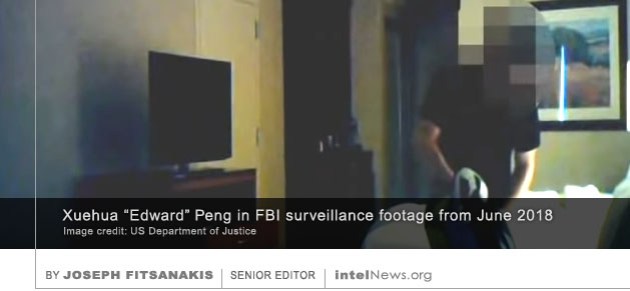 The United States has pressed espionage charges against a naturalized American citizen who operated as a courier for Chinese intelligence while working as a tour operator in California. On Monday federal prosecutors in San Francisco filed espionage charges against Xuehua “Edward” Peng, a 56-year-old Chinese-born American citizen. Peng, a trained mechanical engineer, reportedly entered the United States in June 2001 on a temporary visa. In 2012 he became a naturalized American citizen. By that time he was working for US Tour and Travel, an independent tour operator in California.
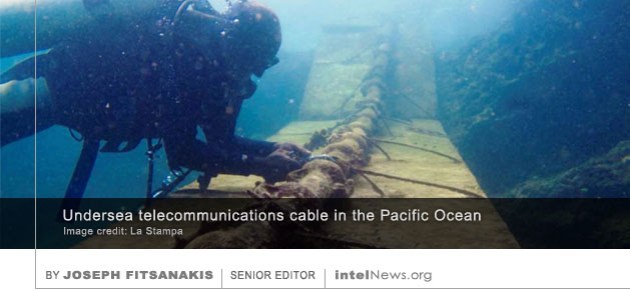 In a move observers describe as unprecedented, a United States government regulator is preparing to recommend blocking the construction of an 8,000-mile long undersea cable linking America with China, allegedly due to national security concerns. Washington has never before halted the construction of undersea cables, which form the global backbone of the Internet by facilitating nearly 100% of Internet traffic. Much of the undersea cable network is in the process of being replaced by modern optical cables that can facilitate faster Internet-based communications than ever before.
 A Swiss court has ordered the extradition to the United States of the brother of one of the world’s leading biochemists, who spied on a British pharmaceutical firm to help a Chinese startup. The extradition is part of a large corporate espionage case centered on Yu Xue, a Chinese scientist described by US federal prosecutors as “one of the world’s top protein biochemists”. Yu specializes in drug research for cancer and other serious terminal illnesses. From 2006 until 2016 he worked in the US for GlaxoSmithKline (GSK), a leading British pharmaceutical group.
 The Polish government has authorized the release on bail of a former counterintelligence officer who was charged in January of this year with spying for China. The man has been identified in media reports as Piotr Durbajlo and is believed to have served as deputy director of the Internal Security Agency, Poland’s domestic counterintelligence service. A cyber security expert, Durbajlo also served in Poland’s Office of Electronic Communications with a top security clearance and unrestricted access to classified systems of Poland and the North Atlantic Treaty Organization, of which Poland is a member.
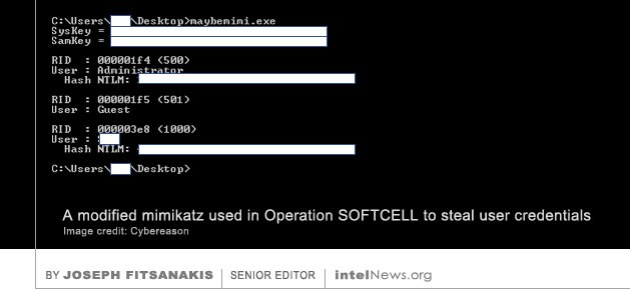 A hacker attack of impressive magnitude targeted specific individuals of interest to the Chinese government as they moved around the world, in what appears to be the first such operation in the history of cyberespionage. The attack was revealed late last month by Cybereason, an American cybersecurity firm based in Boston, Massachusetts. Company experts








US spy agencies conclude China intentionally concealed COVID-19 data
April 2, 2020 by Ian Allen 2 Comments
This claim was published on Wednesday on the website of the American news agency Bloomberg. The news agency cited “three [anonymous] US officials” in its report. The officials said that a summary of the evidence against China had been communicated to the White House in a classified report. The classified report is believed to conclude that the official Chinese numbers about COVID-19 are “intentionally incomplete”.
The claims against China include the accusation that the government in Beijing repeatedly changed the methodology it used to record and track cases —for instance by excluding asymptomatic COVID-19 carriers from the list for several months. There are also claims that the number of deaths owing to the virus may be much higher than official statistics show. This could be especially true in the city of Wuhan, in China’s east-central Hubei province, where the novel coronavirus is believed to have originated.
The embassy of China in Washington DC and the White House did not respond to questions about Bloomberg’s report on Wednesday. However, a number of pro-government media executives in China expressed concern in a Business Insider report late on Wednesday that the White House would try to exploit the Bloomberg report in order to “divert attention” from its own failures in preventing a surge of COVID-19 in America. They also claimed that China mobilized its health sector in a far more effective way than the US has done so far.
► Author: Ian Allen | Date: 02 April 2020 | Permalink
Filed under Expert news and commentary on intelligence, espionage, spies and spying Tagged with China, Coronavirus, COVID-19, disease intelligence, News, United States