US warns Germany it will end intelligence sharing if Huawei is given 5G contract
March 12, 2019 3 Comments
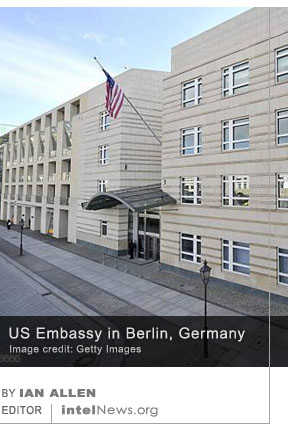 The United States has warned Germany that intelligence sharing between the two countries will be threatened if the Chinese telecommunications giant Huawei is awarded a contract to build Germany’s 5G network. The company, Huawei Technologies, is a private Chinese venture and one of the world’s leading telecommunications hardware manufacturers. In recent years, however, it has come under scrutiny by some Western intelligence agencies, who view it as being too close to the Communist Party of China. More recently, Washington has intensified an international campaign to limit Huawei’s ability to build the infrastructure for 5G, the world’s next-generation wireless network. Along with Britain, Australia and Canada, the US is concerned that the Chinese telecommunications giant may facilitate global wiretapping on behalf of Beijing’s spy agencies.
But some American allies, including Spain, France and Germany, are not satisfied with Washington’s arguments and claim that the United States is eyeing the financial benefits that would arguably come from its domination of the global digital superhighway. German officials, in particular, have told their American counterparts that Berlin has not seen any evidence that Huawei’s telecommunications hardware come with hidden interception features. Moreover, Germany says that it plans to subject Huawei’s systems to rigorous security tests before using them. On Friday, Washington increased its pressure on Berlin by informing German officials that intelligence cooperation between the two allies would be severely impacted if Chinese telecommunications manufacturers are given the green light to build Germany’s 5G infrastructure.
According to The Wall Street Journal, the warning was included in a letter signed by Ambassador Richard Grenell, America’s top diplomat in Germany. It was allegedly sent to Peter Altmaier, Germany’s Minister of Economic Affairs and Energy. The paper says that Grenell suggests in his letter that Berlin should consider rival bids by companies belonging to American allies, such as the Swedish telecommunications equipment manufacturer Ericsson, Finland’s Nokia Corporation, or the South Korean Samsung Corporation, which is the world’s leading telecommunications hardware manufacturer. The Wall Street Journal did not reveal how it acquired Grenell’s letter, nor did it say whether the German government responded to it.
► Author: Ian Allen | Date: 12 March 2019 | Permalink
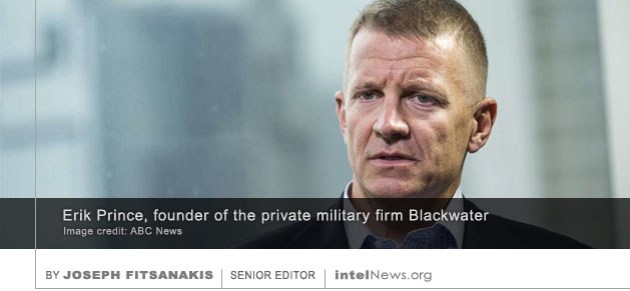 A security firm founded by Erik Prince, the former boss of the private military company Blackwater, has announced a deal with the Chinese state to operate a training facility in China’s largely Muslim Xinjiang province. In the months following the United States invasion of Iraq, Blackwater was hired by the Department of State to provide diplomatic security at several locations throughout the Middle Eastern country. By 2010, when the company was abruptly sold to a group of private investors, its tactics in Iraq had prompted international controversy. Prince went on to help found Frontier Services Group (FSG), another private security firm registered in Hong Kong. The company provides security training to personnel working for Chinese companies. Its specialization is training personnel of Chinese firms based abroad, mainly in regions of Africa.
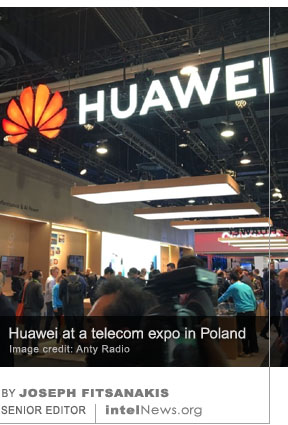 The Chinese telecommunications giant Huawei has fired one of its employees who was arrested last week in Poland on charges of spying for China,
  A group of hackers, allegedly working for the Chinese military, accessed thousands of classified diplomatic cables from the European Union during a protracted cyber-espionage operation, a report has revealed. Over 100 organizations are believed to have been targeted in the multi-year cyber-espionage campaign, including the United Nations, international labor groups, as well as government ministries from dozens of countries. The operation was revealed on Tuesday by Area 1, a cyber-security company founded by former officials of the United States National Security Agency, and
 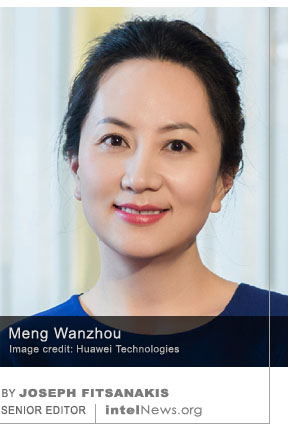 The daughter of the founder of Huawei Technologies, one of the world’s leading telecommunications hardware manufacturers, has been arrested in Canada, reportedly at the request of the United States. Meng Wanzhou (pictured, also known as Sabrina Meng) serves as Huawei’s deputy chair and chief financial officer. She is the daughter of Ren Zhengfei a former officer in the Chinese People’s Liberation Army, who established the company in 1988 and has since amassed a personal fortune estimated at $3.5 billion. By virtue of her family background and position in Huawei, Meng is often
  The United States government plan to impose tighter visa restrictions and wider background checks on Chinese nationals studying at American universities, over espionage concerns. The news follows reports earlier this year that the administration of US President Donald Trump considered banning all Chinese nationals from studying at American universities. In October of this year, The Financial Times
 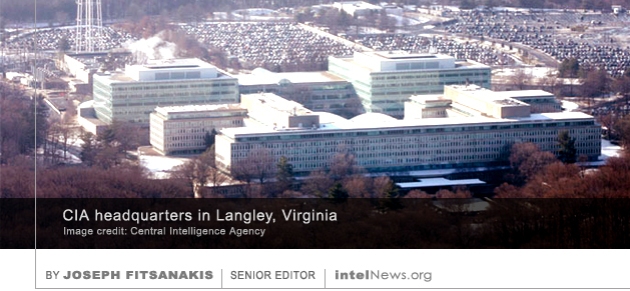 The United States Central Intelligence Agency suffered a “catastrophic” compromise of the system it uses to communicate with spies, which caused the death of “dozens of people around the world” according to sources. This is alleged in a
  A French government report warns of an “unprecedented threat” to security after nearly 4,000 leading French civil servants, scientists and senior executives were found to have been accosted by Chinese spies using the popular social media network LinkedIn. The report was authored by France’s main intelligence agencies, the General Directorate for Internal Security (DGSI) and the General Directorate for External Security (DGSE). According to the Paris-based Le Figaro newspaper, which
 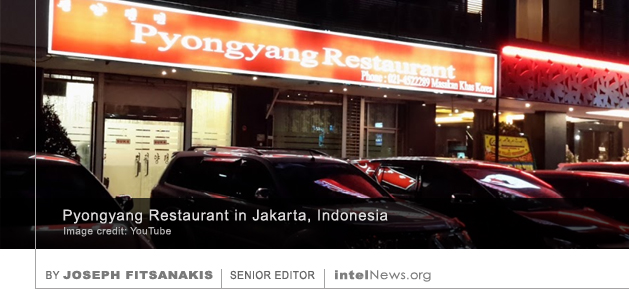 A group of 12 female North Korean restaurant workers and their male manager claim that their widely advertised defections in 2016 were fake, and that they were in fact abducted by South Korea’s spy services. The North Korean government maintains a chain of North Korea-themed restaurants throughout Asia, which operate as popular tourist attractions across Southeast Asia. The state-owned restaurants help provide the cash-strapped regime in Pyongyang with desperately needed foreign funds. The North Korean staff —almost all of them female— who work at these restaurants are carefully vetted and chosen to represent the reclusive regime abroad. Some observers
 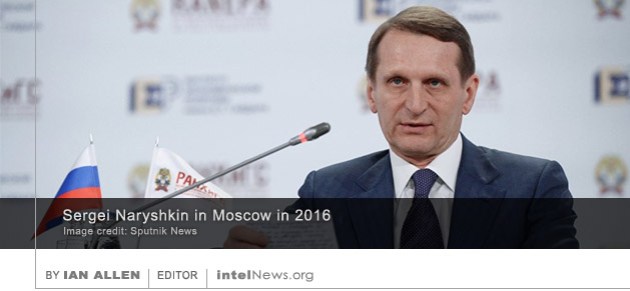 Intelligence directors from Russia, China, Iran and Pakistan met on Tuesday to discuss regional cooperation with particular reference to combating the Islamic State in Afghanistan. Information about the high-level meeting was
 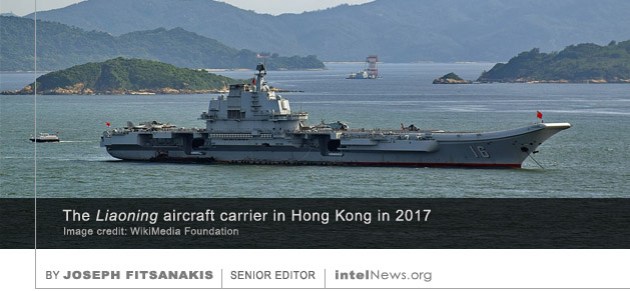 One of China’s most senior shipbuilding executives, who has not been seen in public for nearly two weeks, has been charged with giving secrets about China’s aircraft carriers to the United States. Sun Bo, 57, is general manager of the China Shipbuilding Industry Corporation (CSIC), China’s largest state-owned maritime manufacturer, which leads nearly every major shipbuilding project of the Chinese navy. Most notably, Sun headed the decade-long retrofitting of the Liaoning, a Soviet-built aircraft carrier that was commissioned to the Chinese Navy’s Surface Force after the collapse of the Soviet Union.
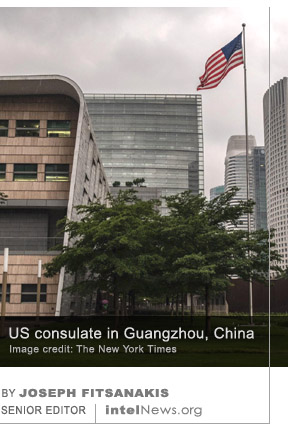 The United States has evacuated at least two more diplomatic personnel from its consulate in the Chinese city of Guangzhou, after they experienced “unusual acute auditory or sensory phenomena” and “unusual sounds or piercing noises”. The latest evacuations come two weeks after the US Department of State
  The online social media company Facebook shares data about its users with a Chinese telecommunications company that has been flagged in United States government reports as a threat to security. The New York Times








US prosecutors to use secret surveillance evidence in Huawei lawsuit
April 5, 2019 by Ian Allen 1 Comment
In a lawsuit brought by US government prosecu- tors against Huawei, the Chinese telecom- munications firm is accused of having conspired to defraud several multinational banks by misrepresenting its relationship with a company called Skykom Tech. Washington says that the company is in fact a front used to conceal illicit activities conducted by the Islamic Republic of Iran. American government prosecutors claim that Huawei worked with Skykom Tech to evade US-imposed economic sanctions on Iran. At a Thursday morning hearing in a federal court in Brooklyn, New York, Assistant US Attorney Alex Solomon said that US authorities had used “secret surveillance” to collect evidence against Huawei. He also said that the evidence had been obtained under a US Foreign Intelligence Surveillance Act (FISA) warrant, which is issued by a secret court and usually pertains to counterintelligence investigations —i.e. when a target is suspected of spying against the US.
Solomon said that the evidence against Huawei was “obtained […] from electronic surveillance and physical search”. He did not elaborate, but added that US government’s legal team had notified Huawei that it planned to use the FISA evidence in court. Last month Huawei rejected all charges filed against it. The company has not yet commented on the FISA evidence. The next date in the court case has been scheduled for June 19, 2019.
► Author: Ian Allen | Date: 05 April 2019 | Permalink
Filed under Expert news and commentary on intelligence, espionage, spies and spying Tagged with Alex Solomon, Canada, China, Foreign Intelligence Surveillance Act, Huawei Technologies, Iran, lawsuits, Meng Wanzhou, News, Skykom Tech, United States