France arrests two intelligence officers on charges of spying for China
May 28, 2018 2 Comments
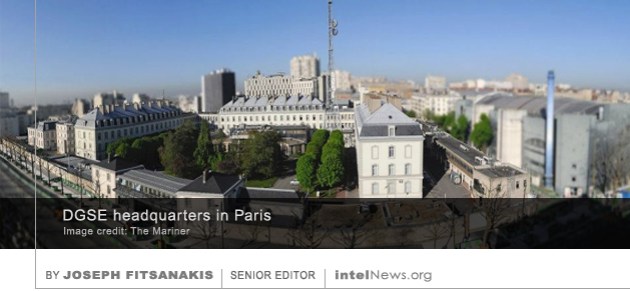 France has confirmed the arrest of two French intelligence officers who are accused of spying for the Chinese government. It appears that the two officers were captured and charged in December. However, their arrests were not publicized at the time, because French counterintelligence officials wanted to avoid alerting more members of a possible spy ring, which some say may include up to five French citizens. It was only last Friday, a day after French media published leaked reports of the arrests, that the French government spoke publicly about the case.
France’s Minister of the Armed Forces, Florence Parly, told France’s CNews television on Friday that two French intelligence officers were “accused of extremely serious acts of treason” against the French state. The two officers had been charged with delivering classified information to a foreign power”, she said. Parly added that the spouse of one of the officers was also being investigated for participating in acts of espionage on behalf of a foreign country. When asked to identify the country that the two officers are accused of spying for, the minister refused to respond. But the Agence France Presse news agency cited an anonymous “security source”, who said that the two intelligence officers were being suspected of spying for China and that they had been captured following a sting operation by French counterintelligence officers.
French television station TFI1 said on Friday that both spy suspects are officers in the General Directorate of External Security (DGSE), France’s primary external intelligence agency. The station added that at least one of the two suspects was stationed at the embassy of France in Beijing when French counterintelligence became aware of the alleged espionage. According to some reports, the two suspects had retired from the DGSE by the time they were arrested, but committed their alleged espionage while still in the service of the spy agency. French government officials have refused to provide information about the length of the alleged espionage or the nature of the classified information believed to have been compromised. Additionally, no information is available about whether the two alleged spies were working in cooperation with each other. The BBC asked China last week about the arrests in France, but the Chinese Ministry of Foreign Affairs said it was not aware of the incident.
► Author: Joseph Fitsanakis | Date: 28 May 2018 | Research credit: E.W. and P.C. | Permalink
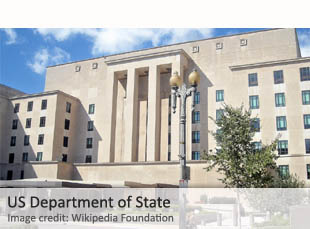 The United States Department of State has warned its personnel stationed in China of the danger of experiencing “unusual acute auditory or sensory phenomena accompanied by unusual sounds or piercing noises”. The warning, issued on May 23, has prompted comparisons to similar phenomena that were reported by US diplomatic personnel in Cuba in 2016. Last September, Washington recalled the majority of its personnel from its embassy in Havana and issued a
 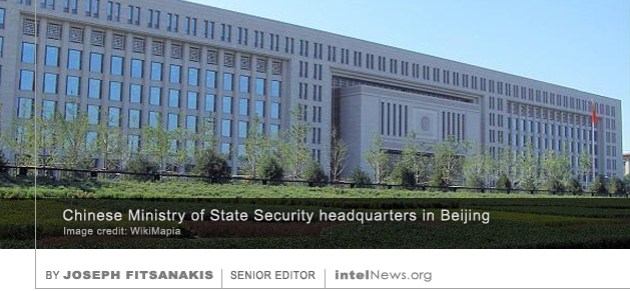 Chinese intelligence operatives gave a former officer of the United States Central Intelligence Agency “hundreds of thousands of dollars in cash” in exchange for carrying out espionage, according to court papers. The Federal Bureau of Investigation
  A case officer in the United States Central Intelligence Agency, who was arrested in January of this year for violating the Espionage Act, shared classified information with China, according to an official indictment. The Federal Bureau of Investigation
 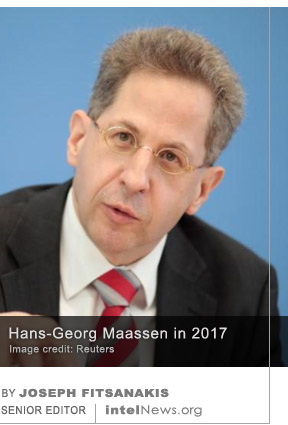 The head of Germany’s domestic intelligence agency has warned of security risks resulting from Chinese direct investment in high-technology German and other European companies. Since 2012, Hans-Georg Maassen has served as director of the Federal Office for the Protection of the Constitution, Germany’s domestic security and counterintelligence agency.
 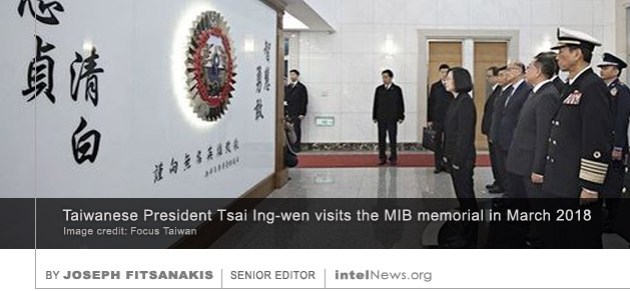 The government of Taiwan has acknowledged publicly for the first time that a Chinese major general, who was executed by Beijing in 1999 for espionage, was indeed one of its spies. The military officer was Liu Liankun, a logistician for the Chinese People’s Liberation Army, who headed its Department of General Logistics. However, China arrested Liu for espionage in 1999, and accused him of having spied for Taiwan for five years, in exchange for money. At the time, Taiwan denied that Liu spied on its behalf and refused to acknowledge that it had any role in the major general’s alleged espionage activities.
 Chinese spies hacked the computer servers of the African Union headquarters in the Ethiopian capital Addis Ababa, which the Chinese government funded and built as a gift to the organization, a French newspaper has claimed. Beijing donated $200 million toward the project and hired the state-owned China State Construction Engineering Corporation to build the tower, which was
  A former case officer in the Central Intelligence Agency, who was arrested this week for violating the United States Espionage Act, was lured back to America from Hong Kong at least once by counterintelligence investigators, according to reports. Jerry Chun Shing Lee, 53, served in the CIA from 1994 to 2007. He was
 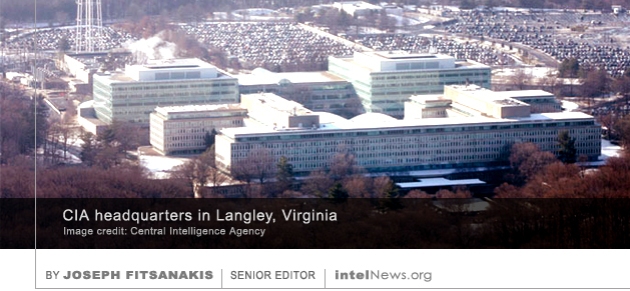 A former operations officer in the United States Central Intelligence Agency has been arrested on charges of illegally possessing top secret information, including lists of real names of foreign assets and addresses of CIA safe houses. The news emerged on Tuesday, as the US Department of Justice announced that the Federal Bureau of Investigation had filed a criminal complaint over the weekend. The complaint identifies the former case officer as Jerry Chun Shing Lee, also known as Zhen Cheng Li. Lee, a 53-year-old naturalized American, served in the CIA from 1994 to 2007 “in various overseas positions and locations”, according to court documents. Lee has
 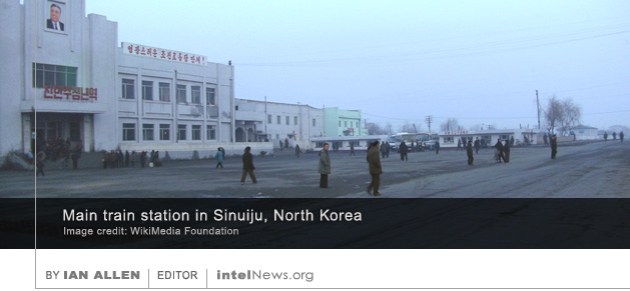 A North Korean nuclear scientist who defected to China but was involuntarily sent back to North Korea in November reportedly killed himself in his North Korean cell hours before he was due to be interrogated. Information about the scientist’s alleged suicide was issued on Thursday by Radio Free Asia (RFA), a multilingual news service based in Washington, DC, which is funded by the United States government. The service said its reporters spoke to an anonymous source in North Hamgyong province, North Korea’s northernmost region that borders China. The source identified the late scientist as Hyun Cheol Huh, but cautioned that this may not be his real name, because the North Korean security services are known to “use […] fake names when referring to important persons” in their custody.
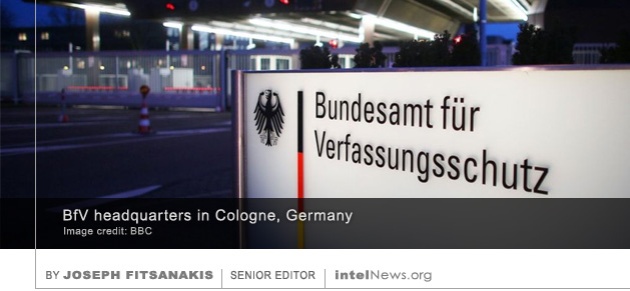 In an unusual step, German intelligence officials have issued a public warning about what they said are thousands of fake LinkedIn profiles created by Chinese spies to gather information about Western targets. On Sunday, Germany’s Federal Office for the Protection of the Constitution (BfV) held a press conference in which it said that it had discovered a wide-ranging effort by spy agencies in China to establish links with Westerners. The agency said that it undertook a 9-month investigation, during which it identified 10,000 German citizens who were contacted by Chinese spy-run fake profiles on LinkedIn. Across Europe, the number of targets could be in the hundreds of thousands,
  A senior Chinese People’s Liberation Army (PLA) military official, who was seen as a close ally of President Xi Jinping, has allegedly committed suicide, according to Chinese state media. Zhang Yang was one of the most high-profile generals in the Chinese PLA. His rise to power after Xi became president of China was meteoric. He was appointed member of the Central Military Commission (CMC) of the Communist Party of China, which exercises political supervision of the Chinese armed forces. In addition to his role in the CMC, Zhang directed the General Political Department of the PLA’s Ground Force, which made him the top political commissar in the army.
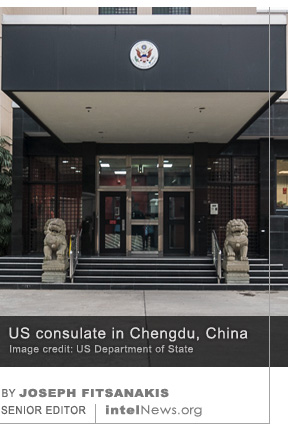 An American diplomat stationed in China was abducted and interrogated for several hours by Chinese authorities, who believed him to be an officer of the Central Intelligence Agency working under official cover. The alleged abduction took place in early 2016 but was revealed this week by the online news outlet Politico. The website said that the diplomat, who has not been named, was stationed at the United States consulate general in Chengdu, a city of 14 million that is the administrative capital of western China’s Sichuan province. Founded in 1985, the US consulate in Chengdu is one of Washington’s seven diplomatic and consular posts in China. It is staffed by 130 people, approximately 30 of whom are Americans and 100 are locally hired Chinese citizens. The facility’s consular district includes several Chinese provinces, including the politically sensitive Tibet Autonomous Region.
 The Parliament of Australia is reportedly reviewing the use of cell phones built by a Chinese manufacturer, after an Australian news agency expressed concerns about the manufacturer’s links with the Chinese military. The cell phone in question is the popular Telstra Tough T55 handset. It is made available to Australian parliamentarians though the Information, Communications and Technology (ICT) unit of the Department of Parliamentary Services (DST). Any parliamentarian or worker in Australia’s Parliament House can order the device through the Parliament’s ICT website. According to data provided by the DST, 90 Telstra Tough T55 cell phones have been ordered through the ICT in the current financial year.







Chinese influence in New Zealand threatens intelligence-sharing, says Canadian report
May 31, 2018 by Joseph Fitsanakis 2 Comments
The report, entitled China and the Age of Strategic Rivalry, was authored by experts at the Canadian Security Intelligence Service (CSIS). It contains a summary of views expressed by participants at an academic outreach workshop that was organized in Canada by the CSIS. In a section focusing on Chinese “interference in democratic systems”, the report suggests that, despite its small size, New Zealand is “valuable to China […] as a soft underbelly through which to access Five Eyes intelligence”. In recent years, claims the report, Beijing has adopted “an aggressive strategy” that has sought to co-opt political and economic elites in New Zealand as a means of influencing political decision making in the country. As part of that process, China seeks to gain advantages in trade and business negotiations, suppress negative views of China, facilitate espionage and control the views of the Chinese expatriate community in New Zealand, according to the report. Ultimately, Beijing seeks to “extricate New Zealand from […] its traditional [military and intelligence] partners]” as a means of asserting its regional and —eventually— global influence, the report concludes.
In a separate but connected development, it emerged this week that China expert Peter Mattis told an American Congressional committee last month that New Zealand’s position in the Five Eyes alliance was tenuous due to China’s influence. Mattis, a former China analyst for the United States Central Intelligence Agency, was speaking before the US-China Economic and Security Review Commission, a group of experts that advise the US Congress. He told the Commission that the influence of the Chinese Communist Party in New Zealand is so deep that it raises questions about whether the Pacific Ocean country can continue to share intelligence with the other members of the Five Eyes alliance.
On Wednesday, New Zealand’s Prime Minister Jacinda Ardern emphatically dismissed questions about her country’s role in the Five Eyes alliance. She told reporters in Wellington that the issue of New Zealand’s Five Eyes membership had “never been raised” with her “or anyone else” by Five Eyes partners. Ardern added that her government received its information “from official channels, not opinions expressed at a workshop”.
► Author: Joseph Fitsanakis | Date: 31 May 2018 | Permalink
Filed under Expert news and commentary on intelligence, espionage, spies and spying Tagged with AUSCANZUKUS, Canada, China, CSIS (Canada), intelligence cooperation, New Zealand, News, Peter Mattis, UKUSA