China dismantled large CIA spy network in 2010, say sources
May 22, 2017 Leave a comment
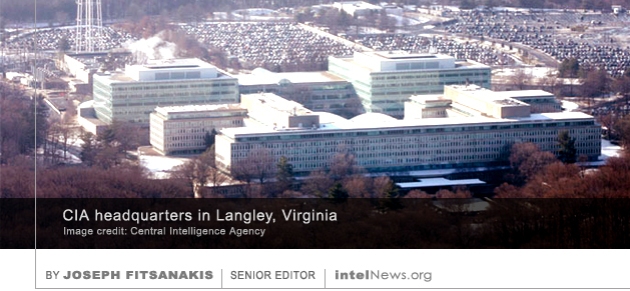 A few years ago, China busted an extensive network of secret operatives run by the United States Central Intelligence Agency. The CIA has yet to recover from the massive blow to its operations, say sources. The CIA has devoted substantial resources to gathering intelligence in China in recent years, and has painstakingly built a network of spies. The latter are Chinese nationals recruited by CIA officers to spy on Beijing on behalf of the United States. But, according to The New York Times, in early 2010 the CIA’s assets began to disappear one by one. By 2012, the Agency’s network of secret operatives in China had been all but wiped out.
According to the Times report, published on Saturday, the CIA lost as many as 20 agents on the ground in China, who were either executed or imprisoned by the authorities in Beijing. The paper cites “ten current and former American officials”, who claim that many of the agents had operated for years deep inside the Chinese state apparatus prior to their capture. At least one of them, say sources, was executed “in front of his colleagues in the courtyard of a government building” in an attempt to dissuade other government employees from spying on the Chinese state. At least 12 of the CIA’s assets in the country were executed between 2010 and 2012, according to The Times.
The damage to the CIA has been incalculable, according to sources, and the Agency is still recovering from the loss of an extensive network of operatives that took years to assemble. Sources described the loss of the network to the Times as “one of the worst in decades” and compared it to the loss of assets caused in the 1980s and 1990s by two notorious American spies for the Soviet Union and Russia, CIA officer Aldrich Ames and Federal Bureau of Investigation agent Robert Hanssen. At that time, dozens of agents and over 100 intelligence projects were compromised.
According to the report, the FBI and the CIA set up Project HONEY BADGER, a joint counterintelligence investigation into the China breach. But the results of the investigation reportedly remain inconclusive. Some argue that such a major dismantling of a network of assets could only have originated from a mole inside the US Intelligence Community. Others believe that the arrests of CIA agents resulted from a sophisticated Chinese computer hacking operation that targeted the CIA. A third theory posits that the breach was caused by the infiltration of the intelligence community of Taiwan, an important American ally in Southeast Asia.
Since 2012, the CIA has been trying to rebuild its network in China, but it will take it years to reach the level of sophistication in had achieved in 2010. The New York Times said it reached out to the CIA and FBI for comment but received no responses.
► Author: Joseph Fitsanakis | Date: 22 May 2017 | Permalink
 A new report authored by a consortium of government and private organizations in Britain has revealed the existence of a computer hacking operation, allegedly based in China, that is said to be “one of the largest ever” such campaigns globally. The operation is believed to have compromised sensitive information from an inestimable number of private companies in Southeast Asia, Europe and the United States. The
 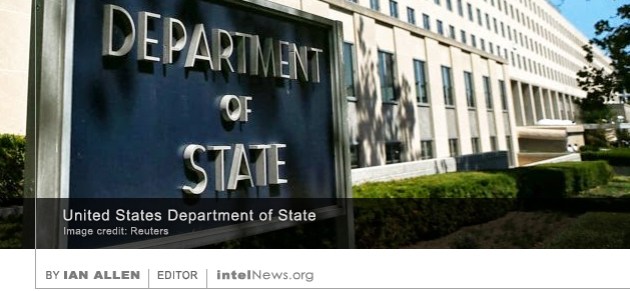 An employee of the United States Department of State has been charged with lying to authorities about her contacts with Chinese intelligence operatives, who gave her money and gifts in return for information. Candace Claiborne, 60, joined the Department of State in 1999 as an office management specialist. She lives in Washington, DC, but has served overseas in American diplomatic facilities in Baghdad, Iraq, Khartoum, Sudan, and China, where she was stationed in Beijing and Shanghai. According to information provided by the Federal Bureau of Investigation, Claiborne had a top security clearance, which required her to report contacts with foreign nationals.
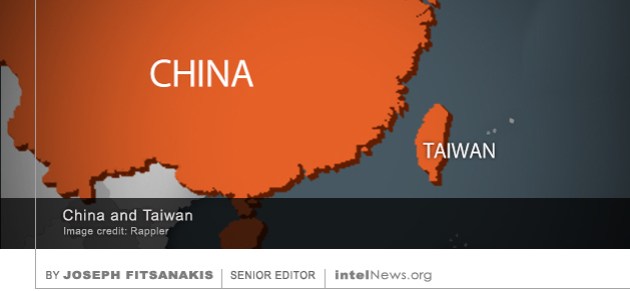 A Taiwanese government official has alleged that China maintains an army of more than 5,000 spies in Taiwan, many of whom have infiltrated the highest levels of government and industry. The allegation came after two sensational arrests were made in Taiwan last week, of people accused of spying for Beijing. Taiwanese counterintelligence officers reportedly arrested a bodyguard of Annette Lu, Taiwan’s former vice president. The bodyguard, who has been identified in Taiwanese media as Wang Hong-ju, has been charged with receiving payments from his Chinese intelligence handler in return for providing information about Mrs. Lu. This incident followed another arrest, made earlier in the week, this time of a Chinese man who is believed to have initially come to Taiwan as a student. Zhou Hong-xu is
  A man at the center of the first case of Chinese nuclear espionage in United States history will be pleading guilty on Friday, according to court documents. This could mean that the alleged spy has decided to give the Federal Bureau of Investigation (FBI) details of Chinese nuclear espionage in the US. The accused man is Szuhsiung ‘Allen’ Ho, a Taiwanese-born engineer and naturalized American citizen. Ho was arrested by the FBI in April on charges of sharing American nuclear secrets with the government of China.
 A Chinese diplomat, who made international news headlines in 2005 when he defected to Australia, has ended a decade of silence to warn about an alleged increase in Chinese espionage operations against his adopted country. Chen Yonglin was a seasoned member of the Chinese diplomatic corps in 2001, when he was posted as a political affairs consul at the Chinese consulate in Sydney, Australia. His job was to keep tabs on the Chinese expatriate community in Australia, with an emphasis on individuals and organizations deemed subversive by Beijing. He later revealed that his main preoccupation was targeting members of the Falun Gong spiritual movement, which is illegal in China. He also targeted supporters of Taiwanese independence, as well as Tibetan and East Turkestan nationalists who were active on Australian soil.
 A senior Chinese official with a leading role in the country’s ongoing anti-corruption crusade has been appointed head of the nation’s spy agency, which has undergone extensive purges in recent years. Chen Wenqing, 56, will be
 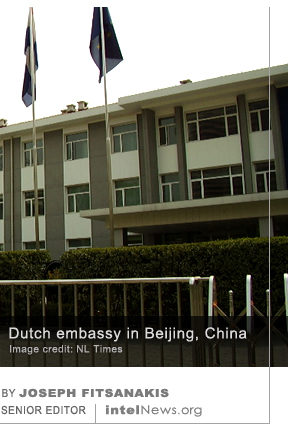 The Dutch government has suspended its ambassador to China and has launched an official investigation into an alleged secret relationship between the ambassador and a female Chinese employee at the Dutch embassy. The ambassador, Ron Keller, is a career diplomat and senior member of the Dutch foreign service corps, who has served in Russia and Turkey among other international posts. He assumed duties as Holland’s ambassador to China in late 2015. In December of that year, he arrived in Beijing and took command of one of the largest Dutch embassies in the world.
 The Chinese embassy in Canberra has strongly denied accusations that a Chinese government ship involved in the international effort to find the missing Malaysia Airlines Flight MH370 is spying on the Royal Australian Navy. The ship, the Dong Hai Jiu 101, is a salvage and rescue vessel built in Shanghai in 2012 and currently sailing under the Chinese flag. In April, the Chinese government contracted the Dong Hai Jiu 101 to join the international search effort for the wreckage of Flight MH370. The Boeing 777 aircraft disappeared over the South China Sea on March 8, 2014, while flying from Kuala Lumpur International Airport in Malaysia, to the Beijing Capital International Airport in China.
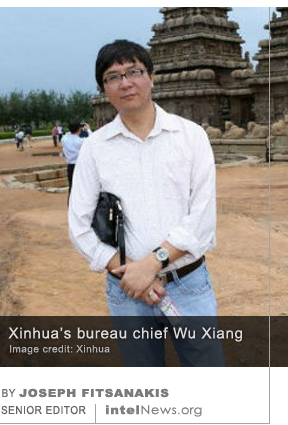 For the first time in history, India has refused to extend temporary residency visas for three senior Chinese media correspondents, effectively expelling them from the country, allegedly for espionage activities. All three reporters are employees of China’s state-run Xinhua news agency. They include Xinhua’s bureau chief in the Indian capital, New Delhi, Wu Xiang, and the agency’s Mumbai bureau chief, Lu Tang. A third journalist, She Yonggang, also based in Mumbai, has been asked to leave India by no later than July 31.
 A former computer technician who worked on cryptology has been sentenced to death in China after being found guilty in what some describe as one of the country’s most damaging espionage cases in recent years. The man, Huang Yu, is reportedly a 41-year-old computer expert who worked for a government-funded research institute specializing in cryptology —the science of making and breaking secret codes. He was arrested in 2011 in Chengdu, the capital of Sichuan province in southwestern China.
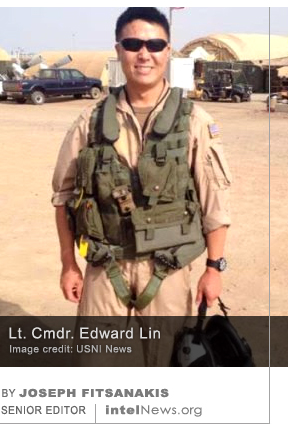 An American official has told Newsweek magazine that the possibility of further arrests in the espionage case of United States Navy flight officer Edward Lin should not be ruled out. Last Sunday, the US Navy reported the arrest Lt. Cmdr. Lin, who faces two counts of espionage and three counts of attempted espionage, among other charges. Aside from a three-page, heavily redacted charge sheet released by the Navy, almost nothing is known about this case. However, as intelNews
 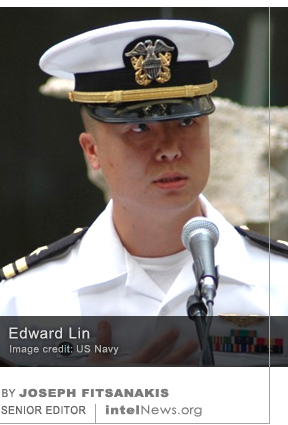 For the first time since 1985, when the Federal Bureau of Investigation broke the John Walker spy ring, an active United States Navy officer has been charged with espionage. On Sunday, the US Navy reported the arrest Lt. Cmdr. Edward C. Lin, who faces two counts of espionage and three counts of attempted espionage, among other charges. Aside from a three-page, heavily redacted
 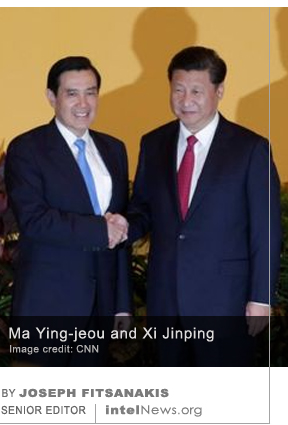 China and Taiwan reportedly swapped each other’s imprisoned spies, just days before a historic meeting between their heads of government. It was the first time in the two nations’ history that they have swapped jailed spies with each other. The exchange appears to have taken place in secret in late October, less than two weeks ahead of a historic November 7 meeting between Chinese President Xi Jinping and Taiwanese President Ma Ying-jeou. The meeting, which took place in Singapore, was hailed for its historic significance, as it was the first of its kind since 1949, when the two countries emerged following a bitter civil war between communist and nationalist forces.








Australia concerned about Chinese firm’s involvement in undersea cable project
August 21, 2017 by Ian Allen 5 Comments
One of Huawei’s most recent large-scale projects involves the Solomon Islands, a former British overseas territory that became independent in 1978 and is today a sovereign nation. The Pacific country consist of a complex of nearly 1,000 islands of different sizes, scattered over a distance of 11,000 square miles. It lies northeast of Australia and directly east of Papua New Guinea. In 2014, the government of the Solomon Islands began an ambitious project to connect its Internet servers to those of Australia via a 2,700-mile undersea fiber optic cable. The ultimate goal of the project is to provide Solomon Islands inhabitants with reliable high-speed Internet. The project was approved by Canberra (Australian government) and Sydney (Australian private sector) and given the green light by the Asian Development Bank, which promised to fund it. But in 2016 the Solomon Islands government suddenly named Huawei Marine as the project’s main contractor. Huawei Marine, a subsidiary of Huawei Technologies, is a joint venture between the Chinese firm and Global Marine Systems, a British-headquartered company that installs undersea telecommunications cables.
The news was greeted with concern in Canberra. The Australian intelligence community has previously warned that Huawei operates as an arm of the Chinese spy services. Intelligence agencies in the United Kingdom and the United States have issued similar warnings. In 2011, a report by a research unit of the US Office of the Director of National Intelligence concluded that Huawei Technologies relied on a series of formal and informal contacts with the Chinese People’s Liberation Army and the Ministry of State Security. But a subsequent 18-month review commissioned by the White House found no evidence that Huawei spied for the Chinese government.
Canberra is concerned that, by constructing the Solomon Islands undersea cable, Huawei would be “plugging into Australia’s telecommunications infrastructure backbone”, something that, according to some intelligence officials, “presents a fundamental security issue”. To further-complicate things, opposition officials in the Solomon Islands allege that the country’s government contracted the services of Huawei after the Chinese company promised to make a multi-million dollar donation to the ruling political party. Last June, the director of the Australian Secret Intelligence Service (ASIS), Nick Warner, visited the Solomon Islands and tried to convince the country’s Prime Minister, Manasseh Sogavare, to drop Huawei from the project. The topic was also discussed in a meeting between Mr. Sogavare and his Australian counterpart, Malcolm Turnbull, in Canberra last week. Following the meeting, the Solomon Islands leader said that his government would “continue to have discussions with the Australian government to see how we can solve that […] security issue”.
► Author: Ian Allen | Date: 21 August 2017 | Permalink
Filed under Expert news and commentary on intelligence, espionage, spies and spying Tagged with Australia, China, Huawei Technologies, News, Solomon Islands, telecommunications, telecommunications hardware, undersea communications cables