China announces arrests of Japanese citizens on espionage charges
October 5, 2015 Leave a comment
 Authorities in China announced last week the arrests of two Japanese citizens accused of spying for the national intelligence agency of Japan. According to a spokesman from the Chinese Ministry of Foreign Affairs, the two men were been arrested last May “on suspicion of carrying out espionage activities” for Japan’s Public Security Intelligence Agency. Administered by Japan’s Ministry of Justice, the Public Security Intelligence Agency is tasked with protecting the country’s internal security by collecting intelligence both within and without Japan. The Agency has a long history of organizing human intelligence operations in mainland China.
Following China’s announcement last week, Yoshihide Suga, Japan’s Chief Cabinet Secretary, who serves as the government’s press secretary, denied that the two men had links with Japanese intelligence. But the Tokyo-based Kyodo news agency reported on Saturday that the two men had admitted that they had links with the Public Security Intelligence Agency. Citing unnamed Chinese and Japanese diplomats, Kyodo said the two men were on a mission to collect intelligence about Chinese military facilities, as well as to spy on Chinese military activities in the border regions between China and North Korea. The news agency said that both men were civilians and did not have diplomatic credentials. One of them is believed to be a 51-year-old who travels regularly to China. He was reportedly captured in the vicinity of a military facility in China’s eastern coastal province of Zhejiang. The other man was described by Kyoto as a 55-year-old North Korean defector to Japan; he was detained in the northeast province of Liaoning (photo), near China’s border with North Korea.
Kyoto said it contacted the Public Security Intelligence Agency, but a spokesman said he was not in a position to comment on the arrest of the two alleged spies. This is the third instance of arrests of Japanese spies in China on espionage charges since 2005. In the summer of that year, Beijing expelled two Japanese nationals for allegedly stealing military secrets. Five years later, four Japanese citizens were detained in Shijiazhuang, reportedly for spying on a Chinese military base there. All were released within a year of their capture.
► Author: Joseph Fitsanakis | Date: 05 October 2015 | Permalink
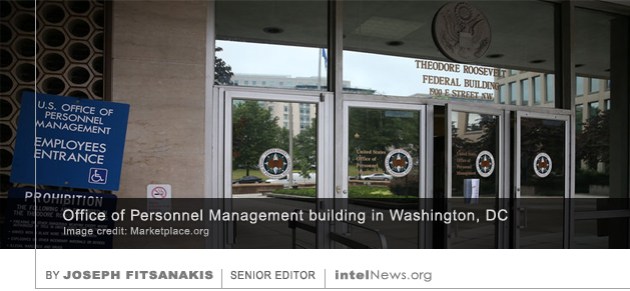 The Central Intelligence Agency (CIA) pulled a number of officers from the United States embassy in Chinese capital Beijing, after a massive cyber hacking incident compromised an American federal database containing millions of personnel records. Up to 21 million individual files were
  The president of the United States and his delegation will be housed at a different hotel during a United Nations General Assembly meeting later this month, allegedly due to concerns over Chinese espionage activity. Since the late 1940s, the American president and his diplomatic entourage have resided at the Waldorf Astoria for several days in September, while attending the annual UN General Assembly in New York. The luxury hotel, which is located on Park Avenue on the island of Manhattan, has also served since 1947 as the residence of the US ambassador to the UN. That is also why the American delegation is usually hosted there, courtesy of the ambassador. This year, however, President Barack Obama and his sizeable delegation will be staying at the New York Palace Hotel, located at the corner of Manhattan’s 50th Street and Madison Avenue. The announcement was made last week by the White House and the US Department of State.
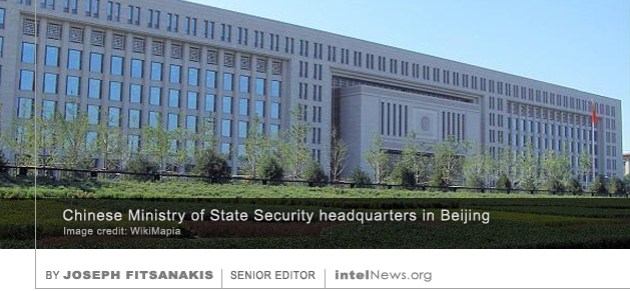 The White House has warned the Chinese government to stop deploying on American soil intelligence operatives masquerading as tourists, business executives or other false covers. Nowadays the standard practice for intelligence personnel deployed abroad is to be posted as diplomatic staff in a foreign embassy or consulate. But there are some intelligence officers who do not follow that practice. These are known as non-official-cover operatives, or NOCs in American intelligence parlance. NOCs are typically high-level principal agents or officers of an intelligence agency, who operate without official connection to the diplomatic authorities of the country that is employing them. They typically pose as business executives, students, academics, journalists, or non-profit agency workers. Unlike official-cover officers, who are protected by diplomatic immunity, NOCs have no such protection. If
 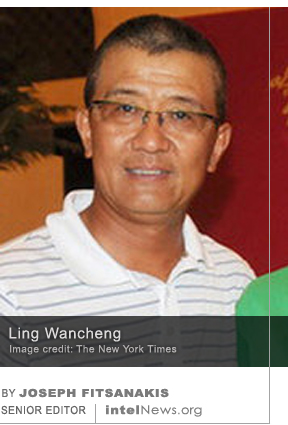 A well-connected Chinese businessman, described by officials as potentially one of the most damaging defectors in the history of modern China, is reputed to have requested political asylum in the United States. Ling Wancheng, 54, is the multimillionaire brother of Ling Jihua, a close aide of China’s former premier, Hu Jintao, who rose through the ranks of the Communist Party of China to eventually lead its Central Committee’s General Office. With the help of his brother’s connections and political influence, Ling Wancheng transformed himself from a journalist to an entrepreneur in the early 2000s. Soon after receiving his graduate degree in business administration, he founded an investment firm and joined China’s nouveau riche elite. His wealth, which is estimated to be in the hundreds of millions of dollars, coupled with his older brother’s senior position within the Communist Party, made him one of China’s most politically connected entrepreneurs.
 Officials in China think that United States spy agencies are using casinos in Macau to entrap Chinese government employees, according to a report produced on behalf of an American-owned casino chain in the former Portuguese colony. The report was produced by a private investigator and was commissioned by Sands China, the Macau branch of a casino venture owned by American gambling magnate Sheldon Adelson. Its goal was to investigate why the Chinese-appointed authorities in Macau were hostile to the gambling industry in general and Sands China in particular.














Washington to investigate Chinese-owned radio stations in the US
November 3, 2015 by Joseph Fitsanakis Leave a comment
All stations in question are managed by broadcasting firm G&E Studioa, based in West Covina, California, which is owned by James Su, a Shanghai-born American broadcasting entrepreneur. According to the news agency, G&E Studio controls the vast majority of these stations’ air time, which it fills with entertainment and public-affairs programming produced in its studios in California. However, the Reuters report claimed that G&E Studio is 60% owned by China Radio International (CRI), which is a Chinese state-controlled broadcaster. Founded as Radio Peking in 1941, then renamed to Radio Beijing during the Cold War, CRI is the Chinese equivalent of the Voice of America or the BBC World Service: it is officially affiliated with the Chinese government and reflects its point of view. What is more, said Reuters, some of the programming aired on G&E Studio-managed stations is produced by CRI in Beijing. Consequently, news programming on these stations tends to reflect the Chinese government’s point of view, on subjects such as Taiwan, naval rights in the South China Sea, trade policies and other major topics of the day.
The investigation has been launched by the US Federal Communications Commission (FCC) because American law prohibits representatives of foreign governments, or foreign governments themselves, from owning or managing US broadcast stations. Moreover, individuals or companies seeking to influence American politics or public opinion on behalf of a foreign agency, group or government, must register with the US Department of State. It doesn’t appear that G&E-owned radio stations have done that, said Reuters on Monday. The news agency quoted FCC spokesman Neil Grace, who said that an investigation had been launched into “the foreign ownership issues raised in the stories, including whether the Commission’s statutory foreign ownership rules have been violated”. The Department of State, however, refused to confirm or deny that an investigation into G&E Studios was underway.
► Author: Joseph Fitsanakis | Date: 3 November 2015 | Permalink
Filed under Expert news and commentary on intelligence, espionage, spies and spying Tagged with China, G&E Studio, James Su, News, propaganda, psyops, radio communications, United States, US Department of State, US Federal Communications Commission