China stops using some Apple products, fearing US espionage
August 7, 2014 2 Comments
By JOSEPH FITSANAKIS | intelNews.org
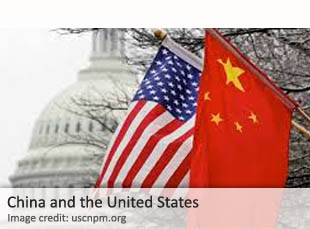
Authorities in China have removed Apple products from a government procurement list because of fears that they are susceptible to electronic espionage by the United States. Citing “government officials familiar with the matter”, Bloomberg News said on Wednesday that 10 Apple products have been removed from the list, including the iPad and iPad Mini, as well as MacBook Air and MacBook Pro products —though interestingly the inventory of removed items does not include Apple smartphone products. The procurement list is produced several times a year by China’s Ministry of Finance and the National Commission for Development and Reform. It specifies the types of products that can be purchased with public funds by all central departments of the Communist Party of China, as well as by all state and local government ministries. The surprise removal of Apple products from the list follows a report aired by Beijing’s state-owned China Central Television in July, which claimed that security weaknesses in Apple software could cause the theft of sensitive state secrets. Apple vigorously rejected the claims made in the television report. The action by the Chinese government is the latest move in a tit-for-tat cyberespionage war between Washington and Beijing, which began in 2013, when American defector Edward Snowden began leaking US intelligence secrets. In June of that year, it was revealed that the US National Security Agency (NSA) has been engaged in protracted offensive cyberespionage operations against China for nearly 15 years. Almost a year later, the US Department of Justice charged a group of Chinese military officers with stealing American trade secrets through cyberespionage. Apple is not the first American technology firm to be hit with removals of its products from the Chinese government’s procurement list. Read more of this post















Canada bans Chinese reporters over spy concerns
August 21, 2014 by Joseph Fitsanakis Leave a comment
The office of the prime minister of Canada has banned reporters working for China’s state-owned media from covering the Canadian leader’s official trip to the Arctic, due to concerns that they may be spies. For the past several summers, Canada’s Prime Minister Stephen Harper has undertaken official tours of the Canadian Arctic, in an effort to promote the country’s northern economy and attend military exercises. However, in a move that has raised eyebrows in Ottawa and Beijing, the organizers of the trip have issued a ban on a number of Chinese reporters from joining the Canadian prime minister’s entourage. The Winnipeg Sun reported on Wednesday that the unprecedented step was taken over concerns that the Chinese journalists in question may in fact be intelligence operatives in the service of China. The paper cited a quote by a spokesman from the office of the prime minister, who reportedly told the Québecor Média International news agency that “certain news outlets are no longer welcome” to travel with the prime minister. It appears that the reporters in question include primarily those working for The People’s Daily newspaper and the Xinhua news agency, both of which are owned by the government of China. Two Chinese journalists working for these outlets, Li Xue Jiang, and Zhang Dacheng, caused controversy during Harper’s trip to the Arctic in 2013. The two appeared to show more interest in photographing their fellow journalists and the interior of Canada’s prime ministerial airplane than covering Harper’s trip. Li even wrote an article for the Chinese-language edition of The People’s Daily at the time, in which he mentioned that he had come under suspicion of spying for China, saying that a secretary from the office of the Canadian prime minister had tasked an officer of the Royal Canadian Mounted Police to keep an eye on him. IntelNews readers will recall that in 2012 Canadian reporter Mark Bourrie resigned his post as parliamentary correspondent for Xinhua, accusing the Chinese news agency of running spy operations in Canada. Read more of this post
Filed under Expert news and commentary on intelligence, espionage, spies and spying Tagged with Canada, China, Dacheng Zhang, journalism, Li Xue Jiang, Mark Bourrie, News, non-official-cover, Stephen Harper