CIA tip led to Mandela’s fateful 1962 arrest, claims US ex-diplomat
May 16, 2016 Leave a comment
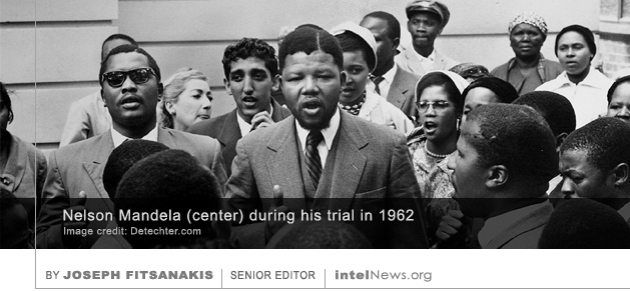 The arrest of Nelson Mandela in 1962, which led to his 28-year incarceration, came after a tip from the United States Central Intelligence Agency, according to an American diplomat who was in South Africa at the time. At the time of his arrest, Mandela was the head of uMkhonto we Sizwe (MK), an organization he founded in 1961 to operate as the armed wing of the anti-apartheid African National Congress (ANC). But the white minority government of South Africa accused Mandela of being a terrorist and an agent of the Soviet Union. The US-Soviet rivalry of that era meant that the ANC and its leader had few supporters in America during the early stages of the Cold War.
Mandela was arrested on August 5, 1962 in the KwaZulu-Natal town of Howick by members of the South African Police. He was pretending to be the chauffeur of Cecil Williams, a white member of the ANC who was riding in the back seat of the car that Mandela was driving that night. The details of what led to Mandela’s arrest have always been mysterious, and the ANC has long suspected that the MK leader was betrayed by informants placed within the organization by the apartheid government. But an article in the London-based Sunday Times has said that it was the CIA that tipped off the South Africans about Mandela’s whereabouts that night. The claim is based on an interview with Donald Rickard, an American diplomat —now dead— who was serving as Washington’s vice-consul in Durban at the time of Mandela’s arrest. Some believe that Rickard was actually a CIA officer posing as a diplomat until his retirement from the service in 1978, and he himself never denied it.
Two weeks before he died, Rickard gave an interview to British filmmaker John Irvin, who was filming for his latest documentary, entitled Mandela’s Gun, about Mandela’s role in the MK. According to The Times, the former US diplomat told Irvin that in the early 1960s Mandela was “the most dangerous communist anywhere outside the USSR”. This is despite Mandela’s repeated denials that he had ever been a member or sympathizer of the South African Communist Party, which at the time was actively supporting the ANC. Rickard allegedly told Irvin: “I found out when [Mandela] was coming down and how he was coming […]. That’s where I was involved and that’s’ where Mandela was caught”. In his interview, Rickard insisted that Mandela was “completely under the control of the Soviet Union [and effectively] a toy for the communists”. Moreover, he said the CIA believed that he was planning to organize the large Indian population of Natal Province and incite them into an uprising led by communists, which, according to Rickard, could have prompted an armed Soviet invasion of South Africa. The former diplomat is quoted as telling Irvin: “We were teetering on the brink here and it had to be stopped, which meant Mandela had to be stopped. And I put a stop to it”.
Following his arrest, Mandela served nearly 30 years in prison on terrorism charges, until his eventual release in 1990. In 1994, he was elected as South Africa’s first black president, a post he held until his retirement in 1999. The US, which officially designated Mandela a terrorist in the 1980s under the administration of US President Ronald Reagan, kept the ANC leader on its terrorism watch list until 2008.
The US government has refused comment on Rickard’s claims.
► Author: Joseph Fitsanakis | Date: 16 May 2016 | Permalink
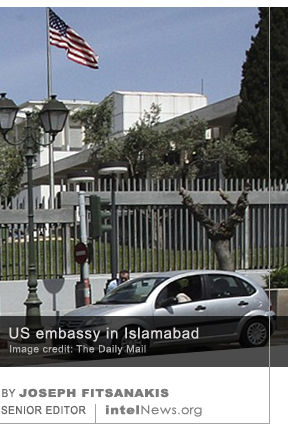 A leading article in The Washington Post suggests that the United States Central Intelligence Agency suspected that its most senior officer in Pakistan was poisoned by the host country’s intelligence services, in an attempt to kill him. The CIA pulled its station chief from Islamabad in the summer of 2011, two months after Operation NEPTUNE SPEAR, which saw the killing in Abbottabad of al-Qaeda founder Osama bin Laden. The CIA official, who has since been identified as Mark Kelton, acted as the senior US intelligence representative in the Asian country. He had assumed the post, which was supposed to last at least two years, only seven months earlier. His abrupt removal raised questions, which were informally answered by Langley. There were rumors that Kelton’s return to the US was health-related, but that the decision to replace him was also affected by his extremely poor relations with the Inter-Services Intelligence (ISI) directorate, Pakistan’s powerful spy service.
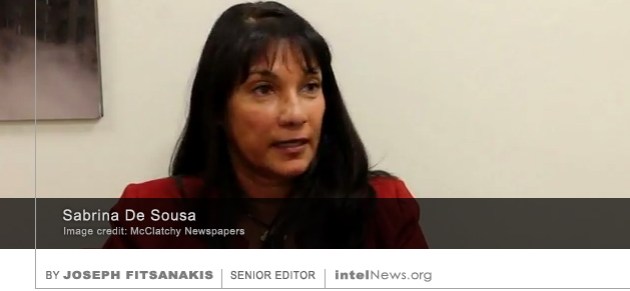 An appeals court in Portugal has ruled that a former officer of the Central Intelligence Agency is to be extradited to Italy, where she faces charges of helping kidnap a man as part of a secret operation sponsored by the United States government. Sabrina De Sousa, 59, was an accredited diplomat stationed at the US consulate in Milan, Italy, in 2003, when a CIA team kidnapped Hassan Mustafa Osama Nasr from a Milan street in broad daylight. Nasr, who goes by the nickname Abu Omar, is a former member of Egyptian militant group al-Gama’a al-Islamiyya, and was believed by the CIA to have links to al-Qaeda. Soon after his abduction, Nasr was renditioned to Egypt, where he says he was brutally tortured, raped, and held illegally for years before being released without charge.
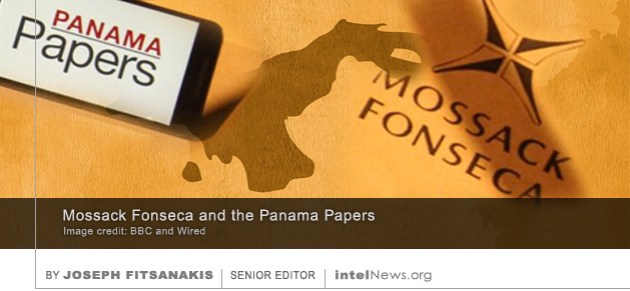 The massive data leak of documents belonging to Panamanian law firm Mossack Fonseca has revealed the names of intelligence officials and agents form several countries, who employed front companies to conceal their financial activities. According to German newspaper Süddeutsche Zeitung, which was the initial recipient of the largest data leak in history last summer, the list of names includes intelligence officials from the Middle East, Latin America and Africa, as well as “close intermediaries of the [United States] Central Intelligence Agency”.
 The Russian government says it has arrested a senior Ukrainian intelligence officer, who was allegedly trained by the United States Central Intelligence Agency and tasked with infiltrating the Russian secret services. In a
  A court in Germany has sentenced a former officer of the country’s intelligence agency, who spied for the United States and Russia from 2008 to 2014. Regular readers of this website will recall the case of ‘Markus R.’, a clerk at the Bundesnachrichtendienst, or BND, Germany’s external intelligence agency. The 32-year-old was
 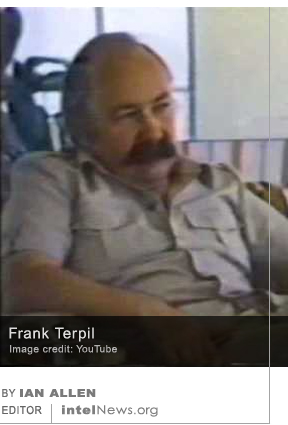 Frank Terpil, a former operative of the United States Central Intelligence Agency, who defected to Cuba in 1981 to avoid charges of criminal conspiracy, has died. He was 76. Terpil resigned from the CIA in 1970, allegedly after he was caught running a pyramid scheme in India, where he had been posted by the CIA. Soon after his forced resignation from the Agency, US federal prosecutors leveled criminal charges on Terpil and his business partner. The former CIA operative was also charged with conspiracy to commit murder, after it was found that he had helped facilitate the illegal transfer of over 20 tons of plastic explosives to the government of Libya.
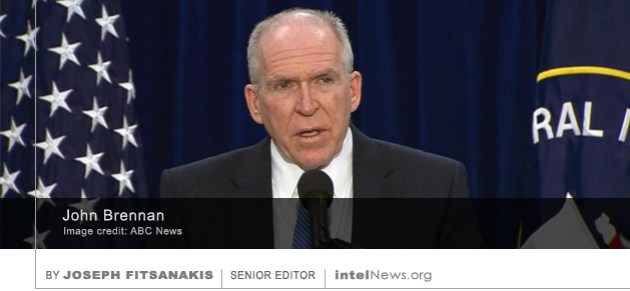 Russia is being “very aggressive” toward the United States, but cooperation on counter-terrorism between Moscow and Washington is “highly active” despite the differences between them, according to the director of the United States Central Intelligence Agency. John Brennan, a longtime CIA career officer, who has led the Agency for nearly three years,
 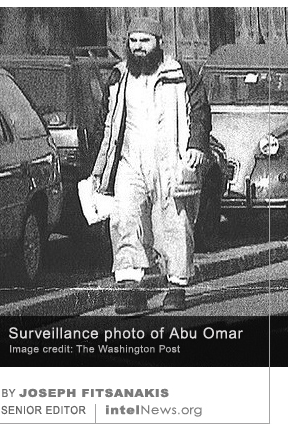 Europe’s highest human rights court has ruled against Italy in the case of an Egyptian man who was abducted from Milan in 2003 by the United States Central Intelligence Agency. Hassan Mustafa Osama Nasr, known as Abu Omar, is a former member of al-Gama’a al-Islamiyya, an Islamist group founded in the 1970s, which aimed to overthrow the Egyptian government and replace it with an Islamic regime. Members of the group have been implicated in the assassination of Egyptian President Anwar Sadat in 1981, as well as in numerous attacks on tourist facilities in Egypt in the 1990s. Once al-Gama’a al-Islamiyya was declared illegal in Egypt, Italian authorities offered Nasr political asylum, after he successfully argued that he would be subject to torture if arrested in Egypt.
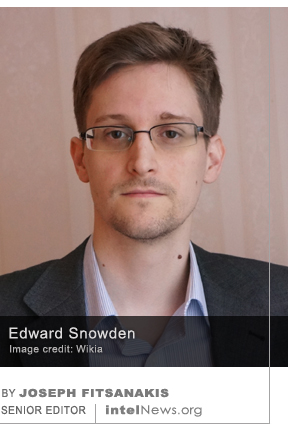 Documents acquired through Denmark’s freedom of information act appear to show that the United States deployed an airplane, which had previously been used to rendition terrorism detainees, in an attempt to capture the American defector Edward Snowden. Snowden, a computer expert for the United States Central Intelligence Agency and the National Security Agency, is currently living in Russia, where he defected in June 2013, after initially fleeing to Hong Kong with millions of stolen US government documents in his possession. A few weeks ago, Danish news website Denfri.dk
 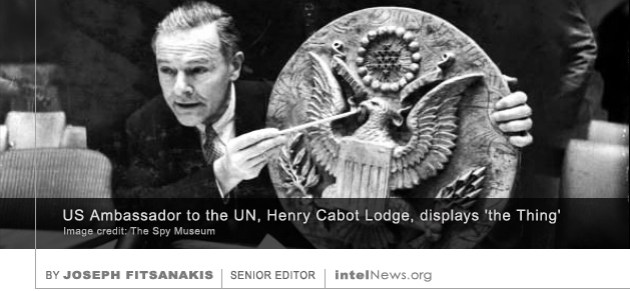 A tightly knit group of Dutch technical experts helped American spies bug foreign embassies at the height of the Cold War, new research has shown. The research, carried out by Dutch intelligence expert Cees Wiebes and journalist Maurits Martijn, has brought to light a previously unknown operation, codenamed EASY CHAIR. Initiated in secret in 1952, the operation was a collaboration between the United States Central Intelligence Agency and a small Dutch technology company called the Nederlands Radar Proefstation (Dutch Radar Research Station).
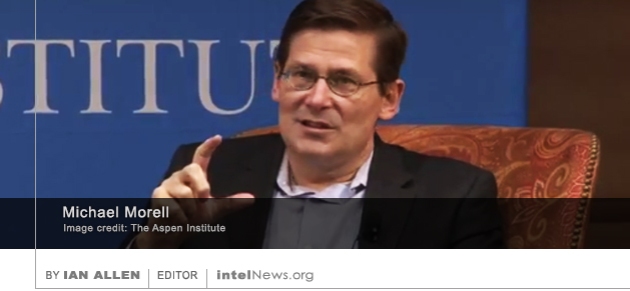 A senior Central Intelligence Agency official, who led the agency as its acting director before retiring in 2013, has said that not having sources in the Iraqi government’s upper echelons led to the intelligence failure of 2003. Michael Morell retired as deputy director of the CIA, after having served twice as its acting director, in 2011 and from 2012 to 2013. A Georgetown University graduate, Morell joined the agency in 1980 and rose through the ranks to lead the Asia, Pacific and Latin America divisions. In May 2015, Morell published his book, The Great War of Our Time: The CIA’s Fight against Terrorism from al Qa’ida to ISIS, which he has been promoting while working as a consultant in the private sector.
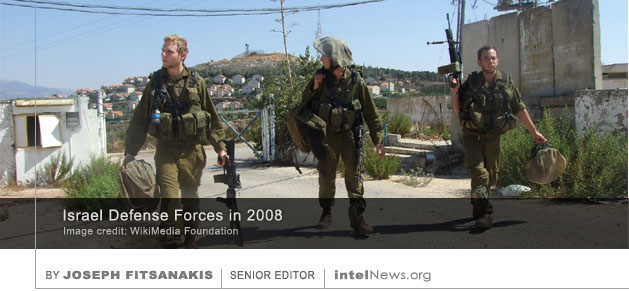 Israel’s military intelligence agency has issued a warning to all soldiers in the Israeli armed forces to resist attempts by the United States Central Intelligence Agency (CIA) to recruit them. The existence of the highly unusual warning was






 intelNews.org
Diplomat involved in fight with US embassy guard is CIA spy, says Russia
July 1, 2016 by Ian Allen 1 Comment
The alleged incident is reported to have taken place in the early hours of Monday, June 6. The American diplomat was making his way to the front entrance of the US embassy complex, which is located in the Presnensky District in downtown Moscow. According to American sources, the diplomat was approached by an employee of the Russian Federal Security Service, the FSB, which regularly stations security personnel around the sizeable US embassy complex. The FSB claims that the guards are there to protect US diplomats, though it is common knowledge that the Russian agency, which is responsible for counterespionage, is primarily there to monitor activities in and around the US embassy. American sources claim that the diplomat presented the Russian guard with proof of identification when asked to do so. But he was then physically attacked and struck repeatedly by the FSB officer, which left him with several injuries, including a broken shoulder. According to The Washington Post, the diplomat managed to enter the embassy grounds and had to be flown out of the country for urgent medical treatment. He has not returned to Russia.
The US government believes the attack was intentional. But what caused it? One theory entertained by The Washington Post is that the diplomat was in fact an officer of the Central Intelligence Agency working in Moscow under official cover, pretending to be a State Department employee. According to this theory, the FSB was chasing the American diplomat through the streets of Moscow after a spy operation that went awry. The Russians then tried unsuccessfully to prevent him from entering the US embassy, which constitutes American soil.
On Thursday, Russian Foreign Ministry spokeswoman Maria Zakharova alleged that the diplomat in question was an intelligence officer. “It is well known”, said Zakharova, “that this very diplomat was in fact an agent of the CIA and was returning [to the US embassy], in disguise, after conducting an intelligence operation the previous night”. She also said that the Russian government employee involved in the altercation was a “police officer” who was attacked by the alleged spy when he asked to be shown proof of identification. Instead of supplying identification documents, the American diplomat “struck the guard in the face with his elbow before disappearing into the embassy”, said Zakharova. The US State Department and the CIA refused to comment on Zakharova’s allegations.
► Author: Ian Allen | Date: 01 July 2016 | Permalink
Filed under Expert news and commentary on intelligence, espionage, spies and spying Tagged with CIA, espionage, FSB, Maria Zakharova, News, Russia, United States, US embassy in Russia