Dutch technical experts helped US bug foreign embassies in Cold War

Great Seal bugA tightly knit group of Dutch technical experts helped American spies bug foreign embassies at the height of the Cold War, new research has shown. The research, carried out by Dutch intelligence expert Cees Wiebes and journalist Maurits Martijn, has brought to light a previously unknown operation, codenamed EASY CHAIR. Initiated in secret in 1952, the operation was a collaboration between the United States Central Intelligence Agency and a small Dutch technology company called the Nederlands Radar Proefstation (Dutch Radar Research Station).

According to Dutch website De Correspondent, which published a summary of the research, the secret collaboration was initiated by the CIA. The American intelligence agency reached out to the Dutch technical experts after interception countermeasures specialists discovered a Soviet-made bug inside the US embassy in Moscow. The bug, known as ‘the Thing’, had been hidden inside a carved wooden ornament in the shape of the Great Seal of the United States. It had been presented as a gift to US Ambassador W. Averell Harriman by the Young Pioneer organization of the Soviet Union in 1945, in recognition of the US-Soviet alliance against Nazi Germany in World War II. But in 1952, the ornament, which had been hanging in the ambassador’s office in Moscow for seven years, was found to contain a cleverly designed listening device. The bug had gone undetected for years because it contained no battery and no electronic components. Instead it used what are known as ‘passive techniques’ to emit audio signals using electromagnetic energy fed from an outside source to activate its mechanism.

Wiebes and Martijn say the CIA reached out to the Dutch in 1952, soon after the discovery of ‘the Thing’, in fear that “the Soviets were streets ahead of the Americans when it came to eavesdropping technology”. According to the authors, the approach was facilitated by the BVD, the Cold War predecessor of the AIVD, Holland’s present-day intelligence agency. In the following years, technical specialists in the Netherlands produced the West’s answer to ‘the Thing’ —a device which, like its Soviet equivalent, used ‘passive techniques’ to emit audio signals. Moreover, the Americans are believed to have used the Dutch-made device to but at least two foreign embassies in The Hague, the Soviet Union’s and China’s, in the late 1950s and early 1960s.

The work by Wiebes and Martijn was initially published in Dutch by De Correspondent in September of last year. An English-language version of the article, which was published in December, can be read here.

Author: Joseph Fitsanakis | Date: 06 January 2016 | Permalink

We had no asset in Saddam’s inner circle, says ex-CIA deputy director

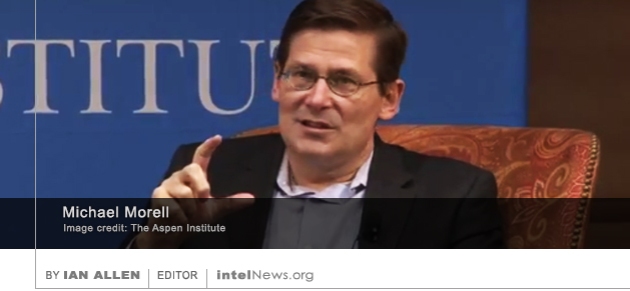
Morell - IA senior Central Intelligence Agency official, who led the agency as its acting director before retiring in 2013, has said that not having sources in the Iraqi government’s upper echelons led to the intelligence failure of 2003. Michael Morell retired as deputy director of the CIA, after having served twice as its acting director, in 2011 and from 2012 to 2013. A Georgetown University graduate, Morell joined the agency in 1980 and rose through the ranks to lead the Asia, Pacific and Latin America divisions. In May 2015, Morell published his book, The Great War of Our Time: The CIA’s Fight against Terrorism from al Qa’ida to ISIS, which he has been promoting while working as a consultant in the private sector.

Morell spoke at the Aspen Institute earlier this month, and once again offered a public apology to former United States Secretary of State Colin Powell for the CIA’s erroneous estimates on Iraq. He was referring to the Agency’s claims prior to the 2003 US invasion that Iraq maintained an active weapons-of-mass-destruction (WMD) program. The claims formed the basis of Powell’s February 2003 speech during a meeting of the United Nations Security Council, in which he claimed that the regime of Iraqi President Saddam Hussein had “biological weapons and the capability to rapidly produce […] many more.” There was no question, said Morell, that Powell’s reputation “was tarnished” as a result of the speech, and that a public apology was in order. The same apology, said Morell, applied “to every single American.”

The retired intelligence official went on to say that the main cause of the CIA’s erroneous assessment of Iraq’s WMD program was that the Agency had failed to penetrate the highest echelons of the Hussein regime. “We were not able to come up with the right answer [because] we didn’t do our fundamental job of penetrating [Hussein’s] inner circles with a human asset,” said Morell. As a result, there was “no information to give to the [CIA] analyst to say ‘here’s what this guy is up to’,” he added. The author of The Great War of Our Time, went on to suggest that the CIA’s failure to penetrate the inner circle of the Iraqi government prior to 2003 was “quite frankly a national security failure.”

Author: Ian Allen | Date: 29 December 2015 | Permalink
Israeli military warns its soldiers against recruitment attempts by the CIA

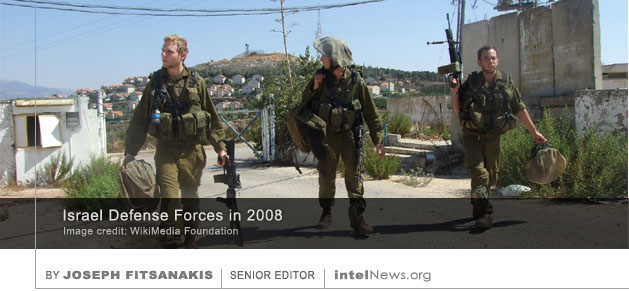
First Post HIsrael’s military intelligence agency has issued a warning to all soldiers in the Israeli armed forces to resist attempts by the United States Central Intelligence Agency (CIA) to recruit them. The existence of the highly unusual warning was revealed on Sunday by Chanel 2, one of Israel’s most popular television stations. According to the report, the communique was sent to every member of the Israel Defense Forces (IDF) by the Military Intelligence Directorate (MID). It cautioned Israeli troops to “be alert and report any unusual incidents” involving American intelligence personnel. The warning made specific reference to the CIA, saying it might be trying to recruit Israeli soldiers as informants.
The communique references a real-life case that is believed to have taken place three years ago, involving several Israeli citizens who had served in the MID. According to media reports, the Israelis, who were traveling to the US, were stopped during passport control and questioned at length by American officials. The latter, who were presumed to be CIA personnel, were alleged to have tried to persuade the Israelis to provide information about their military duties and knowledge of Israeli military affairs. But the Israelis reportedly refused to cooperate with the Americans and reported the incidents to their superiors in the Israeli military.

It is not unusual for the MID to issue warnings regarding soldiers’ use of online social media, or on topics such as confidentiality and discretion when using non-encrypted telephone networks. However, such warnings are typically only communicated to MID personnel and never mention foreign intelligence agencies by name, opting for generic language instead. It is highly unusual for such warnings to identify foreign intelligence agencies, and allied ones at that. The recent move has thus prompted intense speculation in Israel that the MID may have reacted to actual attempts by the CIA to recruit IDF personnel.

An Israeli military spokesperson told Channel 2 that the MID had indeed sent soldiers a written warning about possible recruitment attempts by the CIA. But the representative refused to discuss why the CIA was mentioned in the letter, or why the warning was issued last week.

Author: Joseph Fitsanakis | Date: 02 November 2015 | Permalink

Portugal detains ex-CIA operative wanted for 2003 kidnapping

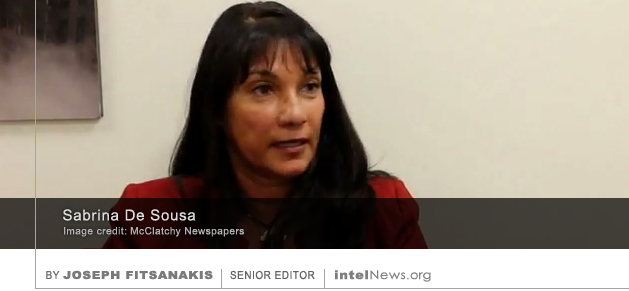
Sabrina De SousaA former officer in the United States Central Intelligence Agency, who is wanted by Italian authorities for her alleged role in the abduction and rendition of a suspected Islamist militant in Italy, has been arrested by police in Portugal. Sabrina De Sousa, 59, was an accredited diplomat stationed at the US consulate in Milan, Italy, when a CIA team kidnapped Hassan Mustafa Osama Nasr from a Milan street in broad daylight. Nasr, who goes by the nickname Abu Omar, is a former member of Egyptian militant group al-Gama’a al-Islamiyya, and was believed by the CIA to have links to al-Qaeda. Soon after his abduction, Nasr was renditioned to Egypt, where he says he was brutally tortured and raped, and held illegally for years before being released without charge.

Upon Nasr’s release from prison, Italian authorities prosecuted the CIA team that abducted him. They were able to trace the American operatives through the substantial trail of evidence that they left behind, including telephone records and bill invoices in luxury hotels in Milan and elsewhere. In 2009, De Sousa was among 22 CIA officers convicted in absentia in an Italian court for their alleged involvement in Nasr’s abduction. Since the convictions were announced, the US government has not signaled a desire to extradite those convicted to Italy to serve prison sentences. However, those convicted are now classified as international fugitives and risk arrest by Interpol and other law enforcement agencies, upon exiting US territory.

According to The Associated Press, Vice News and Newsweek, De Sousa was arrested at the Portela Airport in Lisbon, Portugal, on Monday. She is believed to have spent two nights in jail before being released on Wednesday. However, De Sousa’s passport was seized by Portuguese authorities, who are now trying to decide whether to extradite her to Italy to face charges for helping kidnap Nasr in 2003, and for failing to appear in court in 2009. Shortly after her conviction, De Sousa told American media that the CIA operation against Nasr in Italy “broke the law”, but had been authorized by the leadership of the CIA. The latter, she said, “abandoned and betrayed” those who carried out Nasr’s abduction, leaving them “to fend for themselves”.

In 2013, another convicted CIA operative, Robert Seldon Lady, who is believed to have been the CIA’s station chief in Milan at the time of Nasr’s kidnapping, was detained while attempting to enter Panama from Costa Rica at a remote jungle border-crossing. Costa Rican authorities said later that “a check on his passport [had] triggered an INTERPOL alert”. However, he was released a day later. According to the Panamanian foreign ministry, Lady was released because “Panama did not have an extradition treaty with Italy and because documentation sent by Italian officials was insufficient”.

Author: Joseph Fitsanakis | Date: 05 October 2015 | Permalink

CIA pulled officers from Beijing embassy following OPM database hack

Office of Personnel ManagementThe Central Intelligence Agency (CIA) pulled a number of officers from the United States embassy in Chinese capital Beijing, after a massive cyber hacking incident compromised an American federal database containing millions of personnel records. Up to 21 million individual files were stolen in June of this year, when hackers broke into the computer system of the US Office of Personnel Management (OPM), which handles applications for security clearances for agencies of the federal government. The breach gave the unidentified hackers access to the names and sensitive personal records of millions of Americans who have filed applications for security clearances —including intelligence officers.

According to sources in the US government, the records of CIA employees were not included in the compromised OPM database. However, that is precisely the problem, according to The Washington Post. The paper said on Wednesday that the compromised OPM records contain the background checks of employees in the US State Department, including those stationed at US embassies or consulates around the world. It follows that US diplomatic personnel stationed abroad whose names do not appear on the compromised OPM list “could be CIA officers”, according to The Post. The majority of CIA officers stationed abroad work under diplomatic cover; they are attached to an embassy or consulate and enjoy diplomatic protection, which is typically invoked if their official cover is blown. However, they still have to present their credentials and be authorized by their host country before they assume their diplomatic post. The CIA hopes that foreign counterintelligence agencies will not be able to distinguish intelligence personnel from actual diplomats.

Although the US has not officially pointed the finger at a particular country or group as being behind the OPM hack, anonymous sources in Washington have identified China as the culprit. If true, The Post’s claim that the CIA pulled several of its officers from the US embassy in Beijing would add more weight to the view that the Chinese intelligence services were behind the cyber theft. The paper quoted anonymous US officials who said that the CIA’s decision to remove its officers from Beijing was directly related to the OPM hack, and it was meant to safeguard their personal security, as well as to protect CIA programs currently underway in China.

Author: Joseph Fitsanakis | Date: 1 October 2015 | Permalink

Secret program gave CIA ‘unfiltered access’ to German communications

CIAThe United States Central Intelligence Agency had direct and unfiltered access to telecommunications data exchanged between German citizens, according to a new document that has surfaced in the German press. The program, codenamed GLOTAIC, was a collaboration between the CIA and Germany’s Federal Intelligence Service, known as BND. According to German newsmagazine Der Spiegel, which revealed the existence of the program last week, it lasted from 2004 to 2006. During those years, the CIA was given access to telephone and fax data carried by US telecommunications provider MCI Communications, which is owned by Verizon. The US-headquartered company owns a network switching facility in the German city of Hilden, located 10 miles east of Düsseldorf near the country’s border with Holland.
The existence of joint collection programs between the BND and American intelligence agencies has been established in the past, and has prompted the creation of a special investigative committee in the German parliament. The Committee of Inquiry into Intelligence Operations was set up in 2014, after files leaked by American defector Edward Snowden revealed that the US had been spying on the telephone communications of German Chancellor Angela Merkel. But it has also been investigating whether the BND’s collaboration with American intelligence agencies violated the rights of German citizens.

The committee had previously been told that all telecommunications data given to the US by German agencies had previously been vetted by BND officers. But the GLOTAIC documents published by Der Spiegel states that audio recordings of intercepted telephone calls were “directly routed to the US” in the interests of technical efficiency. The parliamentary committee had also been told that the data shared with the CIA concerned non-German citizens using German telecommunications networks. But the documents published last week state that a “technical glitch” in the GLOTAIC system allowed “massive German traffic” to be directly accessed by the CIA without having been first filtered by the BND.

Another document published by Spiegel reveals that the BND warned project CLOTAIC supervisors that the agency faced “serious risks” should the secret operation become public, because it had allegedly violated German federal privacy regulations.

Author: Joseph Fitsanakis | Date: 08 September 2015 | Permalink

Obama authorizes Special Forces, CIA, to conduct assassinations in Syria

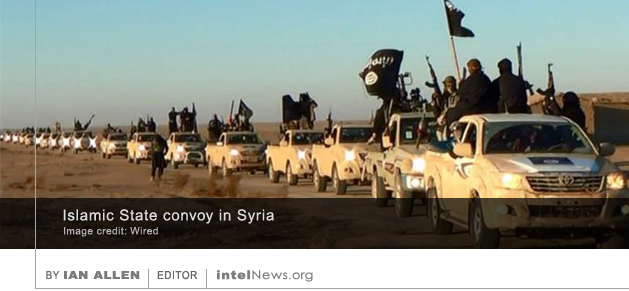
Islamic State convoy in SyriaThe United States Central Intelligence Agency is collaborating with the country’s Special Forces in a targeted killing program aimed against senior members of the Islamic State and other militant groups in Syria. The program, which has been directly authorized by US President Barack Obama, is limited in scope and has so far involved fewer than a dozen strikes against suspected militants. But it is believed to reflect increasing frustration in Washington about the lack of progress shown by the military campaign against the Islamic State. Recent reports by American intelligence agencies confirm that the militant group is “fundamentally no weaker” today than it was a year ago, despite an intense US-led bombing campaign involving thousands of airstrikes in Iraq and Syria.
The Washington Post, which revealed the existence of the program on Tuesday, said it brought together the CIA’s Counterterrorism Center (CTC) and the Joint Special Operations Command (JSOC). The CTC is believed to be primarily responsible for identifying and locating senior Islamic State figures in Syria, while the JSOC is in charge of killing them, mostly through the use of unmanned drones, according the paper. The two agencies continue to operate separate drone centers, said The Post, in Virginia and North Carolina respectively; but they have exchanged several of advisors who have constant access to each other’s drone video feeds.

The goal of the targeted killing program is to assassinate what the CIA refers to as “high-value targets”, which includes Islamic State leaders and those members of the organization whose job is to build a membership base outside the territorial boundaries or the Islamic State’s self-described caliphate. The Post said that the list of Islamic State members killed by the CIA-JSOC program includes Junaid Hussain, a British citizen who was instrumental in building and maintaining the Islamic State’s outreach campaign on social media. The paper noted that the CIA-JSOC targeted killing campaign is not part of the wider American military offensive against the Islamic State.

Author: Ian Allen | Date: 01 September 2015 | Permalink

Maltese far-right party had links to CIA, British documents suggest

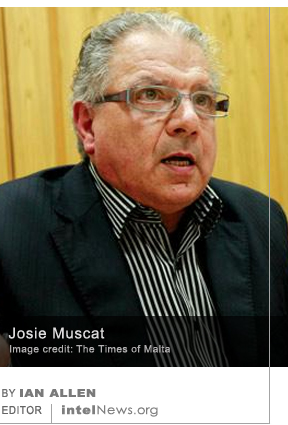
Josie MuscatA Maltese ultra-nationalist group believed to be behind a string of bombings in the 1980s was believed by British intelligence to have links to the United States Central Intelligence Agency (CIA), according to recently declassified documents. The Front Freedom Fighters (FFF) was a staunchly anticommunist group whose members violently objected to what they saw as Malta’s overly close contacts with the Communist Bloc. During the 16-year rule of the Maltese Labour Party, which began in 1971, the Mediterranean island maintained close relations with countries during such as Libya and North Korea. The Maltese Nationalist Party, which formed the main opposition to Labour, was highly critical of these contacts, but failed to win three consecutive electoral contests and was thus unable to influence the country’s foreign policy in any significant way.

The FFF emerged in the early 1980s from within the ranks of the Nationalist Party. It consisted of younger activists who favored a violent response to the rule of the Labour Party. The group was led by Josie Muscat, a dynamic anticommunist campaigner and longtime Nationalist Party Member of Parliament, who gathered around him some of the more extreme rightwing elements in the Nationalist Party. A string of bombings and threats directed at Labour Party facilities on the island was attributed to the FFF by the popular press, though Muscat himself consistently denied such accusations. Many believed that the FFF was actively preparing to launch an armed coup d’etat.

Eventually, the leadership of the Nationalist Party, which saw itself as falling within the mainstream of the European conservative tradition, began distancing itself from the FFF’s rhetoric and actions. In July of 1983, the party expelled FFF leaders from its ranks and forbade its members from associating with FFF-linked groups. Few Nationalist Party members followed Muscat, and his movement eventually suffered what some observers described “a natural death”.

However, new documents released this month by the National Archives in Britain show that the British Foreign Office believed that the FFF was being funded by the CIA. A Foreign Office Report from the early 1980s states that the group was probably behind several bomb explosions targeting Labour Party activists, as well as moderate Nationalist Party members. The report describes the FFF as “neo-Fascist in character” that prioritized crude violence as its main tactic. It goes on to say that the group consisted of about 500 determined members, but that its violent core was much smaller. The Foreign Office report also suggests that Muscat may have traveled abroad to meet CIA officers, as well as to network with other anticommunist organizations throughout Europe.

Asked to give his reaction to the British government documents, Muscat told The Times of Malta that he “hadn’t had such a good laugh in years”. The now retired politician denied having any links to the CIA and said that the FFF’s activities had been “mostly limited to political debating and had never even come close to any form of violence”.

Author: Ian Allen | Date: 25 August 2015 | Permalink

German government charges CIA spy with treason

BND GermanyA German intelligence officer, who is accused of spying for the United States Central Intelligence Agency, has been officially charged with treason by authorities in Berlin. The 32-year-old man, identified in court papers only as “Markus R.”, worked as a clerk at the Bundesnachrichtendienst, or BND, Germany’s external intelligence agency. He was arrested in July 2014 on suspicion of having spied for the CIA for approximately two years. German prosecutors say they have evidence that shows Markus R. supplied the American spy agency with around 200 classified German government documents in exchange for around €25,000 —approximately $30,000.

Germany’s Office of the Federal Prosecutor said on Thursday that Markus R. made contact with the CIA in 2008 and offered his services to the American spy agency. He began working for the United States as a double agent soon afterwards. His arrest last year added to the already tense relations between Berlin and Washington. The latter had been damaged a year earlier, when it was revealed that the US National Security Agency, America’s signals intelligence organization, had bugged the personal cell phone of German Chancellor Angela Merkel. The revelation, which was made public by Edward Snowden, an American defector to Russia who had previously worked for the NSA, showed that Chancellor Merkel had been targeted as part of a wider US spy operation against Germany.

The revelations sparked the establishment in Germany of a nine-member parliamentary committee that was tasked with evaluating Snowden’s revelations and proposing Germany’s response. It appears that Markus R. tried to spy on the activities of the committee on behalf of his American handlers. Soon after Markus R.’s arrest was made public, the German government ordered the immediate removal from Germany of the CIA chief of station –who was essentially the top American intelligence official in the country. Berlin also instructed its intelligence agencies to limit their cooperation with their American counterparts “to the bare essentials” until further notice.

It is worth noting that, before his arrest last year, Markus R. is also said to have approached Russian intelligence with an offer to work for them. He is thus believed to have supplied Moscow with classified German government documents as well.

Author: Joseph Fitsanakis | Date: 21 August 2015 | Permalink

CIA’s internal watchdog post remains vacant despite mounting calls to fill it

CIAThe administration of United States President Barack Obama has yet to nominate a replacement for the Central Intelligence Agency’s inspector general despite calls by Congress to quickly fill the sensitive post. The position has remained vacant since the end of January of this year, when David Buckley resigned after four years on the job. The position was created in 1989 in the aftermath of the so-called Iran-Contra affair, as part of a broader effort to institute independent oversight of the CIA. The Agency’s inspector general is tasked with, among other things, probing allegations of institutional illegality or personnel misconduct, and evaluating concerns raised by whistleblowers.

According to Michael Isikoff, chief investigative correspondent of Yahoo News, there are “mounting concerns on Capitol Hill” about the failure of the White House to nominate a replacement for Buckley, more than six months following his departure. Isikoff wrote that Senator Diane Feinstein (D-Ca), who chairs the Senate’s Select Committee on Intelligence, wrote to President Obama in June urging him to nominate a new CIA inspector general “as soon as possible”. In her letter, Feinstein expressed alarm over the delay, which could adversely affect a growing list of sensitive internal probes at the Agency. But the White House has yet to respond to Feinstein, let alone nominate a candidate for the position, said Isikoff.

Several government watchdogs and observers told Yahoo News that the situation at the CIA inspector general’s office is “hardly unique” and noted that the process for appointing inspector generals for US government agencies usually “takes too long”. Moreover, the Agency’s office of the inspector general is not headless; it is led by interim inspector general Christopher R. Sharpley, a government lawyer who worked under Buckley. However, many wonder whether the delay stems from the President’s inability to find an individual with a reputation for impartiality and the determination to handle one of the US Intelligence Community’s most challenging posts.

Author: Joseph Fitsanakis | Date: 06 August 2015 | Permalink

No signs of ISIS decline despite Western efforts, say US spy agencies

ISIS forces in RamadiInternal reports by American intelligence agencies say that the Islamic State remains strong in Iraq and Syria, and that the group has been able to effortlessly replace its 10,000 fighters who have been killed in the past year. Despite the over $1 billion spent in the war against it by the Syrian and Iraqi governments, as well as by the West, the militant group is “fundamentally no weaker” than it was a year ago, when the United States began a bombing campaign targeting Islamic State strongholds, according to the reports. The Associated Press, which published a summary of the assessment, said that it represents the views of the Central Intelligence Agency, the Defense Intelligence Agency and other members of the US Intelligence Community. Citing anonymous US officials, the news agency said that the overall assessment of the situation could be described as a “strategic stalemate”.

If the leaked assessment is accurate, it would directly contradict the views expressed recently by retired US Marine Corps General John Allen, who is serving as Special Presidential Envoy for the Global Coalition to Counter ISIS. Speaking last week at the annual Aspen Security Forum in Colorado, General Allen argued that the Islamic State (known also as the Islamic State in Iraq and Syria, or ISIS) was “losing”. He added that “we have seen some significant progress” in the war against the group and said he believed that its “momentum has been checked strategically, operationally and, by and large, tactically”.

 But according to the Associated Press, US defense officials have seen “no meaningful degradation” in the numbers of ISIS fighters. They put the group’s current strength at between 20,000 and 30,000 uniformed troops, a number that is practically identical to that of August 2014, when the administration of US President Barack Obama initiated an air bombing campaign against ISIS targets. The intelligence assessments suggest that, not only is ISIS able to replenish its fighter ranks with new recruits from around the world, but that the group’s finances have not been significantly affected by the US air campaign. American fighter jets have repeatedly attacked ISIS-controlled oil installations in recent months; but the group has been able to rebuild its oil-drilling and -refining capacities, and continues to earn over $40 million a month from the sale of oil.

The reports go on to state that, based on current trends, it could take more than a decade before ISIS became weak enough to justify expectations that it could retreat from its strongholds in Iraq and Syria.

Author: Joseph Fitsanakis | Date: 03 August 2015 | Permalink

CIA using Macau casinos to recruit Chinese officials, says report

Sands casino in Macau ChinaOfficials in China think that United States spy agencies are using casinos in Macau to entrap Chinese government employees, according to a report produced on behalf of an American-owned casino chain in the former Portuguese colony. The report was produced by a private investigator and was commissioned by Sands China, the Macau branch of a casino venture owned by American gambling magnate Sheldon Adelson. Its goal was to investigate why the Chinese-appointed authorities in Macau were hostile to the gambling industry in general and Sands China in particular.
The report is dated June 25, 2010, and includes a warning that it should not be shared with Chinese officials in Macau or in mainland China. It cites several unnamed officials in China’s Liaison Office, which governs Macau and Hong Kong, as well as sources in China’s Ministry of Foreign Affairs, and Chinese businessmen with close ties to the government in Beijing. It suggests that Beijing is weary of the damage caused to its public image by thousands of its employees gambling away an estimated $2 billion each year in Macau. Additionally, says the report, the central government in Beijing is hostile to the foreign-owned gambling industry in Macau because it believes that it collaborates with Western intelligence agencies. Sands China establishments in Macau, in particular, are believed by the Chinese government to be recruiting grounds for the United States Central Intelligence Agency, says the 2010 report.

Citing “well-placed sources” in the Chinese capital, the report suggests that the fear of espionage is “the primary subject” that causes Beijing’s hostility toward Sands China. It notes that “many of the [Chinese] officials we contacted were of the view that US intelligence agencies […] have penetrated and utilized the casinos [in Macau] to support their operations”. It adds that Chinese counterintelligence agencies have “evidence” that CIA operatives “monitor mainland government officials” who visit Macau to gamble, paying particular attention to those losing large amounts of money, or those visiting Macau without the knowledge of their superiors. They then “lure and entrap” them, forcing them “to cooperate with US government interests”.

The report was uncovered by the Investigative Reporting Program of the University of California Berkeley’s Graduate School of Journalism and published on Wednesday in British broadsheet The Guardian. The paper said the report was among a set of documents filed with a court in Las Vegas, where the former head of Sands’ Macau casinos is suing the company for wrongful dismissal. The Guardian contacted the Sands Company, which rejected the contents of the report as “a collection of meaningless speculation”. Its senior vice president for global communications and corporate affairs, Ron Reese, also dismissed the report as “an idea for a movie script”.

Author: Joseph Fitsanakis | Date: 23 July 2015 | Permalink: https://intelnews.org/2015/07/23/01-1741/

Cold War files show secret war between CIA and KGB in Canada

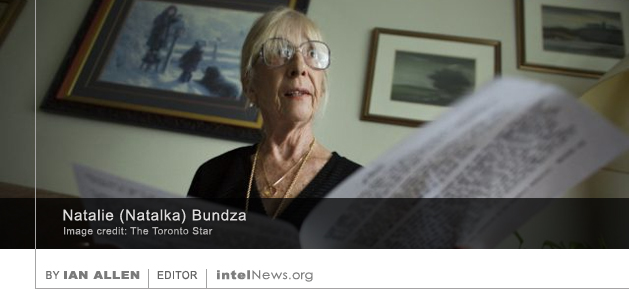
Natalie (Natalka) BundzaA set of declassified intelligence documents from the 1950s and 1960s offer a glimpse into the secret war fought in Canada between American and Soviet spy agencies at the height of the Cold War. The documents were authored by the United States Central Intelligence Agency and declassified following a Freedom of Information Act request filed on behalf of the Canadian newspaper The Toronto Star. According to the paper, they show that Toronto was a major hub of a prolonged espionage conflict fought between the CIA and the Soviet KGB.

Much of the espionage activity by the two spy agencies concentrated on Toronto’s sizable Eastern European expatriate community, especially on immigrants with Ukrainian and Polish roots. In one document dating from 1959, a CIA officer details the profiles of 18 Canadian citizens, most of them Toronto residents, who were suspected by Langley to be working for the KGB. Most of them were believed to be non-official-cover operatives, or NOCs, as they are known in the US Intelligence Community. The term typically refers to high-level principal agents or officers of an intelligence agency, who operate without official connection to the diplomatic authorities of the country that employs them. The declassified document explains that the suspected NOCs had secretly traveled to the USSR after being recruited by the KGB. They were then trained as spies before returning to Canada years later under new identities.

Others, like a naturalized Canadian identified in the documents as Ivan Kolaska, were believed by the CIA to have immigrated to Toronto as part of a broader KGB effort to infiltrate the ranks of the anti-communist Eastern European expatriate community in Canada. Some of these infiltrators were able to settle in Canada, marry locals, get jobs and have families, while living a double life. The Star spoke to one Ukrainian immigrant to Canada whose name features in the declassified CIA files. Natalie Bundza, now 78, worked as a travel agent in 1950s’ Toronto and regularly led tourist groups to communist countries. She was a Ukrainian nationalist and anticommunist, but the CIA believed she was pretending to have these beliefs in order to infiltrate the Ukrainian expatriate community in Toronto. The American agency kept tabs on her and was able to compile a sizable file with information about Bundza’s friends and associates, her travel itineraries, and even the contents of her suitcases she took with her on international trips.

Author: Ian Allen | Date: 3 July 2015 | Permalink: https://intelnews.org/2015/07/03/01-1728/

In surprise move, US Congress may slash funding for CIA ops in Syria

CIAAmerican Congressional lawmakers have voted to cut funding for the Central Intelligence Agency’s secret operations in Syria, in a surprise move that indicates growing concern on Capitol Hill with Washington’s strategy on the Syrian Civil War. The CIA’s involvement in the Syrian Civil War began in 2012, when US President Barack Obama issued 1 a classified presidential finding that authorized Langley to arm and train opposition militias. The clandestine program was initially based in training camps in Jordan, before eventually expanding to at least one location in Qatar. Currently, the CIA’s secret involvement in the Syrian conflict is said 2 to be among the Agency’s most extensive covert operations in the world, and comes at an annual cost that is nearing $1 billion.

But this amount may be cut by as much as 20 percent if the Permanent Select Committee on Intelligence of the US House of Representatives has its way. According to The Washington Post 3, the Committee recently voted to reduce the Agency’s classified funds for the Syria operation as a way of expressing its “concern with [US] strategy in Syria”. It is perhaps indicative of the displeasure on Capitol Hill with Washington’s current policy on Syria that the Committee voted unanimously to slash the CIA’s funding. The Post even quoted the ranking Democrat on the Committee, Adam B. Schiff (CA), who said there was “growing pessimism” among Committee members, who felt that the US would not be in a position to “help shape the aftermath” of the conflict in Syria.

The surprise move by the Congressional intelligence panel will need to be ratified by the House, which will vote on a preliminary intelligence-spending bill this week. The Post said that the measure “provoked concern” in the White House, while CIA officials warned that slashing the CIA’s funding for its Syria operations could seriously hurt rebel groups that are being backed by the US. One unnamed US intelligence official told the paper that Russia and China would continue to fund the regime of Syrian President Bashar al-Assad, even as Congress decided to defund the CIA’s operations in the war-torn Middle Eastern country. The White House declined to respond to questions about the vote.

Author: Joseph Fitsanakis | Date: 15 June 2015 | Permalink: https://intelnews.org/2015/06/15/01-1714/


  1. J. Fitsanakis “Obama authorizes CIA to conduct ‘non-lethal covert action’ in SyriaintelNews [03aug2012] 
  2. G. Miller and K. DeYoung “Secret CIA effort in Syria faces large funding cutThe Washington Post [12Jun2015] 
  3. G. Miller and K. DeYoung “Secret CIA effort in Syria faces large funding cutThe Washington Post [12Jun2015] 

CIA chief paid secret visit to Israel ahead of Iran nuclear deal

John BrennanThe director of the United States Central Intelligence Agency visited Israel in secret last week to discuss the Jewish state’s refusal to endorse an emerging deal with Iran over its nuclear program. Citing “two senior Israeli officials”, the Tel Aviv-based Israeli newspaper Haaretz said on Tuesday that CIA Director John Brennan arrived in Israel last Thursday. Although he was officially hosted by Tamir Pardo, director of Israeli intelligence agency Mossad, Brennan used the opportunity to hold secret meetings with several senior Israeli officials, said Haaretz. Among them were Prime Minister Benjamin Netanyahu, National Security Adviser Yossi Cohen, as well as Major General Hartzl Halevi, who heads Israel’s Military Intelligence Directorate.


According to Haaretz, Brennan’s visit to Israel had been planned “long ahead of time”, and should not be interpreted as a sudden diplomatic move from Washington. However, it came just weeks ahead of a deadline for a far-reaching settlement next month between Iran and six world powers over the Islamic Republic’s nuclear program. If successful, the much-heralded deal will mark the conclusion of ongoing negotiations between the Islamic Republic and a group of nations that have come to be known as P5+1, representing the five permanent members of the United Nations Security Council plus Germany. Israel, however, has strongly criticized the negotiations, referred to as ‘the Geneva pact’. Last year, the Israeli Prime Minister called the pact a “historic mistake” that would enable “the most dangerous regime in the world” to get closer to “attaining the most dangerous weapon in the world”.

It is not known whether Brennan brought with him a message from US President Barack Obama addressed to the Israeli Prime Minister, said Haaretz. On Monday, just 72 hours after Brennan’s departure, another senior American official landed in Tel Aviv —openly this time. It was General Martin Dempsey, Chairman of the US Joint Chiefs of Staff, who was hosted by his Israeli counterpart, General Gadi Eisenkot. Like Brennan before him, General Dempsey met with Prime Minister Netanyahu and Minister of Defense Moshe Yaalon. Haaretz contacted the CIA about Brennan’s secret visit to Israel, but an Agency spokesperson refused to comment.

Author: Joseph Fitsanakis | Date: 10 June 2015 | Permalink: https://intelnews.org/2015/06/10/01-1712/