News you may have missed #477 (Germany edition)

  • German ex-foreign minister in spat with ex-CIA director. Former CIA Director, George Tenet, claims that he discovered “too damn late” that Curveball –the Iraqi defector who became a key source for the CIA and the German secret service (BND)– was a fabricator. But Germany’s former foreign minister, Joschka Fischer, has told journalists that the BND did in fact share its doubts about Curveball with the CIA.
  • German spy chief claims Mubarak to stay in Egypt [unconfirmed]. According to German newspaper Die Welt, Ernst Uhrlau, director of Germany’s BND federal intelligence agency, says he has “no evidence that former Egyptian President Hosni Mubarak wants to leave the country, and that his comment that he intends to stay and be buried in Egypt “is credible”.
  • Austrian on trial in Germany on charges of spying for Russia. An Austrian soldier is on trial in Germany, accused of spying for Russia’s Foreign Intelligence Service (SVR) and passing on sensitive information about European helicopter prototypes. Prosecutors at the Munich court allege that the unnamed 54-year-old Austrian army mechanic spied from 1997 to 2002.

Colin Powell wants answers over fake Iraq intelligence

Rafid Ahmed Alwan al-Janabi

Alwan al-Janabi

By IAN ALLEN | intelNews.org |
Regular readers of this blog will not be surprised by recent news that the Iraqi defector whose information helped build the Bush Administration’s case for invading Iraq in 2003, has admitted he lied about Saddam Hussein’s alleged weapons of mass destruction. Rafid Ahmed Alwan al-Janabi, known in intelligence circles as ‘Curveball’, arrived in Germany in 1999, where he applied for asylum, saying he had been employed as a senior scientist in Iraq’s biological weapons program. Serious doubts about al-Janabi’s reliability were expressed at the time by Germany’s Federal Intelligence Service, the BND, and by some in the CIA. Yet his testimony became a major source of US Secretary of State Colin Powell’s February 2003 speech before the United Nations Security Council, in which he layed out Washington’s case for war. A year later, both the BND and the CIA concluded that al-Janabi had been lying about his alleged biological weapons role, and that he was in reality a taxi driver from Baghdad, who had used his undergraduate knowledge of engineering to fool Western intelligence. Now al-Janabi, who still lives in Germany, has spoken to British newspaper The Guardian, and openly admitted that his story was completely fabricated. He told the paper that he was an “opposition activist” and that he lied to his German and American intelligence handlers in order to help “topple” the regime of Saddam Hussein. Read more of this post

News you may have missed #476

News you may have missed #475 (Arab revolution edition)

  • Obama ‘disappointed’ with US intelligence on Tunisia. US President Barack Obama sent word to National Intelligence Director James Clapper that he was “disappointed with the intelligence community” over its failure to predict that the outbreak of demonstrations would lead to the ouster of President Zine el-Abidine Ben Ali in Tunis.
  • An Intelligence Failure in Egypt? The US intelligence community is like the offensive line of the government. They protect the quarterback all day long, and no one notices until they give up a sack. Which raises the question: was US President Barack Obama blindsided by the uprisings in Tunisia and Egypt?
  • Did US intelligence fail in North Africa? “One former official said US president Barack Obama recently urged the CIA to put as much effort into analysis of the situation in North Africa as into covert operations, including those targeting al-Qaida”.

Egypt intelligence highlights Congress-CIA tensions

Egypt uprising

Egypt uprising

By IAN ALLEN | intelNews.org |
A US Congressional hearing over a career CIA official’s promotion turned into a heated exchange on Thursday, as Congress members accused America’s intelligence community of failing to provide forewarning of the political instability in Egypt. Speaking before the US Senate’s Select Committee on Intelligence, Stephanie O’Sullivan, former Director of the CIA Directorate of Science and Technology, was faced with an unexpected barrage of questions concerning the Agency’s alleged failure to provide US policy planners with accurate warning of the Egyptian popular uprising. Shortly after the start of the hearing, which was intended to deliberate O’Sullivan’s nomination for the position of Deputy Director of the Office of Director of National Intelligence, attention turned to Egypt, with members of the Committee pressuring the CIA executive to explain why the US intelligence community had failed to issue ample warnings on Egypt. O’Sullivan responded repeatedly that the CIA and other US intelligence services had provided warnings to Obama Administration officials in November and December of 2010, about extreme political volatility in North Africa. Read more of this post

Analysis: Spy Agencies Failed to Predict Egypt Uprising

Egypt uprising

Egypt uprising

By JOSEPH FITSANAKIS| intelNews.org |
It is becoming increasingly clear that the ongoing popular uprising in Egypt represents the most important geopolitical development in the Middle East since the 1979 Islamic Revolution in Iran. In light of this, it is remarkable how unprepared foreign intelligence agencies have proven in forecasting the crisis. Even the Israelis were caught completely unaware: on January 25, the day when massive protests first erupted across Egypt, Major General Aviv Kochavi, newly appointed head of Israel’s Military Intelligence Directorate, told a Knesset committee that “there are no doubts about the stability of the regime in Egypt” and that “the Muslim Brotherhood is not organized enough to take over”. Instead, Kochavi focused on political volatility in Lebanon; ironically, the latter now seems like an oasis of tranquility compared to the explosive state of Egyptian politics. If the Israelis, whose very concept of national security is inextricably linked with developments in Cairo, were so unsuspecting of the popular wave of anger against the thirty-year dictatorship of President Hosni Mubarak, one can only imagine Washington’s surprise at the protests. Click here to read my article in Intelligent-Intelligence.com, a specialist publication edited by Kyle Cunliffe. Continue reading →

Analysis: What is the CIA doing in Egypt?

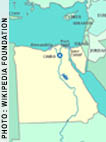
Egypt

Egypt

By JOSEPH FITSANAKIS | intelNews.org |
Every time there is a popular uprising anywhere in the Muslim world, the minds of American intelligence planners go immediately to 1979, when the Iranian Revolution tore down almost overnight one of Washington closest allies in the Middle East. By ignoring the immense unpopularity of the Shah’s brutal regime, and by limiting its Iranian contacts among the pro-Shah elites in the country, the CIA was caught completely in the dark as the Islamic revolution unfolded. Could the same be happening now in Egypt? Hopefully not, says The Washington Post’s veteran intelligence correspondent Jeff Stein. As in the case of Iran under the Shah, the US has stood by the 33-year dictatorship of Hosni Mubarak, choosing to abide by the simplistic dogma of ‘either secular repression or anti-American Islamism’. But, unlike 1970s Iran, one would hope that US intelligence agencies have been able to develop useful contacts across the fragmented but dynamic and energized Egyptian opposition community, says Stein, quoting former US Defense Intelligence Agency official Jeffrey White. It is unlikely that the CIA and other agencies have fully embraced persistent calls, such as those by Emile Nakhleh, former head of the CIA’s program on political Islam, to develop trustworthy contacts inside the Egyptian Islamic Brotherhood, as well as groups close to it, such as Hamas and Hezbollah. Read more of this post

News you may have missed #471 (ex-spy edition)

  • Interview with ex-CIA analyst David Kanin. Interesting extended discussion with Dr. Kanin, who was a CIA analyst for 31 years, who suggests the US is currently on the retreat, both politically and economically.
  • New book by ex-CIA agent Everett. Watergate uncovered many high-level secrets, including the identity of CIA agent James A. Everett, whose cover was blown in Congressional hearings during the White House scandal and its fallout. Now Everett shares his story of recruitment and training by the CIA in his book The Making and Breaking of an American Spy.
  • Ex-MI5 officer questions UK spying priorities. The cascade of revelations in the UK about undercover police officers spying on environmental groups, suggest Britain needs a sense of perspective on threats to the nation, argues former MI5 intelligence officer Annie Machon.

South African spy chief had secret US talks, embassy cable reveals

Moe Shaik

Moe Shaik

By JOSEPH FITSANAKIS | intelNews.org |
South Africa’s spy chief regularly gave the American embassy in Pretoria detailed information on internal African National Congress (ANC) politics, according to a diplomatic cable leaked by WikiLeaks. The cable, entitled “Zuma Advisor Threatens to Expose Political Skeletons”, was authored on September 10 2008 by the embassy and communicated to several recipients, including the State Department, CIA, and the National Security Council. It reveals that Moe Shaik, who heads the South African Secret Service (SASS), the country’s external intelligence agency, met regularly with an unnamed political officer of the US embassy and “always share[d] insights into the motivations and strategies of the Zuma camp”. The reference is to Jacob Zuma, President of the governing ANC, who assumed the organization’s leadership in May of 2009, after a bitter internal party struggle. Several months prior to Zuma’s election as ANC’s President, the organization’s rival faction, which was loyal to Thabo Mbeki, attempted to challenge Zuma’s eligibility by leveling corruption charges against him. Read more of this post

US paying ‘price in blood’ for Israel-Palestine conflict, say ex-CIA officers

Bruce Riedel

Bruce Riedel

By IAN ALLEN | intelNews.org |
Two former CIA officers have warned that America will continue “paying an increasing price in blood” for the Israeli-Palestinian conflict, and urged the White House to directly meddle in domestic Israeli politics in order to help end the dispute. Speaking on Thursday at a conference on achieving Israeli-Palestinian peace, Bruce Riedel and Frank Anderson, whose combined CIA careers span 55 years, agreed that a new all-out war between Israel and the Palestinians would be inevitable unless the United States aggressively “puts down its own map of a two-state solution”. Anderson, who is currently President at the Middle East Policy Council, opined that America is “paying an increasing price in blood for [the Israelis’ and the Palestinians’] failure and refusal to reach an agreement”. Riedel, who is Senior Fellow at the Brookings Institution, argued that “American lives are being lost today” due to the conflict’s impact on American national security. Read more of this post

News you may have missed #470

  • Blackwater still working for US despite denials. Reports that Blackwater is out of the US government’s private-security game appear to have been greatly exaggerated. A consigliore to the company’s new owners has said the firm still holds security contracts with the US State Department, and intends to seek more.
  • CIA gets spooky with new radio commercials. The CIA’s National Clandestine Service is continuing its recruitment drive with new radio commercials, complete with a spooky soundtrack of sawing violins and rising timpani –and something about “no one will ever know what you do”.
  • Iranian shah’s son found dead in Boston. Alireza Pahlavi, the youngest son of the late shah of Iran, has been found dead from a self-inflicted gunshot wound in Boston’s South End. In June 2001, Alireza’s sister Leila was found dead in a London hotel room from an overdose of barbiturates. The late siblings’ father was overthrown in the 1979 Islamic revolution. He died in Egypt in 1980.

News you may have missed #468

Why is Germany protecting Iraqi informant who lied about WMDs?

Rafid Ahmed Alwan

Alwan al-Janabi

By JOSEPH FITSANAKIS | intelNews.org |
German politicians in the state of Baden-Württemberg are questioning the protection given by German intelligence services to a notorious Iraqi informant, who lied about Iraq’s weapons program. Rafid Ahmed Alwan al-Janabi, known in intelligence circles as “Curveball”, arrived in Germany in 1999, where he applied for political asylum, saying he had been employed as a senior scientist in Iraq’s biological weapons program. Despite serious doubts expressed at the time by officials in Germany’s Federal Intelligence Service, the BND, and by some of their CIA colleagues, al-Janabi was given asylum in Germany. Moreover, information gathered from his testimony became a major source of the Bush Administration’s argument in favor of going to war in Iraq in 2003. Less than a year later, both the BND and the CIA concluded that al-Janabi had been lying about his alleged biological weapons role, and that he was in reality a taxi driver from Baghdad, who had used his undergraduate knowledge of engineering to fool Western intelligence. Read more of this post

Ex-CIA officer faces up to 120 years for leaking secrets

James Risen

James Risen

By IAN ALLEN | intelNews.org |
A former CIA officer, who sued the Agency after he was fired, was arrested last Thursday in St. Louis, Missouri n charges of leaking classified information about a botched CIA covert operation in Iran. There is no information on the indictment about the recipient of the information that was leaked by Jeffrey Alexander Sterling, who worked for the CIA from 1993 until 2002. But it is common knowledge Sterling spoke to James Risen, a Pulitzer Prize winning journalist for The New York Times. In 2002, Risen wrote an article about Sterling’s lawsuit, in which the plaintiff claimed he was told by his superiors that he was “too big and black” to operate covertly overseas. According to the indictment, in 2003, after Sterling’s lawsuit was thrown out on national security grounds, he started leaking information (presumably to Risen), which he had gathered while working for the CIA’s Iran Task Force. Risen reportedly tried to publish Sterling’s disclosures, but The New York Times declined to print them, after its editors were warned by the White House that they would be severely detrimental to national security. Read more of this post

News you may have missed #465

  • Germany denies secret spy collaboration with the US. Germany’s aerospace center denied Monday that it is working with the US on a $270 million high-tech secret spy program, insisting that its plans for a high-resolution optical satellite have purely scientific and security uses. The denial was in response to US State Department cables obtained by WikiLeaks and revealed by Norwegian daily Aftenposten.
  • Was Iranian nuclear defector tortured? Iranian nuclear scientist Shahram Amiri, who returned to Tehran in July after what he called a “kidnapping” by the CIA, has been held in detention by Iranian authorities for two months and tortured so badly he was hospitalized, according to a dissident Iranian web site.
  • WikiLeaks reveals France leads industrial spying in Europe. France is the country that conducts the most industrial espionage on other European countries, even ahead of China and Russia, according to leaked US diplomatic cables, reported in a translation by Agence France Presse of Norwegian daily Aftenposten‘s reporting.