Security official confirms ‘unprecedented’ anti-corruption campaign in Iran’s judiciary
August 16, 2019 1 Comment
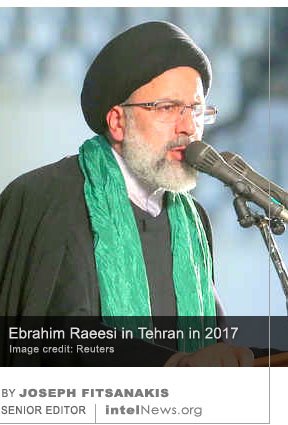 A senior Iranian intelligence official has confirmed widespread rumors that an unprecedented anti-corruption campaign is taking place at the top echelons of Iran’s all-powerful judiciary, with some senior figures already in prison. The Iranian judiciary is one of the most powerful and secretive institutions in the Islamic Republic. It is nominally supervised by the Iranian Justice Ministry, but its senior officials, including the chief justice (the head of the judiciary), are appointed directly by Iran’s Supreme Leader Ali Khamenei. It follows that the judiciary has been a deeply conservative institution throughout the country’s existence, and especially after the 1979 Islamic Revolution.
Until earlier this year, the judiciary was headed by Ayatollah Sadeq Amoli Larijani, a protégé of Khamenei, who named him chief justice in August of 2009. Throughout Larijani’s decade-long tenure, there were rumors of rampant corruption in the judiciary, but Khamenei never seemed to intervene. However, in March of this year Larijani was suddenly removed from his position and replaced with Ebrahim Raeesi (pictured), a conservative former attorney general with middle-to-low-rank clerical credentials. Almost as soon as he took charge of the judiciary, Raeesi announced a sweeping anti-corruption campaign. In July, rumors began to circulate in the media that Iran’s Deputy Chief Justice, Akbar Tabari, had been arrested.
On Wednesday, Ali Abdollahi, head of the judiciary’s intelligence and security wing, said during a speech that Tabari had indeed been imprisoned for “exerting influence on some legal cases” and “having unlawful and unethical relationships”. He added that a number of other members of the judiciary had been placed under arrest in connection with the investigation on Tabari. On Thursday, Abdollahi said that the arrests had taken place under the direction of Supreme Leader Khamenei and that they would continue both inside and outside the judiciary. There would be “no delay in cleansing the inside and outside of the judiciary”, said Abdollahi. Raeesi and Khamenei have not made any public comments. But observers now believe that the unprecedented wave of arrests would never have reached the upper levels of the judiciary unless the supreme leader had personally given the anti-corruption campaign the green light.
► Author: Joseph Fitsanakis | Date: 16 August 2019 | Permalink
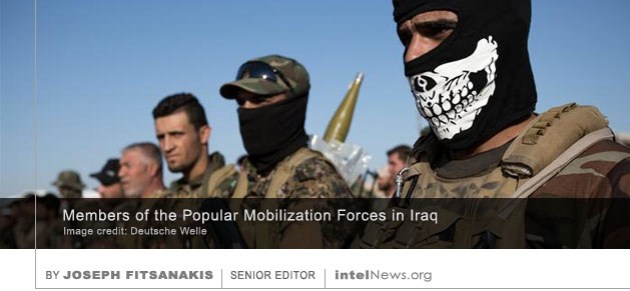 A powerful alliance of about 50 Shiite militias, who helped Iraq defeat the Islamic State, is resisting calls by the Iraqi government to surrender its weapons and join civilian life, according to observers on the ground. Much of the territory captured from the Islamic State (known also as the Islamic State of Iraq and Syria, or ISIS) in northern Iraq is currently controlled by the Popular Mobilization Forces (PMF), a collection of around 40 different Shiite militias consisting of over 150,000 armed fighters. The militias began to form in the summer of 2014, after Sayyid Ali al-Husseini al-Sistani, the spiritual leader of the Iraqi Shiite community, issued a fatwa (religious degree) that called or the destruction of ISIS. The Iranian-supported PMF proved instrumental in the territorial defeat of ISIS. However, the group’s leadership is ideologically aligned with Iran, and many of its members will not cooperate with the Iraqi Armed Forces, because of the latter’s proximity to the United States.
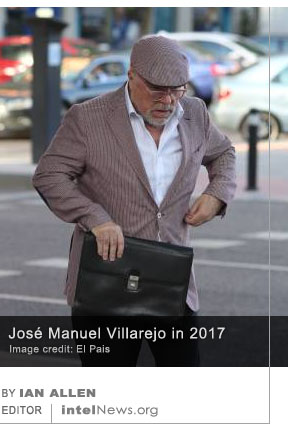 Spain’s second largest bank has been placed under investigation in connection with a probe into an illegal network that spied on scores of politicians, business executives, journalists and judges for over 20 years. The investigation centers on José Manuel Villarejo (pictured), a 67-year-old former police chief, who remains in pre-trial custody following his
  The younger brother of Algeria’s deposed president Abdelaziz Bouteflika has been arrested along with two former directors of the country’s spy services. All three men are known as some of the North African country’s most powerful figures. Saïd Bouteflika, 61, served as senior advisor to his brother for over a decade. In 2013, when President Bouteflika suffered a debilitating stroke, Saïd became what many see as Algeria’s de facto leader and its primary decision-maker. He had not been seen in public since February 22, when mass demonstrations broke out across the country just hours after President Bouteflika, 82, announced that he would run for the highest office in the land for a record fifth time. The massive protests forced Bouteflika, who had held the presidency for two decades, to resign on April 2.
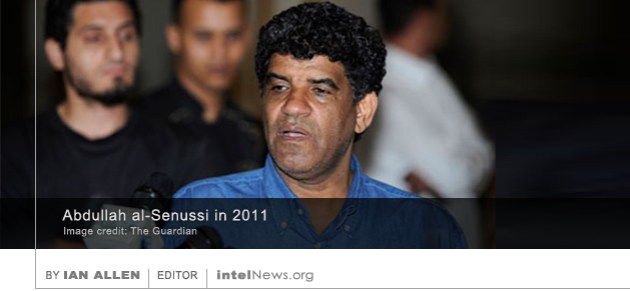 A senior intelligence advisor to Libya’s late ruler Muammar al-Gaddafi has reportedly told French investigators that the Libyan government gave $8 million to the election campaign of France’s ex-President Nicolas Sarkozy. Sarkozy’s 30-year political legacy has been marred by a series of financial scandals, for which he is currently under investigation. In March of last year, the former French president issued strong denials of accusations that he accepted an illicit multi-million monetary donation from Gaddafi during his 2007 campaign for the presidency. During a 20-minute television interview, Sarkozy described the investigation into the allegations that he acted as an agent of influence for Libya as “a waste of time”, arguing that it was over an alleged donation of less than $45,000, which represented a tiny fraction of his campaign budget.
 A judge in Spain has widened an investigation into an illegal network that spied on scores of politicians, business executives, journalists and judges for over 20 years, in return for payments by wealthy clients. At the center of the case is José Manuel Villarejo, a 67-year-old former police chief, who was arrested in November of 2017 for carrying out illegal wiretaps and remains in pre-trial custody. State prosecutors accuse Villarejo of running an illicit information-collection enterprise that violated the privacy of hundreds of unsuspecting citizens. The latter were targeted by corporate competitors and individual wealthy clients. Many of Villarejo’s targets were eventually blackmailed by the recipients of information collected by the former police chief and his network.
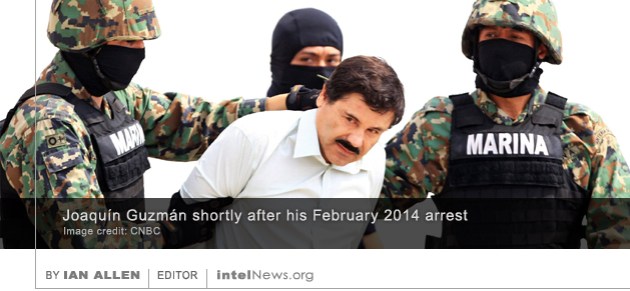 A high-profile witness has told the trial of Joaquín ‘El Chapo’ Guzmán in New York that the accused bribed the then President of Mexico, Enrique Peña Nieto, with $100 million in order to stay out of prison. Guzmán, the leader of the powerful Sinaloa drug cartel, was
 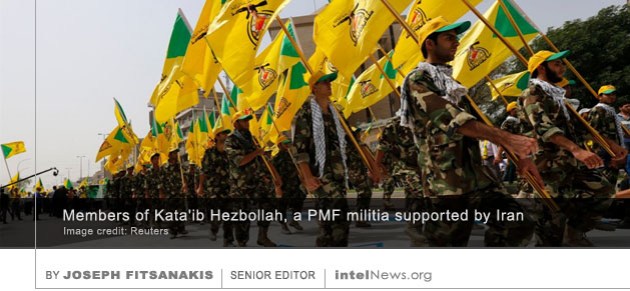 The Shiite militias that fought in the war against the Islamic State are now “engaged in mafia-like practices” in former Islamic State strongholds, enraging Iraqi Sunnis and sparking fears of another Islamist insurgency, according to a
 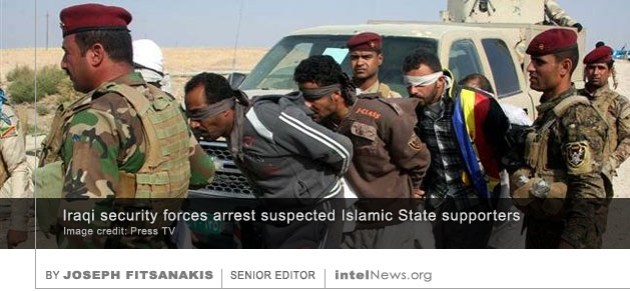 A campaign of revenge by Iraq’s Shiite-dominated government against Sunni Arabs in regions once controlled by the Islamic State is aiding Islamists and fueling another rebellion in the country, according to a new report. In 2014, the meteoric rise of the Islamic State of Iraq and Syria —ISIS, later renamed to Islamic State— was largely aided by the strong belief among Iraqi Sunnis that they were second-class citizens in a Shiite-dominated Iraq. In addition to its Sunni credentials, the Islamic State was also able to appeal to Iraqi Sunnis by portraying itself as pious, efficient and trustworthy. This image was in a sharp contrast to the widespread provincial view of politicians in Baghdad as corrupt, indifferent and ineffectual. Popular support for the Islamic State among Iraq’s Sunni Arab minority took the Iraqi government by surprise and almost enabled the militant group to conquer Baghdad in 2015.
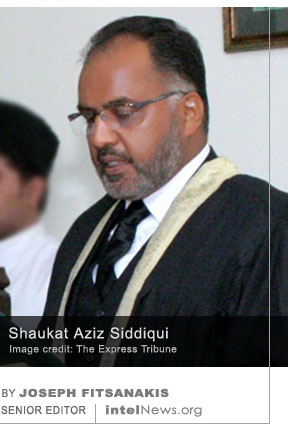 The government of Pakistan has dismissed a High Court judge who accused the country’s powerful intelligence agency of interfering with the judicial process in order to rig the outcome of last July’s general election. On July 25, the governing center-right Pakistan Muslim League – Nawaz (PML-N) was unseated by the conservative-centrist Pakistan Tehreek-e-Insaf, headed by former cricket star Imran Khan. The elections took place amidst a corruption scandal that saw Nawaz Sharif, former prime minister of Pakistan and leading member of PML-N, arrested on charges of fraud. Sharif was charged following the release of the so-called
 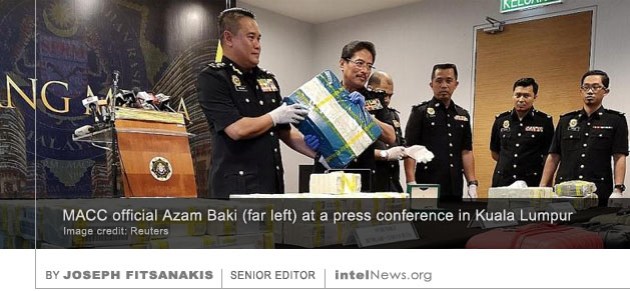 Eight senior officials of Malaysia’s external intelligence agency, including its former director, have been arrested, allegedly for stealing over $16 million from government coffers. The arrests represent a dramatic widening of the anti-corruption campaign that has gripped the Asian nation of 31 million since it was launched in May of this year. The campaign is led by a special task force within the Malaysian Anti-Corruption Commission (MACC). The task force was set up by Malaysia’s Prime Minister Mahathir Mohamad, with the aim of probing the so-called 1MDB scandal. The acronym refers to the 1Malaysia Development Berhad, a government-owned strategic development company spearheaded by Malaysia’s then Prime Minister, Dato Sri Najib Razak, with the aim of raising funds to match foreign direct investment in the country.
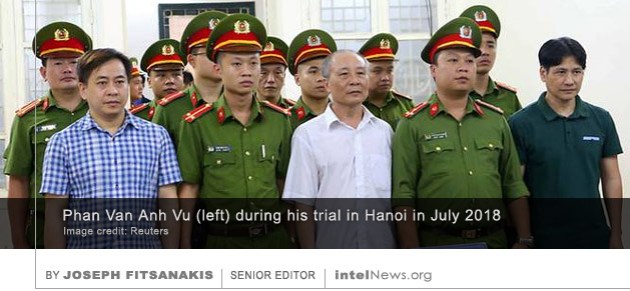 In a move that has stunned Vietnamese society, authorities in Hanoi have arrested one of the country’s most powerful security officials, allegedly for helping a business tycoon and former intelligence agent escape abroad. The move, which observes described as “unprecedented” in modern Vietnamese history, signals a widening of the anti-corruption campaign that started in 2016 and is now affecting Vietnam’s powerful intelligence agencies. Vietnam boasts one of Asia’s fastest-growing economies, but its economic performance is severely hampered by corruption, which is endemic in the communist country of 93 million. In its most recent Corruption Perceptions Index, Transparency International ranked Vietnam 107th out of the world’s 180 countries, behind nations like Colombia, Albania and Zambia. Two years ago, the Vietnamese government launched an
 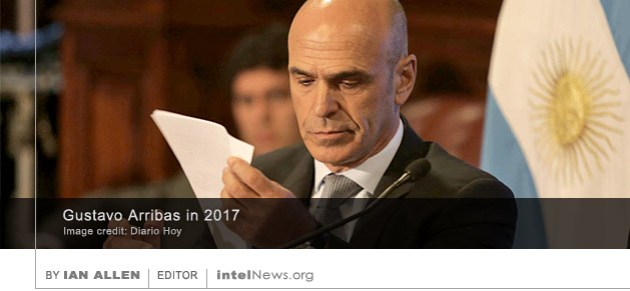 The director of Argentina’s spy agency has been accused by security officials in Brazil of being implicated in a multi-million dollar money-laundering scandal that involves dozens of senior officials across Latin America. The allegations were made in the context of the so-called “operation car wash”, known in Portuguese as Operação Lava Jato. The term refers to a money-laundering probe that began in 2014, following allegations of illegal financial practices by a number of private import-export companies in Brazil. Soon, however, Lava Jato led to the exposure of large-scale corruption, nepotism and bribing practices at the core of Brazil’s state-owned oil company Petrobras. Today, four years later, the constantly expanding investigation has implicated nearly 200 people —many of them well-known politicians— in numerous Latin American countries, including Mexico, Peru and Venezuela.
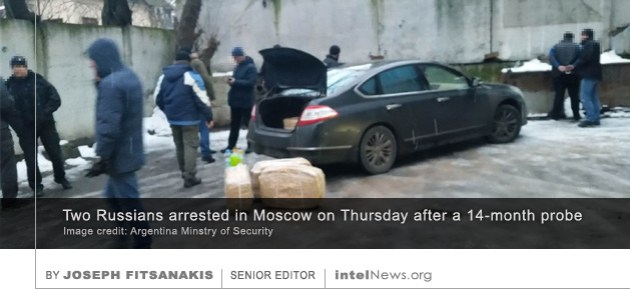 A Russian former diplomatic employee and an Argentine police officer are among six people arrested following the discovery of nearly 1000 pounds of cocaine inside the Russian diplomatic compound in Buenos Aires. The arrests took place last Thursday and were announced in Argentina by the country’s Security Minister Patricia Bullrich. She told reporters that the arrests came after a 14-month investigation in Argentina, Russia and Germany. She added that the investigation unveiled “one of the most complex and extravagant drug-dealing operations” in Argentina’s history.






 intelNews.org
Executive of Danish bank implicated in massive money laundering found dead
September 26, 2019 by Ian Allen Leave a comment
But the reputation of the Estonian banking sector was tarnished last year, when a criminal investigation was launched into an alleged money laundering scandal. The investigation focused on customers from Russia and other Eastern European countries who allegedly used Danske Bank’s subsidiary in Estonia to launder billions of dollars in illicit funds. The probe prompted Danske Bank to pull out of the Baltic countries. Meanwhile, the probe extended to Sweden, Germany and the United States. Deutsche Bank, one of the world’s largest financial institutions, is currently being investigated for allegedly helping facilitate Danske Bank’s customers launder money by converting it into United States dollars. The criminal probe has damaged the previously spotless reputation of the Scandinavian banking sector and has made Central European banks hesitant to do business in the Baltics. Some financial observers have even warned that the Danske Bank scandal could drag the Baltic economies into a prolonged recession.
Rehe was not involved in the money laundering scandal. However, much of the money laundering took place between 2007 and 2015, when he was in charge of the Estonian subsidiary of Danske Bank. Under his leadership the bank’s operations were allegedly marred by “deficiencies in controls and governance”, which allowed for criminal activity to occur unnoticed, according to an internal Danske Bank investigation into the money laundering affair. Rehe had been missing from his home since Monday, having apparently left without taking his wallet and cellphone. His body was discovered on Wednesday in the garden of his home in the Estonian capital. Police have ruled his death an apparent suicide and believe that no foul play was involved.
► Author: Ian Allen | Date: 26 September 2019 | Permalink
Filed under Expert news and commentary on intelligence, espionage, spies and spying Tagged with Aivar Rehe, corruption, Danske Bank, Denmark, Estonia, money laundering, suicides