Latvia warns of ‘hybrid war’ as central bank corruption probe widens
February 26, 2018 1 Comment
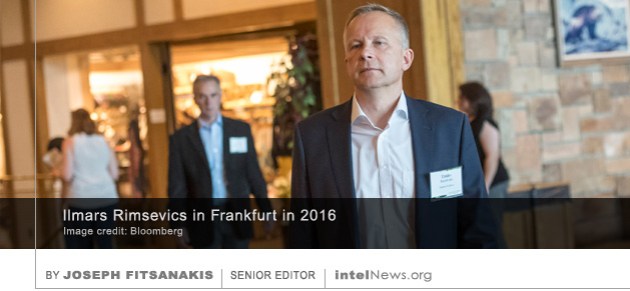 Latvian defense officials have hinted that Russia is trying to destabilize Latvia’s economy, as a Western-backed anti-corruption probe at the highest levels of the Baltic country’s banking sector deepens. Developments have progressed at a high speed since Monday of last week, when Latvia’s Corruption Prevention and Combating Bureau arrested Ilmars Rimsevics, the longtime Governor of the Bank of Latvia —the country’s central bank. Bureau investigators said Rimsevics’ arrest related to charges that he received bribes in order to facilitate money laundering from Russia.
Rimsevics became deputy governor of the Bank of Latvia in 1992, just months after the country seceded from the Soviet Union. In 2001 he was promoted to governor, a post that he has held onto ever since. When the small Baltic country joined the European Union, in January 2014, Rimsevics automatically became a member of the Governing Council of the European Central Bank (ECB), which directs the Eurozone’s monetary policy and monitors the performance of the euro. But last week the Latvian government rescinded Rimsevics’ security clearance and a scheduled meeting of the ECB in Frankfurt took place without him.
This dramatic development underscores the troubled state of Latvia’s banking sector, which is a notorious reputation as one of Europe’s most lucrative money-laundering hubs. Soon after it gained its independence, the small country of 2 million became an attractive conduit for Russia’s nouveau riche seeking to funnel their money westward. The country’s sizeable Russian-speaking minority allowed the local banking sector to offer highly sought-after services in the Russian language, which further-facilitated its contacts with wealthy Russian clients. This was further-enhanced by Latvia’s integration into the economic structure of the European Union in 2014. But Western countries began voicing concerns about close links between Latvia’s banking sector and Russian oligarchs in 1996. By 2011, the United States Department of the Treasury had identified numerous Latvian banks as serious violators of laws designed to prevent money laundering. In 2014, and again in 2017, the Organized Crime and Corruption Reporting Project identified Latvia as part of an extensive international money-laundering scheme dubbed “the Russian Laundromat”.
Notably, Rimsevics was arrested less than a week after Washington vowed to impose penalties on ABLV, Latvia’s third largest bank, for “institutionalizing money laundering” and violating a host of financial sanctions imposed by the United Nations, including sanctions against North Korea’s nuclear program. There is no question, therefore, that Rimsevics’ dramatic arrest was designed to combat what The Financial Times recently called “a banking scandal on the Baltic”. In the past few hours, reports from Riga indicate that ABLV may be on the brink of collapse, being unable to withstand the financial effects of the public scandal that emerged in recent days.
But things are never simple in the Baltic region. Soon after Rimsevics’ release on bail, reports in the Latvian media pointed to alleged efforts by Russia to defame him, in an effort to further-tarnish the already damaged reputation of Latvia’s banking sector. On Tuesday of last week, the Latvian Ministry of Defense said it had evidence that Rimsevics was targeted in a “disinformation operation” directed from abroad. It added that there was a “high probability that [a] massive information operation” had been launched for “foreign centers” aimed at destabilizing Latvia’s banks. No evidence or further information about the allegation was revealed. But the Defense Ministry’s allegations seemed to be supported by an analysis of the relevant news reporting by the Atlantic Council’s Digital Forensics Research Lab in Washington.
On February 23, Latvia’s Prime Minister, Maris Kucinskis, and President, Raimonds Vejonis, seemed to endorse the Defense Ministry’s allegations. Despite the fact that both politicians have urged Rimsevics to resign “for the sake of the financial system”, they also warned that Latvia was under attack in an information war. The two men did not make specific allegations, but said that the information attacks experienced by Latvia were “identical” to those seen in recent years in France, Germany, and the United States. Meanwhile, shortly after his release, Rimsevics held a press conference in Riga, where he denied all charges against him. He accused Latvia’s private banks of conspiring against him and said he was the victim of “death threats” to destabilize the country. On the same day Moscow, Kremlin spokesman Dmitry Peskov said that Russia had no comment on the situation in Latvia. “This is an internal political matter for our Latvian comrades [and] we wouldn’t want to get involved”, he said.
► Author: Joseph Fitsanakis | Date: 26 February 2018 | Permalink
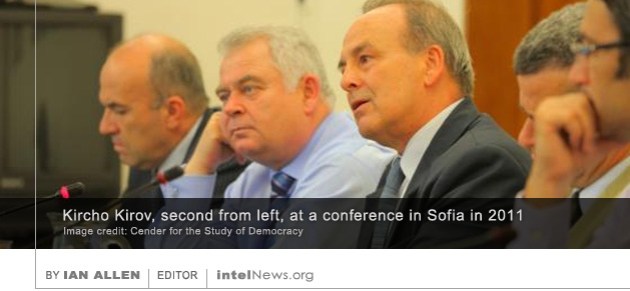 A former director of Bulgaria’s intelligence service, who headed the agency for nearly a decade, has been jailed for embezzling millions of dollars from public funds. General Kircho Kirov, 67, was director of the Bulgarian National Intelligence Service (NIS) from February 2003 until January 2012. After stepping down from his post he was appointed national security advisor to Bulgaria’s Prime Minister, Boiko Borissov. But he soon fell out with Borrisov and was fired after just two months on the job. Now Borissov’s administration has
 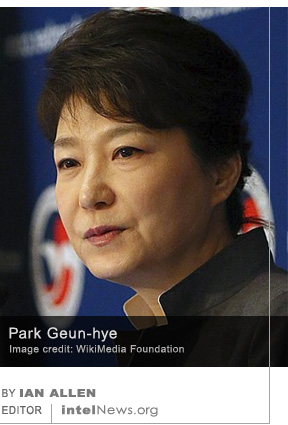 South Korea’s disgraced former president, Park Geun-hye, has been charged with accepting bribes amounting to millions of dollars from the country’s spy agency, according to reports. Park made history in 2013, by becoming the first woman president in South Korean history. However, almost as soon as she assumed office, her administration became embroiled in successive corruption scandals. By 2016, Park’s presidency had been brought to a standstill due to mass protests urging her removal from power, while increasing numbers of officials and administrators were refusing to work with her. She was eventually impeached in 2017, after the Constitutional Court of Korea found that she had violated the country’s laws by promoting the interests of personal friends and private corporations in return for cash and favors. She is currently in custody awaiting trial for 18 different charges, including abuse of power, coercion, blackmail and bribery.
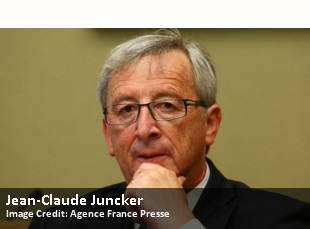 A judge in Luxembourg has launched a criminal investigation into whether officials working for the country’s former Prime Minister and current European Commission President, Jean-Claude Juncker, tried to conceal his role in a spy scandal. Until he stepped down from his post in 2013, Juncker, a member of Luxembourg’s Christian Social People’s Party, was Europe’s longest-serving elected leader, having served as Prime Minister since 1995. His resignation from his post came after a parliamentary inquiry found that the country’s State Intelligence Service (SREL) had engaged in serious criminal activity.
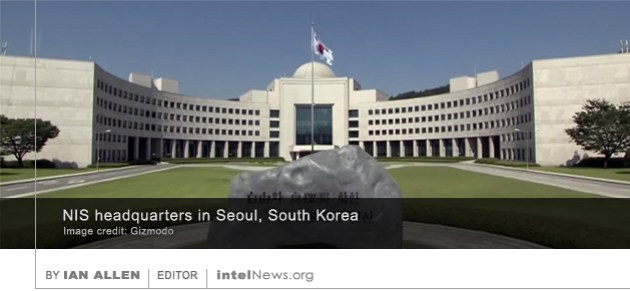 A South Korean prosecutor has charged three former directors of the country’s spy agency of secretly diverting funds from the agency’s clandestine budget to aid the country’s disgraced former President, Park Geun-hye. The three men, Nam Jae-joon, Lee Byung-kee and Lee Byung-ho, headed South Korea’s National Intelligence Service (NIS) between 2013 and 2016, when Mrs. Park was head of state. The conservative politician was impeached late last year, following accusations of corruption, bribing and extortion. In March this year, Mrs. Park’s government was brought down and she is currently in prison, awaiting trial. Her successor in the presidency, leftist politician Moon Jae-in, was elected after pledging to combat corruption in South Korea’s political inner circle.
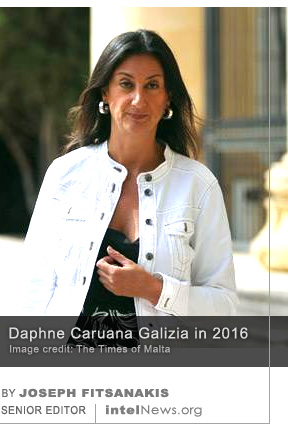 Malta’s best known investigative journalist, whose reporting about offshore tax evasion prompted a major political crisis in the European Union member-state, has been killed by a powerful bomb near her home. Daphne Caruana Galizia, who died Monday, aged 53, gained international prominence last year, when she used information from various sources, including the leaked “Panama Papers”, to accuse senior members of Malta’s government of implication in tax-evasion schemes. Her reporting led to the resignation and eventual re-election of the country’s Labor government last year.
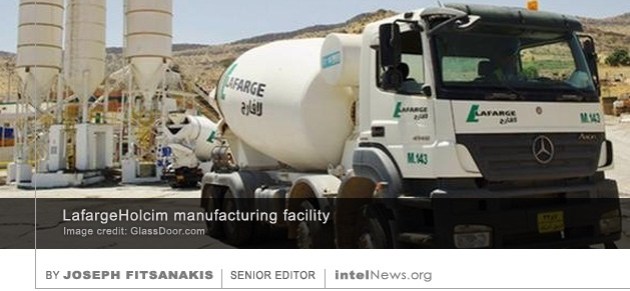 The world’s largest building materials manufacturer, LafargeHolcim, which is headquartered in France and Switzerland, allegedly bribed the Islamic State to keep its factory working in Syria, according to court witnesses. The company specializes in the manufacture of building materials such as cement, concrete and various byproducts. It was formed in 2015 by a merger of France-based Lafarge and Swiss-based Holcim, and currently employs an estimated 120,000 employees in nearly 100 countries around the world.
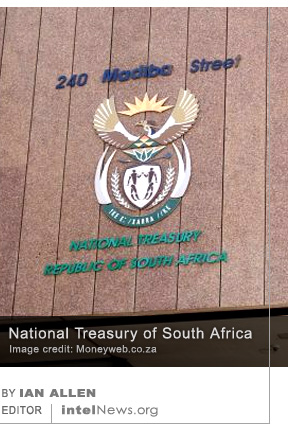 South Africa’s National Treasury threatened to terminate all funding for covert operations last year, after the country’s spy agency refused to account for tens of millions of dollars in expenses, saying the money had been put to “secret use”. An investigation by two leading South African news outlets, the Afrikaans-language weekly newspaper Rapport and the English-language online news portal News24, has revealed the existence of a major bureaucratic spat between the National Treasury and the State Security Agency (SSA), the country’s primary civilian intelligence organization.
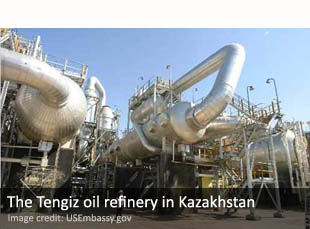 A former director of Kazakhstan’s feared intelligence agency has been given a lengthy prison sentence, as a ruthless power struggle between rival factions surrounding the country’s president widens. From 2001 to 2006, Nartai Dutbayev directed the Kazakh National Security Committee (KNB), a direct institutional descendant of the Soviet-era KGB. Founded in 1992, the KNB is today directly controlled by Kazakhstan’s authoritarian President, Nursultan Nazarbayev. Many officials serving in senior KNB positions are members of the president’s family, or close friends.
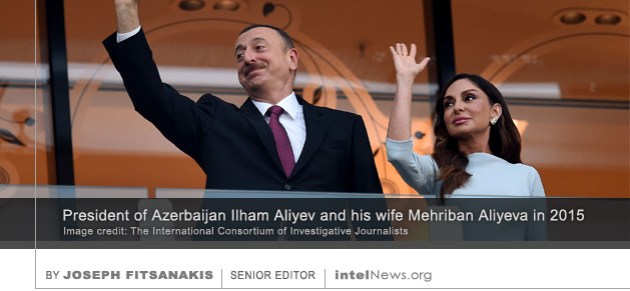 An investigation by a consortium of European newspapers has uncovered details of a massive slush fund worth nearly $3 billion, which was allegedly used by Azerbaijan’s governing elite to bribe officials, business leaders and journalists at home and abroad. The fund was operated out of Baku, the capital of the former Soviet state, which is routinely accused of human-rights abuses. Western countries, including the United States,
 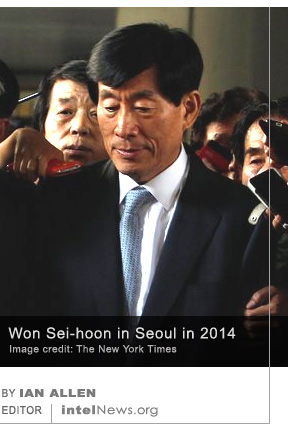 The former director of South Korea’s main intelligence agency has been sent to prison for organizing a large-scale illegal campaign to influence the result of the country’s 2012 presidential election. Won Sei-hoon headed the NIS from 2008 to 2013, during the administration of conservative President Lee Myung-bak. During the 2012 presidential election, Won ordered a group of NIS officers to “flood the Internet” with messages accusing liberal political candidates of being “North Korean sympathizers”. One of those candidates, Moon Jae-in, of the left-of-center Democratic Party of Korea, is now the country’s president. Mr. Moon succeeded his main right-wing rival, Park Geun-hye, who resigned in March of this year following a series of financial scandals. She is now facing charges of bribery, abuse of power, leaking government secrets, and corruption.
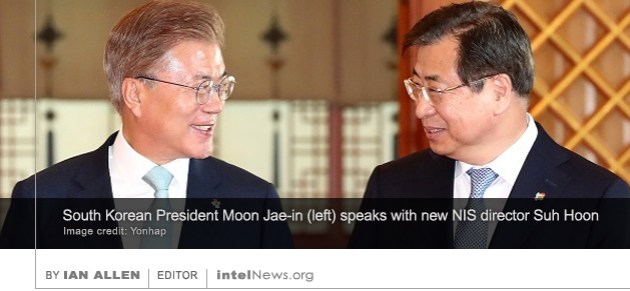 An internal investigation has found that the intelligence agency of South Korea tried to steer the result of the 2012 presidential election in favor of the conservative candidate, and placed liberal politicians under surveillance in the run-up to the election. South Korea’s intelligence agency, the National Intelligence Service (NIS) has fallen into disrepute in recent years, after it was found to have secretly sided with conservative political candidates for public office.
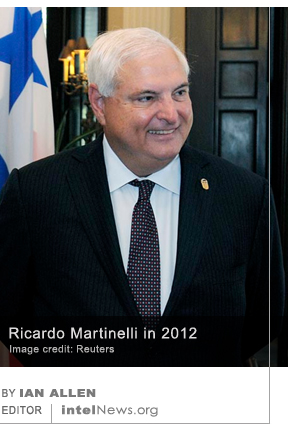 Police in the United States have arrested Panama’s former president Ricardo Martinelli, who is wanted in the Central American country on charges of using state resources to spy on his political opponents and business rivals. The center-right US-educated businessman won the 2009 presidential election in the country with a landslide, receiving over 60 percent of the national vote. His election prompted positive comments from Washington, because it marked a rare ascent to power of a conservative Latin American leader in a sea of socialist heads of state. But the euphoria did not last long. In 2014, Martinelli was succeeded in the presidency by his Vice President, Juan Carlos Varela. Varela promptly launched nearly 200 criminal investigations against his former political partner on issues ranging from embezzlement of state funds to political espionage.
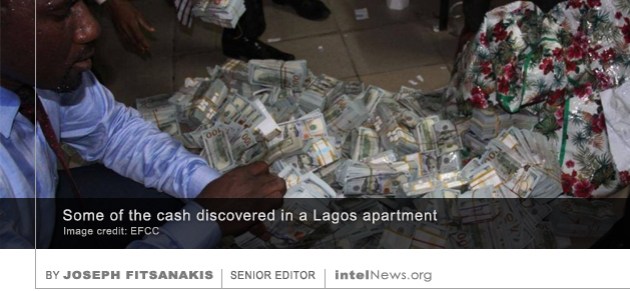 The director of Nigeria’s powerful intelligence agency has been suspended on orders of the president, after a massive stash of cash totaling $43 million was found in an apartment in Lagos. The money was discovered by investigators working for the Nigerian Economic and Financial Crimes Commission (EFCC). Based in Abuja, the EFCC is a high-profile body that was created in 2003, in response to accusations by the international community that Nigeria is used as a major base for global money-laundering schemes.








Discovery of cocaine in Russian diplomatic luggage leads to numerous arrests
February 27, 2018 by Joseph Fitsanakis Leave a comment
The 14-month probe dates to December of 2016, when Victor Koronelli, Russia’s ambassador to Argentina, and thee members of Russia’s Federal Security Service, discreetly approached Argentinian authorities. They informed the Argentinians that they had discovered 16 pieces of luggage filled with drugs inside an annex of the Russian embassy in Buenos Aires. Argentinian authorities were given permission to secretly enter the embassy grounds and inspect the suitcases. They confirmed that they contained more than 850 pounds (390 kilos) of cocaine, with a street value of more than $60 million. The suitcases were intended for transfer to Russia via a diplomatic flight. Cargo transferred on diplomatic flights cannot be searched by international customs officials due to the privilege of diplomatic immunity.
According to Bullrich, diplomatic counter-narcotics officers secretly transferred the bags to a separate location, where they replaced the cocaine with flour and fitted the suitcases with GPS tracking devices, before returning them to the Russian embassy annex. The luggage was eventually transferred to Russia via airplane in December 2017, a year after it was bugged by the Argentinians. Several Argentinian customs officers traveled to Russia to monitor the transfer of the shipment, in coordination with Russian authorities. The latter arrested two Russian citizens who tried to collect the suitcases. Another Russian citizen, and former staff member of the Russian embassy in Argentina, Alia Abyanov, was arrested in Moscow. Officials said Abyanov helped plan the transfer of the suitcases to Russia.
Two Argentines with dual Russian citizenship were also arrested in Buenos Aires. One of them has been named as Iván Blizniouk, a police officer, who is believed to have mediated between the drug smugglers and corrupt Argentine customs officers. A seventh suspect, identified only as “Señor K.” by the Argentine authorities, remains at large. He is believed to be living in Germany and is currently wanted by Interpol pursuant to an international warrant that has been issued for his arrest.
► Author: Joseph Fitsanakis | Date: 27 February 2018 | Permalink
Filed under Expert news and commentary on intelligence, espionage, spies and spying Tagged with Alia Abyanov, Argentina, corruption, diplomatic immunity, FSB, Iván Blizniouk, narcotics trade, News, Patricia Bullrich, Russia, Russian embassy in Argentina