Malaysia immigration probe reveals growing insider threat to passport security
June 3, 2016 Leave a comment
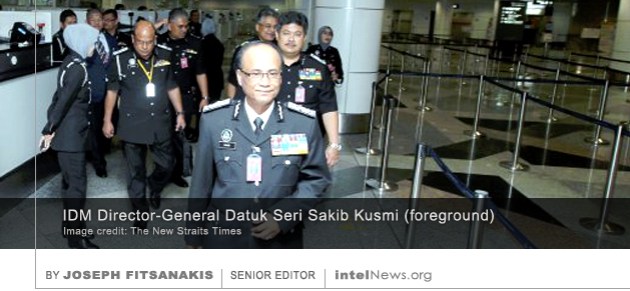 As many as 100 Malaysian immigration officers are implicated in a widening investigation involving the deliberate sabotage of the country’s electronic passport control system. The investigation, which began over three months ago, focuses on a criminal ring of immigration personnel at the Kuala Lumpur International Airport (KLIA), one of Southeast Asia’s major travel hubs. Reports suggest that 15 members of the alleged ring are in prison awaiting trial. Another 14 immigration officers have been suspended without pay, while 20 more staff members are under investigation by the intelligence subdivision of the Immigration Department of Malysia (IDM). On Wednesday, IDM Director-General Datuk Seri Sakib Kusmi said that the scope of the investigation had widened, and that 63 immigration officers would be transferred from the IDM’s headquarters in Putrajaya to KLIA, to replace members or suspected members of the criminal ring.
The officers implicated in the investigation are accused of deliberately sabotaging the automated passport control system used at KLIA. Known as myIMMs, the system allows passport control officers to validate the authenticity of international travelers’ passports, and to confirm that the latter have not been reported lost or stolen. It is believed that the myIMMs system was deliberately made to crash at least once a day, in order to allow human traffickers and other organized criminals to smuggle individuals in and out of Malaysia. With the system going offline, KLIA passport control officers were forced to screen passengers manually, which is now believed to have permitted countless individuals using forged and stolen passports to go through security undetected. The deliberate sabotage of myIMMs is believed to have been going on since 2010, and investigators are at a loss in trying to estimate the numbers of people who have been able to bypass computerized passport checks.
One investigator said Australia’s ABC news network that the criminal ring’s handlers were located overseas and would send immigration officers instructions via coded messages. The primary ring members had recruited IDM administrative staff, technology staff, and even software vendors, who were involved in sabotaging the system. The practice of organized criminal and terrorist groups using forged passports is both long and documented. But news of a criminal group that is able to set up an extensive ring of immigration officers, who then sabotage an electronic passport verification system at a major international transport hub, is rare and extremely alarming. It reveals a new form of insider threat, namely compromised immigration and passport control officers, who are bribed to facilitate the work of criminal groups and terrorist organizations.
► Author: Joseph Fitsanakis | Date: 03 June 2016 | Permalink
 Over 50 journalists and their contacts were systematically spied on by the Polish intelligence services between 2007 and 2015, according to the former director of an anti-corruption watchdog. Until 2009, Mariusz Kamiński led the Central Anti-Corruption Bureau, which was set up by the office of the Polish Prime Minister in 2006 to address corruption in the country. The body is also responsible for monitoring the operations of Poland’s intelligence services, including the Internal Security Agency (ABW).
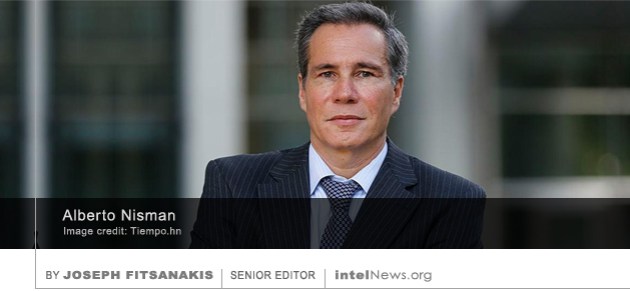 An Argentine former senior intelligence official has claimed in court testimony that the administration of President Cristina Fernández de Kirchner murdered a state prosecutor who had accused senior officials of having colluded with Iran to bomb Israeli targets in Buenos Aires. In January 2015, the prosecutor, Alberto Nisman, prompted international headlines by launching a criminal complaint against President Kirchner and several other notable personalities of Argentine political life. Nisman accused them of having colluded with the government of Iran to obstruct an investigation into the bombings of the Israeli embassy and a Jewish cultural center in Buenos Aires in the mid-1990s. A dozen people died in the bombing of the embassy, while another 85 were killed two years later, when the Asociación Mutual Israelita Argentina community center in the Argentine capital was bombed. Nisman was
  An Argentine former senior intelligence official, who is wanted in connection with the murder of a federal prosecutor in Buenos Aires, is hiding in the United States, according to the President of Argentina, who says Washington should extradite him. Antonio Horacio Stiuso, better known as Jaime Stiuso, rose through the ranks of Argentina’s Secretaría de Inteligencia del Estado (SIDE) to become its director of counterintelligence. In 2012, Argentine President Cristina Fernández de Kirchner appointed Stiuso to chief operating officer of SIDE, working directly under the agency’s director. However, Stiuso was fired in a massive agency shake-up in February of this year, when the government suddenly dissolved SIDE and replaced it with a new agency, called Agencia Federal de Inteligencia.
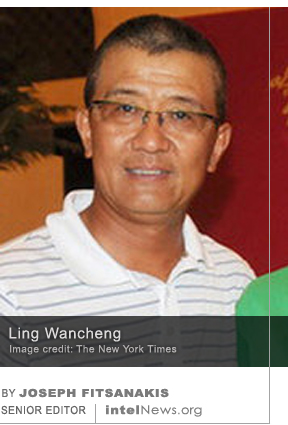 A well-connected Chinese businessman, described by officials as potentially one of the most damaging defectors in the history of modern China, is reputed to have requested political asylum in the United States. Ling Wancheng, 54, is the multimillionaire brother of Ling Jihua, a close aide of China’s former premier, Hu Jintao, who rose through the ranks of the Communist Party of China to eventually lead its Central Committee’s General Office. With the help of his brother’s connections and political influence, Ling Wancheng transformed himself from a journalist to an entrepreneur in the early 2000s. Soon after receiving his graduate degree in business administration, he founded an investment firm and joined China’s nouveau riche elite. His wealth, which is estimated to be in the hundreds of millions of dollars, coupled with his older brother’s senior position within the Communist Party, made him one of China’s most politically connected entrepreneurs.
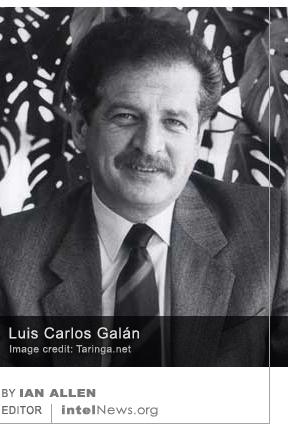 The former director of Colombia’s intelligence service returned to court this week to face charges of complicity in the assassination of a leading presidential hopeful, who was gunned down in 1989 by a powerful drug cartel. Luis Carlos Galán, a senator and former minister, was tipped to win the 1990 presidential election in which he stood on the Liberal Party ticket. His popularity with the electorate is largely attributed to his uncompromising stance against Colombia’s powerful drug cartels. He had vowed to arrest leading drug lords and send them to the United States to face criminal charges. He would do so, he said, after signing a mutual extradition treaty with Washington. However, Galán was assassinated on August 18, 1989, during a campaign rally in Soacha, a working-class suburb of Colombia’s capital, Bogotá. The assassination took place before thousands of spectators who were present at the rally, and is considered one of the highest-profile political killings in the history of Colombia.
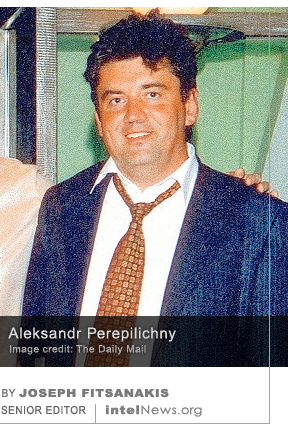 A Russian businessman, who died in London while assisting a Swiss probe into a massive money-laundering scheme, may have been poisoned with a substance derived from a highly toxic plant, an inquest has heard. Aleksandr Perepilichny was an influential Moscow investment banker until he fled Russia in 2009, saying that his life had been threatened after a disagreement with his business partners. A few months later, having moved to an exclusive district in Surrey, south of London, Perepilichny began cooperating with Swiss authorities who were investigating a multi-million dollar money-laundering scheme involving senior Russian government officials. The scheme, uncovered by a hedge fund firm called Hermitage Capital Management (CMP), and described by some as the biggest tax fraud in Russian history, defrauded the Russian Treasury of at least $240 million. The case made international










Brazil launches probe into plane crash that killed senior corruption investigator
January 23, 2017 by Joseph Fitsanakis 2 Comments
In October 2016, Zavascki ordered the arrest of Eduardo Cunha, President of Brazil’s Chamber of Deputies, and the man who had a few months earlier led the impeachment of Brazil’s disgraced former President, Dilma Rousseff. Cuhna’s arrest was part of so-called Operation Carwash, an enormous corruption investigation involving dozens of leading Brazilian politicians, who are accused of having taken bribes from Petrobras and Odebrecht, Brazil’s largest construction company. This coming February, Zavascki was scheduled to publicize a series of plea-bargain settlements, involving nearly 80 Odebrecht senior executives. It is believed that the plea bargains will implicate a large number of well-known Brazilian politicians, including Brazil’s President, Michel Temer, and his two immediate predecessors, Rousseff and Luiz Inácio Lula da Silva.
Shortly after Thursday’s plane crash, there was widespread speculation on social media that Zavascki’s death was not an accident. Several notable public figures in Brazil expressed concern about the timing of the judge’s death. They included detective Márcio Anselmo, the senior federal police investigator in Operation Carwash. On Friday, authorities launched an official investigation into the plane crash, which will inevitably remain in the news headlines for weeks, as the Supreme Court struggles to keep Operation Carwash alive. Several public figures have expressed strong concern about possible delays in the investigation, which could enable those being probed to evade justice. In a bizarre twist of fate, President Temer will now be expected to nominate a judge to take Justice Zavascki’s place on the Supreme Court, while knowing that his own name may be implicated in the ongoing corruption investigation.
► Author: Joseph Fitsanakis | Date: 23 January 2017 | Permalink
Filed under Expert news and commentary on intelligence, espionage, spies and spying Tagged with Brazil, corruption, News, Odebrecht, Operation Carwash, Petrobras, suspicious deaths, Teori Zavascki