Dozens of Turkish diplomats apply for asylum in Germany following July coup
October 25, 2016 Leave a comment
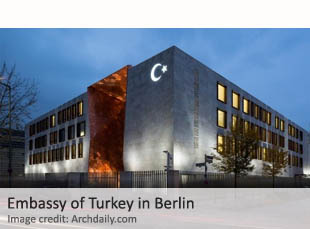 At least 35 Turkish nationals with diplomatic passports have applied for political asylum in Germany following last July’s failed military coup in Turkey, according to German authorities. The administration of Turkish President Recep Tayyip Erdoğan accuses members of the so-called Gülen movement of orchestrating the coup, which included an armed attack on the country’s parliament and the murder of over 200 people across Turkey. The Gülen movement consists of supporters of Muslim cleric Fethullah Gülen, who runs a global network of schools, charities and businesses from his home in the United States. The government of Turkey has designated Gülen’s group a terrorist organization and claims its members have stealthily infiltrated state institutions since the 1980s.
Since the end of the failed coup, the Turkish state has initiated a nationwide political crackdown directed at alleged supporters of the coup. An estimated 100,000 people have been fired from their jobs, while hundreds of thousands have been demoted, censured or warned. Another 32,000 are believed to be in prison charged with supporting the failed coup or with being members of the Gülen network. Many of those targeted in the crackdown belong to the country’s diplomatic corps. It is believed that the 35 Turkish holders of diplomatic passports members of the country’s diplomatic community who were stationed abroad when the coup took place and are now hesitant to return to their home country for fear of being arrested.
On Monday, German Interior Ministry spokesman Johannes Dimroth told reporters in Berlin that the Turkish nationals had filed applications for asylum with Germany’s Federal Office for Migration and Refugees, known as BAMF. He added that the number of 35 asylum seekers included diplomats’ family members, who are also carriers of diplomatic passports. He did not specify whether the asylum seekers had been based in Germany prior to the July 15 coup. In response to a question from a reporter, Dimroth said that 35 was “not an absolute and final figure” and that it could change in the coming weeks. When asked about the reasons given by the asylum seekers for their applications, Dimroth refused to speculate. The Turkish Ministry of Foreign Affairs and the Turkish embassy in Berlin did not respond to questions on the matter.
► Author: Joseph Fitsanakis | Date: 25 October 2016 | Permalink
 The Turkish government has sent an official request to German intelligence for assistance in cracking down on the members of the so-called Gülen movement, which Ankara claims is behind July’s failed coup plot. The movement consists of supporters of Muslim cleric Fethullah Gülen, who runs a global network of schools, charities and businesses from his home in the United States. The government of Turkey has designated Gülen’s group a terrorist organization and claims it has stealthily infiltrated state institutions since the 1980s. The administration of Turkish President Recep Tayyip Erdoğan accuses Gülen’s supporters of orchestrating the July 15 coup that included an armed attack on the country’s parliament and the murder of over 200 people across Turkey.
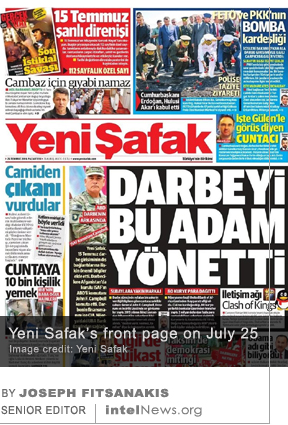 American officials have strongly denied accusations in the Turkish press that Washington was behind the failed July 15 coup in Turkey. On July 25, Yeni Şafak, a popular Turkish daily, alleged that the failed coup had been funded and organized by the United States government. The newspaper, which is headquartered in Istanbul, is known for its conservative political stance and close links to the AKP, the party of Turkish President Recep Tayyip Erdoğan. Its editorials typically reflect the AKP’s position on the political affairs of the day.
 Russian and Turkish authorities will not confirm or deny reports that the Kremlin warned Turkey’s intelligence services about an impending coup on July 15, several hours before tanks appeared on the streets of major Turkish cities. On Wednesday, several
 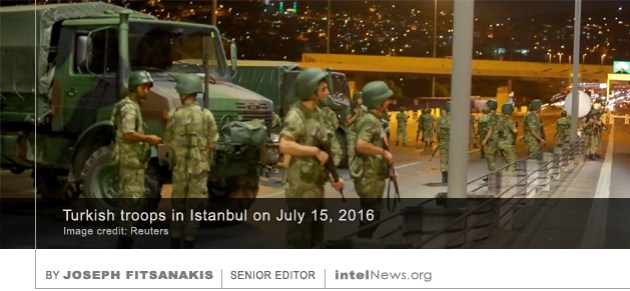 After the failure of the recent military coup d’état in Turkey, much attention has been given to the country’s armed forces, the police, even the judiciary. In contrast, little to no information has surfaced about Turkey’s intelligence establishment, which is led by MİT, the National Intelligence Organization. Did it anticipate the plot, and how did it fare as the crisis unfolded in the early hours of July 16?







 intelNews.org
Political tension rises in Serbia amidst espionage allegations
November 3, 2016 by Ian Allen 1 Comment
The coup allegations surfaced on October 16, after 20 Serbians and Montenegrins were arrested by Montenegrin authorities for allegedly planning a military coup against the government. The arrests took place on election day, as Montenegrins were voting across the country of 650,000 people. According to media reports, the failed coup aimed to prevent the reelection of Prime Minister Milo Đukanović, who is pushing for Montenegro to join the North Atlantic Treaty Organization. Đukanović, who was eventually reelected, claimed that the coup plotters were supported by Russia. Moscow has raised strong objections to the possibility of Montenegro joining NATO. A few days later, Serbian Prime Minister Vučić appeared to substantiate Đukanović’s allegations. According to Vučić, the Serbs who were arrested in Montenegro had hatched their coup plot in Serbia, assisted by Russian intelligence. Vučić added that he would not allow Serbia to “act as the puppet of world powers”, a comment that was clearly directed at Moscow.
However, Serbian authorities made no arrests following the October 16 developments in Montenegro, despite much media attention in Belgrade. Shortly prior to the alleged failed coup in Montenegro, Nikolai Patrushev, former director of the Russian Federal Security Service (FSB) and current secretary of Russia’s Security Council, visited the Serbian capital. There were rumors that he returned to Moscow with three Russian intelligence officers who had been caught engaging in espionage by Serbian counterintelligence. Meanwhile, some Serbian newspapers alleged last week that an official in the Ministry of Justice and Public Administration had been arrested for selling classified information to the United States Central Intelligence Agency. Meanwhile, Russian and Byelorussian troops arrived in Serbia this week to hold joint military exercises with their Serbian counterparts, codenamed Slavic Brotherhood.
► Author: Ian Allen | Date: 03 November 2016 | Permalink
Filed under Expert news and commentary on intelligence, espionage, spies and spying Tagged with Aleksandar Vučić, Balkans, coup plots, espionage, Milo Đukanović, Montenegro, News, Nikolai Patrushev, Russia, Serbia