News you may have missed #570
August 18, 2011 Leave a comment
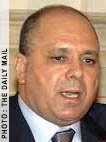
Abdullah Nassr
►►Libya internal security chief defects. Egyptian airport officials said Nassr al-Mabrouk Abdullah, Muammar al-Gaddafi’s interior minister, landed in a private plane in Cairo with nine family members traveling on tourist visas. Nassr was the minister responsible for police, civil defense, domestic intelligence, and some border security units.
►►S. Korea admits 1962 death occurred in spy training camp. A special committee is reviewing whether the family of a South Korean man who died half a century ago while being trained as a spy for elite missions into North Korea is eligible for compensation. South Korea’s military intelligence command admitted in a July 14 letter that “Mr. Jeon Gwang-su died during training on Sept. 30 of 1962 ahead of being dispatched for a mission in the North”.
►►NSA announces ‘hiring blitz’. The National Security Agency, America’s largest cryptologic intelligence agency, has announced its intention to hire as many as 3,000 people over the next two years, many of them cybersecurity experts. In fact, NSA recruiters even took a trip to Las Vegas in the last few weeks to look for potential hires at DefCon, a high-profile hacker conference there.







 intelNews.org
Analysis: CIA retains special operations role in post-9/11 era
September 12, 2011 by Joseph Fitsanakis Leave a comment
CIA HQ
By JOSEPH FITSANAKIS | intelNews.org |
Despite its ‘shoot ’em-up’ image in popular culture, the Central Intelligence Agency is predominantly responsible for collecting and analyzing intelligence for the benefit of US policymakers. The Agency’s paramilitary tasks —also known as ‘special operations’— form a somewhat smaller part of its overall mission. The CIA is America’s only government agency that can legally authorized by the President to perform special operations. The question is, should it? One of the 9/11 Commission Report’s chief recommendations was that the CIA should be stripped of its special operations function, and that the latter should be surrendered to the Department of Defense, in the form of the Joint Special Operations Command (JSOC). Clearly, JSOC has played an important role in post-9/11 counterterrorist operations. Yet it is equally clear that, not only has the CIA not been stripped of its paramilitary tasks, but the latter have actually been drastically augmented by the Obama administration —not least through the continuing unmanned drone program in Afghanistan and Pakistan. A well-written analysis by Politico’s Josh Gerstein correctly notes that recommendations to eliminate the CIA’s paramilitary role and transfer it to the Pentagon “remain unpopular in the highest echelons”. The article quotes Philip Zelikow, a University of Virginia professor and former executive director of the 9/11 Commission, who is one of the few intelligence planners that favor transferring special operations from the CIA to the Department of Defense. He says that military functions “ought to be performed by trained military organizations […]. Do you want the CIA operating a combatant command responsible for fighting our twilight wars, especially in a world when twilight wars are the wars we mainly fight?”. The argument seems to be that, as special operations become increasingly central in America’s ‘war on terrorism’, they should be commanded by a military, rather than a civilian, agency. An unnamed former CIA official puts forward the Agency’s view in the article: what do you do “if you have a [host] country that wants to deny a program”? In other words, how do you exercise plausible deniability through the Department of Defense? “[T]he CIA is going to [have to] move to the front of the queue”, he answers. Read more of this post
Filed under Expert news and commentary on intelligence, espionage, spies and spying Tagged with 9/11, Analysis, CIA, covert action, covert operations, Joint Special Operations Command, JSOC, Michael Leiter, Philip Zelikow, special operations, United States, US DoD, US National Counterterrorism Center