September 13, 2016
by Joseph Fitsanakis
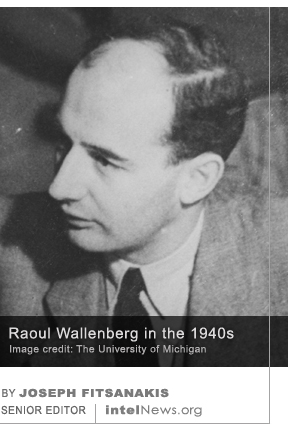 The recently discovered memoirs of a former director of the Soviet KGB suggest that a senior Swedish diplomat, who disappeared mysteriously in the closing stages of World War II, was killed on the orders of Joseph Stalin. The fate of Swedish diplomat Raoul Wallenberg is one of the 20th century’s unsolved espionage mysteries. In 1944 and 1945, the 33-year-old Wallenberg was Sweden’s ambassador to Budapest, the capital of German-allied Hungary. During his time there, Wallenberg is said to have saved over 20,000 Hungarian Jews from the Nazi concentration camps, by supplying them with Swedish travel documents, or smuggling them out of the country through a network of safe houses. He also reportedly dissuaded German military commanders from launching an all-out armed attack on Budapest’s Jewish ghetto.
But Wallenberg was also an American intelligence asset, having been recruited by a US spy operating out of the War Refugee Board, an American government outfit with offices throughout Eastern Europe. In January of 1945, as the Soviet Red Army descended on Hungary, Moscow gave orders for Wallenberg’s arrest on charges of spying for Washington. The Swedish diplomat disappeared, never to be seen in public again. Some historians speculate that Joseph Stalin initially intended to exchange Wallenberg for a number of Soviet diplomats and intelligence officers who had defected to Sweden. According to official Soviet government reports, Wallenberg died of a heart attack on July 17, 1947, while being interrogated at the Lubyanka, a KGB-affiliated prison complex in downtown Moscow. Despite the claims of the official Soviet record, historians have cited periodic reports that Wallenberg may have managed to survive in the Soviet concentration camp system until as late as the 1980s.
But the recently discovered memoirs of Ivan Serov, who directed the KGB from 1954 to 1958, appear to support the prevalent theory about Wallenberg’s demise in 1947. Serov led the feared Soviet intelligence agency under the reformer Nikita Khrushchev, who succeeded Joseph Stalin in the premiership of the USSR. Khrushchev appointed Serov to conduct an official probe into Wallenberg’s fate. Serov’s memoirs were found in 2012 by one of his granddaughters, Vera Serova, inside several suitcases that had been secretly encased inside a wall in the family’s summer home. According to British newspaper The Times, the documents indicate that Wallenberg was indeed held for two years in the Lubyanka, where he was regularly interrogated by the KGB. The latter were certain that the Swedish diplomat was an American spy who had also been close to Nazi Germany’s diplomatic delegation in Hungary. Soviet Premier Joseph Stalin considered exchanging him for Soviet assets in the West. But eventually Wallenberg “lost his value [and] Stalin didn’t see any point in sending him home”, according to Serov’s memoirs. The KGB strongman adds that “undoubtedly, Wallenberg was liquidated in 1947”. Further on, he notes that, according to Viktor Abakumov, who headed the MGB —a KGB predecessor agency— in the mid-1940s, the order to kill Wallenberg came from Stalin himself.
In 2011, Lt. Gen. Vasily Khristoforov, Chief Archivist for the Russian Federal Security Service (FSB), one of two successor agencies to the old Soviet KGB, gave an interview about Wallenberg, in which he said that most of the Soviet documentation on the Swedish diplomat had been systematically destroyed in the 1950s. But he said that historical reports of Wallenberg’s survival into the 1980s were “a product of […] people’s imagination”, and insisted that he was “one hundred percent certain […] that Wallenberg never was in any prison” other than the Lubyanka. An investigation by the Swedish government into the diplomat’s disappearance and eventual fate is ongoing.
► Author: Joseph Fitsanakis | Date: 13 September 2016 | Permalink
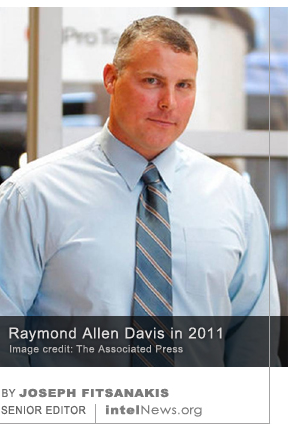 A former contractor for the United States Central Intelligence Agency, who was released from a Pakistani prison in 2011 despite being implicated in a double murder there, says he was freed with the help of senior Pakistani officials. Raymond Allen Davis was a CIA contractor posted in the US consulate in Pakistan’s Punjabi capital, Lahore, which is also the country’s second-largest city. It has been suggested that, for a while, Davis was the CIA’s acting station chief in Lahore, thus technically the most senior American intelligence officer in Punjab.
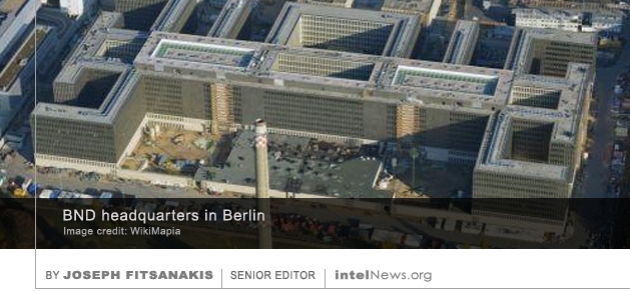 The foreign intelligence service of Germany spied on at least 4,000 targets in the United States from 1998 until 2006, according to a leaked document published yesterday by leading German newsmagazine Der Spiegel. The German investigative weekly said that the surveillance was carried out by the German Federal Intelligence Service, known as BND. The Hamburg-based magazine claimed to have in its possession a list of approximately 4,000 “selector keywords”, unique distinguishing terms, addresses or numbers that identify individual targets for surveillance. The list allegedly includes names, telephone or fax numbers, and email addresses of people that the BND had identified as worthy of individual attention between 1998 and 2006.
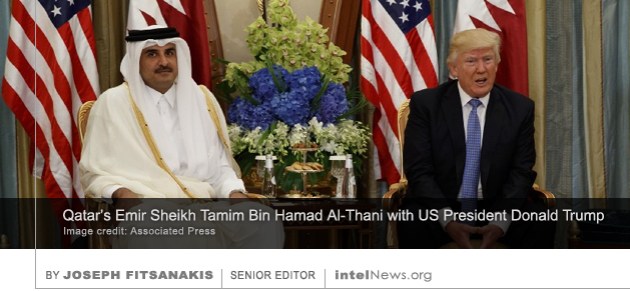 A former director of Qatar’s intelligence agency broke ranks with the government of Qatar and accused Doha of supporting terrorism. He also warned that the United States, which has a base in Qatar, would not allow the presence of foreign troops there.
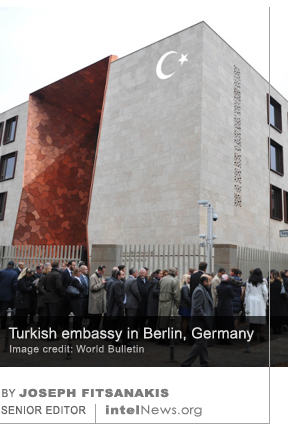 Turkish state agencies have asked the country’s diplomats stationed all over Europe to spy on Turkish expatriate communities there, in an effort to identify those opposed to the government, according to a German report. The government of Turkish President Recep Tayyip Erdoğan accuses members of the so-called Gülen movement of orchestrating a military coup in July of last year, which resulted in an armed attack on the country’s parliament and the murder of over 200 people across Turkey. The Gülen movement consists of supporters of Muslim cleric Fethullah Gülen, who runs a global network of schools, charities and businesses from his home in the United States. The government of Turkey has designated Gülen’s group a terrorist organization and claims that its members have stealthily infiltrated state institutions since the 1980s.
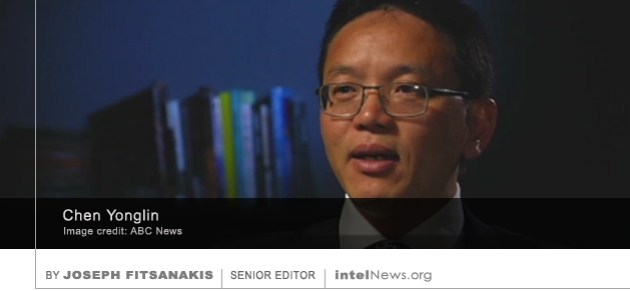 A Chinese diplomat, who made international news headlines in 2005 when he defected to Australia, has ended a decade of silence to warn about an alleged increase in Chinese espionage operations against his adopted country. Chen Yonglin was a seasoned member of the Chinese diplomatic corps in 2001, when he was posted as a political affairs consul at the Chinese consulate in Sydney, Australia. His job was to keep tabs on the Chinese expatriate community in Australia, with an emphasis on individuals and organizations deemed subversive by Beijing. He later revealed that his main preoccupation was targeting members of the Falun Gong spiritual movement, which is illegal in China. He also targeted supporters of Taiwanese independence, as well as Tibetan and East Turkestan nationalists who were active on Australian soil.
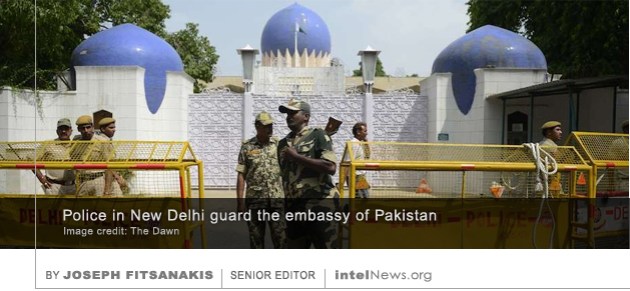 India is in the process of recalling eight of its diplomats from Pakistan, after their names and photographs were published in Pakistani newspapers with accusations that they are intelligence officers. According to anonymous sources in the government of Pakistan, three of the eight recalled diplomats have already left Islamabad for New Delhi. Five more are expected to leave the country before the end of the week. The three who left Pakistan yesterday were
 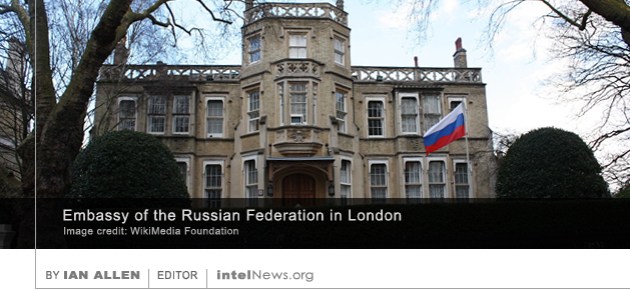 Russia’s ambassador to the United Kingdom has accused the British Foreign Office of deliberately delaying the issuance of visas for its diplomatic officials who have been assigned to join the Russian embassy in London. Alexander Yakovenko, Russia’s former Deputy Minister of Foreign Affairs, who has been heading the Russian embassy in London since 2011,
 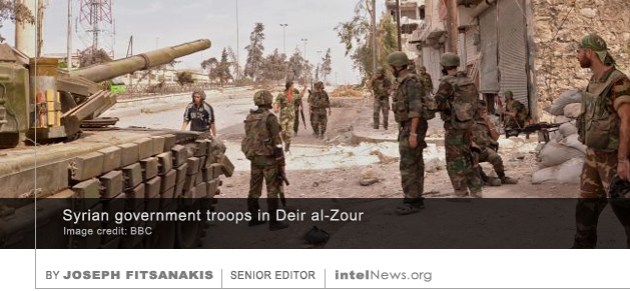 A cease-fire that was launched with much fanfare by the United States and Russia last week appeared in tatters on Sunday night, after Washington acknowledged it mistakenly killed over 60 Syrian troops on Saturday. American officials expressed regret for the alleged error, but Syrian and Russian officials accused Washington of deliberately sabotaging the cease-fire agreement. Russian sources
 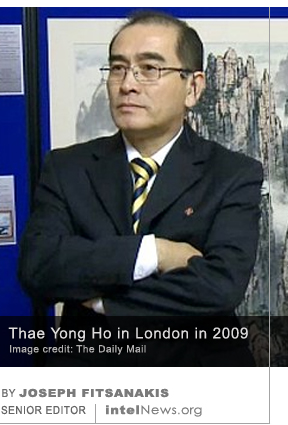 A high-ranking North Korean diplomat, who defected with his wife and children in London, and is now in South Korea, is from a privileged family with a long revolutionary pedigree in North Korean politics. South Korea’s Ministry of Unification confirmed on Wednesday that Thae Yong-Ho, the second-in-command at the North Korean embassy in the United Kingdom, had defected with his wife and children and had been given political asylum in South Korea. As intelNews
 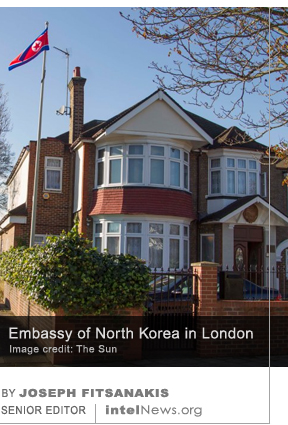 A senior member of North Korea’s diplomatic representation in the United Kingdom, who is considered one of his country’s leading specialists in Western European affairs, has reportedly defected “to a third country” with his family. The alleged defection was first
 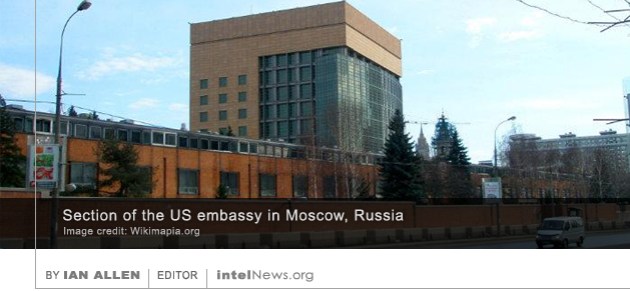 A notable increase in incidents of harassment of American diplomats stationed in Europe by Russian intelligence personnel appears to be part of what some officials describe as an escalating “gray war” between the US and Russia. For over a year now, American State Department personnel stationed in Europe have been complaining of a systematic campaign of “harassment and intimidation” against them and their families by Russian intelligence operatives. The campaign is allegedly being waged in Moscow and other European capitals, and has prompted one US diplomat to say that he and his colleagues were “feeling embattled out there in the embassy”. The Washington Post, which published the
 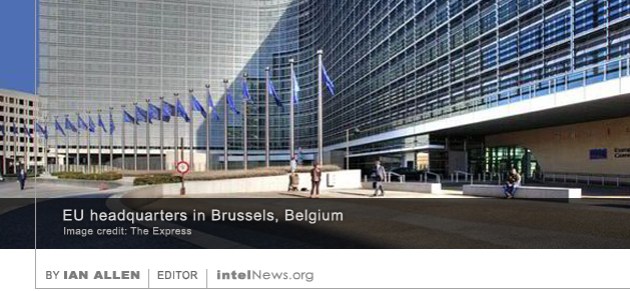 A debate on information security measures in the European Union was prompted last week after some officials voiced concerns that the proceedings of a closed-door meeting were secretly monitored by Israel. The meeting took place on January 15 as part of regular proceedings by the EU’s Political and Security Committee (PSC). The main item on the agenda was the EU’s Middle Eastern policy. According to some meeting participants, Israeli diplomats appeared to be aware of a statement discussed during the PSC meeting “in real time”, which prompted a wider debate on EU information security policies.
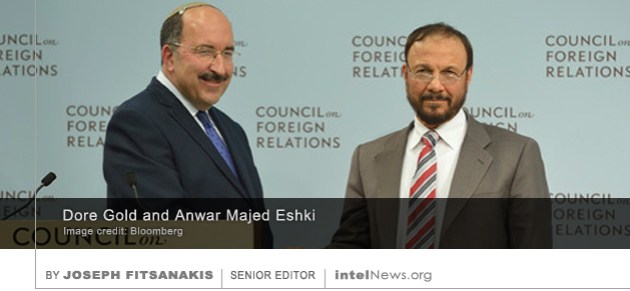 Representatives from Israel and Saudi Arabia have publicly admitted for the first time that they met secretly to discuss their common foe Iran, even though Saudi Arabia does not officially acknowledge Israel’s existence. The admission was made at a symposium held on Thursday at the Council on Foreign Relations, a foreign-policy think tank based in Washington, DC.






 intelNews.org
Russia allegedly planning to expel 30 American diplomats in a few weeks
July 12, 2017 by Joseph Fitsanakis 2 Comments
Observers, including the present author, were confident at the time that the Kremlin would respond in kind. In a surprising move, however, the Russian President Vladimir Putin said he would not respond to Mr. Obama’s move, in the hope that US-Russian relations would improve with the arrival of the new president in the White House. He added that Russia reserved the right to retaliate at a later time. Moscow’s response was met with praise by the then-president-elect Donald Trump and his transition team.
But Russia’s hopes for warmer relations with the US under Mr. Trump’s leadership do not seem to be materializing. A recent article in the daily Russian newspaper Izvestia reported that the Kremlin thought it was “outrageous” that the Trump White House had not yet returned the two seized compounds to the Russian Ministry of Foreign Affairs and not rescinded the expulsions of the 35 diplomats and their families. It also claimed that President Putin raised the issue with his US counterpart during their July 7 meeting in the German city of Hamburg. The Moscow-based newspaper quoted unnamed senior Russian officials, who said that Russia was preparing to expel dozens of American diplomats and seize US diplomatic facilities soon.
It appears that Russia will wait until the upcoming meeting between the US Undersecretary of State Thomas Shannon and the Russian Deputy Foreign Minister Sergei Ryabkov, which has been scheduled for later this month in St. Petersburg. If no US assurances for the return of the compounds and diplomats are made at that time, Moscow will proceed with its tit-for-tat plan. When asked about Izvestia’s article, the Russian Minster of Foreign Affairs, Sergei Lavrov, replied that the Kremlin was “weighing specific measures” in response to last December’s expulsions of Russian diplomats from the US. However, Mr. Lavrov said he did not want to elaborate at the present time, while also refusing to deny the newspaper’s allegations.
► Author: Joseph Fitsanakis | Date: 12 July 2017 | Permalink
Filed under Expert news and commentary on intelligence, espionage, spies and spying Tagged with 2016 US presidential election, diplomacy, diplomatic expulsions, Russia, United States