FBI’s top New York official urges personnel to ‘dig in’ for ‘battle’ with White House

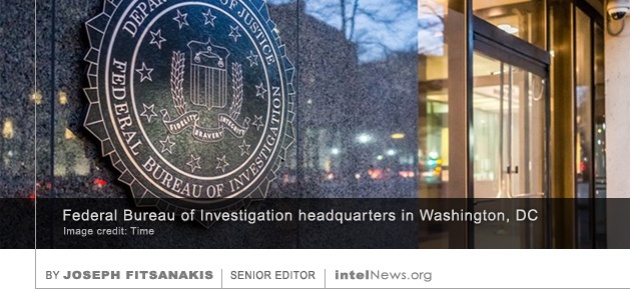
FBITHE HEAD OF THE Federal Bureau of Investigation’s largest field office sent an email to his staff last night, urging them to “dig in” for “battle” after the White House began scrutinizing the Bureau’s investigation into the January 6 riots. James E. Dennehy, assistant director in charge of the FBI’s New York field office, sent a defiant email to FBI employees just hours after the Department of Justice (DOJ) began compiling the names of Bureau personnel who participated in the probe of the January 6, 2021, attack on the U.S. Capitol.

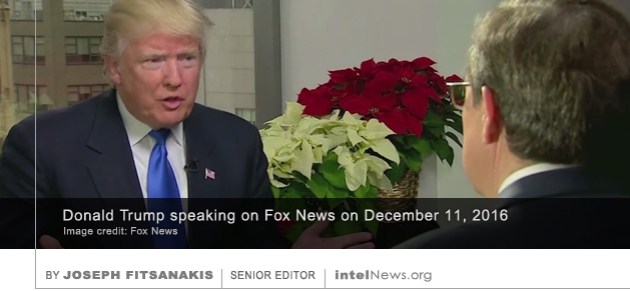
On January 31, President Donald Trump’s administration summarily dismissed nine senior FBI officials. The following day, the Bureau’s interim leadership received a DOJ directive instructing them to provide information on all employees involved in the January 6 investigation. This request applies not only to special agents but also to thousands of FBI personnel who provided support services for what remains the largest investigation in the agency’s history.

Approximately 15% of the FBI’s workforce —an estimated 6,000 employees— was involved in the investigation. On Sunday, around 4,000 of them received an email from the Department of Justice asking them to voluntarily disclose their role in the probe. Reports indicate that recipients must submit the requested information by 6:00 p.m. Eastern Time today. Many within the FBI fear this inquiry is part of a broader effort by the Trump administration to remove rank-and-file employees who worked on January 6 cases.

In response, Dennehy, a former U.S. Marine who joined the FBI after seven years in the Corps, sent an email on Sunday afternoon to personnel in the New York field office, delivering what appears to be a message of defiance. “Today,” he wrote, “we find ourselves in the middle of a battle of our own, as good people are being walked out of the FBI and others are being targeted because they did their jobs in accordance with the law and FBI policy.”

Dennehy praised the Bureau’s interim leaders, Brian Driscoll and Robert C. Kissane, for resisting DOJ requests to provide lists of FBI personnel, calling them “warriors.” He also recounted his Marine Corps experience, describing a time when he had to dig a five-foot-deep foxhole to survive, stating he would “dig in” similarly now. He emphasized that he had no plans to resign from the FBI or step down from his current position. Read more of this post

Is Trump signaling possible CIA covert operations against drug cartels?

CJNGTHERE WERE REPORTS LATE on Monday that United States President Donald Trump was considering authorizing covert operations by the Central Intelligence Agency (CIA) against drug cartels. During his inaugural address on Monday afternoon, Trump said he would be “designating the cartels as foreign terrorist organizations”. Later the same day, the incoming president signed an executive order to that effect.

According to US law, the Foreign Terrorist Organization (FTO) designation may be applied to non-US organizations which participate in activities that fall under the US Department of State’s definition of terrorism. Historically the FTO list has included leftwing militant groups, armed nationalist or separatist organizations, as well as Islamist violent extremist groups.

In some cases, FTO organizations have actively participated in the manufacture and distribution of illicit drugs. However, they are distinguished from purely criminal organizations by the overarching political motives that guide their activities. In contrast, drug cartels are primarily motivated by financial profit and tend to engage in politics only to the extent that doing so will boost their money-making ability.

While signing his executive order on Monday evening —one of nearly a hundred he signed that day— President Trum said he would instruct his administration “to use the full and immense power of federal and state law enforcement to eliminate the presence of all foreign gang criminal networks” from the US and Mexico.

According to some observers, the FTO designation is “a strong indication” that the new US president plans to issue a presidential finding —a classified directive issued by the commander-in-chief— authorizing the CIA to engage in covert action targeting the drug cartels. A number of Trump allies have reportedly compiled a list of targeted cartels, which are located mostly in Mexico. They include notorious criminal organizations, such as the Cartel Jalisco Nueva Generación (CJNG), the Sinaloa Cartel, and the Gulf Cartel.

Additionally, the FTO designation might constitute the first step toward an American military presence inside Mexico, or missile strikes directed against designated FTO strongholds, including drug production and storage facilities. In November of last year, there were reports in the American media claiming that key figures in the incoming Trump administration were contemplating launching a military invasion of northern Mexico.

Author: Joseph Fitsanakis | Date: 21 January 2025 | Permalink

Analysis: Secret Service failed Trump because it can’t keep up with the growing threat

Trump 2016THE UNITED STATES SECRET Service is among the world’s most prestigious law enforcement agencies. Its institutional experience in protecting US presidents and presidential candidates dates to 1901. Given its high-stakes protective mission —safeguarding the executive leadership of the world’s most powerful nation— the agency has historically placed emphasis on flawlessness: it simply can’t afford to fail.

Yet it did just that on Saturday in Butler, Pennsylvania. Presidential candidate Donald Trump did not survive the attempted assassination because his Secret Service detail neutralized the threat to his safety in time. Instead he survived because the shooter, 20-year-old Thomas Matthew Crooks, from the small suburb of Bethel Park in Pittsburgh, missed. How are we to explain this abject failure by one of the world’s most venerated law enforcement agencies?

POLICING IN A DEMOCRACY

Unlike tyrannical regimes, where law enforcement is nearly omnipresent, policing functions in democratic societies are relatively limited. They rely on what can be essentially described as a numbers game. Under this model, the effectiveness of policing functions inherently rests on the assumption that the vast majority of the population will comply with legal norms voluntarily, and that it will do so most of the time.

Thus, the sustainability of law and order in democratic societies hinges, not just on the capabilities of the enforcement agencies, but significantly on the general populace’s commitment to uphold the rule of law. This tacit social contract allows law enforcement agencies to operate with a relatively small logistical footprint. It also allows police forces to focus their efforts on a relatively small number of individuals, or groups, who do not adhere to the law.

WIDESPREAD BREAKDOWN

The US has relied on this model of policing since the Civil War. However, this model tends to falter once a substantial segment of the population refuses to voluntarily adhere to legal conventions. In such a scenario, the sheer number of non-compliant individuals can overwhelm the policing system, leading to a widespread breakdown in law and order.

The US has witnessed such incidents with alarming intensity in recent years. Examples include the 2014 Bundy standoff and the 2016 occupation of the Malheur National Wildlife Refuge by armed groups of anti-government extremists. It also witnessed the —often gratuitously violent— George Floyd protests, as well as the armed occupation of the Capitol Hill neighborhood of Seattle, Washington, in 2020.

Most notably, America witnessed widespread civil disobedience on January 6, 2021, when thousands of frenzied Trump supporters stormed the US Capitol and attempted to bring an end to the Constitutional order in one of the world’s oldest democracies. In addition to exposing the fragility of American democracy, the January 6 attack drew attention to the ineffectiveness of the state’s policing functions, thus further-eroding public trust and compliance.

AMERICANS ARE EMBRACING VIOLENCE

There is no denying that Americans are viewing violence as an element of national politics with an alarming rate. Last summer, a survey conducted by the University of Chicago’s Project on Security and Threats revealed that 4.4 percent of the adult population of the US —12 million Americans— believed that violence was justified to restore Donald Trump to power. Granted, very few of those survey responders would actually be willing to act on such extreme beliefs. But even a mere 1 percent of those 12 million people who appear to endorse violence in support of Trump amounts to 120,000 individuals. That’s an enormously large number of radicalized Americans. Read more of this post

Still unanswered: Trump’s motive for withholding classified documents

Trump 2016THE 49-PAGE GRAND JURY indictment, filed last week in Florida by the United States Department of Justice, contains 37 criminal charges against former president Donald Trump. The charges can be summarized into a two-fold accusation: Trump is alleged to have stolen more than 300 classified documents upon leaving the White House in January 2021. Moreover, he allegedly schemed with a group of advisors and aides in order to obstruct efforts by the government to retrieve the stolen documents. Both accusations are spelled out in stark detail in the pages of the indictment.

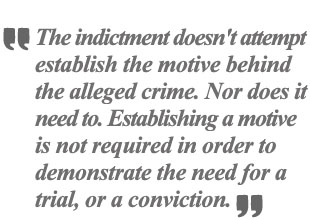
What remains unanswered, however, is the motive. Why did Trump allegedly take several hundred classified documents from the White House? Did he select specific documents to purloin? And, if so, why these specific documents? Lastly, why did the former president go to such pains to frustrate the government’s efforts to recover the documents? There has been intense public speculation about the answers to these questions. Yet the grand jury indictment does not appear to attempt to establish the possible motive behind the alleged crime. Nor Q Quotedoes it need to. Establishing a motive is not required in order to demonstrate the need for a trial, or indeed a conviction. Given the high stakes of this case, however, establishing a motive can provide much-needed clarity in the public sphere.
Accidental or Malicious?

It is important to clarify with precision what the grand jury indictment does not state: its pages do not contain any suggestion that Trump took possession of the classified documents in order to share them with specific individuals or entities, American or foreign. Nor does the indictment suggest that the former president intended to use the classified information in his possession for personal financial gain —for instance to promote his investment ventures at home or abroad, or to gain leverage and win over potential business partners.

So, why did Trump do it? As The New York Times explained on Sunday, the indictment does offer some hints of motives, if one reads between the lines. One possible explanation stems from Trump’s time in the White House, during which he learned to associate his access to classified information as a paramount perk that came with being president of the United States. It follows that, retaining access to classified information was a way for him to maintain control over the office of the presidency. That strong need intensified even more after January 2021, as Trump was clearly “not ready to let go of the perks of holding the highest office in the country”. Indeed, the indictment describes several examples that reveal the strong sense of ownership that the former president felt about the classified documents he kept at his private residence at Mar-a-Lago, as well as his determination to keep them in close proximity to his office and sleeping quarters.
Tertiary Motives

A plausible tertiary motive for Trump’s alleged crimes is the leverage and status that access to secrets can bestow upon an individual. It is possible that Trump viewed the classified documents as the apogee of the long list of his material prizes and trophies —as an important physical legacy of the zenith of his career. That would also explain why he allegedly fought so determinedly to keep the documents in his possession, even after he was told in no uncertain terms by the government that they did not belong to him. Moreover, as The Times notes, the former president may view his classified document collection as a way to insure his legacy —for instance as a means of rebutting critics of his policies and decisions while he was in office, or even as potential “payback against perceived enemies”.

But these motives are probably less prominent in Trump’s mind. A strong and deeply held sense of ownership of government information, no matter their classification grade, is likely the driving motive behind the alleged crimes. As The Washington Post noted in an insightful article in 2022, aides to the former president said that he appeared sincere and genuine about his conviction that the classified documents “were his, not the government’s”. When he was advised otherwise by his own aides, he noticeably “gravitated toward lawyers and advisers who indulged his more pugilistic desires”, according to the paper. His attitude was not a show. It was sincere. Moreover, there is no reason to believe that it has subsided since his indictment.
A Genuine Conviction of Ownership

Trump’s latest legal woes are rooted in his genuine belief that access to classified information is something he is owed —not simply because he served as president of the United States, but because, in his mind, he should still be in the Oval Office. These deeply entrenched beliefs are unlikely to be abandoned by the former president, regardless of the cost. More importantly, these same beliefs are passionately shared by millions of his supporters. The latter are sufficient in number to wreak havoc in the Republican Party and radically reshape American politics for years to come. If Trump avoids trial or a prison sentence, his support base will view such an outcome as a form of noble victory against the “deep state”. It is therefore likely to be energized, possibly like never before. Should Trump be jailed or seek political asylum abroad in order to evade incarceration, the American political landscape will undergo a major earthquake. Regardless of the outcome of this unprecedented saga, stormy waters seem to lie ahead.

Author: Joseph Fitsanakis | Date: 12 June 2023 | Permalink

US government warns of ‘unprecedented articulated threats’ against law enforcement

FBIA SECURITY BULLETIN ISSUED jointly by the United States Department of Homeland Security (DHS) and the Federal Bureau of Investigation (FBI) warns of a growing number of “articulated threats” against law enforcement. The bulletin connects these threats with the recent execution by the FBI of a search warrant at the Florida residence of former US President Donald Trump. Several US-based media, which have accessed the bulletin, described the volume of threats against law enforcement and other government personnel as “unprecedented”.
The bulletin, issued on Friday, said known threats were “occurring primarily online and across multiple platforms” in the social media ecosphere. Most threats were general in nature, and included calls for a civil war and an armed rebellion against the US government. The bulletin warned, however, that alongside general threats FBI and DHS agents were investigating “multiple articulated threats and calls for the targeted killing of judicial law enforcement and government officials”. Among those threats, some were “specific in identifying proposed targets and tactics, as well weaponry”, the bulletin added. At least one case involved a targeted threat to “place a so-called Dirty Bomb in front of FBI headquarters” in downtown Washington, DC. The term ‘dirty bomb’ refers to an improvised nuclear weapon consisting of conventional explosives and radioactive nuclear waste material.

There was particular concern over the weekend for the safety of those FBI special agents and other government officials, whose names appear on the official government documentation that relates to the search of Trump’s residence. The names of several FBI special agents were reportedly being circulated across online forums last week, while pro-Trump activists have vowed to publicize the personal information of dozens of FBI employees. An armed man who tried to storm the FBI field office in Cincinnati, OH, was shot dead on Thursday, following a car chase and gun battle with law enforcement personnel. Meanwhile, a group of armed protesters gathered on Saturday outside the FBI field office in Phoenix, AZ, but eventually dispersed without incident.

The bulletin warns that domestic violent extremists (DVEs) could potentially target “individuals implicated in conspiracy theories and perceived ideological opponents who challenge their worldview”. It adds that high profile DVE attacks in the coming weeks may inspire copycat actions, while the emergence of new conspiracy theories could add more fuel to the fire. The bulletin concludes by viewing the upcoming 2022 midterm election as “an additional flashpoint” around which DVEs could “escalate threats against perceived ideological opponents, including federal law enforcement personnel”.

Author: Joseph Fitsanakis | Date: 15 August 2022 | Permalink

Tip by confidential human source guided FBI search of Trump’s home, reports claim

Mar-a-Lago MULTIPLE NEWS OUTLETS CLAIMED on Wednesday that Monday’s search by authorities of a Florida residential compound belonging to former United States President Donald Trump was based on information provided to the Federal Bureau of Investigation by a confidential human source. The source reportedly gave the FBI details about a number of classified documents that were allegedly hidden in Trump’s Florida estate, as well as their precise location.
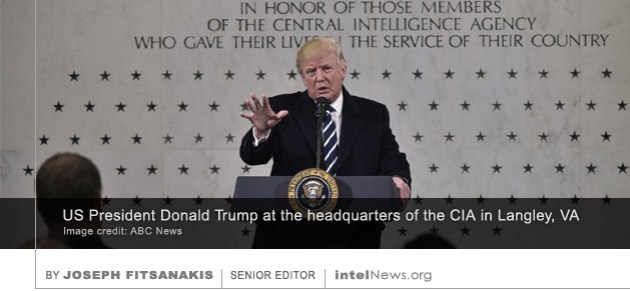
America’s troubled political waters turned stormy once again on Monday morning, when around 35 FBI special agents and technical support personnel arrived at Trump’s Mar-a-Lago estate in a convoy of unmarked vehicles. The FBI team proceeded to execute a search warrant, which authorized them to confiscate government files that were allegedly in storage at the luxury estate. According to the 1978 Presidential Records Act, these files belong to the state and should have been deposited to the National Archives upon Trump’s departure from the White House in January of 2021.

On Monday afternoon, the FBI staff reportedly left Trump’s residence with between 10 and 15 boxes of documents. In the ensuing hours, a number of commentators pointed out that, as per Trump’s attorney Lindsey Halligan, who observed the search in person, the FBI focused on just three rooms, ignoring the rest of the sprawling mansion —namely Trump’s office, a bedroom and a storage room. That, according to some, points to the strong possibility that the FBI special agents had prior information about the location of the files.

On Wednesday morning, Newsweek said it could confirm that the FBI had prior information about the precise location of the files. The news outlet cited two senior government officials, including “an intelligence source” who had “direct knowledge of the FBI’s deliberations” in the days leading up to the search. According to the sources, during the first week of August the government prosecutor in charge of the case was able to secure a search warrant by a West Palm Beach judge. The prosecutor reportedly did so by providing the judge with “abundant and persuasive detail” about the files, which “proved that those records were contained at Mar-a-Lago […] in a specific safe in a specific room”.

On Wednesday evening, The Wall Street Journal also reported that the FBI had been approached by “someone familiar with stored papers”. The source allegedly provided government investigators with information about the precise location of “classified documents” at Mar-a-Lago. The paper added that the FBI confidential source had direct access to the documents.

The US attorney general’s guidelines [PDF] define FBI confidential human sources as individuals who are “believed to be providing useful and credible information to the FBI for any authorized information collection activity”. They further stipulates that the FBI expects or intends to obtain “additional useful and credible information” from confidential human sources in the future, thus it usually builds a long-term relationship with these individuals. The guidelines also note that, given the sensitivity of the role of confidential human sources, their “identity, information or relationship with the FBI warrants confidential handling”.

Author: Ian Allen | Date: 11 August 2022 | Permalink

Trump transition was ‘far and away’ most difficult in CIA history, internal report claims

Donald Trump CIA

THE PERIOD IMMEDIATELY FOLLOWING the electoral victory of Donald Trump in 2016 was “far and away the most difficult” transition between administrations in the history of the Central Intelligence Agency (CIA). This is the conclusion of a recently declassified CIA analysis of how American presidents-elect are briefed. The term ‘president-elect’ refers to individuals who have won the US presidential election, but have yet to assume the presidency. Presidents-elect are briefed by the CIA during the transition period, which typically lasts about 75 days, from early November until late in January of the following year.

The CIA analysis appears in the most recent edition of Getting to Know the President: Intelligence Briefings of Presidential Candidates and Presidents-Elect, 1952–2016. It is authored by John L. Helgerson, a 38-year veteran of the CIA, who retired in 2009 as the Agency’s Inspector General. The volume contains lessons learned by analysts who briefed presidents-elect in over sixty years. Chapter nine of the book, which contains an assessment of Trump as president-elect, was released [pdf] last week.

The chapter chronicles some of the challenges faced by the CIA in the days immediately after Trump’s electoral victory in 2016. Such challenges included CIA analysts having to wait for over a week for the Trump team to begin communicating them, its members “apparently having not expected to win the election”. Additionally, the Trump transition team had not thought of a way to safeguard printed documents shared with them by the CIA, which necessitated the Agency having to install a safe in the Trump transition team’s headquarters.

Eventually, president-elect Trump began receiving the President’s Daily Brief (PDB), a highly sensitive classified document produced each morning for the eyes of the president, vice president and a limited number of senior administration officials. However, unlike his vice-president elect, Mike Pence, Trump did not read the PDB, and eventually told the CIA he wanted a less text-heavy approach to the document if he was going to read it. The CIA complied with the request, as it tries to adapt its briefing method to the intelligence consumers’ preferred mode. Read more of this post

White House considers barring Donald Trump from receiving intelligence briefings

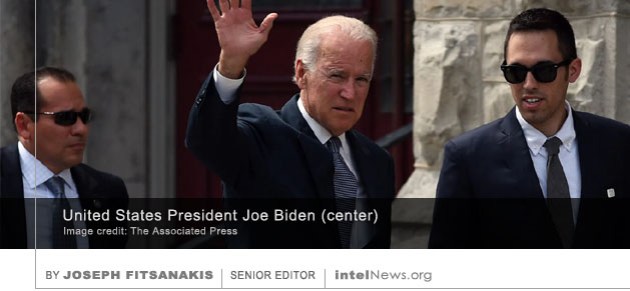
Joe BidenUNITED STATES PRESIDENT JOE Biden and his senior aides are “reviewing” the possibility of preventing his predecessor, Donald Trump, from receiving briefings containing classified information. Such an eventuality would constitute a dramatic break from the longstanding tradition of providing intelligence briefings to former American presidents, who wish to continue to receive them after leaving office.

The reasoning behind granting former American presidents access to classified information, even after leaving office, is that they usually maintain a visible diplomatic presence with worldwide influence. Many keep a busy schedule that involves regular meetings with foreign dignitaries, in which affairs of state are discussed. Intelligence briefings can therefore be useful in allowing them to speak with authority on various matters of domestic and international policy.

But Trump may not be granted that ability, according to reports in several American media. The reports were sparked by an answer given by White House press secretary Jen Psaki to a question asked by NBC reporter Geoff Bennett on Monday. Bennett asked Psaki if the Biden administration had decided whether Trump should continue to have access to classified information. Psaki responded by telling Bennett he had asked “a good question”, and added that the issue was “obviously under review”. However, “no determination” had been made yet, said Psaki.

Psaki’s confirmation that the matter is under review follows comments by the incoming White House chief of staff, Ron Klain, who said last month that the new president would make a decision following recommendations by his intelligence advisors. Some former senior security and intelligence officials have come out strongly in support of barring Trump from having access to intelligence. Among them are former Federal Bureau of Investigation director James Comey, as well as Susan M. Gordon, former principal deputy director of national intelligence, who briefed Trump regularly for two years. Gordon argued in an a Washington Post op-ed last month that Trump’s foreign liabilities and close associations with “foreign entities” render him a “potential national security risk”.

Author: Joseph Fitsanakis | Date: 02 February 2021 | Permalink

Trump pardons alleged recruiter of US Navy analyst who spied for Israel

Jonathan PollardDURING HIS LAST DAY in office, United States President Donald Trump issued a federal pardon for Aviem Sella, an Israeli former intelligence officer, who allegedly recruited Jonathan Pollard, an American who sold secrets to Israel. Pollard was released in November of 2015, after serving a 30-year sentence for being what US government prosecutors called “one of the most damaging spies in American history”. The convicted spy recently relocated to Israel, where many see him as a national hero.
In 1987, along with Pollard, the US government indicted Sella, accusing him of recruiting and helping handle Pollard on behalf of Israeli intelligence. Sella, who today is 75, was a fighter pilot in the Israeli Air Force. He allegedly began working for Israeli intelligence in the early 1980s. He left the US just days before Pollard was arrested while trying to enter the grounds of the Israeli embassy in Washington, seeking political protection. Israel refused to extradite him to the US and refused to charge him with a crime.

But in his last day in office yesterday, President Trump included Sella’s name in a list of 144 names of individuals to whom he granted last-minute federal pardons. In a statement, the White House explained Trump’s decision by saying that Israel had “issued a full and unequivocal apology [for Pollard’s spying], and has requested the pardon in order to close this unfortunate chapter in US-Israeli relations”. In a statement issued a few hours later, Pollard and his Israeli wife, Esther, said they were “truly happy” about Trump’s decision. They went on to day that pardoning Sella “puts an end to the affair’s bleeding wounds after 35 years”.

Author: Joseph Fitsanakis | Date: 21 January 2021 | Permalink | Thanks to A.B. for corrections

CIA chief ‘threatened to resign’ to prevent her replacement by Trump loyalist

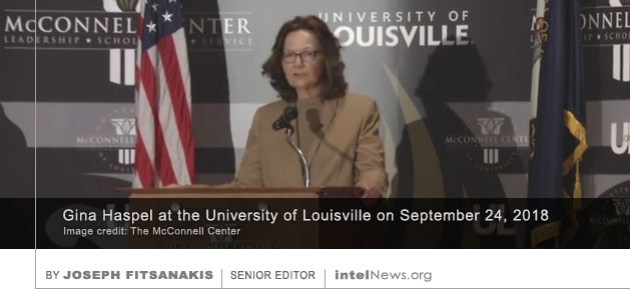
Gina HaspelTHE DIRECTOR OF THE United States Central Intelligence Agency, Gina Haspel, reportedly threatened to resign on the spot in order to prevent a plan by the White House to replace her with a loyal ally of President Donald Trump. This was reported on Saturday by the American news website Axios, which cited three anonymous “senior administration officials” with direct knowledge of the matter.
President Trump reportedly planned to fire the heads of several federal law enforcement and intelligence agencies, including CIA, if he was re-elected in November. Following his electoral defeat, he discussed with his closest aides the possibility of proceeding with his plan to fire senior security and intelligence officials, as a form of retaliation against a part of the federal government that he views as disloyal to him. In particular, the president appears to believe that the CIA is in possession of secret documents that, if declassified, would harm the reputation of his domestic political enemies.

On November 9, the president summarily fired Secretary of Defense Mark Esper and replaced him with Chris Miller, who until then was serving as director of the National Counterterrorism Center. He also installed Kash Patel as Miller’s chief of staff. Patel is an attorney whose rise within the ranks of the Trump administration has been nothing short of meteoric. In 2019, after serving as Principal Deputy to the Director of National Intelligence for a number of months, Patel became senior director of the Counterterrorism Directorate at the National Security Council. He was also a former aide to Representative Devin Nunes (R-Ca), and is believed to have been the main author of a memorandum issues by Nunes, which accuses the Department of Justice and the Federal Bureau of Investigation of participating in a conspiracy to destroy Trump.

This memorandum, claims Axios, convinced Trump that Patel would make a good acting CIA director. He therefore planned to replace the CIA’s current deputy director, Vaughn Bishop, with Patel. He then planned to fire Haspel, which would elevate Patel to acting CIA director, according to Axios. The website claims that the president instructed the White House chief of staff Mark Meadows to begin the process of replacing Bishop with Patel in early December. However, once Haspel was notified of the plan, she threatened to resign before Patel was installed at the CIA. Her resignation would mean that Trump would have to also fire Haspel’s replacement, Bishop, in order to place Patel at the helm of the agency.

By December 11, Trump had reportedly been convinced to keep Haspel as CIA director. A relatively amicable meeting between him and Haspel, followed by the counsel of his senior aides, allegedly contributed to his decisoin. Among those who spoke in Haspel’s favor was Vice President Mike Pence and Pat Chipollone, who serves as White House Counsel. At that time, said Axios, Meadows contacted Haspel to inform her that the president had reversed his decision, and canceled the paperwork for installing Patel at the CIA.

Author: Joseph Fitsanakis | Date: 18 January 2021 | Permalink

Analysis: Emergence of an armed insurgency is now a distinct possibility in the US

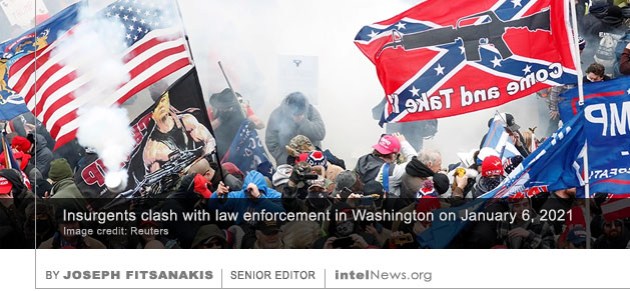
US CapitolWITH DOWNTOWN WASHINGTON RESEMBLING a large military encampment, a repeat of last week’s shocking assault on the Capitol Complex is highly improbable. But America could witness escalating levels of violence across many states, as supporters of the January 6 insurrection continue to organize themselves into a coherent armed movement. Their ability to threaten American national security will depend on whether they can overcome major internal divisions. It will also be determined by the speed with which United States authorities will respond to the rise of what is quickly becoming a dangerous militant movement.
Supporters of the nationalist insurrection that shook the nation on January 6 could possibly return to Washington in time to make a show of force during the Inauguration of Joe Biden. Intelligence reports by US federal agencies mention as many as 17 separate events being planned in the nation’s capital by a variety of militant groups. If these events materialize, the US is likely to witness the largest armed protests in its history. Other gatherings —many of them involving armed militants— are scheduled to take place in all 50 states between January 16 and 20.Q Quote 1

The militants who will descend on Washington in the coming days are unlikely to engage in all-out hostilities against as many as 20,000 members of the US National Guard. The latter have reportedly been given clear rules of engagement, which include the use of lethal force against assailants. The command and control capabilities that are needed to seriously threaten a 20,000-strong professional army, make it unlikely that the insurrectionists will attempt such a suicidal mission. Nevertheless, the possibility that one or more small groups of die-hard militants will descend on Washington determined to engage in direct combat against the US military should not be disregarded. Their chances of a martial victory are extremely slim, but victory can also be achieved through what their supporters will interpret as heroism and —ultimately— martyrdom.

What is far more likely to happen is that the insurrectionists will engage the forces of the government asymmetrically —that is, by resorting to strategies and tactics of unconventional warfare. Such scenarios are more likely to materialize in the coming months, or even years, in the countryside of so-called ‘red states’, where some supporters of President Donald Trump may be willing to help the insurgents by giving them protection and cover. Read more of this post

FBI, NYPD forewarned Capitol Police of serious violence by Trump supporters

US CapitolTHE FEDERAL BUREAU OF Investigation and the New York Police Department gave Capitol Police officials specific warnings that supporters of United States President Donald Trump were determined to engage in serious violence on January 6, according to federal officials. The FBI even made contact with known far-right radicals across the United States in early January, and warned them not to travel to Washington for the pro-Trump rally that resulted in the bloody attack on the US Capitol, according to NBC News.
Citing “senior law enforcement officials”, including “a senior FBI official”, NBC reported on Sunday that the FBI had “credible and actionable information” about specific far-right radicals who intended to join the protest on January 6. This information was allegedly communicated to Capitol Police officials, according to the report. The senior FBI official, who is not named in report, told NBC that the Bureau made contact with those radicals and warned them not to travel to Washington for the protest. Citing “multiple law enforcement officials”, the news network also said that the Capitol Police was given extensive intelligence by NYPD about planned acts of violence on January 6. The intelligence was “specific”, “detailing the threats and extremist rhetoric on social media”, according to the news network.

Despite these warnings, however, Capitol Police reportedly turned down an offer of assistance by the US National Guard three days before the fateful siege of the Capitol Building Complex by thousands of pro-Trump insurgents, many of whom were armed. According to the Associated Press, despite the advanced and detailed warnings given to it, “the Capitol Police planned only for a free speech demonstration”.

Meanwhile, the experts warning of a significant risk of widespread violence on January 20, when President-Elect Joe Biden is scheduled to be sworn into office, are growing in number. On Sunday, Cindy Otis, a former Central Intelligence Agency analyst and vice-president of the Alethea Group, which tracks online threats, warned that “we are in a tinderbox situation right now”. She pointed to numerous threats made online, which claim that last Wednesday’s attack on the Capitol was “just a taste of things to come”. There are reports that far-right insurgents are preparing for a violent showdown in DC, aimed at preventing Biden from entering the White House on January 20. Other reports suggest that groups of insurgents seek to organize synchronous potentially violent rallies in every state of the union that day.

Author: Joseph Fitsanakis | Date: 11 January 2021 | Permalink

Analysis: US Capitol attack marks the beginning of a prolonged period of insurrection

Rightwing militancy 2021IF WEDNESDAY’S ATTACK ON the United States Capitol Complex was part of a coup d’état, then the American political system should be considered safe for the time being. The mob that ransacked the Capitol was disordered, leaderless, and appeared to have no coordination, or even direction. However, the broader militant movement that it represents is evolving very rapidly. If left unchecked, it will be able to turn its weaknesses into strengths and spell major trouble ahead for the already stormy waters of American politics. The nation’s law enforcement and security agencies must therefore prepare for a period of widespread insurrection, some of which will be armed and lethal in nature. Insurrectionist acts are likely to occur across the nation, and may last for months, if not longer.

WHO CARRIED OUT THE ATTACK?

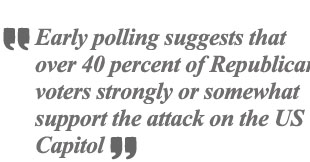
Wednesday’s attack was carried out by what can be described as the militant wing of the American nationalist-populist movement. This wing is not strictly representative of the US president’s broader political base. Its members see themselves as vanguard soldiers who are prepared to take extreme action to avert President Trump’s imminent departure from the White House. Such militant attitudes are not typical among Trump voters. Yet this vanguard is revered by Trump’s political base, a sizeable portion of which appears to be in support of Wednesday’s attack on the US Capitol. Indeed, early polling by YouGov suggests that over 40 percent of Republican voters strongly or somewhat support the attack on the US Capitol.Q Quote 1

Many members of this frontline force belong to organized militant cells, like the Oath Keepers, the Three Percenters, and —more recently— the Proud Boys. But these groups provide limited operational direction to their members, and were certainly not commanding Wednesday’s events. In fact, an audiovisual analysis of the attack shows that most of the assailants operated in makeshift groups and many didn’t even know each other’s names. There were no leaders directing the attacks on Wednesday. It is indeed likely that the militant figureheads of the movement were as surprised by the turn of events as the hapless members of the US Capitol Police.

HOW WAS THE ATTACK PREPARED?

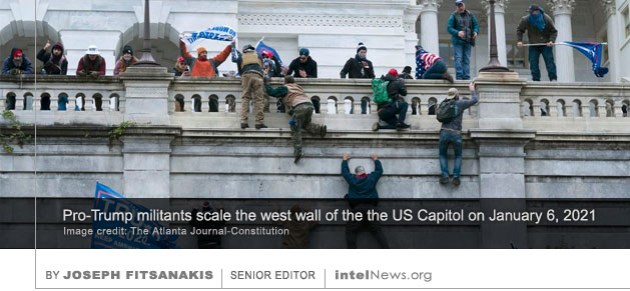
Many of the assailants were armed with tactical equipment, as well as with clubs, shields, chemical irritants, knives and other weapons. It also appears that at least one group of insurgents arrived at the Capitol with ropes, which they subsequently used to scale its walls. This points to earlier planning and coordination, which likely involved at least some reconnaissance. Read more of this post

Senior Homeland Security officials resign, reportedly under White House pressure

Department of Homeland Security DHS

TWO SENIOR OFFICIALS AT the United States Department of Homeland Security have resigned, reportedly after coming under pressure to do by the White House. The resignations may point to the latest incidents in an ongoing string of firings and resignations in the US intelligence and national security communities, part of a concerted effort by President Donald Trump.

The more senior of the two DHS officials who have resigned as of today is Bryan Ware, DHS assistant director for cybersecurity. Ware served at the DHS’s cybersecurity wing, the Cybersecurity and Infrastructure Security Agency (CISA). CISA was created by the Trump administration two years ago, when the president signed into law the Cybersecurity and Infrastructure Security Agency Act. The mission of the young agency is to streamline cybersecurity efforts across government agencies and departments, in order to improve the government’s cybersecurity protections.

Ware’s resignation coincided with a rare announcement by top officials at CISA, which called the US presidential election of November 3 “the most secure in American history”. The officials, who are members of the Election Infrastructure Government Coordinating Council (GCC) Executive Committee, added that “[t]here is no evidence that any voting system deleted or lost votes, changed votes or was in any way compromised”. The announcement appeared to be a refutation of claims made by President Trump and his supporters that the election was marred by significant irregularities.

The DHS assistant secretary for international affairs, Valerie Boyd, also resigned as of today. In her resignation letter, Boyd states that her “belief that people of character should support the institution of the Presidency […] has been tested many times these past few years”. In his farewell letter to colleagues, Ware states that his departure from the DHS came “too soon”, indicating that the decision to resign was not his own. Several sources suggest that both Ware and Boyd were pressured to resign by White House aides close to President Trump.

Reporters said last night that officials at the White House, the DHS and the CISA did not respond to requests for comment about the two DHS officials’ resignations. There were also rumors last night that CISA director, Chris Krebs, would be fired by President Trump in a matter of days.

Author: Ian Allen | Date: 13 November 2020 | Permalink

Senior US Republicans split on whether CIA director Gina Haspel should be fired

Gina Haspel

SENIOR FIGURES IN THE United States Republican Party appear to be split on whether President Donald Trump should fire Gina Haspel, the first female director of the Central Intelligence Agency, who has been serving in that capacity since 2018. According to The New York Times, Haspel is on a list of senior intelligence and national security officials that the embattled American president plans to fire in the coming days. He already fired key defense officials this week, including the Secretary of Defense Mark Esper, as well as the Pentagon’s head of policy and director of intelligence.

Trump administration insiders, who want to see Haspel gone, are aware that Trump will not be president for much longer, and are thus pushing for her immediate termination, said The Times. They blame Haspel for not stopping the CIA whistleblower who filed a complaint about the president’s July 2019 telephone call with his Ukrainian counterpart, Volodymyr Zelensky. The complaint led to Trump’s impeachment in the House of Representatives. Haspel had no role in that incident, but senior Trump loyalists believe she could have stopped the complaint before it reached the office of the US Intelligence Community’s Inspector General.

Haspel is also accused by Trump loyalists of not following the directives of the Office of the Director of National Intelligence, under John Ratcliffe, a Trump appointee who serves as the most senior intelligence officer in the US government. The CIA and the ODNI have not seen eye-to-eye since the latter’s founding in 2005. Additionally, unlike Haspel, who rose through the ranks of the Intelligence Community, Ratcliffe had no intelligence experience before this year, when he was appointed by Trump to lead the ODNI. It is believed that his status as an outsider has made it difficult for him to exercise leadership in the close-knit Intelligence Community.

But other senior Republicans have rallied around Haspel. They are said to include the powerful Senator Mitch McConnell, who on Tuesday met with Haspel in his office on Capitol Hill. The closed-door meeting between McConnell and Haspel alarmed the Trump inner circle, with Donald Trump, Jr., calling the CIA director a “trained liar” and accusing those Republicans who support her of undermining his father. The CIA declined to comment on the story.

Author: Joseph Fitsanakis | Date: 13 October 2020 | Permalink