FBI seeking former Syrian intelligence officer reportedly hiding in Florida

Moustafa Abed AyoubA Syrian former intelligence officer, who was given American citizenship several years ago, is being sought by authorities in the United States. The man was named by the Federal Bureau of Investigation last week as Moustafa Abed Ayoub, a 75-year-old resident of Fort Lauderdale, Florida. A statement by the FBI said the wanted man is believed to be hiding in southern Florida, possibly in the Miami area. A reward is now offered for information leading directly to Ayoub, according to the FBI press release. The release did not specify whether the former intelligence officer is wanted in connection with the ongoing civil war in Syria.

The FBI press release described Ayoub as a former brigadier general in Syria’s powerful Mukhabarat, the Military Intelligence Directorate, which operates under the auspices of the country’s Ministry of Defense. He is reported to have served in the Mukhabarat for nearly 20 years, from the early 1980s to the late 1990s. According to the FBI release, Ayoub served initially in Hama and Homs before he was transferred to Damascus. It appears that Ayoub is accused by the FBI of procuring American citizenship unlawfully, after giving deliberately false testimony during his naturalization proceedings. To be eligible for American citizenship, an applicant must have lived in the US for at least 30 months during the period leading to his or her naturalization application. Ayoub is accused of not telling immigration authorities that he had spent over 1,000 days outside the US in the months leading to his application for citizenship.

The FBI said it issued a warrant for Ayoub’s arrest in Florida, where he is believed to be hiding. However, the FBI release noted that Ayoub may have returned to Syria, or may be currently residing in the Lebanese capital Beirut.

Author: Ian Allen| Date: 30 September 2016 | Permalink

FBI arrests two more members of hacker group that targeted CIA director

Computer hackingTwo more members of a computer hacker group that targeted senior United States intelligence officials, including the director of the Central Intelligence Agency, have been arrested by the Federal Bureau of Investigation. The arrests of Justin Liverman, 24, and Andrew Boggs, 22, took place on Thursday in Morehead City and North Wilkesboro, in the US state of North Carolina. They are accused by the FBI of being members of Crackas With Attitude (CWA) an international group of computer hackers that specialized in targeting American intelligence and law enforcement officials.

Last October, the international whistleblower website WikiLeaks published personal emails and documents belonging to CIA Director John Brennan. The documents included a 47-page application for security clearance that Brennan had submitted to the US government a few years earlier. It was apparently found on his personal America Online (AOL) email account, which had been hacked by the CWA hacker group. Members of the group, who are all in their late teens or early 20s, routinely employed a method known as ‘social engineering’ to gain access to their victims’ information. The method refers to impersonating technicians or other service provider company personnel to gain access to private email or telephone accounts.

CWA members used these techniques to target dozens of senior US government officials from October 2015 until February 2016. Their targets included the Director of National Intelligence James Clapper and the Deputy Director of the FBI, Mark Giuliano. The hackers also gained access to electronic databases belonging to the US Department of Justice, from where they obtained the names, personal telephone numbers and home addresses of nearly 30,000 employees of the FBI and the Department of Homeland Security. That information was eventually published online by the hacker group.

In February, a 16-year-old hacker known as ‘Cracka’, who is the purported ringleader of CWA, and whose name cannot be released due to his young age, was arrested in the East Midlands region of Britain. It is believed that information on the teenager’s electronic devices eventually led the FBI to the capture of Liverman and Boggs. The two men have been charged with computer crime and are expected to appear in court in the US state of Virginia next week.

Author: Joseph Fitsanakis | Date: 09 September 2016 | Permalink
FBI warns against alleged Russian campaign to destabilize US elections

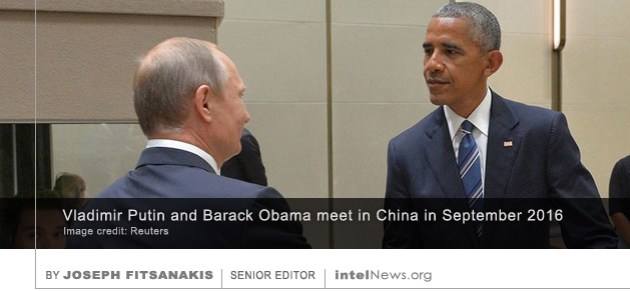
Putin and ObamaThe Federal Bureau of Investigation is among several intelligence agencies in the United States that have expressed concerns about an alleged Russian campaign to destabilize November’s presidential elections. The Washington Post, which revealed the FBI’s concerns on Monday, claimed that Moscow recently launched an “active measures” operation aimed at covertly sabotaging the integrity of the US election process. Russia’s goal, said the paper, was to “counter US leadership and influence in international affairs”, thus subverting America’s image, especially in countries of the former Eastern Bloc or former Soviet republics.
According to The Post, the FBI and other US intelligence agencies have “no definitive proof” that Moscow is attempting to promote public distrust in American political institutions. But there are strong indications that have made this topic “a priority” for intelligence officials from the FBI, the Department of Homeland Security, the National Security Agency and the Central Intelligence Agency, said the paper. These indications include the hack of the computer systems at the Democratic National Committee, the official governing body of the US Democratic Party, which was revealed in June. The hack resulted in the disclosure of over 20,000 internal emails and led to the resignation of Debbie Wasserman-Schultz, the DNC’s Chairwoman. According to The Post, the hack is “not yet officially ascribed by the US government to Russia”, but US intelligence officials are convinced that Moscow was behind it.

The DNC hack prompted the FBI to send a so-called “flash alert” to US election officials in July, urging them to remain vigilant against “attempts to penetrate election systems”, which have been detected in several states, according to the report. The unprecedented FBI alert did not expressly name Russia as a national-security threat, nor did it give details of electoral sabotage. But it urged state election officials to “be on the lookout for intrusions into their election systems”. Citing unnamed intelligence officials, The Post said that the investigation into alleged Russian operations against the US Presidential election is being coordinated by James Clapper, the US Director of National Intelligence.

Author: Joseph Fitsanakis | Date: 07 August 2016 | Permalink

Senior Russian intelligence defector to the US is allegedly dead

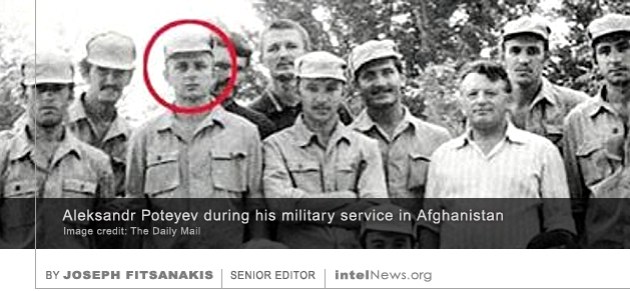
Aleksandr PoteyevA Russian former senior intelligence officer, who reportedly defected to the United States after helping the Federal Bureau of Investigation arrest 10 Russian spies in 2010, is believed to have died. The arrests, which revealed the so-called “Russian illegals program” in the US, were part of a counterintelligence operation codenamed GHOST STORIES by the FBI. The operation culminated in June 2010 with the dramatic arrests of 10 Russian ‘illegals’ in several US states. The Russian illegals, deep-cover intelligence operatives with no official connection to the country that employs them, had been operating in the US for over a decade prior to their arrest, using passports from third countries, including Britain, Canada and Uruguay. They were eventually exchanged with spies for the West that had been imprisoned in Russia.
Moscow blamed the arrests of the illegals on Colonel Aleksandr Poteyev, a veteran of the Soviet war in Afghanistan, who rose through the ranks of the KGB and its successor agency, the SVR, to become second-in-command in the so-called Department S. The senior leaders of Department S are believed to be appointed directly by the president of Russia, and are tasked with directing the activities of all Russian illegals operating abroad. According to the Russian government, which tried Poteyev in absentia in 2011, he began working for the US Central Intelligence Agency in 1999, shortly before entering the senior echelons of Department S.

A panel of judges was told during Poteyev’s Moscow trial that he left Russia without permission on June 24, 2010, just days before the FBI arrested the 10 Russian illegals in the US. He initially went to Belarus, from where he notified his unsuspecting wife via a text sent from a mobile phone that he was leaving Russia for good. He then traveled to Ukraine and from there to Germany, where he was allegedly picked up by his American CIA handler. It is believed that was provided with a new identity and passport, which he used to enter the US. By the time the Russians sentenced him to 25 years in prison for treason, Poteyev was adjusting to his new life in America.

But on July 7, the Moscow-based Interfax news agency reported that Poteyev, had died in the US, aged 64. The brief report did not specify the cause of Poteyev’s alleged death, nor did it state how Interfax acquired the information. Since the report was issued, no confirmation of Poteyev’s purported death has appeared from any other news source, or from government agencies. Russia’s Sputnik News contacted the SVR last week, but the agency declined to comment. It is believed that Poteyev’s two children were working in the US at the time of his defection, and that they are still living in the country.

Author: Joseph Fitsanakis | Date: 11 July 2016 | Permalink

Muslim man held in New York prison claims he was CIA spy

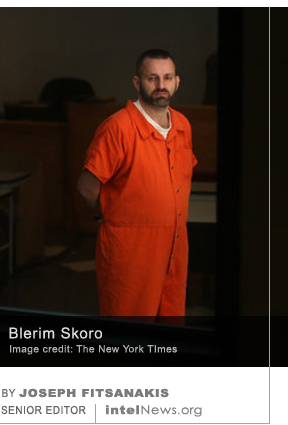
Blerim SkoroAn ethnic Albanian man facing deportation from the United States says he was trained by the Central Intelligence Agency to spy on “the most ruthless, dangerous terrorists in the Balkans and the Middle East”. Blerim Skoro, 45, from the former Yugoslav Republic of Kosovo, was arrested last February in Brooklyn, New York, for illegally using a discounted student MetroCard. He was then found to have entered the US illegally and is currently in prison in New Jersey, facing possible deportation back to Kosovo. But Skoro told The New York Times in an interview published on Wednesday that he cannot be sent back to Kosovo because he operated there as a spy for the CIA.
According to The Times, Skoro came to the US in 1994. Six years later, he was convicted in a New York court of transporting drugs and laundering nearly $700,000 in criminal proceeds. But while in prison, Skoro was recruited as an informant for the Federal Bureau of Investigation, and was tasked with monitoring inmates with militant Islamist leanings. In 2007, when Skoro was released from prison and deported back to Kosovo, he allegedly continued working for US intelligence. He told The Times that he was trained by US operatives in a CIA safe house in the former Yugoslav Republic of Macedonia before taking on assignments in the Balkans, the Middle East and even Pakistan. Throughout that time, Skoro says he posed as a militant Islamist who had become radicalized while serving his prison sentence in America. He claims to have supplied the CIA with intelligence relating to al-Qaeda and other Sunni Islamist groups.

However, in 2010, while traveling to a CIA safe house in Macedonia for a meeting, he was shot by assailants who probably knew he was working for a foreign spy agency. That incident prompted the CIA to sever its relationship with him, dismissing him from his agent status and offering him approximately $40,000 in compensation. Soon afterwards, Skoro made his way to Canada, from where he entered the US illegally, in November 2014. Before getting arrested in Brooklyn in February, he says he made contact with US intelligence officials, offering to spy for the US against the Islamic State. But his offer was not accepted. The Times article speculates that US intelligence may have no use for Skoro because his identity has been compromised, or because his reliability has come into question.

Currently Skoro is being held without bond at the Bergin County Jail in northern New Jersey, because federal prosecutors believe he might flee if released. The Times contacted the CIA, the FBI and police sources, but all declined to comment.

Author: Joseph Fitsanakis | Date: 07 July 2016 | Permalink

Russian deep-cover spy sentenced in New York court

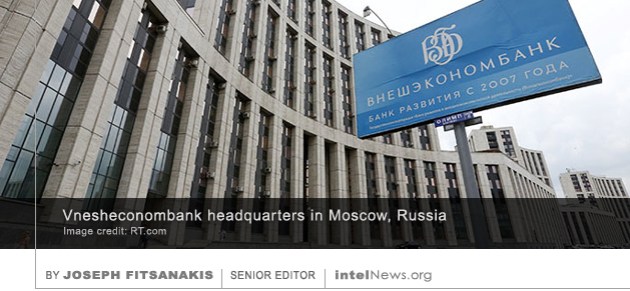
VnesheconombankA Russian intelligence officer, who posed as a banker in the United States, has been handed a prison sentence by a court in New York. Evgeny Buryakov, 41, posed as an employee of the New York branch of Vnesheconombank, a Russian state-owned bank headquartered in Moscow. However, in January 2015, the Federal Bureau of Investigation arrested Buryakov along with Igor Sporyshev, 40, and Victor Podobnyy, 27, who were employees of the trade office of the Russian permanent mission to the United Nations in New York. According to their indictment, Sporyshev and Podobnyy were in fact employees of the SVR, Russia’s Foreign Intelligence Service, one of the direct institutional descendants of the Soviet-era KGB. The FBI said the two were employed by the SVR’s ‘ER’ Directorate, which focuses on economics and finance. Operating under diplomatic guise, they regularly met with Buryakov, who the FBI said was the third member of the alleged spy ring.
However, unlike Sporyshev and Podobnyy, Buryakov was operating under non-official cover, posing as a bank employee. Non-official-cover operatives, or NOCs, as they are typically referred to in the US Intelligence Community, are usually high-level principal agents or officers of an intelligence agency, who operate without official connection to the diplomatic authorities of the country that employs them. They typically pose as business executives, students, academics, journalists, or non-profit agency workers, among other covers. Unlike official-cover officers, who are protected by diplomatic immunity, NOCs have no such protection. If arrested by authorities of their host country, they can be tried and convicted for conducting espionage.

The court documents also reveal that Sporyshev and Podobnyy broke basic rules of intelligence tradecraft by contacting Buryakov using an unencrypted telephone line and addressing him by his real name, rather than his cover name. These conversations, which occurred in April 2013, turned out to be monitored by the FBI’s counterintelligence division, which promptly recorded them. The three SVR officers were arrested following a successful FBI sting operation, which involved an undercover FBI agent posing as an American investor offering to provide Buryakov with classified documents from the US Treasury. In March of this year, Buryakov pleaded guilty to working in the US as unregistered agent of Russia’s SVR. He has been sentenced to 2 ½ years in prison and ordered to pay a $10,000. Sporyshev and Podobnyy, who held diplomatic immunity, were expelled from the US following their arrest.

Author: Joseph Fitsanakis | Date: 27 May 2016 | Permalink

Nuclear black market thriving in Eastern Europe despite efforts to stop it

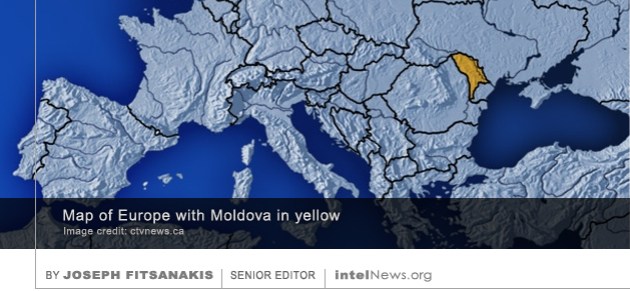
MoldovaThe United States Federal Bureau of Investigation is assisting authorities in some of Europe’s poorest states in their efforts to stop criminals with Russian connections from selling radioactive material to foreign terrorist organizations. The Associated Press said earlier this month that joint efforts by the FBI and Eastern European governments have frustrated at least four attempts to sell stolen radioactive material in the black market since 2010.
In one case, which involved a criminal gang in the former Soviet Republic of Moldova, the smugglers were trying to sell radioactive material to representatives of the Islamic State in Iraq and Syria. The Associated Press said it spoke to law enforcement and judicial authorities in Moldova, who have set up a small team of detectives to investigate the nuclear black market. The Moldovans told the Associated Press that they were working with the FBI, and even shared some of their investigative case files with the news agency.

In another recent case, which was cracked by authorities in February of this year, a smuggler in Moldova tried to sell a significant quantity of cesium, a radioactive metal typically extracted from the waste produced by nuclear reactors. According to the Moldovans, the quantity of the fission product was “enough to contaminate several city blocks”. Additionally, the Moldovan investigators told the Associated Press that the smuggler was specifically seeking a buyer from the Islamic State.

In yet another case, a joint US-Moldovan investigation targeted Alexandr Agheenco, a mysterious Russian-born smuggler, who in the spring of 2011 said he had access to bomb-grade uranium. According to Moldovan investigators, a middleman working for Agheenco told a prospective buyer from Sudan that he would be willing to sell an unspecified quantity of uranium, as well as “blueprints for a dirty bomb”. Although the sale was prevented by the US-Moldovan investigators, Agheenco managed to escape.

According to the Moldovans, the worsening relations between Washington and Moscow are making it more difficult for investigators from the two countries to share intelligence on nuclear smuggling rings. As a result, smugglers are finding it easier to operate across Eastern Europe and parts of the former Soviet Union. Many leading black-market operatives manage to avoid capture and prosecution, while even those arrested are usually able to evade lengthy convictions, which means that they quickly return to nuclear smuggling, reports the Associated Press.

Author: Joseph Fitsanakis | Date: 30 October 2015 | Permalink | News tip: J.B.

Dual US-Russian citizen pleads guilty to spying for Russia

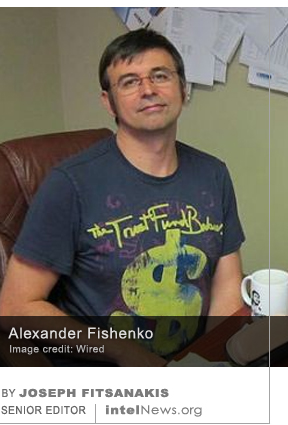
Alexander FishenkoA resident of Texas, who is accused by United States authorities of setting up a front company in order to illegally acquire American technology on behalf of Russia’s intelligence services, has pleaded guilty to espionage charges. Alexander Fishenko, 49, was one of 11 people arrested in October 2012 by the Federal Bureau of Investigation. The arrests came during several raids in locations around Houston, Texas, which included the headquarters of Arc Electronics, Inc. The FBI accused the export firm of having shipped over $50 million-worth of military-grade micro-electronics since 2008. The supplies were received in Moscow, Russia, by a mysterious procurement company called Apex System LLC. Counter-intelligence investigators in the US claim that both firms are part of an elaborate scheme set up by Russian military intelligence, aimed at stealing dual-use electronics hardware created by American firms.
According to the indictment, Arc Electronics told its US suppliers that the microelectronics technologies were intended for use in various types of streetlights. But in reality, said the FBI, the company gave the hi-tech supplies to the Russian Ministry of Defense for use in airborne surveillance systems, as well as in remote weapons guidance systems, among other military applications. Federal prosecutors said that, for over four years, Arc Electronics engaged in a prolonged “surreptitious and systematic” scheme to circumvent US government export controls, thus seriously damaging US national security. Following the early-morning raids, the FBI unsealed indictments against 11 Arc Electronics employees, most of whom were charged with “acting as unregistered agents of the Russian Federation in the United States” —legal jargon for espionage.

Fishenko, who is originally from Kazakhstan, was scheduled to face trial on September 21 in New York. But on Wednesday he chose to plead guilty to the charges leveled against him. He is the fifth member of the 11 Apex System employees arrested back in 2012 to plead guilty to espionage. A government spokesman said the Fishenko’s plea did not result from an agreement to cooperate with the FBI. He now faces up to 15 years in prison. His lawyer, Richard Levitt, declined comment when he was contacted on Wednesday. The Russian government has denied that it had any involvement with Fishenko’s operations.

Author: Joseph Fitsanakis | Date: 08 September 2015 | Permalink

More on Russian citizens charged with espionage by the FBI

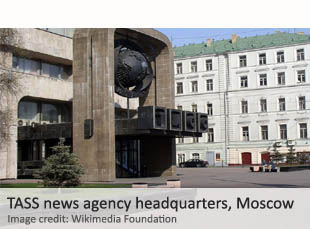
TASS news agency headquartersBy JOSEPH FITSANAKIS | intelNews.org
A criminal complaint unsealed Monday in a Manhattan court has revealed more details about a complex counterintelligence operation by American authorities against three Russian citizens in New York. The Federal Bureau of Investigation filed charges against two Russian diplomats, Igor Sporyshev and Victor Podobnyy, as well as Evgeny Buryakov, an employee of a major Russian bank in Manhattan. All three are believed to be officers of the SVR, Russia’s Foreign Intelligence Service, one of the direct institutional descendants of the Soviet-era KGB. According to the criminal complaint, the two diplomats met Buryakov nearly fifty times between March 2012 and September 2014. FBI counterintelligence agents witnessed the Russians pass “small objects or notes” between each other in public, said the indictment. As intelNews reported yesterday, the three Russians were in regular contact with individuals “associated with a leading Russian state-owned news organization” in the US. According to The Daily Beast, the news organization in question is the Moscow-based TASS news agency, which is owned by the Russian government. The court documents also reveal that Sporyshev and Podobnyy broke basic rules of intelligence tradecraft, by contacting Buryakov using an unencrypted telephone line and addressing him by his real name, rather than his cover name. These conversations, which occurred in April 2013, turned out to be monitored by the FBI’s counterintelligence division, which promptly recorded them. In subsequent telephone conversations, Sporyshev and Podobnyy exchanged views on how to recruit female assets in New York. According to the transcripts provided by the FBI, Sporyshev expressed the view that female assets posed problems, in that they would not let male SVR case officers “get close enough” unless they entered a sexual relationship, which made recruitment of assets complicated. Eventually, the FBI set up a sting operation targeting Buryakov. He was approached by an undercover FBI agent posing as an American investor, offering to provide the Russian with classified documents from the US Treasury. In exchange for the documents, he wanted assistance from the Kremlin to build a chain of casinos in Russia. Buryakov spoke with Sporyshev on the phone about the investor’s offer, and was advised by the diplomat that it could be “some sort of a set up —a trap of some kind”. When Sporyshev told Buryakov to proceed cautiously, the latter received from the undercover FBI agent documents purporting to be from a US Treasury source. The Russian was promptly arrested and now faces up to 20 years in prison on charges of operating as an unregistered agent of a foreign power.

US busts Russian spy ring, charges three with espionage

Russian mission to the UNBy JOSEPH FITSANAKIS | intelNews.org
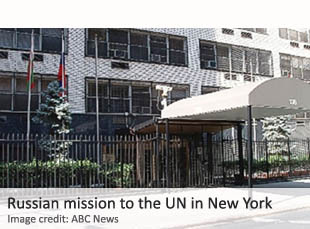
Authorities in the United States have charged three Russian citizens, two of them diplomats, with operating a New York-based spy ring on orders from Moscow. Early on Monday, the Federal Bureau of Investigation named the diplomats as Igor Sporyshev, 40, and Victor Podobnyy, 27. It said the two were employees of the trade office of the Russian permanent mission to the United Nations in New York. But the FBI had apparently been monitoring the two accredited diplomats since March of 2012. Its agents eventually uncovered that Sporyshev and Podobnyy were in fact employees of the SVR, Russia’s Foreign Intelligence Service, one of the direct institutional descendants of the Soviet-era KGB. According to their indictment, the two were employed by the SVR’s ‘ER’ Directorate, which focuses on economics and finance. The two SVR employees, operating under diplomatic guises, regularly met with a third member of the alleged spy ring, Evgeny Buryakov, 39, also an SVR officer. However, unlike Sporyshev and Podobnyy, Buryakov was operating under non-official cover, posing as an employee in the Manhattan office of a major Russian bank. Non-official-cover operatives, or NOCs, as they are known in the US Intelligence Community, are typically high-level principal agents or officers of an intelligence agency, who operate without official connection to the diplomatic authorities of the country that is employing them. They typically pose as business executives, students, academics, journalists, or non-profit agency workers, among other covers. Unlike official-cover officers, who are protected by diplomatic immunity, NOCs have no such protection. If arrested by authorities of their host country, they can be tried and convicted for conducting espionage. US government prosecutors suggested on Monday that the three alleged SVR operatives were also in regular contact with individuals “associated with a leading Russian state-owned news organization”, presumably in the US. They also tried to recruit American citizens to spy for Moscow, including employees of “major companies” and “several young women with ties to a major university in New York”, according to the indictment. It is believed that the three Russians were primarily interested in information relating to potential US government sanctions against Russian financial institutions, as well as Washington’s efforts to promote the development of alternative resources of energy. The FBI said Sporyshev and Podobnyy, who are protected by diplomatic immunity, “no longer reside in the US”. Presumably they were expelled. Buryakov, however, appeared in a Manhattan court on Monday.

High-profile US diplomat probed by FBI counterintelligence

Robin L. RaphelBy IAN ALLEN | intelNews.org
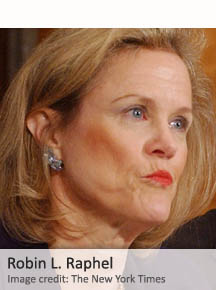
A highly experienced American diplomat, who is commonly described as “a fixture in Washington foreign policy circles”, is reportedly being investigated by counterintelligence agents of the Federal Bureau of Investigation. The Washington Post named the diplomat last week as Robin L. Raphel, who served as United States ambassador to Tunisia before being appointed as assistant secretary of state for South Asian affairs, during the administration of US President Bill Clinton. The New York Times described Ms. Raphel as one of the US Department of State’s highest-ranking female diplomats. She is considered an expert on Pakistan and until recently served as an adviser to the Department of State’s special representative for Afghanistan and Pakistan. Ms. Raphel officially retired from the Foreign Service in 2005 and joined the ranks of Cassidy & Associates, a high-powered government-relations firm based in Washington, DC, which is known to have performed lobbying assignments on behalf of the government of Pakistan. In reporting the alleged investigation of Ms. Raphel by the FBI, The Washington Post said last week that the nature of the probe was “unclear”. But it stated that FBI counterintelligence agents had searched the former diplomat’s house and office. Citing unnamed government sources, The New York Times reported that the FBI was trying to determine why Ms. Raphel had taken classified information to her house, and whether she had shared it, or planned to share it, with a foreign government. There was no mention in the article of the identity of the foreign government that may have been privy to classified information allegedly taken home by Ms. Raphel. Media reports suggested that the former diplomat had been placed on leave and stripped of all her government security clearances as part of the ongoing FBI investigation. Insiders note that it is extremely rare for such a prominent figure in Washington to become the subject of an FBI counterintelligence investigation.

Fearing Soviet invasion, FBI trained Alaskan spies, files show

Russia, Alaska, CanadaBy JOSEPH FITSANAKIS | intelNews.org
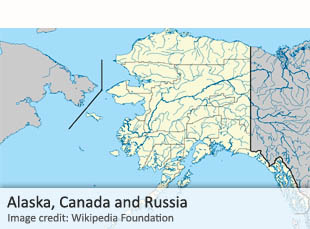
The United States government set up a secret network of citizen-spies in Alaska in response to concerns that the Soviet Union was planning to invade the territory, newly declassified documents show. The documents, dating from 1950, were given to the Associated Press by The Government Attic, a website specializing in publishing US government files obtained through Freedom of Information Act requests. The news agency said on Sunday that the Federal Bureau of Investigation decided to set up the secret network of agents in the 1950s, after it was warned by the US Air Force that a Soviet invasion of Alaska was “a real possibility”. One FBI memo from the time stressed the likelihood that Moscow would stage an airborne invasion of what was then the US territory of Alaska, using “bombing and the dropping of paratroopers”. Responding to such concerns, FBI Director J. Edgar Hoover authorized Operation WASHTUB, which involved the establishment of a “stay-behind” force of nearly 100 citizen-agents recruited from the local population. The operation, which was also known by several other codenames, including CORPUSCLE, STIGMATIC and CATBOAT, was headed by Hoover protégé Joseph F. Carroll, of the Air Force’s Office of Special Investigations. From 1951 to 1959, the OSI, in association with the FBI, recruited Alaskan woodmen, fishermen, pilots, and others, paying them up to $3,000 a year (nearly $30,000 in today’s currency), a sum which was to be doubled following a Soviet invasion. The “stay-behind” agents were to retreat to predetermined hideouts throughout Alaska, unearth hidden caches of food, survival supplies, and communications facilities, and transmit information about Soviet movements. The Associated Press report suggests that the concept of stay-behind agents in Alaska was novel in those early stages of the Cold War. But the report fails to mention Operation GLADIO, the stay-behind program instituted by the North Atlantic Treaty Organization in Europe, which appears to have preceded Operation WASHTUB by at least two years. Read more of this post

FBI searched for Soviet atom bombs in 1950s’ New York, files show

Redacted page from FBI filesBy JOSEPH FITSANAKIS | intelNews.org
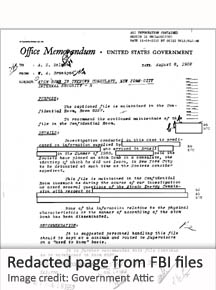
American authorities suspected that Soviet intelligence had smuggled atom bombs in New York City and that Moscow was planning to detonate them “at an expedient time”, according to declassified documents. The revelation comes from a set of internal FBI files, which were declassified and released in redacted form in 2010. Copies of the documents, which date from the early 1950s, were posted (.pdf) on The Government Attic, a website specializing in publishing US government files obtained through Freedom of Information Act requests. The documents were then noticed last week by The Village Voice‘s Anna Merlan. The file (.pdf), titled “Atomic Bomb in Unknown Consulate, New York City”, is nearly 80 pages-long. It indicates that the search for a supposed Soviet atomic weapon in New York began shortly after the summer of 1950, when the FBI received a tip from a source in Brazil. The source reportedly told the Bureau that Soviet operatives had “placed an atom bomb in a consulate […] in New York City to be detonated at such time as the Soviets consider expedient”. The problem was that the FBI was not aware of the identity of the consulate, which was presumed to belong to the USSR or to a country politically aligned with it. The Bureau thus actively engaged in searching for the bomb during the years of 1951 and 1952. The search was primarily conducted by the FBI’s informants in various communist-bloc consulates and agencies in New York, including the Soviet mission to the United Nations, located on Park Avenue, as well as the Polish, Hungarian and Czechoslovakian missions, located a few blocks away from their Soviet equivalent, on East 67th Street. The FBI also appears to have mobilized its informants inside the Soviet government-run Amtorg Trading Corporation, which handled the USSR’s trade with foreign countries, as well as the Telegraph Agency of the Soviet Union (TASS) offices at Rockefeller Plaza. A clandestine search was also conducted at the Soviet diplomatic mission’s retreat on Long Island. American customs agents were also notified to keep their eyes open for oddly shaped diplomatic packages “which appear to be suspiciously heavy in proportion to their dimensions”. Read more of this post

FBI kept tabs on Mandela’s first-ever visit to the US, files show

Nelson MandelaBy IAN ALLEN | intelNews.org
The United States Federal Bureau of Investigation has released for the first time some of its internal files on the late South African leader Nelson Mandela. Among other things, the documents reveal that the Bureau closely monitored Mandela’s first ever visit to the United States in 1990. The legendary black campaigner arrived in the United States in June of that year, just four months following his release from prison after 27 years of captivity. The FBI documents include a redacted memorandum from the Bureau’s field office in Atlanta, Georgia, addressed to William Sessions, who was the FBI’s Director at the time. The memorandum notes that the Bureau had been able to recruit an informant inside, or closely affiliated with, Mandela’s inner circle. The source had provided his FBI handlers with a detailed itinerary of Mandela’s 11-day US tour. The memorandum stresses that the “confidential source” was “newly opened” and thus his or her “reliability [was] not yet established”. But Mandela’s travel itinerary, which had apparently been planned by a member of staff in the office of Coretta Scott King, Dr. Martin Luther King Jr.’s widow, was carefully dissected by the FBI. The documents show that the Bureau’s principal concern was safeguarding the life of the South African political leader, who had received countless death threats in the days prior to his arrival. According to the declassified files, the threats originated from various racist skinhead and neo-Nazi groups, the Ku Klux Klan, as well as a host of white supremacist organizations. But alongside its concern about “terrorist activity being directed” at the civil rights campaigner, the Bureau was obligated to monitor his activities on US soil because at that time Washington still designated the African National Congress, which Mandela led, as a “foreign terrorist organization”. The designation was finally lifted in 2008. Read more of this post

New details about FBI probe that led to Chinese spy’s conviction

Dongfan "Greg" ChungBy JOSEPH FITSANAKIS | intelNews.org
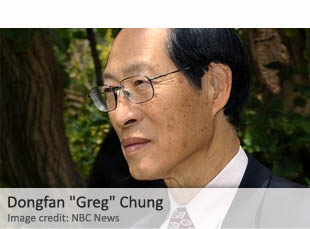
Some of our longtime readers will recall the case of Dongfan “Greg” Chung, a Chinese-born American engineer for Boeing, who was convicted in 2009 of passing US space program secrets to China. The case is arguably far more important than it might have seemed at the time, as Chung was technically the first American to be jailed for economic espionage. Many at the Federal Bureau of Investigation view the Chung conviction as a landmark case for providing clear legal proof of Chinese espionage in the US. Little is known, however, about how the FBI managed to uncover Chung’s espionage activities, which are believed to have gone on for nearly three decades. In the latest issue of The New Yorker, Yudhijit Bhattachargjee reveals for the first time the fascinating background of how the Bureau got to Chung. It did so through another American engineer of Chinese origin, named Chi Mak. Unlike Chung, who was ideologically committed to Maoism and was recruited by Chinese intelligence after immigrating to the US, Mak was an accredited intelligence operative who was allegedly specifically planted in the US by the Chinese. He came to America from Hong Kong in 1979 and worked for California-based defense contractor Power Paragon. He almost immediately began stealing secrets relating to US Navy systems. The FBI first started monitoring Mak and his wife, Rebecca, in 2004, following a tip. The effort evolved in one of the Bureau’s biggest counterintelligence cases, involving elaborate physical and electronic surveillance that lasted for nearly 18 months. During that time, FBI and Naval Criminal Investigation Service agents installed surveillance cameras outside the Maks’ residence, followed the suspects around, and monitored their telephone calls. Eventually, the surveillance team managed to acquire a warrant allowing them to clandestinely enter the Maks’ home and conduct a secret search. The nondestructive entry team discovered numerous stacks of secret documents “some two or three feet high” all around the suspects’ house. Among the findings was an address book containing the names of other engineers of Chinese origin living in the state of California. That, says Bhattachargjee, was the first time the FBI came across Chung’s name. Read more of this post