America’s most senior intelligence officer says its classification system is broken
January 28, 2022 Leave a comment
 THE MOST SENIOR INTELLIGENCE officer in the United States has said in a letter that the nation’s system of classification is flawed and undermines its national security. This view was expressed by Avril Haines, who heads the Office of the Director of National Intelligence, the body that directs and coordinates America’s 18 intelligence agencies. Haines, 52, was appointed to the position last year by President Joe Biden, and is seen as a potential reformist of the US intelligence community.
Haines stated her view on classification in a letter sent to two Senators, Jerry Moran (R., Kan.) and Ron Wyden (D., Ore.). The letter was in response to a formal query submitted by the two members of Congress. The query concerns the mounting backlog of classified information that is currently awaiting declassification on historical or ‘right-to-know’ legal processes. The latter require government agencies to release information to the public domain.
Some of the contents of Haines’ letter, marked “for official use only”, were reported on Thursday by The Wall Street Journal. According to the paper, Haines opined that “deficiencies in the current classification system undermine our national security, as well as critical democratic objectives, by impeding our ability to share information in a timely manner”. This affects the work of policy makers, the public’s perception of the American system of government, and the nation’s ability to share critical information with its allies, said Haines.
What is more, ongoing efforts to limit the “exponential growth” of classified information in government vaults “are simply not sufficient”. This is “a fundamentally important issue that we must address”, said Haines. In an essay she authored shortly before becoming Director of National Intelligence, Haines had criticized the government’s tendency to overclassify information, claiming that “it actually encourages leaking”. In response to Haines’ letter, Senators Moran and Wyden issued a statement saying the DNI “clearly recognizes that the current broken classification system harms US national security while eroding the public’s trust in government”.
► Author: Joseph Fitsanakis | Date: 28 January 2022 | Permalink
 An unprecedented closed-door trial of a man identified only as “Witness J”, who was convicted earlier this year of a crime that cannot be revealed, has raised questions about the relationship between security and the law in Australia. The man, who is also known as “Prisoner 123458”, was sentenced to a jail sentence in February of this year. His sentencing came following a closed-door hearing, which was
  The government of Israel has increased to 90 years the period during which documents belonging to intelligence and security agencies can remain secret, extending it by 20 years. Until last month, government documents produced by Israeli spy agencies, such as its external spy organization, the Mossad, or its domestic security agency, the Shin Bet, could remain hidden from public view for up to 70 years. Last year, however, the administration of Prime Minister Benjamin Netanyahu commissioned a study into the possibility of extending the classification period for such documents. Israel’s Supreme Council of Archives, a body within the Israel State Archives that advises the Office of the Prime Minister on matters of classification, recommended against extending the classification period by more than five years.
 A judge has ruled that the British government has the right to withhold information relating to alleged links between British spy agencies and a Russian millionaire who died in mysterious circumstances in England. Aleksandr Perepilichny was a wealthy and influential investment banker living in Moscow. In 2009, however, he fled Russia saying that his life had been threatened following a business disagreement. He resettled in Surrey, south of London, and began cooperating with Swiss authorities who were investigating a multimillion dollar money-laundering scheme involving senior Russian government officials. Described by some as the biggest tax fraud in Russian history, the scheme is said to have defrauded the Russian Treasury of at least $240 million.
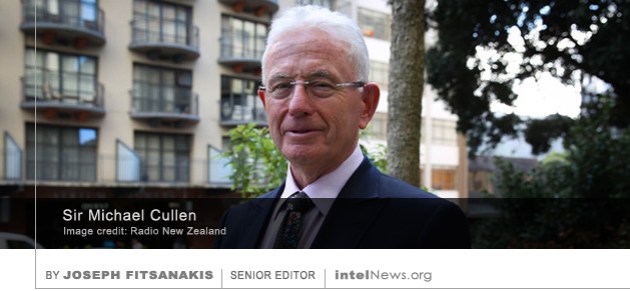 A former deputy prime minister of New Zealand, who is heading a major review of intelligence practices in the country, has said in an interview that spy agencies hurt their mission by practicing excessive secrecy. Sir Michael Cullen served as finance minister, education minister and attorney-General before serving as deputy prime minister of New Zealand, from 2002 to 2008. He was recently appointed by the government to co-chair a broad review of state intelligence agencies, with particular focus on updating the applicable legislative framework and evaluating the oversight exercised by lawmakers and the executive. The review is expected to affect the work of New Zealand’s two most visible intelligence agencies, the Security Intelligence Service and the Government Communications and Security Bureau.
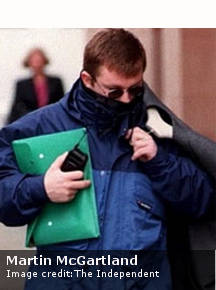
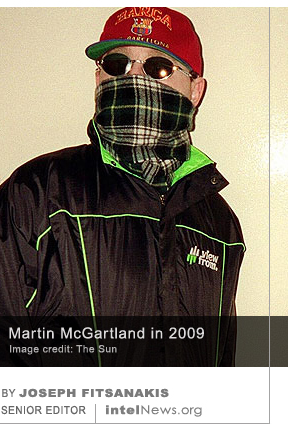 A lawsuit against Britain’s Security Service (MI5) by a former spy, who in the 1980s infiltrated the Provisional Irish Republican Army, commonly known as IRA, is to be judged in secret, a court in London has decided. The spy, Martin McGartland, of Belfast, Northern Ireland, was recruited by the Special Branch of the Royal Ulster Constabulary in the mid-1980s. The information he supplied to the security agencies over several years is widely credited with having saved the lives of at least 50 British police officers and soldiers. His autobiographical experiences formed the basis of the 2008 motion picture 50 Dead Men Walking.










 intelNews.org
Australian court releases judge’s remarks in unprecedented ‘secret prisoner’ trial
April 24, 2023 by Ian Allen 2 Comments
Witness J is believed to be in his mid-30s and to have served for many years as an intelligence officer in the Australian military, with a top secret security clearance. He is also believed to have served in Iraq, Afghanistan and East Timor with a distinguished service record. But he drew the attention of counterintelligence investigators in 2018, while undergoing a routine re-evaluation of his security clearance status. During that time he was reportedly serving as a civilian in an undisclosed country in Southeast Asia. This period, according to reports, coincided with the deterioration of Witness J’s mental health.
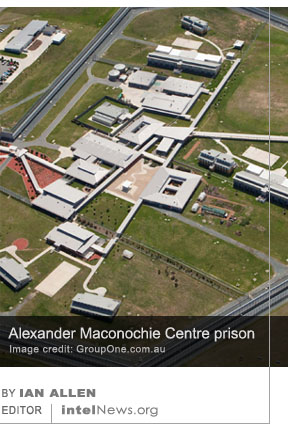
Witness J was eventually jailed in mid-May 2018 and spent a month in solitary confinement. He was then placed in a high-security wing for serious sex offenders at the Alexander Maconochie Centre prison in Canberra. This was not because he was a sex offender, but because it was determined that he would be safer there than in the other wings of the prison. In early 2019, Witness J was sentenced in a closed-door trial, which was held under the secrecy provisions of Australia’s 2004 National Security Information Act. He was released from prison 15 months into his 24-month sentence, after agreeing to plead guilty to security breaches.
Last week, the Supreme Court of the Australian Capital Territory (ACT) released the sentencing remarks of the judge in Witness J’s case, which had remained secret since November of 2019. According to ABC News, the remarks are heavily redacted in order to comply with restrictions under the National Security Information Act. The redacted document makes clear that Witness J faced a total of five charges. However, the sentencing remarks make no mention of the nature of the charges against him.
In his remarks, the judge in the case, Justice John Burns, mentions that the court had been given a report by Witness J’s doctor, which detailed his deteriorating mental state and his depression. The judge goes on to explain that he took the doctor’s report into account in sentencing Witness J. He argues, however, that despite his illness, the accused was aware of his actions and deliberately chose to conduct himself in a “grossly reckless” manner.
► Author: Ian Allen | Research credit: P.C.| Date: 24 April 2023 | Permalink
Filed under Expert news and commentary on intelligence, espionage, spies and spying Tagged with Australia, government secrecy, lawsuits, News, Prisoner 123458, Witness J