Turkish diplomats stepping up espionage in Europe, claims German report
February 20, 2017 Leave a comment
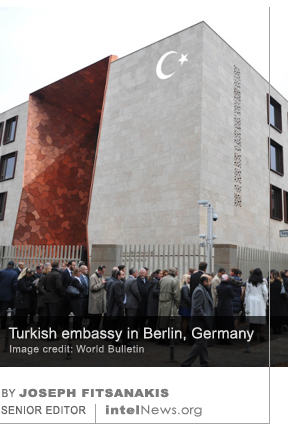 Turkish state agencies have asked the country’s diplomats stationed all over Europe to spy on Turkish expatriate communities there, in an effort to identify those opposed to the government, according to a German report. The government of Turkish President Recep Tayyip Erdoğan accuses members of the so-called Gülen movement of orchestrating a military coup in July of last year, which resulted in an armed attack on the country’s parliament and the murder of over 200 people across Turkey. The Gülen movement consists of supporters of Muslim cleric Fethullah Gülen, who runs a global network of schools, charities and businesses from his home in the United States. The government of Turkey has designated Gülen’s group a terrorist organization and claims that its members have stealthily infiltrated state institutions since the 1980s.
According to German newsmagazine Der Spiegel, the Erdoğan government has now tasked its diplomats stationed abroad to engage in intelligence collection targeting alleged Gülen sympathizers. The report cited “a confidential analysis by the Federal Office for the Protection of the Constitution” (BfV), Germany’s counterintelligence agency. The analysis allegedly states that Turkish diplomats are now conducting systematic espionage activities in Germany, Austria, Switzerland, Holland, Belgium, and other Western European countries. The BfV report allegedly claims that much of the espionage conducted by Turkish diplomats is directed by the country’s Religious Affairs Directorate, known as Diyanet. The agency is seen as the institutional guardian of Turkey’s Sunni Muslim orthodoxy. It provides schools with religious education that is carefully tailored to be compatible with the country’s secular constitution, and trains the country’s imams, who are employed by the state. Der Spiegel claimed on Monday that Diyanet has asked its religious representatives stationed in Europe to look for Gülen sympathizers. According to the German newsmagazine, information is now pouring in from Turkey’s embassies and consulates. It includes names of individuals, as well as student groups, cultural organizations, schools and day-care centers that are seen as not sufficiently critical of the Gülen movement. Der Spiegel said it had seen a report sent to Diyanet by the Turkish embassy in Berne, Switzerland, which warned that many Gülenists had left Turkey and were now operating in Switzerland.
Late last summer, Der Spiegel claimed that Turkey’s National Intelligence Organization (known by its Turkish initials, MİT) secretly contacted its German counterpart, the Federal Intelligence Service (BND) and asked for assistance to investigate and arrest supporters of the Gülen movement living in Germany, some of whom are German citizens. The BND reportedly refused to cooperate with the request. Another German news outlet, Die Welt, cited an unnamed German security official who said that the MİT employed more operatives in Germany than the East German spy agency did at the height of the Cold War.
► Author: Joseph Fitsanakis | Date: 20 February 2017 | Permalink
 Intelligence veterans have raised concerns that the temporary ban on immigrants and refugees from seven Muslim-majority nations, which has been imposed by the White House, will significantly hinder American efforts to recruit intelligence assets and sources in Muslim countries. United States President Donald Trump signed an executive order on Friday, banning entry into the United States of citizens of Iran, Iraq, Syria, Yemen, Sudan, Somalia and Libya. According to the White House, the goal of the temporary ban is to help increase domestic security in the US. But
 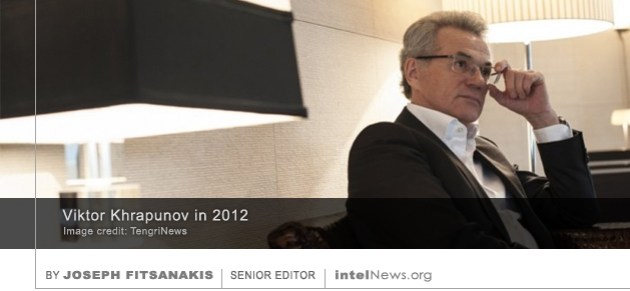 A Swiss court has reopened an investigation of alleged espionage activities by agents of the government of Kazakhstan against a high-profile political exile living in Switzerland. The case, which dates to 2014, centers on Viktor Khrapunov, a former senior Kazakh government official, who has been living in Geneva since 2008. In the years immediately following the dissolution of the Soviet Union, Khrapunov served as Kazakhstan’s Minister for Energy and Coal, a post that was later renamed to Minister of Energy and Natural Resources. After 1997, he was appointed mayor of Almaty, Kazakhstan’s largest city, which is inhabited by 10 percent of the country’s population. But by 2006, Khrapunov had fallen out with the government of Kazakhstan’s authoritarian President Nursultan Nazarbayev. The government claimed that Khrapunov was embroiled in a series of fraudulent real-estate schemes and that he laundered large sums of money for his own personal use.
 A Syrian former intelligence officer, who was given American citizenship several years ago, is being sought by authorities in the United States. The man was named by the Federal Bureau of Investigation last week as Moustafa Abed Ayoub, a 75-year-old resident of Fort Lauderdale, Florida. A
 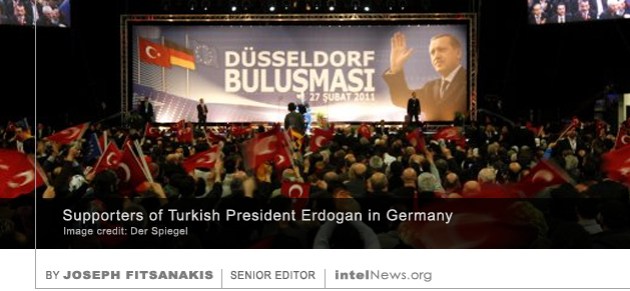 The Turkish intelligence service currently employs more operatives in Germany than the East German spy agency did at the height of the Cold War, according to a German expert on espionage. The comment was made following the disclosure that Turkey maintains close to 6,000 informants and other intelligence operatives in Germany. An unnamed German security official told German newspaper Die Welt on Monday that the informants are operational throughout Germany and are handled by Turkey’s National Intelligence Organization, known as MİT.
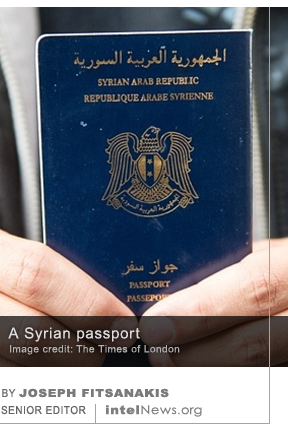 Fake Syrian passports designed for use by members of the Islamic State trying to enter Europe have been found in refugee camps in Greece during an investigation by the law enforcement agency of the European Union (EU). Officials from Europol, the EU agency that coordinates intelligence operations against organized crime across EU-member-states, said that the fake travel documents were found during a fact-finding mission in Greek refugee camps. The mission was part of a larger investigation into the production and use of forged passports by the Islamic State, the Sunni militant group that is also known as the Islamic State of Iraq and Syria (ISIS).
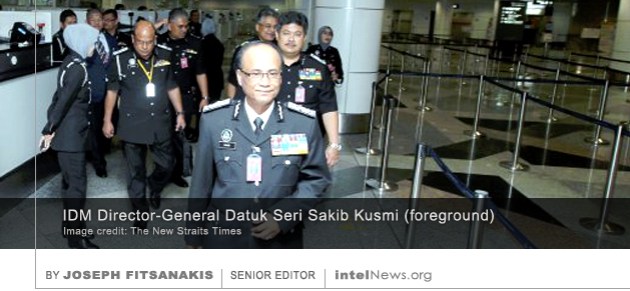 As many as 100 Malaysian immigration officers are implicated in a widening investigation involving the deliberate sabotage of the country’s electronic passport control system. The investigation, which began over three months ago, focuses on a criminal ring of immigration personnel at the Kuala Lumpur International Airport (KLIA), one of Southeast Asia’s major travel hubs.
 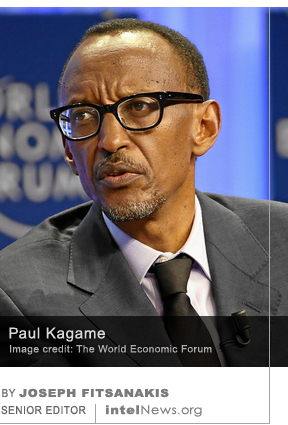 The government of Rwanda uses intelligence operatives to systematically spy on, harass, and even kill opposition figures living abroad, according to a report issued by a Canadian security agency. The report was written by the National Security Screening Division of the Canada Border Services Agency, and was partly based on information from the Canadian Security Intelligence Service (CSIS). It was released as part of a court case involving a Rwandan man living in Canada, who was accused of working as a spy for the government of Rwanda.
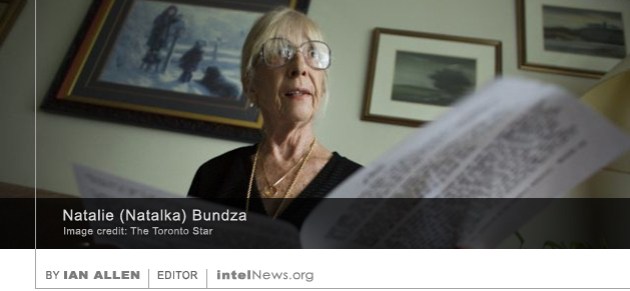 A set of declassified intelligence documents from the 1950s and 1960s offer a glimpse into the secret war fought in Canada between American and Soviet spy agencies at the height of the Cold War. The documents were authored by the United States Central Intelligence Agency and declassified following a Freedom of Information Act request filed on behalf of the Canadian newspaper The Toronto Star.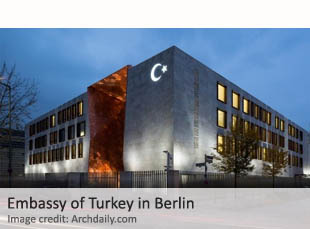








 intelNews.org
Germany publicly rejects Turkish spies’ request to monitor dissidents
March 29, 2017 by Joseph Fitsanakis Leave a comment
Since the end of the failed coup, the Turkish state has initiated a nationwide political crackdown against alleged supporters of the coup. Over 100,000 people have been fired from their jobs, while hundreds of thousands have been demoted, censured or warned. Another 41,000 are believed to be in prison, charged with supporting the failed coup or being members of the Gülen network. But many observers in Europe view the coup as a catalyst that was exploited by the government in Ankara neutralize its political opponents.
On Monday, Germany’s Süddeutsche Zeitung newspaper claimed that Turkey’s National Intelligence Organization, known as MİT, gave its German counterpart a list containing the names hundreds of Turks living in Germany, and asked him to spy on them. According to the newspaper, the list was given by MİT chief Hakan Fidan to Bruno Kahl, head of the Bundesnachrichtendienst, Germany’s Federal Intelligence Service, known as BND. The two men allegedly met at a security conference held in Munich last February. The Süddeutsche Zeitung claims that the list given to Kahl included 300 individuals and approximately 200 groups and organizations that the MİT wanted the BND to monitor.
But instead of spying on these targets, the BND wrote to them and warned them that the Turkish state was after them. The German spy agency also warned them to stay away from any contact with Turkish authorities in Germany and to refrain from traveling to Turkey. On Tuesday, Germany’s Interior Minister, Thomas De Maiziere, confirmed the Süddeutsche Zeitung article and warned Turkey to respect Germany’s territorial sovereignty. “Here German jurisdiction applies”, said De Maiziere, “and citizens will not be spied on by foreign countries”.
► Author: Joseph Fitsanakis | Date: 29 March 2017 | Permalink
Filed under Expert news and commentary on intelligence, espionage, spies and spying Tagged with 2016 Turkish coup d'état attempt, BND, Bruno Kahl, Germany, Hakan Fidan, immigration intelligence, MİT (Turkey), News, Turkey