Former deep-cover spy leads Kremlin’s efforts to woo Indian high-tech sector

Andrei Bezrukov A FORMER DEEP COVER Russian intelligence officer, whose cover was blown in 2010 when he was arrested in the United States, is spearheading efforts by the Kremlin to secure investments by India’s technology sector. The spy, Andrei Bezrukov, was recruited by the Soviet Committee for State Security (KGB) in the late 1970s or early 1980s—most likely alongside his wife, Elena Vavilova. For several years, the married couple lived in several countries, including Canada and France, before arriving in the United States in 1999 using fraudulently obtained Canadian passports.

Posing as Donald Heathfield and Tracey Foley, Bezrukov and Vavilova were among 10 Russian non-official-cover intelligence officers arrested by the Federal Bureau of Investigation (FBI) in June 2010. They were eventually swapped with Moscow for several Western spies held in Russian prisons. After returning to Russia, Bezrukov and Vavilova received the Order “For Merit to the Fatherland” 4th Class, which is Russia’s second-highest state decoration. They also entered state-sponsored employment, with Bezrukov advising the Rosneft Oil Company—Russia’s second-largest corporation—and teaching at the Moscow State Institute of International Relations.

In June 2025, Bezrukov apparently represented the Russian state at the 28th Saint Petersburg International Economic Forum (SPIEF)—often referred to as “Putin’s Davos”. According to the Washington Post, Bezrukov’s apparent role at SPIEF was to network with Forum representatives from India’s advanced technology sector, allegedly on direct orders by the administration of Russian President Vladimir Putin.

The event, which went under the tagline “Shared Values as a Foundation for Growth in a Multipolar World”, gathered nearly 20,000 delegates from 140 countries. The Kremlin touted it as evidence of the West’s failure to isolate Russia following its invasion of Ukraine. It also served as part of a set of broader efforts by the Kremlin to prevent the Russian economy from sliding into a recession by seeking to develop alternative energy markets and strengthening economic and political ties to the Global South.

India is by far the largest of a group of countries seen as “friendly” by Russia, which could potentially help revitalize the Russian economy, largely through the International North–South Transport Corridor (INSTC). The 14-year-old agreement aims to interconnect a transnational transportation network connecting Russia and India with import-export routes in Central Asia the Middle East, and Europe. Experts claim that the INSTC is the logistical backbone of Russia’s efforts to salvage its economy from the growing pressures of the war in Ukraine.

The Post reported that Bezrukov denied that he is still an employee of Russian intelligence agencies when approached and asked about his past by Western journalists.

Author: Joseph Fitsanakis | Date: 08 December 2025 | Permalink

Report claims India behind ‘methodical’ assassination campaign deep inside Pakistan

Research and Analysis Wing RAW IndiaA NEW REPORT IN The Washington Post newspaper claims that the Indian government is behind a “methodical assassination program” that has been targeting individuals deep inside India’s nuclear arch-rival Pakistan. According to the report, which was published on Tuesday, the covert assassination program is the work of the Research and Analysis Wing (RAW), India’s primary external intelligence agency. It was allegedly authorized by India’s popular and controversial Prime Minister Narendra Modi, who has also been overseeing its implementation since he was re-elected to office in 2021.

Since 2023, intelNews has covered/ the high-level dispute between India and Canada, after Ottawa uncovered an extensive Indian assassination program targeting Sikh separatist leaders on Canadian soil. Last month, intelNews guest editor Dr. Stephan Blancke analyzed the mounting concern across the European Union about Indian covert activities that target members of the Indian expatriate community on European soil. But The Washington Post report touches on a potentially new dimension of India’s assassination program, which focuses on Pakistan.

According to the report, Prime Minister Modi has been fully supporting RAW’s targeted killings program since at least 2021. In the ensuing years there have been six assassinations inside Pakistan that bear the hallmarks of RAW operations. These operations have been carried out through a “sophisticated network” of intermediaries in the Middle East —particularly in Dubai— who command compartmented teams of surveillance operatives, hitmen, as well as logisticians. Payments are allegedly facilitated through informal hawala networks managed by Middle Easterners, Afghans, and others.

Many of those killed have been current and former members of militant Pakistani-aided groups like Jaish-e-Muhammad and Lashkar-e-Taiba, who have been designated terrorist organizations by most Western nations. For this reason, the West, including the United States, have been hesitant to accuse India of breaking international law. The Washington Post report claims that the Pakistanis have expressed their frustration to the United States, through Nadeem Anjum, director general of the Inter Services Intelligence (ISI) Directorate, Pakistan’s primary intelligence agency. In 2022, Anjum reportedly informed William Burns, director of the United States’ Central Intelligence Agency, about the Indian assassination program. However, no notable action was taken by the United States in response to Anjum’s revelations, the article claims.

Author: Joseph Fitsanakis | Date: 02 January 2025 | Permalink

Mounting concern in the EU about Indian black operations targeting dissidents

BLACK OPERATIONS, WHICH AIM to liquidate targeted individuals, are once again the subject of various reports. The primary focus tends to be on Russian intelligence agencies targeting alleged traitors worldwide. Michael Weiss, US publisher of The Insider, spoke in a recent interview of “more than 60 mysterious deaths of Putin’s enemies in Russia and Europe since the Ukraine war began”.
Somewhat-less-black operations, in which individuals —usually living abroad— are not killed, but intimidated, persecuted, threatened, or roughed up, appear to be increasingly utilized as a tool by certain states that have little tolerance for domestic political opposition. Ken McCallum, Director General of Britain’s Security Service (MI5), stated on 8 October 2024 that, “since January 2022, with police partners, we have responded to twenty Iran-backed plots presenting potentially lethal threats to British citizens and UK residents”.

Back in September 2023, The Guardian reported having spoken to 15 Iranian activists living in the United Kingdom, France, Germany, Spain, Switzerland and Sweden, who were being persecuted and intimidated, or had been threatened in various ways by the Iranian regime’s henchmen and its intelligence services. There are numerous similar examples of journalists and dissidents who have been a thorn in the side of the Turkish government for several years now. In addition to threats and violence, there are reports of abductions by Turkey’s National Intelligence Organization (MIT). In recent years, China too has increasingly relied on intimidation directly in the West, and has also engaged Western investigators and helpers for this purpose.

One concerning development is the fact that these states are apparently increasingly resorting to the help of members of Outlaw Motorcycle Gangs (OMCG), members of drug cartels, and other criminals. Regardless of whether it is for purposes of sabotage, threats, or assassinations, shady figures —typically apolitical— are undertaking missions on behalf of the intelligence agencies of authoritarian states on European soil.
The Case of India

Another country that has been in the spotlight for some time is India, which has historically maintained a low profile in the West, in terms of black operations. Western intelligence agencies could have predicted that there would be an escalation —i.e. Indian black operations on Western soil— which could lead to the liquidation of alleged or actual terrorists. If one observes the reports of Indian intelligence agencies and analysts on the activities of its mortal enemy, Pakistan, and its intelligence agency, the Inter-Services Intelligence (ISI), it quickly becomes apparent that India is less and less willing to tolerate what it regards as terrorism sponsored by Pakistan. This applies particularly to individuals and organizations operating from abroad. Read more of this post

Canada expels Indian diplomat, accuses India of assassinating Canadian citizen

Sikh KhalistanTHE GOVERNMENT OF CANADA expelled a senior Indian diplomat on Monday, after accusing “agents of the government of India” of having perpetrated the assassination of a Canadian citizen on Canadian soil last June. Canadian Prime Minister Justin Trudeau released information about the alleged assassination during a rare emergency statement to parliament on Monday morning. He also warned India that Canada would continue to work with its allies around the world, including the United Kingdom, to unearth further intelligence about the alleged assassination.
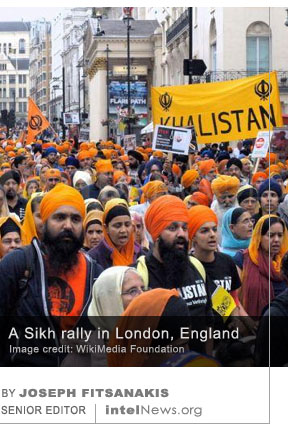
The case involves the killing of Hardeep Singh Nijjar, who was gunned down on June 18, 2023, outside a Sikh cultural center in Surrey, British Columbia. Nijjar was an outspoken activist and a member of Canada’s Sikh community. The adherents of Sikhism follow a monotheistic religion that originated during the late 15th century in what today in northern India’s Punjab region. Many Sikhs support the creation of Sikh homeland, which they refer to as Khalistan —an aspiration that has sparked numerous armed conflicts in India’s history. The government of India considers such aspirations a threat to its national security and regularly refers to leading Sikh activists as terrorists.

Over half of the 1.4 million Canadians of Indian origin identify as Sikhs. This makes Canada’s Sikh population the largest in the world outside of the Punjab region of India. Canadian Sikhs tend to be outspoken in their criticism of the government of India. Many of them campaign openly about what they see as the need for the establishment of an independent Sikh homeland. Nijjar was one such outspoken activist, having risen “to become a prominent advocate for the creation of Khalistan”, according to one recent biographical article. Indian authorities had accused Nijjar of terrorism and had issued a warrant for his arrest.

On Monday, Prime Minister Trudeau referred to Nijjar’s assassination as “an unacceptable violation of [Canada’s] sovereignty, adding that the murdered man was Canadian citizen. He went on to state that Canadian security agencies had been “actively pursuing allegations of a potential link” between Nijjar’s death and “agents of the government of India”. The Canadian leader also called on the government of India “to cooperate with Canada to get to the bottom of this matter”. As of early this morning local time, the Indian embassy in Ottawa was not responding to requests for comment.

Author: Joseph Fitsanakis | Date: 19 Septembrer 2023 | Permalink

Russia denies rumors that its chief security official met with CIA director in India

Russian embassy India

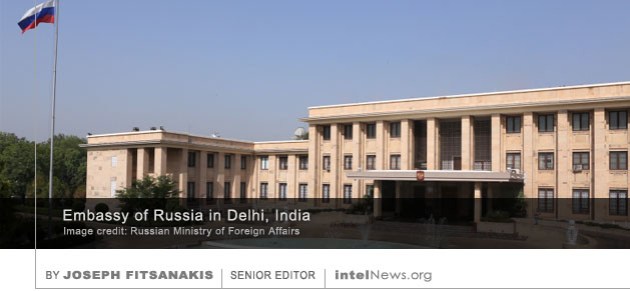
A RUSSIAN GOVERNMENT SPOKESMAN has denied reports Moscow’s Security Council Secretary met secretly this week with the director of the United States Central Intelligence Agency in the India. The United States, however, has not commented on the reports.

As intelNews and others reported yesterday, General Nikolai Patrushev, Secretary of the Security Council of the Russian Federation, arrived in Delhi on September 7, “for high-level consultations on Afghanistan”, according India’s Ministry of External Affairs. General Patrushev, who is Russia’s highest-ranked security official, traveled to India at the invitation of his counterpart there, National Security Adviser Ajit K. Doval.

Interestingly, The Hindu, one of India’s two newspapers of record, reported on Tuesday that “an American delegation of intelligence and security officials” were visiting Delhi, and had already “held consultations” with officials. According to the newspaper, the American delegation was led by no other than CIA Director William Burns, who is said to be touring the region, and is also expected to visit Islamabad in the coming days.

Like General Patrushev, Burns met with National Security Adviser Doval about “issues arising from the Afghanistan evacuation effort and Taliban government formation”, said The Hindu. But unlike the Russian delegation’s visit, which was announced by the Indian government, the alleged American delegation’s visit remains speculative, and has not been officially confirmed by either Delhi or Washington.

It was not long before Indian media began to report that the American and Russian teams had met in secret, allegedly in order to discuss the situation in Afghanistan. On Wednesday, however, a spokesman for the Russian Security Council flatly refuted the rumors of a meeting between Burns and Patrushev. The Russian-government owned TASS news agency quoted Russian Security Council spokesman Yevgeny Anoshin as saying that “Patrushev did not plan to, and did not meet, with the CIA head in Delhi”.

The United States government has yet to comment on these reports.

Author: Joseph Fitsanakis | Date: 09 September 2021 | Permalink

High-level American, Russian intelligence delegations visit India on the same day

Nikolai PatrushevHIGH LEVEL DELEGATIONS OF intelligence officials from the United States and Russia visited India on the same day this week, for talks with Indian officials about the situation in Afghanistan, according to news reports. This development highlights the frantic pace with which Moscow and Washington are maneuvering around the region, following the dramatic takeover of Afghanistan by the Taliban last month.
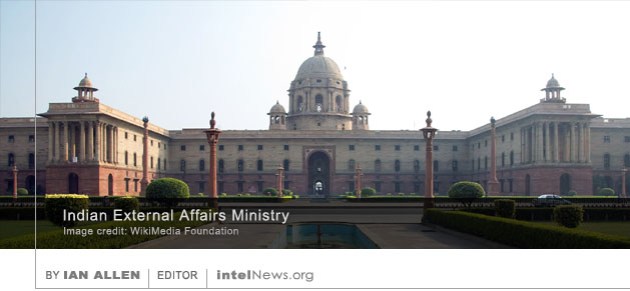
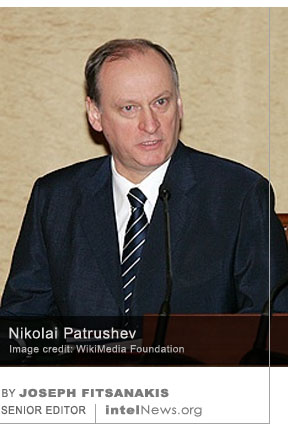
India’s Ministry of External Affairs announced on Tuesday that General Nikolai Patrushev (pictured), Secretary of the Security Council of the Russian Federation, would be in Delhi “for high-level consultations on Afghanistan” between September 7 and 8. General Patrushev —Russia’s highest-ranking security official— is traveling to India at the invitation of his Indian counterpart, National Security Adviser Ajit K. Doval, according to the announcement. He was scheduled to meet with, aside from Doval, Indian Prime Minister Narendra Modi and External Affairs Minister S. Jaishanka.

Late yesterday, however, the Chennai-based English-language newspaper The Hindu reported that “an American delegation of intelligence and security officials” had visited Delhi on Tuesday, and had “held consultations” with officials there. According to the newspaper, the American delegation was led by Central Intelligence Agency (CIA) Director William Burns, who is touring the region and is also expected to visit Islamabad in the coming days. The report also said that Burns spoke at length with Doval about “issues arising from the Afghanistan evacuation effort and Taliban government formation”.

It is worth noting that India’s Ministry of External Affairs and the embassy of the United States in Delhi declined to confirm or deny the news about the CIA director’s visit to the country.

Author: Joseph Fitsanakis | Date: 08 September 2021 | Permalink

Main suspect in potentially momentous hacker-for-hire case seeks plea deal in NY

Computer hacking

IN A DRAMATIC CASE, described by observers as “unusual”, a suspect in a hacker-for-hire scheme of potentially global proportions has told United States government prosecutors he is ready to discuss a plea deal. The case centers on Aviram Azari, a highly sought-after private detective who served in an Israeli police surveillance unit in the 1990s before launching a private career in investigations.

Azari was arrested in Florida in 2019 during a family vacation, and was shortly afterwards indicted in New York on charges of aggravated identity theft, conspiracy to commit computer hacking, and wire fraud. These charges reportedly date back to 2017 and 2018. Azari’s alleged objective was to target carefully selected individuals in order to steal their personal information, including email usernames and passwords. Last year, The New York Times reported that the case against Azari is connected with a potentially massive hacker-for-hire scheme code-named DARK BASIN.

Further information about DARK BASIN was published by Citizen Lab, a research unit of the University of Toronto’s Munk School of Global Affairs and Public Policy, which focuses on information technology, international security and human rights. It said DARK BASIN was orchestrated by an India-based firm called BellTroX InfoTech Services. It also claimed that the company is one of a number of hacker-for-hire firms based in India. These companies are said to be employed by private detectives in Western countries, who are usually hired by large multinationals or wealthy individuals.

Accordingly, the targets of DARK BASIN activities appear to have been investment firms based in the US and elsewhere, as well as government officials, pharmaceutical companies, lawyers, large banks, and even environmental activists who campaign against large multinationals. Additionally, some of DARK BASIN’s thousands of targets appear to be people involved in high-stakes divorce proceedings. Perhaps more alarmingly, among DARK BASIN’s targets are journalists around the world, who seem to have been targeted systematically in efforts to reveal their sources of information.

Azari has pleaded not guilty. But the fact that he his lawyer has now communicated his client’s desire to seek a plea deal with US government prosecutors may be a major game-changer in this case, which may have global ramifications. The Reuters news agency, which reported the latest developments on this case this week, said it reached out to the US Attorney’s Office in Manhattan, but spokesmen there declined to provide any information on Azari’s case.

Author: Joseph Fitsanakis | Date: 02 July 2021 | Permalink

Mutual distrust of China heightens US-Indian intelligence cooperation to historic levels

India External Affairs MinistryINTELLIGENCE COOPERATION BETWEEN THE United States and India has reached historic levels in the closing months of 2020, and is driven by the two countries’ mutual distrust of China. This development is particularly noteworthy for India, which has traditionally maintained a non-aligned stance in military and intelligence matters for much of its existence. New Delhi’s increasingly close relationship with Washington is described by some experts as “a revolution in the way that India views the world and aligns with partners in Asia”.

The deepening intelligence cooperation between India has its roots in 2002, when the military forces of the two nations formalized intelligence-sharing systems on matters of regional security. In 2016, a new bilateral logistics agreement enabled them to share each other’s facilities in order to repair or resupply vehicles, vessels and aircraft. Two years later, the US gave India access to secure communications equipment that is also used by the US Navy and Air Force.

These military- and intelligence-sharing agreements were reinforced in recent months, after India and China were involved in a bloody border dispute in the Himalayan region. The heated dispute lasted for over a month, resulting in the death of nearly 30 Indian and Chinese military officers. The incidents alarmed observers, as they marked the first violent clashes between Indian and Chinese troops in several decades. Since that time, India has deliberately deepened its intelligence-sharing relationship with the US, led by its growing rift with China.

The most recent demonstration of the deepening relationship between India and the US is the Basic Exchange and Cooperation Agreement (BECA), which was signed by Washington and New Delhi in October of this year. It allows US intelligence agencies, such as the Defense Intelligence Agency and the National Geospatial-Intelligence Agency, to provide India with archival and real-time geospatial data. The latter includes aeronautical, nautical and topographical intelligence, much of which concerns China or the activities of Chinese vessels and aircraft in Southeast Asia and the Pacific. BECA is said to be instrumental in allowing India to advance its understanding of Chinese military targets, as well as detect the pattern of Chinese military activity in the wider region. However, the agreement has raised concerns among officials in India’s regional foe, Pakistan, as well as in Russia, which has historically been one of India’s closest regional allies.

Author: Ian Allen | Date: 23 December 2020 | Permalink

Research uncovers vast online disinformation network with presence in 100 countries

EU DisinfoLabA TEAM OF RESEARCHERS in Belgium has uncovered one of the world’s largest known online disinformation networks, which has existed for 15 years and is believed to incorporate at least 750 fake media outlets in over 100 countries. The network, described by researchers as “one of the most persistent and complex operations” in the area of disinformation, is believed to exist in order to support the national interests of India.
A team of researchers at the Brussels-based EU DisinfoLab has termed the network “Indian Chronicles”. This is also the title of an extensive 90-page report (.pdf), which was published on Wednesday. The researchers stress that the size of the disinformation network, and its systematic promotion of Indian interests, do not in themselves provide proof that the Indian government and its intelligence services are behind the project.

They do note, however, that the Indian Chronicles network of fake media outlets relies extensively on news reports that are produced by the Asian News International (ANI). Founded in 1971 in Delhi, ANI is India’s largest news bureau and the nation’s most prolific provider of news-related television content. There is no evidence that ANI is aware of the Indian Chronicles network. Additionally, according to EU DisinfoLab, the disinformation network has links with “at least 10” non-government organizations (NGOs) that have been accredited by the United Nations.

Some of these NGOs have been known to promote Indian views vis-à-vis Pakistan’s and China’s views in the United Nations and other intergovernmental bodies. They also own think-tanks and publishing houses that publish books and monographs supporting Indian positions on international affairs. The network also relies on hundreds of fake news websites that use fake personas of fictitious editors and reporters, and have been registered using fake names and non-existent contact information. The content of these fake publishers is then forwarded to United Nations and other intergovernmental bodies, in an attempt to influence decision-making, according to EU DisinfoLab.

Author: Ian Allen | Date: 10 December 2020 | Permalink

News you may have missed #910

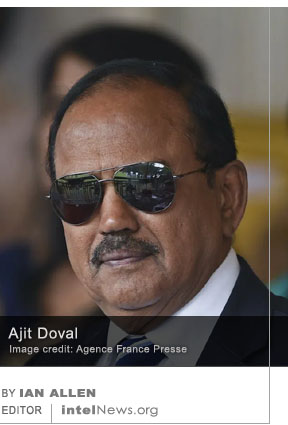
Ajit DovalIn-fighting erupts between Syrian intelligence and army in Damascus. Violent clashes broke out between Syrian regime intelligence forces and local militias affiliated with the army’s 4th Division and national defense in Damascus’ countryside, local media sources reported. Sporadic fighting reportedlhy broke out for the third consecutive day in the Daf Al-Shouk region between militiamen affiliated with the 4th Division and the national defense on the one hand, and security formations from the Palestine Branch of the Syrian military intelligence on the other. This came after the 4th Division and the national defense refused to hand over their weapons and end the military tasks assigned to them in the region.
India gold smuggling case sparks political row. A political row has broken out in India after gold was found being smuggled into the country in diplomatic baggage. Customs officials at the international airport in the southern state of Kerala found more than 30kg (66lb) of gold hidden inside bathroom fittings. The package was addressed to the United Arab Emirates’ consulate in Thiruvananthapuram. The UAE has denied any knowledge of the package and said a former local employee had been arrested. Local reports suggest another person has also been detained.

The ex-spy who brought India and China back from the brink. It takes nerves of steel and a cool wit to negotiate a truce in the face of a grave provocation – such as the brutal killing of 20 soldiers – and getting two nuclear-armed rivals to pull back from the brink of a full-scale confrontation. But that’s what Ajit Doval (pictured), India’s national security adviser, managed to do as he walked a diplomatic tightrope in recent talks with Chinese officials.

News you may have missed #908

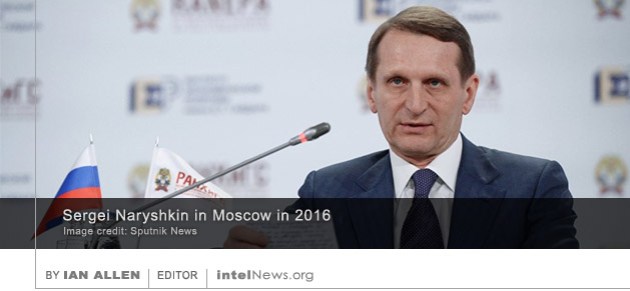
Sergei NaryshkinRussian spy chief in rare interview with the BBC. In an exclusive interview, Sergei Naryshkin (pictured), the head of Russia’s Foreign Intelligence Service (SVR) has told the BBC that America has been trying to “rule the world” and this could lead to “disaster”. Russia’s spy chief, who was talking to the BBC’s Steve Rosenberg on the occasion of the 75th anniversary of the end of World War Two, also said that Russia doesn’t trust what the British government says about the Salisbury poisonings.

India and Pakistan embassies to cut staff by half over spy row. India is expelling close to half of the staff at Pakistan’s embassy in New Delhi over espionage claims. Islamabad has reciprocated with the same orders for the Indian High Commission. Notably, both commissions do not have a permanent ambassador in place. Tensions have remained high since India scrapped Kashmir’s semi-autonomous status last year.

Israel moves to redeploy spy agency to track surging virus cases. Israel’s parliament gave initial approval Wednesday to a controversial bill enabling the government to use its domestic security agency to track cases of coronavirus, which are rising again. Cabinet mandated Shin Bet to use cell phone surveillance as an emergency measure to combat the virus in mid-March as mounting numbers of Israelis tested positive for the novel coronavirus. The specifics were kept secret, but security officials said the agency had tracked virus carriers’ movements through their phones. The measure was discontinued on June 10 as infection rates dropped. But following two weeks that have seen growing numbers of Israelis infected with the virus, Prime Minister Benjamin Netanyahu decided to table the bill.

News you may have missed #907

India External Affairs MinistryPakistan releases two Indian diplomats. Pakistan has released two employees of rival India’s embassy in Islamabad after briefly detaining them in connection with a hit-and-run road accident in the capital. A city police report noted the Indian officials were taken into custody on Monday morning after their “reckless driving” injured a pedestrian. The Indian External Affairs Ministry on Monday summoned the deputy chief of the Pakistani High Commission in New Delhi to protest the detention of its officials and demanded their immediate release. Pakistani authorities familiar with the incident argued the detainees were released to the Indian High Commission in Islamabad within hours because they held diplomatic immunity.

As US intelligence community returns to work, employees confront new anxieties. More US federal employees and contractors in the intelligence community have been gradually returning to their office spaces in the past two weeks. But for IC leadership, “reopening” isn’t only about rearranging office spaces and cobbling together cleaning supplies and hand sanitizer, it’s also about easing the concerns of their employees and contractors who are uneasy or nervous to return to the physical workplace.

Belgian police officer convicted of spying for terrorist network. A police officer in Brussels has been jailed for four years after prosecutors found he had acted as an informant for the brother of a man seen as the mastermind of the Brussels and Paris attacks. The 53-year-old officer with the Brussels North police zone was sentenced to 50 months imprisonment, his lawyers confirmed on Friday.

News you may have missed #906

Gustavo ArribasTurkish court jails US consulate employee for terrorism offenses. A Turkish employee of the US consulate in Istanbul has been sentenced to almost nine years in prison, allegedly for aiding a terrorist organisation. Metin Topuz was arrested in 2017 and accused of having links to an “armed terror group” that Turkey blames for a failed coup the previous year. Topuz is reported to have spent decades working as a translator and fixer for the US Drug Enforcement Administration (DEA) in Istanbul. He denies the allegations. The US has said there is “no credible evidence” to support his conviction.
India arrests LeT female spy ring. India’s National Investigation Agency has busted an alleged female spy racket in the country and taken a 22-year-old Lashkar-e-Taiba (LeT) handler into 10-day custody. The female spy was allegedly in touch with many handlers in Pakistan, including 26/11 Mumbai terror attack mastermind Hafiz Mohammed Sayeed. Sources also claimed that Pakistan’s Inter-Services Intelligence was honey-trapping Indian officials through the female spy, in order to gain sensitive information.

Illegal espionage claims put former Argentine president in spotlight. Argentina’s former president, Mauricio Macri, has found himself back in the national spotlight after the emergence of extraordinary claims alleging the Federal Intelligence Agency (AFI) –-headed at the time by his close ally Gustavo Arribas (pictured) during the former president’s 2015-2019 administration-– carried out illegal espionage more than 500 journalists, academics, politicians and business leaders. Prior to heading the federal intelligence agency, Arribas had no prior public service, having worked as a notary and a football agent. He is a close personal friend of Macri.

India expels Pakistan embassy officials for allegedly carrying out espionage

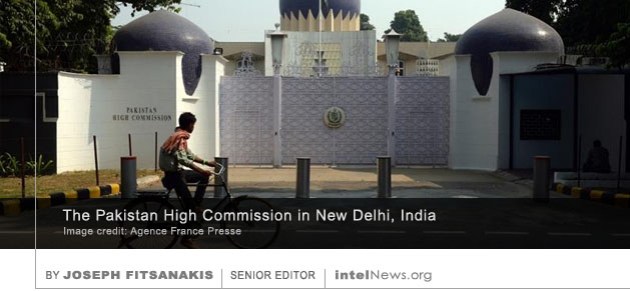
Pakistan embassy IndiaIndia has expelled two officials at the High Commission of Pakistan in New Delhi, after they were allegedly caught with fake Indian identity papers while trying to acquire classified documents. But the Pakistani government has rejected the allegations and subsequent expulsions as “a part of persistent anti-Pakistan propaganda” from India, and said the two officials were tortured while under detention by Indian authorities.

The expulsion orders followed the arrest of three Pakistani citizens, who were identified as Abid Hussain, 42, Tahir Khan, 44, and Javed Hussain. The Times of India said Abid Hussain had been working at the Pakistani embassy’s visa issuance department since late 2018. Khan was “an upper division clerk” at the embassy and arrived in India at around the same time Abid Hussain did, said the paper. Javed Hussain has been working as a driver at the embassy since 2015, and was reportedly released by the Indian authorities after he was found not to have been implicated in the alleged espionage.

The Times cited unnamed sources in New Delhi in claiming that the three Pakistanis had been arrested by Indian police at an undisclosed location in the Indian capital’s centrally located Karol Bagh neighborhood. The men were reportedly there to receive “highly sensitive information” by unnamed Indian “defense personnel”. Javed Hussain and Khan were reportedly found to be carrying Indian identification cards bearing fake names. They also had in their possession what the newspaper called “incriminating documents”, two smartphones and 15,000 rupees, which equal to around $200.

On Sunday, India’s Ministry of Foreign Affairs said that Javed Hussain and Khan had been declared “persona non grata” and had been ordered to leave the country within 24 hours. The reason for their expulsion was “indulging in activities incompatible with their status as members of a diplomatic mission”. The phrase is used in the international legal vernacular to describe an accredited diplomat engaging in intelligence operations abroad without the consent of his or her host nation. The Ministry also said that it had summoned the Pakistani ambassador and issued him with a “strong protest” about the incident.

The Indian government said late on Sunday that it was investigating whether other Pakistani embassy officials had been engaging in espionage. Diplomatic observers expressed certainty last night that Islamabad would expel at least two Indian diplomats from the country in a tit-for-tat response to India’s move.

Author: Joseph Fitsanakis | Date: 01 June 2020 | Permalink

Germany convicts married couple of spying for Indian intelligence service

Manmohan S. Kanwal Jit K.A court in Frankfurt has found a married couple guilty of spying in Germany on behalf of India’s external intelligence service. Due to Germany’s strict privacy laws, the couple have been identified only as 50-year-old Manmohan S. and his wife, Kanwal Jit K., who is 51.


According to the prosecution, Manmohan S. was recruited by India’s Research and Analysis Wing (RAW) in January of 2015. His wife joined his intelligence-collection activities in July 2017. Following their arrest, the couple told German authorities that they held regular meetings with a RAW case officer who was serving as a diplomat in the Indian consulate in Frankfurt. They also said they were paid nearly $8,000 for their services.

The two convicted spies said at their trial that they were tasked to spy on adherents of the Sikh religion and members of the Kashmiri expatriate community in Germany. The central European country is believed to host as many as 20,000 Indian Sikhs, many of whom openly proclaim secessionist aspirations. Many Sikhs in India and abroad campaign for the creation of a Sikh state in parts of northwestern India and Pakistan, which they call Khalistan. India is also concerned about the secessionist aspirations of Kashmiris, a predominantly Muslim population of 10 million that lives in the region of Jammu and Kashmir. Delhi has long claimed that expatriate groups living in Europe and the United States provide funding for secessionist groups that operate in the region.

On Thursday, Frankfurt’s Higher Regional Court found the couple guilty of conducting illegal espionage activities on German soil. It handed Manmohan S. a one-and-a-half-year suspended jail sentence, while Kanwal Jit K. was given a fine that equates to 180 days of income.

Author: Joseph Fitsanakis | Date: 13 December 2019 | Permalink


