Iraqi intelligence claims capture of Islamic State’s finance chief in ‘complex’ operation
October 12, 2021 Leave a comment
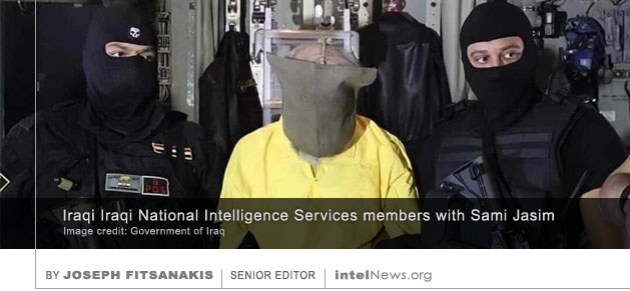
ONE OF THE ISLAMIC State’s senior leaders, who has headed the group’s financial arm since at least 2015, was captured in a “complex operation” by Iraq’s intelligence agency, according to announcements from Baghdad. Sami Jasim Muhammad al-Jaburi, also known by the name Abu Asya, has been close to senior Sunni Islamist figures since before the Islamic State emerged as a major player in Iraq and Syria. He is believed to have first met the Islamic State’s spiritual leader, Abu Bakr al-Baghdadi, in the northern Iraqi city of Mosul in 2012.
Once the Islamic State began conquering large swathes of territory in the Middle East, and proclaimed itself the government of a self-styled emirate, Jasim was appointed treasurer. He also served as one of al-Baghdadi’s senior deputies until at least 2017. He survived the fall of the Islamic State’s proto-state, but continued serving in the organization’s financial arm under its current chief, Abdullah Qardash.
Jasim’s arrest was announced on Monday by Iraq’s Prime Minister, Mustafa al-Kadhimi, through his personal account on Twitter. According to the tweet, the Iraqi National Intelligence Services conducted “a complex external operation to capture Sami Jasim”. Notably, the Iraqi Armed Forces revealed in a follow-up tweet that Jasim had been captured outside of Iraq’s borders. But the tweet did not reveal the precise location where the Islamic State leader was captured, nor did it discuss any other aspects of the operation.
The United States government had offered a $5 million reward for information leading to Jasim’s capture. It is not known whether American intelligence agencies or troops played any role in Jasim’s capture.
► Author: Joseph Fitsanakis | Date: 12 October 2021 | Permalink
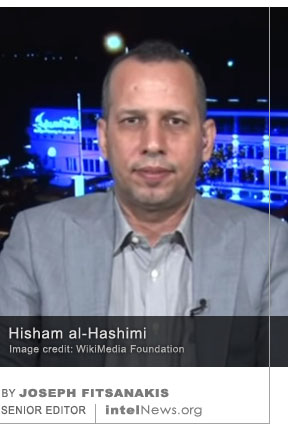 A leading Iraqi expert on paramilitary groups has been shot dead outside his home in Baghdad, raising concerns that the Iraqi government is unable to curtail the activities of militias in the country. Hisham al-Hashimi, 47, was a Baghdad University-educated historian, who rose to prominence in post-Ba’athist Iraq as an expert on paramilitary groups in the country. He was seen as a leading local authority on the Islamic State and advised the United States-led coalition on the group’s inner workings.
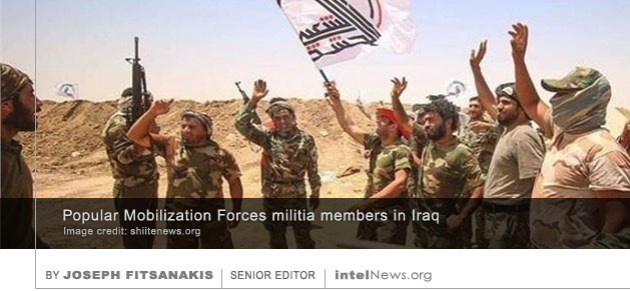 There was growing tension in Iraq over the weekend, as the government in Baghdad announced it had arrested over a dozen members of a powerful Shi’a militia backed by Iran. The arrests marked the first time that the Shi’a dominated Iraqi government moved to curtail the growing power of these heavily armed groups, which some say are threatening the cohesion of the country’s fragile state institutions.
 • French forces kill al-Qaeda head and capture ISIS leader in Mali. In the past few days, the French military
 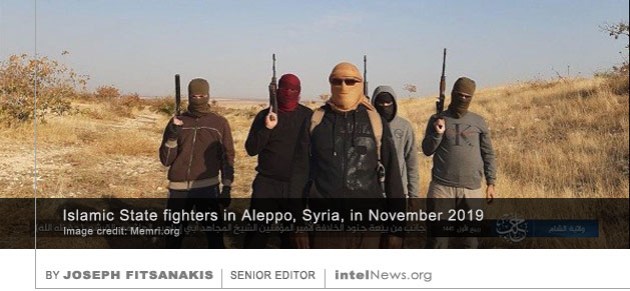 In a recent video message, the new head of the Islamic State calls COVID-19 a “great torment” from God against unbelievers, and vows that “not a single day will pass without bloodshed” due to attacks by his forces. The 39-minute video is entitled “The Crusaders Will Know Who Will Win in the End”, and began to circulate on the popular messaging application Telegram last Thursday.
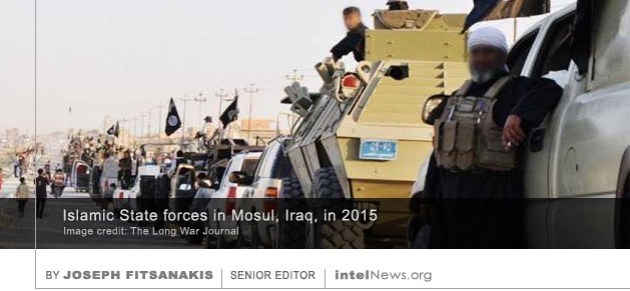 Iraq is currently witnessing the largest resurgence of the Islamic State since December of 2017, when the Iraqi government declared it had defeated the group, according to local and international observers. The Sunni militant group, which became known as the Islamic State of Iraq and Syria (ISIS), is exploiting a moment of opportunity, as Iraqi security forces, Shia militias and American troops are essentially sheltering in place to avoid the effects of COVID-19.
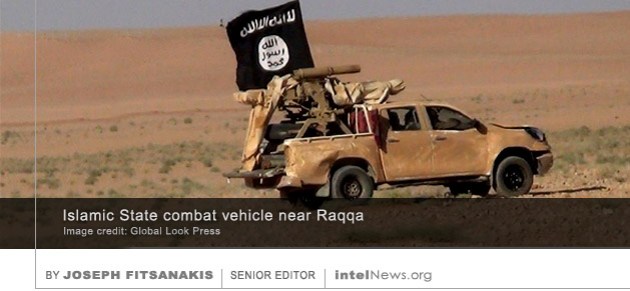 The Islamic State remains committed to its goals and continues to utilize ample funding sources, according to a new report by the United Nations. The report warns that the militant Sunni group, which was previously known as the Islamic State of Iraq and Syria (ISIS), is quickly reasserting itself in the Middle East.
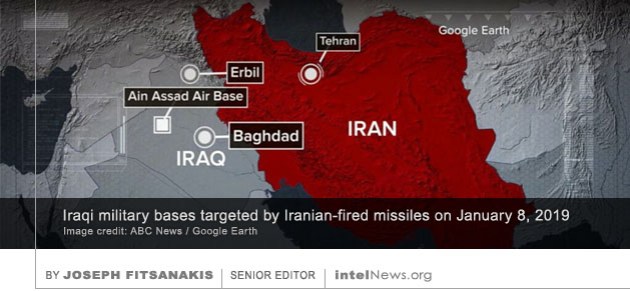 The missiles that targeted American troops in Iraq a few hours ago offer significant clues about the evolving confrontation between Iran and the United States. The attack appears to have been largely symbolic —a somewhat rushed attempt to restore some of Iran’s wounded prestige following the assassination of its military commander, Qasem Suleimani. At the same time, however, it is also the prelude to a broader regional conflict that appears increasingly unavoidable.
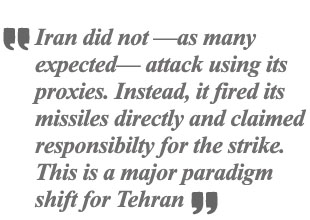 Soleimani’s killing is viewed by Tehran as too insulting to be responded to indirectly. This does not mean that Tehran will not revert to its standard method of employing proxies in the future. But the fact that it consciously chose to deviate from that time-tested method is in itself extremely important.
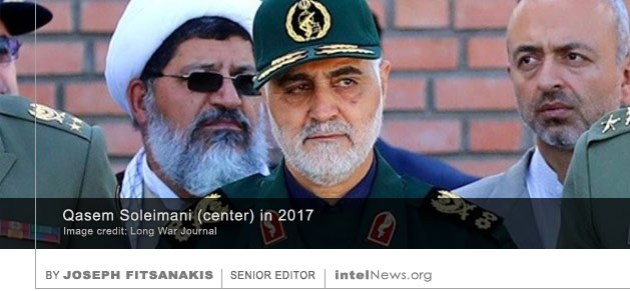 In an act whose implications are impossible to overstate, the United States has assassinated General Qasem Soleimani, arguably Iran’s second most powerful official. In the early hours of this morning, the entire Middle East stood on the verge of a regional war as the US Department of Defense
  why US President Donald Trump made the decision to kill Soleimani, and why he did so now.
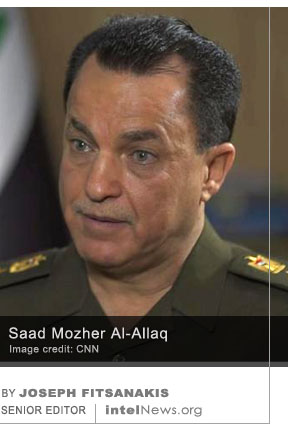 In a rare interview, the head of Iraq’s military intelligence has warned of an impending “catastrophe” as the Islamic State continues to edge ever-closer to rebuilding its networks of fighters and supporters in the Middle East. Lieutenant General Saad Mozher Al-Allaq, head of Iraq’s Military Intelligence Directorate, gave a rare
  The Iranian government may have used a female intelligence officer to lure a leading Iranian dissident from his home in France to Iraq, where he was abducted by Iranian security forces and secretly transported to Iran. Iranian authorities
  Iranian authorities have announced the capture of a Paris-based Iranian dissident, who was reportedly lured out of France and then abducted by Iranian agents in a third country. The kidnapped dissident is Ruhollah Zam, 46, son of Mohammad-Ali Zam, a well-known reformist cleric who served in top Iranian government posts after the 1979 Islamic Revolution. But in 2009 the younger Zam distanced himself from this father and sided with the so-called Green Movement, whose leaders called for the toppling of the government in Tehran. Around that time, Zam was part of a group of Internet-savvy Iranians who launched AmadNews. The website’s stated purpose was “spreading awareness and seeking justice” in Iran, and it soon became the online voice of the Green Movement.
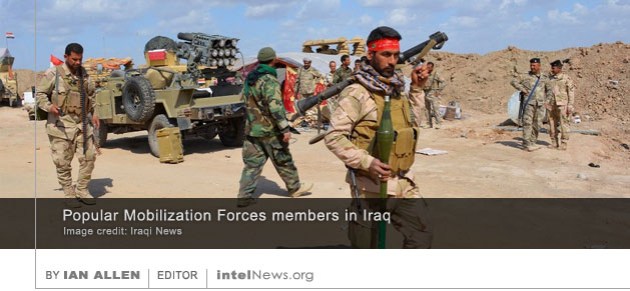 Iraq’s largest Shia militia, which controls parts of Iraq’s territory that were aptured from the Islamic State, has accused the United States and Israel for a series of mystery explosions at its arms depots around the country. Much of the territory captured from the Islamic State (known also as the Islamic State of Iraq and Syria, or ISIS) in northern Iraq is currently controlled by the Popular Mobilization Forces (PMF), a collection of around 40 Shia militias consisting of over 150,000 armed fighters. The Iranian-supported PMF proved instrumental in the territorial defeat of ISIS. However, the group’s leadership is ideologically aligned with Iran, and many of its members will






 intelNews.org
Revealed: Turkey helped Iraqi intelligence capture senior Islamic State figure
October 13, 2021 by Joseph Fitsanakis Leave a comment
AN ELABORATE OPERATION WHICH, carried out jointly by Iraqi and Turkish intelligence, led to the arrest of one of the most senior officials of the Islamic State to be ever captured alive, according to sources. As intelNews reported on Monday, the Iraqi government announced the capture of Sami Jasim Muhammad al-Jaburi, who served as deputy to the Islamic State’s late spiritual leader, Abu Bakr al-Baghdadi.
Jasim, also known by the name Abu Asya, was the Islamic State’s treasurer during the group’s heyday, when it controlled territory equal to the size of Germany in Syria and Iraq. He survived the demise of the Islamic State’s territorial power, but continued serving in the organization’s financial arm under its current chief, Abu Ibrahim al-Hashemi al-Quraishi. The Iraqi government announced Jasim’s capture on Sunday with a brief statement, which said he had been seized in a “complex operation outside the borders” of Iraq. No further details were made available.
On Tuesday, however, the Reuters news agency reported that Jasim was arrested on Turkish soil in a joint Turkish-Iraqi intelligence operation. Citing “a senior regional security source and two Iraqi security sources”, Reuters said that Jasim had been under surveillance in northwestern Syria for several months by Iraqi and Turkish intelligence. He was reportedly arrested by Turkish intelligence shortly after crossing into Turkey, where he was lured in an operation that included participants from Iraqi intelligence and “local security forces”. Reuters notes that the phrase “local security forces” most likely refers to Turkish backed Syrian militias, who operate along the Turkish-Syrian border.
The Reuters report also points out that Jasim’s arrest may illustrates a deepening cooperation between Turkish and Iraqi intelligence against the remnants of the Islamic State that continue to operate in northwestern Syria, a region that is largely under the control of Turkey. Turkish, Iraqi and American officials who were approached by Reuters refused to comment on the report.
► Author: Joseph Fitsanakis | Date: 13 October 2021 | Permalink
Filed under Expert news and commentary on intelligence, espionage, spies and spying Tagged with Iraq, Islamic State, National Intelligence Service (Iraq), News, Sami Jasim Muhammad al-Jaburi, Turkey