News you may have missed #0284

  • Real IRA faction killed MI5 informant, says Irish police. The Gardai have concluded that a Real IRA faction executed Denis Donaldson, a former Sinn Fein official who turned informer for MI5 and the Police Service of Northern Ireland. Last year, the Real IRA took responsibility for the 2007 killing.
  • NATO spy station up for sale. A Canadian NATO spy station in Nova Scotia that operated between 1983 and 2006 is for sale for US$1.4 million. It appears that the site’s current owner, who doesn’t want to be identified, bought it from the Canadian Defense Department after the base was closed down.
  • Analysis on the Binyam Mohamed disclosures and UK-US spy cooperation. This analysis, by Michael Clarke, director of Britain’s Royal United Services Institute, is probably the best synopsis of the meaning of the recent court order to disclose Binyam Mohamed’s torture records, which has complicated US-UK spy relations.

Bookmark and Share

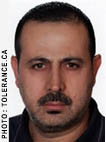
Three women among al-Mabhouh assassins, says journal

Mahmoud al-Mabhouh

Al-Mabhouh

By JOSEPH FITSANAKIS | intelNews.org |
Three women were among ten members of a Mossad assassination team that killed a top Hamas official last month in Dubai, according to Intelligence Online. The Paris-based, subscription-only website also said that all members of the Israeli assassination squad that killed Mahmoud al-Mabhouh used European passports to enter the United Arab Emirates. Earlier this week, Dubai police announced that the team consisted of seven people, at least four of whom had used fraudulent Irish passports to enter the Emirates. According to Intelligence Online, one female member of the Mossad hit-team played a central role in the operation, by dressing herself in a generic hotel uniform before knocking on the door of al-Mabhouh’s room at the luxury Al-Bustan Rotana Hotel. Read more of this post

Al-Mabhouh assassins used Irish passports, says Dubai police

Mahmoud al-Mabhouh

Al-Mabhouh

By JOSEPH FITSANAKIS | intelNews.org |
At least four of the seven people believed to have participated in last month’s assassination of a senior Hamas military official in Dubai, used forged Irish passports to enter and exit the United Arab Emirates, according to local police. The body of Mahmoud al-Mabhouh, co-founder of the Palestinian Izz ad-Din al-Qassam Brigades, Hamas’ military wing, was discovered by staff at Dubai’s luxury Al-Bustan Rotana Hotel, where al-Mabhouh was a guest, on January 20. Nine days later, on January 29, Hamas accused Israeli intelligence service Mossad of having killed al-Mabhouh. Now the Dubai police alleges that four of the seven assassins, which included at least one woman, used real Irish travel documents with falsified identities to enter the Emirates, and used them again to “flee to a European country” several hours before al-Mabhouh’s body was discovered.   Read more of this post

News you may have missed #0201

  • New book claims historic IRA commander was British spy. John Turi has authored England’s Greatest Spy, a new book, which claims that Éamon de Valera, who founded Irish republican party Fianna Fáil and later became the first President of the Irish Republic, secretly became a British intelligence officer in 1916. Tim Pat Coogan, one of de Valera’s most prominent biographers, reviews the book.
  • Japan launches spy satellite targetting North Korea. Japan’s H-2A No. 16 rocket, which was launched on Saturday, carries an advanced space satellite that will spy on North Korean military and other sites. The satellite is said to carry the most advanced high-resolution imaging equipment of all of Japan’s intelligence-gathering satellites.
  • US Secret Service 9/11 text messages disclosed. Hundreds of thousands of lines of transcribed pager messages exchanged between US civilian and military users on 9/11 were anonymously published on the Internet on Wednesday. They include messages exchanged between US Secret Service agents.

Bookmark and Share

News you may have missed #0159

  • US Congress wants to change locks in document safes. Some Congress members have revived “a decade-old debate” on replacing security locks on government safes for storing classified documents with new electromechanical locking mechanisms. According to one independent security consultant, existing mechanical locks in classified document safes “can be penetrated surreptitiously within 20 minutes”, and older barlock containers still in use “can be penetrated within seconds”.
  • A US spy in wartime Ireland. The interesting story of Major Martin S. Quigley, one of three US spies sent by the Office of Strategic Services (OSS, CIA’s forerunner) to Ireland, on a mission to find out whether the country’s government, which was officially neutral in the War, was actually siding with Nazi Germany.

Bookmark and Share

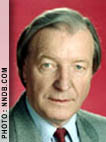
Irish leader used British-supplied bugs to spy on opponents: book

Charles Haughey

Charles Haughey

By IAN ALLEN | intelNews.org |
Charles Haughey, Ireland’s Taoiseach (head of government) in the late 1970s, and on two instances in the 1980s, used audio surveillance devices supplied by a British security officer to spy on his domestic political opponents. This allegation is made by George Clarke, a former officer in the Special Branch of the Royal Ulster Constabulary (the name of the British police force in Northern Ireland until 2001), in his book Border Crossing, which was published last week. In it, Clarke says he purchased the devices at a specialist store in London, in 1979, and later lent them to an intelligence officer in the Garda, the police of the Republic of Ireland, for use in spy operations against the Irish Republican Army (IRA). Several months later, however, when Clarke requested that the devices be returned to him, he was told that they were in the possession of Charles Haughey, and that he was so fond of them that he simply refused to give them back. Read more of this post

International mercenary cell uncovered in Bolivia

Eduardo Flores

Eduardo Flores

By JOSEPH FITSANAKIS | intelNews.org |
Last month, the Bolivian government expelled a senior “diplomat” from the US embassy in La Paz, whom it accused of covertly supporting efforts to depose the country’s leftist president, Evo Morales. This past week, Bolivian authorities announced they had foiled operations by a major international anti-government mercenary group operating out of the city of Santa Cruz, a hotbed of anti-government activity in the country’s wealthy eastern provinces. Three of the unit’s members, a Bolivian of Croatian descent, an Irishman and a Romanian, were killed by Bolivian security forces; two others, a Hungarian and another Bolivian of Croatian descent, were captured and are now in custody. What were the plans of the covert unit, and who is behind it? Read article →