Destabilization fears grow as hundreds of armed ISIS fighters enter Iraq from Syria
February 26, 2019 Leave a comment
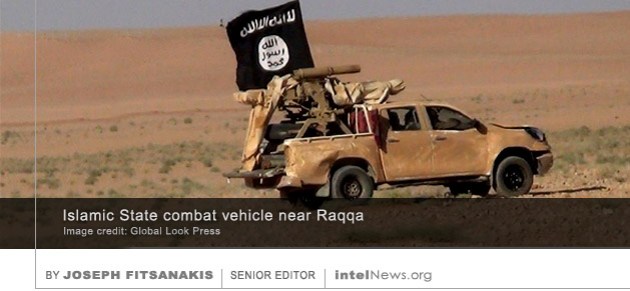 Intelligence officials warn that Iraq’s fragile stability may be at risk, following reports that as many as a thousand armed Islamic State fighters have entered Iraq from Syria in recent weeks. The organization calling itself the Islamic State (known also as the Islamic State of Iraq an Syria, or ISIS) is on its last legs in Baghouz, a Syrian village located on the banks of the Euphrates River near the Syrian-Iraqi border. Its fighters are report by a large number of American-backed forces led by Syrian Kurds, in what appears to be the Islamic State’s last territorial stronghold in the Middle East.
Many or the militant Sunni group’s fighters, however, have managed to slip past the American-led coalition’s offensive lines and are now making their way across the border into Iraq’s Sunni-majority northwestern provinces. To prevent this, the Shiite-led Iraqi army has reportedly deployed more than 20,000 soldiers across the 370-mile border with Syria. But the size of the border, as well as the region’s rugged and inhospitable terrain, are making it very difficult to police it. A major surrounded published by the Associated Press late last week claims that hundreds of Islamic State fighters are slipping across the border into Iraq at night, or using tunnels that were constructed by the Islamic State in 2013 and 2014. Others are making their way into Iraq disguised as women or local farmers. Most are armed, says the Associated Press, or know where to go to dig up weapons caches and money, which the Islamic State buried as it retreated into Syria last year under concerted attacks by the Iraqi army.
The Associated Press report quotes three Iraqi intelligence officials and a United States military official, who say that more than 1,000 ISIS fighters entered Iraq from Syria since last September. Iraqi intelligence sources allegedly estimate that between 5,000 and 7,000 armed ISIS fighters are now present in Iraq. Many of them remain in hiding, but others are engaged in systematic efforts to revitalize the group’s presence in Iraq’s Sunni-majority provinces. This was confirmed in a recent press briefing by a senior Iraqi Army spokesman, Brigadier General Yahya Rasoul, who warned that “ISIS is trying to assert itself in Iraq, because of the pressure it is under in Syria”. At least nine major ISIS attacks were recorded in Iraq in January, and several have taken place in February, including the recent killing of five fishermen in Najaf Province, which prompted officials to warn that ISIS may be making a comeback in the region. Iraqi intelligence officials told the Associated Press that the attacks are aimed at warning locals not to share intelligence with the Iraqi military, and to “restore the extortion rackets that financed the group’s rise to power six years ago”.
► Author: Joseph Fitsanakis | Date: 26 February 2019 | Permalink
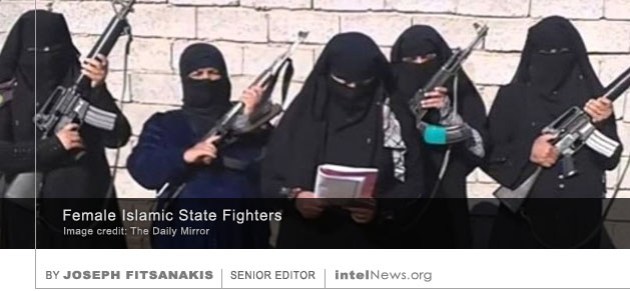 The role of women inside the Islamic State is growing, as the Sunni militant group is transmuting into an underground organization, according to a Harvard University terrorism expert. Since its meteoric rise in Iraq and Syria, the Islamic State has been known for advocating for strict segregation between men and women. In the early stages of the group’s emergence, combat roles were exclusively performed by men, while women’s roles were limited to childbearing and housework. But according to Vera Mironova, Visiting Scholar in the Economics Department at Harvard University, and former Associate of the International Security Program at Harvard’s Belfer Center, the Islamic State’s policy on gender roles is shifting rapidly.
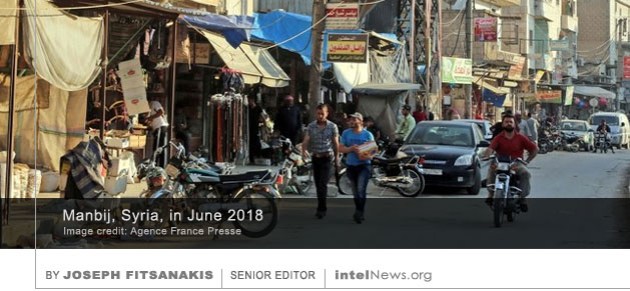 The “illusion of safety” has been blamed for the death of four American service members in northern Syria last week, after a suicide bomber attacked a restaurant, killing at least 19 people and wounding countless others. The deadly attack happened in Manbij, a small Kurdish-majority town near the Syrian-Turkish border, which American forces previously viewed as an oasis of security in the war-torn country. American troops fought alongside a coalition of Kurdish and Arab fighters who in 2016 took control of Manbij from the Islamic State of Iraq and Syria (ISIS). Since then, American forces have remained in the area —mostly to prevent a military invasion by Washington’s ally Turkey, which views the Kurds as terrorists and has threatened to destroy their armed forces.
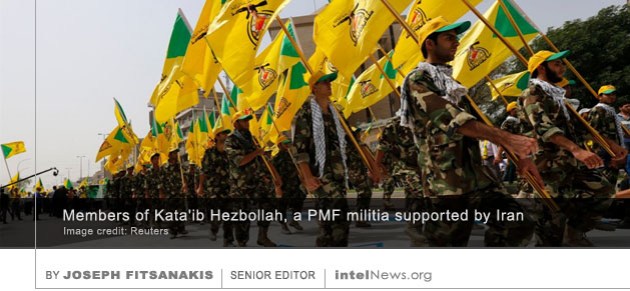 The Shiite militias that fought in the war against the Islamic State are now “engaged in mafia-like practices” in former Islamic State strongholds, enraging Iraqi Sunnis and sparking fears of another Islamist insurgency, according to a
  Police in Barcelona have intensified security checks in some of the Spanish city’s most recognizable landmarks, following a security warning from the United States Department of State. The surprise warning came in the form of a post on the popular social networking site Twitter on Sunday, December 23. In the
  On the heels of chaotic scenes at Britain’s Gatwick Airport, which
 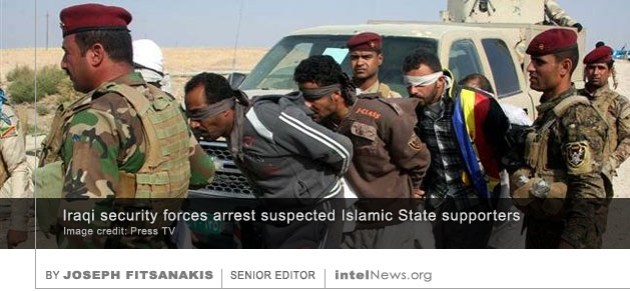 A campaign of revenge by Iraq’s Shiite-dominated government against Sunni Arabs in regions once controlled by the Islamic State is aiding Islamists and fueling another rebellion in the country, according to a new report. In 2014, the meteoric rise of the Islamic State of Iraq and Syria —ISIS, later renamed to Islamic State— was largely aided by the strong belief among Iraqi Sunnis that they were second-class citizens in a Shiite-dominated Iraq. In addition to its Sunni credentials, the Islamic State was also able to appeal to Iraqi Sunnis by portraying itself as pious, efficient and trustworthy. This image was in a sharp contrast to the widespread provincial view of politicians in Baghdad as corrupt, indifferent and ineffectual. Popular support for the Islamic State among Iraq’s Sunni Arab minority took the Iraqi government by surprise and almost enabled the militant group to conquer Baghdad in 2015.
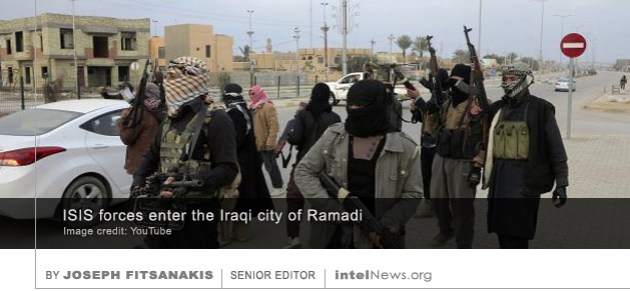 A report from the United States Department of Defense warns that the Islamic State is swiftly returning to its insurgent roots, as observers in Iraq and Syria caution that the group is witnessing a revival. It has been four years since the Islamic State —known then as the Islamic State of Iraq and Syria, or ISIS— conquered much of eastern Syria and more than a third of Iraq’s territory. But by the end of 2017, virtually the entirety of ISIS’ self-styled ‘caliphate’ had been obliterated by an ‘unholy alliance’ of US-backed Iraqi government forces, Iranian-supported Shiite militias, Kurdish guerillas and Western airpower.
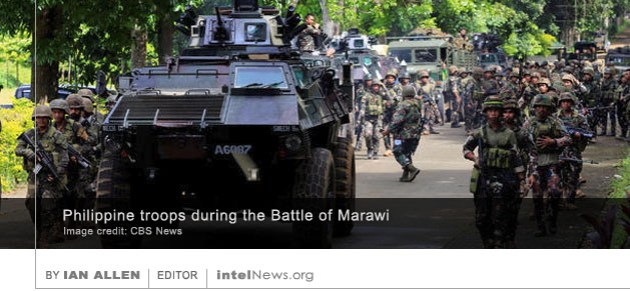 The number of foreign Islamic State fighters entering the Philippines is growing, and the momentum they generate among local Islamist groups may prompt them to declare a new caliphate, according to experts. British newspaper The Guardian cited “a high-ranking intelligence officer” who said that between 40 and 100 foreign fighters have joined the Islamic State in the southern Philippines in the past 12 months. Most of them come from neighboring countries, such as Indonesia, Malaysia and Singapore. But there are also fighters from Pakistan, Bangladesh and several Middle Eastern countries, said the intelligence officer. One of them, a Moroccan militant,
 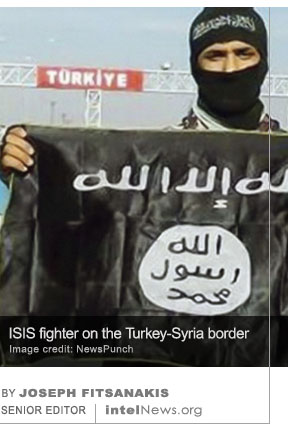 Islamic State cells are using Turkey as a strategic base in which to recuperate, rebuild, and plan an underground war in Europe, according to a new report by Dutch intelligence. This assessment is featured in a
  The online arm of the Islamic State, which was once one of the organization’s most noticeable trademarks, has declined markedly in 2018, according to expert observers in the United States and elsewhere. This is especially applicable to the militant group’s online propaganda and recruitment campaign, which appears to have effectively ceased, say experts.
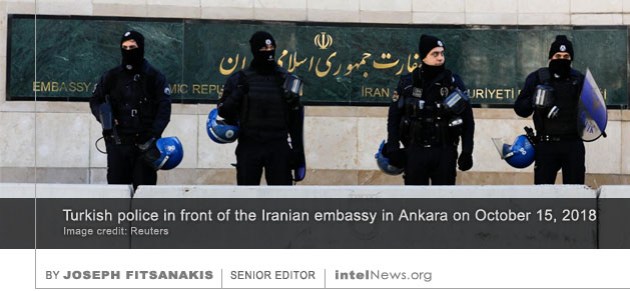 There were conflicting reports yesterday in Ankara of an alleged evacuation of Iran’s ambassador to Turkey, following credible reports of a suicide bomb attack, possibly by the Islamic State. Several Turkish media outlets reported on Monday afternoon that authorities in Ankara had communicated an urgent intelligence warning to the Iranian embassy there of a possible suicide bomb attack. According to the
 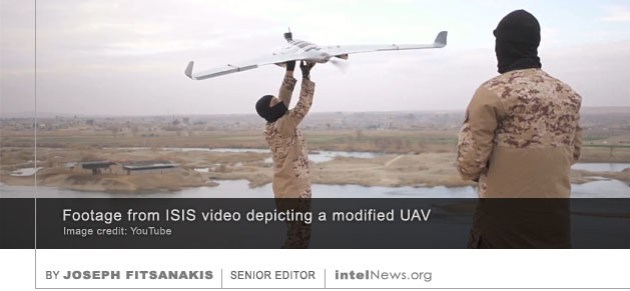 Danish Police have announced the arrest of two men who attempted to procure unmanned aerial vehicles (UAVs) —commonly known as drones— on behalf of the Islamic State in Syria. In a press statement issued on Wednesday, Denmark’s State Police
  Supporters of the Islamic State, most of them Persian speakers, were spied on by the government of Iran after they downloaded a fake smartphone application with wallpaper images, according to an online security firm. Iran is a major adversary of the radical Sunni group Islamic State. The latter considers Shiism (Iran’s state religion) as an abomination. Not surprisingly, therefore, the Islamic State, which is also known as the Islamic State of Iraq and Syria (ISIS), relies largely on supporters from the Arabic-speaking regions of the Levant. But according to estimates, Sunnis constitute about 10 percent of Iran’s population, and ISIS has found some fertile ground among Iran’s 8 million-strong Sunni minority. As a result, the government in Tehran is highly mistrustful of Iranian Sunnis, many of whom are ethnic Kurds, Baluchis, Azeris or Turkomans, and systematically spies on them.






 intelNews.org
Dutch counterterrorism report sees rise in Islamist recruitment in the West
March 4, 2019 by Joseph Fitsanakis Leave a comment
In its most recent report (.pdf), entitled Terrorist Threat Assessment Netherlands, the NCTV warns that it is not only the Islamic State (known also as Islamic State of Iraq and Syria, or ISIS) that remains highly active, but also al-Qaeda. The two groups are riding a wave of Salafist Muslim extremism that appears to be on the rise throughout Europe, says the report. ISIS, in particular, continues to engage in extensive recruitment drives in the West, which take place mostly through the dissemination of propaganda material online. There is also a proliferation of an underground recruitment movement in conservative Muslim schools and mosques across the West, says the report (.pdf).
But the most serious short-term threat to European and North American security, according to the NCTV document, comes from so-called returnees, citizens of European countries who joined the Islamic State in Syria and Iraq and are now returning —or trying to return— to their home states in the West. The majority of these men and women remain faithful to the idea of the caliphate despite the failure of their efforts in the Middle East. There is a risk that, upon their return to the West, they will connect with existing —and growing— Salafist underground networks there, and remain active in radical circles. The report also notes that both ISIS and al-Qaeda are showing increasing interest in developing chemical and biological weapons for use against civilian and military targets.
► Author: Joseph Fitsanakis | Date: 04 March 2019 | Permalink
Filed under Expert news and commentary on intelligence, espionage, spies and spying Tagged with al-Qaeda, counterterrorism, Islamic State, NCTV (Netherlands), Netherlands, News