ISIS has lost control of most oil fields: German intelligence report
April 10, 2015 Leave a comment
 By JOSEPH FITSANAKIS | intelNews.org
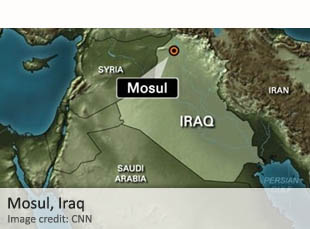
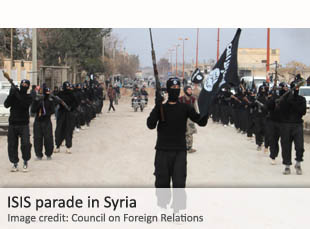
The Islamic State has lost control of approximately 95 percent of its oil production capacity following the advancing Iraqi counteroffensive, according to a leaked German intelligence report. Last June, a massive offensive by armed members of the Islamic state, also known as the Islamic State of Iraq and al-Sham (ISIS), conquered much of northern Iraq, including the cities of Mosul and Tikrit. As the crumbling Iraqi army kept hastily retreating south, ISIS forces encountered almost no resistance during their onslaught.
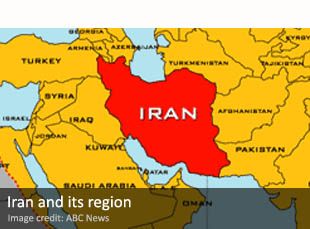
In the past two months, however, a large-scale counter-offensive by Iraqi forces and irregular Shiite militias, supported by Iran and the United States, has reclaimed much of the land previously occupied by ISIS. Earlier this month, Iraqi forces recaptured the strategically located city of Tikrit, in a move that is widely viewed as the greatest victory so far for the anti-ISIS forces.
Along with Tikrit, Iraqi forces have managed to recapture a number of oil fields, which provided ISIS with a lucrative source of income for much of the past year. On Thursday, German broadsheet Süddeutsche Zeitung cited a leaked intelligence report that claimed ISIS had lost control of “a minimum of three oil fields” in northern Iraq. The Munich-based newspaper said it had seen a report on the subject authored by the Bundesnachrichtendienst, or BND, Germany’s external intelligence agency. According to the report, the Iraqi counteroffensive had reclaimed all but one of the ISIS-controlled oil fields in the country.
The BND documents state that the ISIS government now only controls the Qayara oil field, located in Iraq’s southeastern Nineveh province. The oil field’s daily output capacity of around 2,000 barrels leaves ISIS with only “five percent of the extraction capacity” it had before the Iraqi counteroffensive, says the paper. Moreover, satellite images taken last March show that retreating ISIS forces set fire to two of the largest oil fields in their possession, the Ajil and Himrin facilities. That, according to the BND, shows that ISIS were themselves pessimistic about being able to reclaim these oil fields from the Iraqi forces.









 intelNews.org
Analysis: The West should weigh carefully its response to the Paris carnage
November 14, 2015 by intelNews 13 Comments
I. The adversaries know and understand the West, its culture and way of life, far better than the West understands them. Ever since 9/11 and the London bombings of 2005, a number of Western observers have cautioned against the so-called “Islamization of Europe”. Nothing could be further from the truth. In reality, the events of 9/11 caused a widening gulf between an increasingly Islamophobic West and Muslims; the latter are viewed by European critics of Islam as foreign bodies. What is far more prevalent and important is the Europeanization of Islam, which means that adherents of radical Islam are studying and interacting with European culture, norms and values, more intensely than ever before. Consequently, armed attacks carried out by Islamist militants against Western targets reflect a deep understanding of Western culture that far exceeds the West’s understanding of them. The November 13 attacks in Paris typify this: they were not “indiscriminate”, as some have suggested. They were carefully selected to achieve core political objectives, while at the same time sending a symbolic message against the Western way of recreation, which Islamists view as decadent. That was highlighted in a statement about the Paris attacks issued by the Islamic State, in which the group singled out the Bataclan Theater as a venue where “a party of perversity” was taking place. Europe’s response to this phenomenon is dismissal and indifference. Most Westerners are still at a loss trying to understand the basic differences between Sunni and Shia Islam, let alone the ideological and spiritual underpinnings of groups like the Islamic State, Jabhat al-Nusra, and others. The idea that radical Islam can be defeated before it is understood is naïve and dangerous.
II. The West does not have the intelligence and security infrastructure that is necessary to take on the Islamic State. It should not be forgotten that last Friday’s attacks took place despite the state of heightened alert that France has been under after the Charlie Hebdo shootings of January 2015. Since that time, French authorities have reportedly managed to stop at least six advanced plots against civilian targets, while alert passengers were able to prevent a mass shooting aboard a French train in August of this year. However, if France deepens its involvement in the Syrian Civil War, these attacks will continue with a scale and complexity that is bound to stretch —and possibly overwhelm— the country’s security infrastructure. Nine months after the Charlie Hebdo shootings, the presence of thousands of police officers and even troops in the streets of Paris has become common. But that did nothing to stop Friday’s attacks in a city of 2.2 million people, which features 35,000 cafés, 13,000 restaurants and over 2,000 hotels. The sheer number of these “soft targets” makes Paris a city that is virtually impossible to defend against determined suicide assailants. The French are also used to traveling with ease within their country and across Europe, as the borders between France and its neighbors, such as Belgium, Germany and Switzerland, have become practically meaningless. Moreover, French authorities estimate that at least 13,000 radicalized Muslims live in France —a fraction of the country’s nearly 6 million Muslim citizens, but large enough to overwhelm the French security services. Read more of this post
Filed under Expert news and commentary on intelligence, espionage, spies and spying Tagged with Analysis, France, Islamic State, Joseph Fitsanakis, November 2015 Paris attacks