Israeli officials announce arrest of alleged deep-cover spy for Iran
June 21, 2019 2 Comments
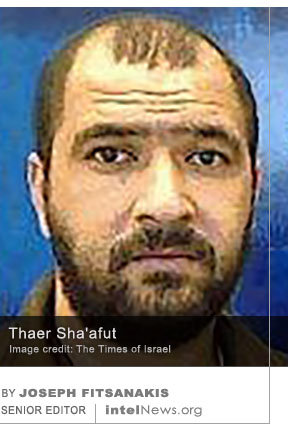 Israeli authorities announced on Thursday the arrest of a deep-cover intelligence operative who allegedly attempted to establish a base for Iranian intelligence in Israel and the West Bank, according to news reports from Israel. Shin Bet, Israel’s domestic security and counterintelligence agency, said it arrested Thaer Sha’afut (pictured), a Jordanian national, on espionage charges. The arrest reportedly occurred in April, but was only announced this week. According to Shin Bet officials, Sha’afut was an accredited deep-cover intelligence operative for the Iranian spy services. He was allegedly was commissioned “to carry out missions that were meant to establish a network in Israel and the West Bank, which would be used for covert operations by the Iranians”.
Israeli officials said Sha’afut received instructions from his Iranian handlers to enter Israeli territory between July and August of 2018. After entering Israel, his goal was “to form business ties” in the West Bank and in Israel proper. He planned to do that, said the Shin Bet, by hiring Shiite Muslims to staff a new factory in Jordan and then use the new venture “as an anchor for future Iranian activities in Israel and the West Bank”. These activities included the eventual recruitment of “spies who would help collect intelligence for Iranian interests”, according to court documents. The Shin Bet said that Sha’afut’s handlers were two Arabic-speaking Iranian intelligence officers based in Lebanon and Syria, who went by the names Abu Sadek and Abu Jaffar. They allegedly provided Shafut with “an encrypted communication device”, which he used to arrange clandestine meetings with them throughout 2018 and 2019.
Sha’afut’s Iranian handlers allegedly planned to use him as a conduit for transferring funds to spies in the West Bank and Israel. They had told Sha’afut that Iranian intelligence would make an initial investment of $500,000 in his factory venture in Jordan and to an import-export business, in order to sustain his base of operations, with more funds to follow. Once the factory was set up, Sha’afut was expected to travel clandestinely to Iran in order to complete his training as a deep-cover case officer. Israeli daily Haaretz said on Thursday that Sha’afut was indicted earlier this month by military prosecutors in Jerusalem for “contact with an enemy country, contact with a hostile organization, and conspiracy to funnel money from an enemy entity”.
► Author: Joseph Fitsanakis | Date: 21 June 2019 | Permalink
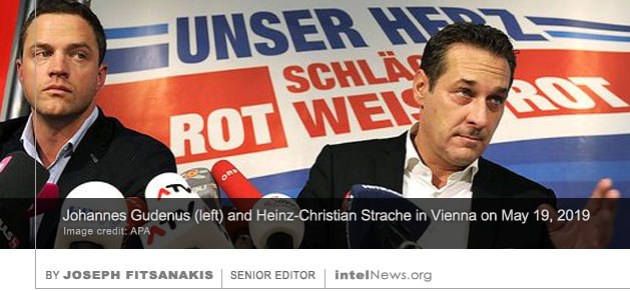 Israeli intelligence was likely behind the leaked video that brought down the far-right governing coalition in Austria on Monday, according to the former deputy director of Germany’s spy agency. The surreptitiously recorded video was
  Jonathan Pollard, an American who spied on his country for Israel in the 1980s, and is now free after spending 30 years in prison, has spoken of his frustration with the Israeli government, which it claims has forgotten about him. Pollard, a former intelligence analyst for the United States Navy, was released from an American prison in 2015, after serving a lengthy sentence for selling US government secrets to Israel. Throughout Pollard’s time in prison, the government of Israel
  The sudden decision by the United States to deploy significant firepower to the Middle East was partly in response to intelligence that was given to Washington by Israeli officials, according to a report. On Wednesday, the US announced that the USS Abraham Lincoln carrier strike group had received instructions to sail to the Middle East. The aircraft carrier is
  The government of Israel has increased to 90 years the period during which documents belonging to intelligence and security agencies can remain secret, extending it by 20 years. Until last month, government documents produced by Israeli spy agencies, such as its external spy organization, the Mossad, or its domestic security agency, the Shin Bet, could remain hidden from public view for up to 70 years. Last year, however, the administration of Prime Minister Benjamin Netanyahu commissioned a study into the possibility of extending the classification period for such documents. Israel’s Supreme Council of Archives, a body within the Israel State Archives that advises the Office of the Prime Minister on matters of classification, recommended against extending the classification period by more than five years.
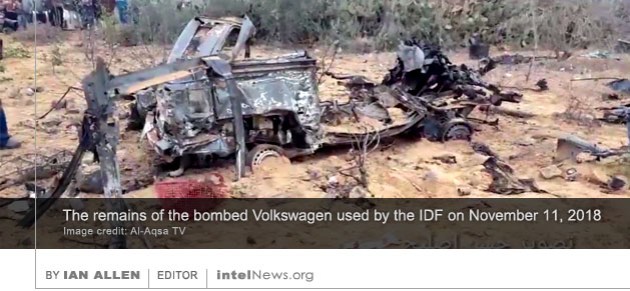 An undercover Israeli team that clashed with Hamas in Gaza on November 11 —an incident that brought the region to the brink of war— was installing an advanced surveillance system, according to Palestinian sources. Local media reports said that the Israeli undercover team —believed to be members of the Israel Defense Forces (IDF)— killed seven members of Izz ad-Din al-Qassam Brigades, the military arm of Hamas’ armed wing. The IDF troops eventually escaped into Israel with the help of air support, having lost one team member. The incident was followed by a barrage of nearly 500 rockets and mortars fired from the Gaza Strip into Israel. The Israelis responded by firing more than 160 missiles that fell throughout the Palestinian enclave. Hostilities were halted on November 13, when Hamas declared a unilateral ceasefire brokered by Egypt. The incident prompted the
 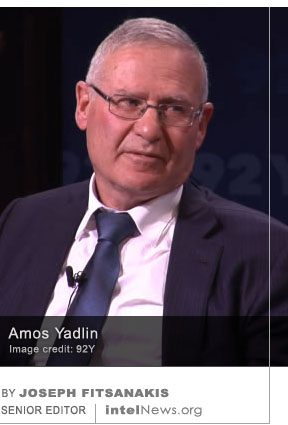 The government of Iran is smuggling parts for ballistic missiles to Lebanon, where they are secretly assembled in clandestine factories operated by the Shiite militant group Hezbollah, according to Israel’s former spy chief. For several months now, the international news agency Reuters has been
 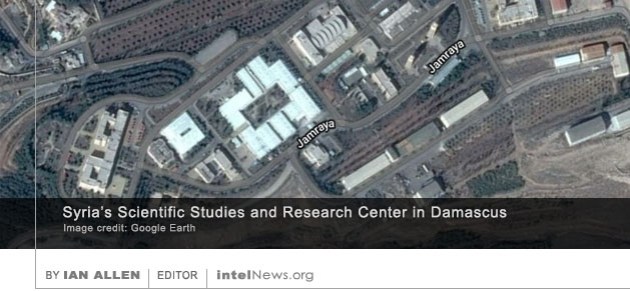 One of Syria’s leading pro-government newspapers has said that Israel was behind a bomb blast in Hama province that killed a senior scientist working for the country’s missile program. Aziz Azbar was reportedly a senior research director at the Syrian Scientific Studies and Research Center, known as CERS. The Damascus-based agency is thought to be at the center of the Syrian government’s formidable chemical weapons program. Last year, the United States Department of the Treasury imposed economic sanctions on nearly 300 CERS employees, after Washington accused them of being directly responsible for the Syrian government’s repeated use of chemical weapons against rebels and civilians. The European Union, as well as the French and British governments, also imposed sanctions on CERS and its staff.
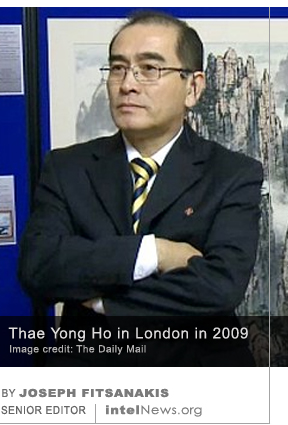 North Korea offered to stop selling missile technology to Iran and other enemies of Israel in exchange for $1 billion in cash from the Jewish state, according to former senior North Korean diplomat who has now defected. The account of the offer can be read in Password from the Third Floor, a book published earlier this year by Thae Yong Ho. Thae, a member of a prominent North Korean family, defected with his wife and children in 2016, while he was serving as a senior member of the diplomatic staff of the North Korean embassy in London.
 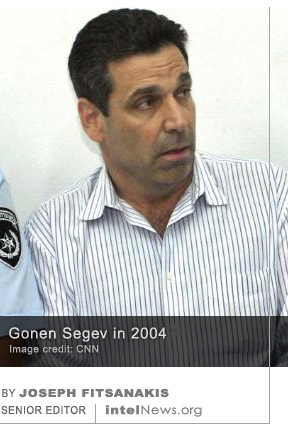 Israel has charged Gonen Segev, who served as the Jewish state’s Minister of Energy and Infrastructure, with spying for its archenemy, Iran. Segev, 62, was reportedly detained last month during a trip to Equatorial Guinea following a request by Israeli officials. He was then extradited to Israel and arrested as soon as he arrived in Tel Aviv last month, according to a statement by the Shin Bet, Israel’s domestic security service. On Monday it emerged that Israeli authorities had imposed a gag order on the case, forbidding Israeli media from reporting any information about it. The order appears to have now been lifted.
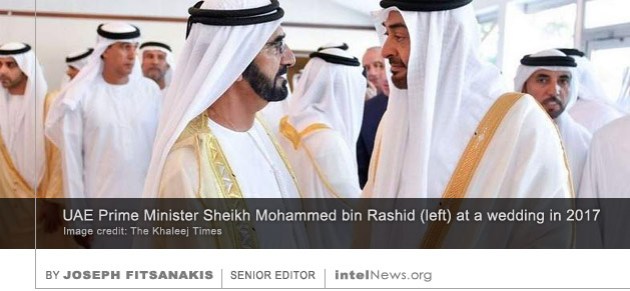 A lengthy exposé by a leading American newsmagazine has claimed that Israel and the United Arab Emirates, two countries that officially have no relations, have been secretly collaborating for more than two decades. Their secret cooperation has been extremely tight and has included clandestine weapons sales and intelligence-sharing, according to the exposé, which was published on the website of The New Yorker on Monday and will feature in the magazine’s print edition on June 18. The lengthy piece, which deals with the changing geopolitics of the Middle East, is written by Adam Entous, national security correspondent for The Washington Post, who has previously reported for more than two decades for Reuters and The Wall Street Journal.
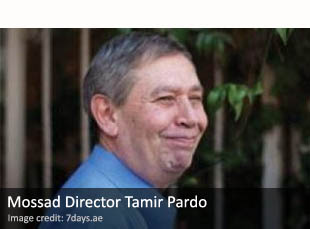 Israeli officials have denied reports that the head of the country’s internal security service was asked by the prime minister to spy on the director of the Mossad intelligence agency and the head of the military. The denials were prompted by allegations that will be made in full on Thursday, when the latest installment of the investigative news program Uvda (Fact) will be aired on Israel’s Channel 12 television channel. According to the program, the Israeli Prime Minister Benjamin Netanyahu requested that the personal phones of senior Israeli security officials, including those of the heads of the Mossad and the military, be wiretapped for security reasons.
 Militants in the Gaza Strip have accused Israel of assassinating a Palestinian engineer based in Malaysia, who was shot dead on Saturday by unknown assailants riding motorcycles. The victim has been identified as Dr. Fadi M. al-Batsh, 35, from the town of Jabalia in the Gaza Strip, a Palestinian enclave controlled by the militant group Hamas. Al-Batsh is believed to have completed undergraduate and Master’s degrees in electrical engineering at the Islamic University of Gaza. In 2011 he enrolled as a PhD student at the University of Malaya in Kuala Lumpur, from where he subsequently received his doctorate in electrical engineering. He was then employed as a lecturer by the University of Kuala Lumpur’s British Malaysian Institute. The Institute is located in the Jalan Gombak neighborhood of the Malaysian capital, where al-Batsh lived with his wife and three children. Some reports from Israel said that al-Batsh worked on drone technology and that he had authored scientific articles on the development of drone technology, as well as on the technical specifications of transmitters used to remotely control drones.






 intelNews.org
Mossad chief sees historic shift of alliances as Arab states side with Israel against Iran
July 2, 2019 by Joseph Fitsanakis 2 Comments
In his 40-minute speech Cohen said that the Mossad had identified the present time as “a rare opportunity —perhaps the first in the history of the Middle East— to reach a regional understanding that would lead to an inclusive regional peace agreement” between Israel and most of the Arab states. He justified his reasoning by claiming that many Arab states are siding with Israel to pursue “common interests [such as] the fight against rivals like Iran and jihadist terrorism”. This historic shift in alliances is happening as Israel is enjoying “close relations with the White House” and keeping open “channels of communication with the Kremlin”, said the spy chief. These factors “combine to create what might be a one-time window of opportunity” for Israel to form a strategic alliance with the majority of its Arab neighbors, said Cohen.
The Mossad chief went on to allege that the Islamic Revolutionary Guard Corps (IRGC) were behind the recent bombings of commercial oil tankers in the Persian Gulf. He told the conference that he could “say with certainty that Iran was behind these attacks” and that they were “approved by the Iranian leadership and carried out by the [IRGC]”. Cohen cited “the best sources of Israeli and Western intelligence” but did not provide specific evidence to support his allegation, which Iran denies. Later in his speech, Cohen said that the IRGC and Iranian intelligence agencies had carried out assassinations throughout Europe and had discussed further plans to attack Jewish and Israeli targets in Denmark, Azerbaijan and the North America. “And that is only the tip of the iceberg”, said Cohen, and went on to claim that the IRGC had set up a network of 300 agents in the African continent and was heavily present in Syria, mainly through its Lebanese proxy Hezbollah.
At the conclusion of his speech, the Mossad chief repeated prior warnings by Israeli officials that the Jewish state would never allow the development of an Iranian nuclear arsenal. “Mossad and the State of Israel have not signed the nuclear deal and will do all to ensure Iran will never possess a nuclear arsenal”, said Cohen.
► Author: Joseph Fitsanakis | Date: 02 July 2019 | Permalink
Filed under Expert news and commentary on intelligence, espionage, spies and spying Tagged with conferences, Herzliya Conference, Iran, Islamic Revolutionary Guard Corps, Israel, Mossad, News, Yossi Cohen