Italian spy chief’s sudden resignation described as ‘seismic development’

Elisabetta BelloniTHE SUDDEN RESIGNATION OF Italy’s spy chief last week was described by some news outlets as a “seismic development” in the domestic political scene of the Group of Seven (G7) member state. In May 2021, the  then-Prime Minister Mario Draghi appointed Elisabetta Belloni to lead the Department of Information for Security (DIS). The widely respected career diplomat thus became the first woman to lead an Italian intelligence agency.

Previously Belloni held positions in the Directorate-General for Political Affairs and Security of the Ministry of Foreign Affairs of Italy. She also served in several Italian embassies in Europe, notably Bratislava and Vienna. Belloni is commonly viewed as a career civil servant who has successfully served under various political administrations, without expressing any political preferences. Throughout her career, Belloni has refused to espouse partisan political views, which has only increased the respect with which she is viewed.

There is no known history of friction between Belloni and Giorgia Meloni, a rightwing populist who emerged as Italy’s first woman prime minister in October 2022. On the contrary, Belloni was viewed as an administrator who had gained Meloni’s trust. However, a report last week by the center-left La Repubblica newspaper claimed that Belloni detested Meloni’s constant interference in security affairs and found it difficult to truly gain the prime minister’s trust. The newspaper claimed that the spy chief tended her resignation on a phone call with the prime minister, telling close associates that she “couldn’t take it any more”.

In a subsequent interview published in the Corriere della Sera newspaper, Belloni said that “last few months of her mandate [had] been a real war of attrition”. Given the key position that Belloni held in the Italian cabinet, her sudden resignation has reignited the discussion about the phenomenon of executive overreach in Italian politics, as non-political career officials are resigning or being pushed out and are replaced by political appointees.

Meanwhile the prime minister announced last Thursday that she would appoint Vittorio Rizzi as Belloni’s successor in the DIS. A law enforcement official with a background in cybersecurity, Rizzi is currently serving as deputy director of the Internal Intelligence and Security Agency (AISI), the domestic security agency of Italy. He was appointed to that role by Meloni in September 2024.

Author: Joseph Fitsanakis | Date: 13 January 2025 | Permalink

Italy investigating suspicious cash withdrawals by Russian embassy staffers in Rome

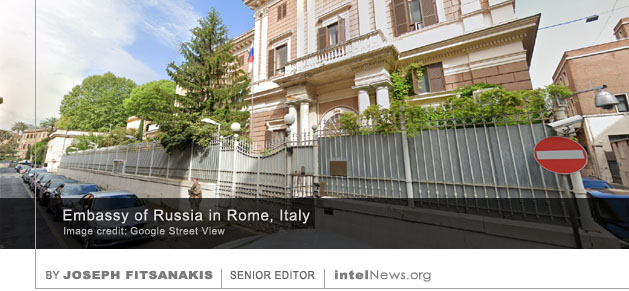
Embassy of Russia in ItalyAUTHORITIES IN ITALY ARE investigating a series of suspicious cash withdrawals that were made from accounts belonging to the Russian embassy in Rome, according to reports in the Italian press. On November 14, the Rome-based daily La Repubblica reported that the Financial Intelligence Unit (UIF) of the Bank of Italy had launched a probe to uncover out exactly who made the cash withdrawals and who the money might have gone to.

According to the Italian newspaper, Russian diplomatic personnel withdrew nearly €4 million ($4.35 million) in cash from two accounts belonging to the Russian embassy in Rome. Russian embassy staffers reportedly withdrew the €4 million on 21  separate instances, sometimes in portions amounting to €100,000 at a time. The withdrawals drew the attention of the UIF, which is now reportedly investigating the withdrawals.

La Repubblica said that UIF investigators are anchoring their probe on several hypotheses. These include the possibility that the cash withdrawals were meant to bypass the progressively stricter financial sanctions that the European Union has been imposing on Moscow. The bulk of these sanctions began shortly February 2022, when Russia launched its full-scale invasion of Ukraine. Notably, Russian embassy staffers started to withdraw the funds almost immediately after Russia’s full-scale invasion of Ukraine began.

The correlation between the Russian invasion of Ukraine and the cash withdrawals has led Italian authorities to entertain another hypothesis, namely that Rome embassy staffers have been using the cash to pay Russian intelligence personnel working without a diplomatic cover in Italy and elsewhere in Europe. A third hypothesis is that Russian intelligence personnel have been using the cash to support information operations that target European audiences. According to La Repubblica, the cash could have been used for “paying influencers to espouse the Kremlin’s cause in Italy, thus influencing public opinion”.

Author: Joseph Fitsanakis | Date: 20 November 2023 | Permalink

China arrests government worker who gave CIA ‘core information’ about military

US embassy Rome ItalyA CHINESE GOVERNMENT EMPLOYEE gave “core information” about China’s military to the United States, after he was recruited by a Central Intelligence Agency (CIA) officer in Italy, a Chinese state agency has said. The allegation was made in a statement that was issued on Friday by China’s civilian intelligence agency, the Ministry of State Security (MSS), on its WeChat social media account.
The MSS statement did not specify the period during which the alleged espionage took place. But it named the alleged spy as “Zeng” and described him as a 52-year-old “staff member of a Chinese military industrial group and an important confidential employee” of the Chinese state. According to China’s state-owned newspaper The Global Times, Zeng had been sent to Italy by his employer, presumably in order to pursue graduate studies or receive technical training. While in Italy, Zeng was allegedly accosted by an employee of the United States embassy in Rome, which the MSS identified as “Seth”.

According to the MSS, Seth was a CIA case officer, who befriended Zeng through “dinner parties, outings and trips to the opera”. The Chinese man “developed a psychological dependence” on Seth and was “indoctrinated” by him “with Western values”, the MSS statement claims. Seth eventually convinced Zeng to sign an agreement with the CIA to conduct espionage, after which the Chinese man allegedly received intelligence tradecraft training. Upon returning to China from his stay in Italy, Zeng is alleged to have carried out espionage on behalf of his CIA handlers. The MSS claims Zeng gave his CIA handlers “a great amount of core intelligence” during “multiple secret meetings” with them.

The information Zeng is alleged to have provided to the CIA concerned “key developments about China’s military” to which he had access through his employer. In exchange for this information, Zeng is accused of having received “a huge amount of [financial] compensation” by his CIA handlers. The latter also promised him that they would help his family emigrate to the United States, as per the MSS statement. The spy agency said that Zeng remains in detention while the case is under investigation. The MSS statement also warned other Chinese citizens living or traveling abroad of “the risks and perils” of recruitment by Western spy agencies.

The Reuters news agency said it contacted the United States embassy in Beijing about the MSS allegations, but received no response.

Author: Joseph Fitsanakis | Date: 14 August 2023 | Permalink

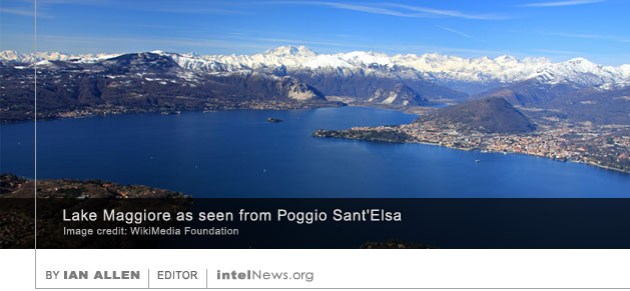
Israeli, Italian intelligence officers drown as boat capsizes in Lake Maggiore

ONE ISRAELI AND TWO Italian intelligence officers are among the victims of a boating accident in northern Italy. Local reports indicate that the incident occurred last Sunday evening, when a passenger boat named the Gooduria capsized and sank rapidly in Italian territorial waters. The boat was on a sightseeing trip near the Italian shoreline of Lake Maggiore, a popular destination situated on the southern side of the Alps between Italy and Switzerland.

It has been reported that nearly all of the approximately two dozen passengers aboard the Gooduria were current or former members of the Italian and Israeli intelligence services. These individuals were believed to have collaborated professionally as intelligence officers and had gathered for “a convivial meeting to celebrate the birthday of one of the group”, according to a statement issued by the Italian government.

It is worth noting that some Italian news outlets have expressed skepticism about the precise nature of the gathering. An article in the Italian daily Corriere della Sera suggested that “the gathering was a working meeting of intelligence agents”. Another Italian daily, La Stampa, said that the gathering was “an opportunity to exchange information between agents of the two countries”. These claims have not been confirmed by the Italian and Israeli governments.

Italian authorities have stated that no foul play is suspected in the accident. Instead, it is believed that inclement weather, possibly coupled with overcrowding onboard the Gooduria, contributed to the incident. The Ministry of Foreign Affairs of Israel released a brief statement on Sunday acknowledging the death of a retired member of the Israeli intelligence services, without identifying the victim by name or professional title. However, local media reports have identified the deceased as Shimoni Erez, 50, a recent retiree from the Mossad, Israel’s external intelligence agency.

The two Italian victims of the accident have been identified as Claudio Alonzi, 62, and Tiziana Barnobi, 53, both of whom were intelligence officers. Additionally, among the casualties was a Russian national named Anna Bozhkova, 50, who was reportedly the wife of the captain of the Gooduria. Following the capsizing of the boat, Israeli diplomats promptly arranged for the immediate evacuation of ten active Israeli intelligence officers from Italy. They were swiftly removed from regional hospitals and transported back to Israel via a military flight.

Author: Ian Allen | Date: 31 May 2023 | Permalink

New paper sheds light on Russian and Chinese influence in Italy

Russia Italy Putin ConteA NEW PAPER, PUBLISHED by the United Kingdom’s Royal United Services Institute (RUSI) for Defence and Security Studies, sheds light the complex relationship between Italy and the West’s two principal adversaries, Russia and China. Italy is a major global economic power. It is a prominent member of the Group of Seven (G7), which collectively account for more than 50 percent of global net wealth. It is also a member of the North Atlantic Treaty Organization (NATO) and the European Union (EU).
Despite —or perhaps because of— its central place in the Western alliance, Italy has long been a leading advocate for cooperation and dialogue between the West and Russia. In 2019, it became the first G7 member and the first major European Union power to sign a Memorandum of Understanding with China on Beijing’s Belt and Road Initiative. Additionally, the Italian private sector has been far more hesitant than those of other Western countries to abandon Russia following its invasion of Ukraine, with only a single Italian company having completely exited the Russian market since February of this year.

According to two Italian researchers, RUSI Senior Associate Fellow Raffaello Pantucci, and Eleonora Tafuro Ambrosetti, of the Italian Institute for International Political Studies (ISPI), Italy’s cooperative attitude toward China and Russia has led some to accuse Rome of being a “Trojan horse in Europe”. But in their research paper published by RUSI earlier this week, Pantucci and Ambrosetti argue that the reality is far more complex, especially in the case of Italian-Russian relations. They point out that Italy has, in fact, been a leading voice in favor of the imposition of harsh sanctions on Moscow in response to its invasion of Ukraine. Currently the Italian state is actively seeking to disengage its energy-import sector from Russia.

Strategy of Engagement

The research paper, entitled “Russian and Chinese Influence in Italy”, argues that Italy’s tendency to “hedge between its close transatlantic ties and its longstanding connections with Moscow and Beijing” is not new. In fact it reflects a longstanding Italian strategy, which tends to remain relatively constant and “does not change according to the political color of the government in charge” in Rome. As a result, Italy’s relations with Russia and China “show a roughly consistent pattern” in the post-Cold War era, as Rome is largely oriented “toward engagement” with both Moscow and Beijing. Read more of this post

Kremlin spy participated in secret meeting to fund Italian separatist party

Kremlin, Russia

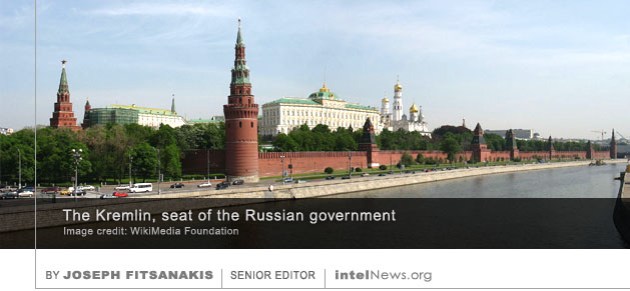
AN ALLEGED EMPLOYEE OF Russian intelligence was present during a secret meeting in Moscow, in which politicians and investors discussed a plan to fund a northern Italian separatist political party. The party, Lega Nord (Northern League, or LN) was established in 1991 as an amalgamation of northern Italian separatist groups whose members seek greater autonomy and are opposed to Italy’s membership in the European Union. Under its current leader, Matteo Salvini, the LN has adopted an hard-line anti-immigration stance and has associated itself with United Russia, the political home of Russian President Vladimir Putin.

In July of 2019, the investigative news website BuzzFeed released audio recordings of a secret meeting that allegedly took place in Moscow’s Hotel Metropol, between members of the LN and Russian emissaries of the Kremlin. The discussion reportedly concerned a plan to sell Russian oil to an Italian firm connected to the LN at a markedly discounted price, which would allow it to compete with Italy’s state-owned energy supplier and at the same time enrich the LN’s election campaign coffers by nearly $70 million.

According to an investigation by Italian authorities, participants at that meeting were Salvini’s former spokesperson, Gianluca Savoini, as well as two other Italians, who managed investment banks and were also supporters of the LN. There were also three Russian participants, including a Kremlin lawyer who works for the Russian Ministry of Energy, and a Russian former banker and tycoon with clsoe ties to President Putin. But the third Russian had not been identified. Until now.

The Italian newspaper L’Espresso, which has led the investigative reporting into the alleged scandal, reports that the Milan Prosecutor’s Office has identified the third Russian participant as Andrey Yuryevich Kharchenko, an alleged employee of Russian intelligence. The paper said that Kharchenko’s identity was supplied to the Italian government by “another Western state” that has been targeted by Russian intelligence in recent years. The investigation into the alleged scandal continues.

Author: Joseph Fitsanakis | Date: 29 June 2021 | Permalink

Flurry of diplomatic expulsions as European states respond to Russia spy allegations

Russian embassy RomaniaSEVERAL EASTERN EUROPEAN STATES announced plans to expel Russian diplomats this week, as Moscow declared an Italian diplomat persona non grata in a tit-for-tat dispute with Rome over espionage allegations. Earlier this month, the Czech Republic expelled 18 Russian diplomats in protest against an explosion that totaled a remote munition depot in the east of the country, which Prague claims was part of a Russian intelligence operation.
The explosion, which occurred in October of 2014, killed two people and destroyed a munitions storage facility belonging to the Military Technical Institute of the Czech Ministry of Defense. Czech investigators recently concluded it was perpetrated by Unit 29155, a Russian elite spy outfit that operates under the Main Directorate of the General Staff of the Russian Armed Forces, commonly known as GRU. The Kremlin responded to the expulsions of its diplomats by ordering 20 Czech diplomats to leave Russia, and condemning Prague’s move as an “unprecedented” and “a hostile act” that was designed “to please the United States”.

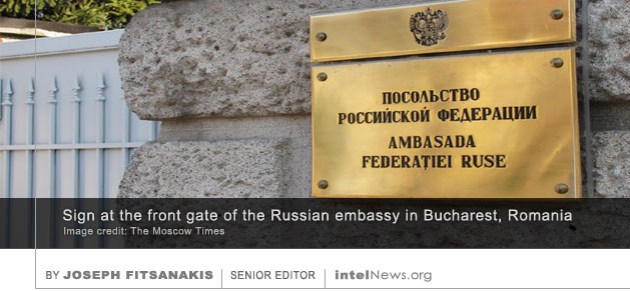
The Czechs retorted by calling their allies in the North Atlantic Treaty Organization and the European Union to “expelled officers of Russian special services” in solidarity. In recent days, five countries have answered Prague’s call. Seven Russian diplomats have been given just days to leave Slovakia, Lithuania, Latvia, Lithuania and Estonia. Meanwhile, Romania announced on Monday that it would expel Alexei Grichayev, who serves as a deputy military attaché at the Russian embassy in Bucharest. The Romanian government said Grichayev’s “activities and actions [were] contrary to the Convention of Vienna on diplomatic relations” —a phrase used to denote espionage in diplomatic parlance.

Also on Monday, the Romanian Ministry of Foreign Affairs summoned the Russian ambassador in order to file an official complaint, while Hungary, Poland and Slovakia issued a joint statement decrying what they described as “deplorable act[s] of aggression and breach of international law committed by Russia on European soil”. In a separate development, Moscow said on Monday it would expel an Italian diplomat in response to the expulsions of two Russian diplomats from its embassy in Rome last month. The two Russians were accused of recruiting an Italian Navy captain, who has been charged with spying for the Kremlin.

Author: Joseph Fitsanakis | Date: 27 April 2021 | Permalink

Wife of Italian spy for Russia says he was desperate for money due to COVID-19

Embassy of Russia in Italy

THE WIFE OF AN ITALIAN Navy captain, who is facing espionage charges for allegedly selling classified documents to Russia, has claimed that he resorted to spying after facing bankruptcy due to the COVID-19 pandemic. Meanwhile, Italian Foreign Affairs Minister Luigi Di Maio described the case on Wednesday as “an extremely grave matter […] tied to spying and state security”.

The Navy captain has been named as Walter Biot, 54, who served in the National Security Policy Department of the Italian Ministry of Defense. His job duties included advising military and civilian officials on formulating national security policy in coordination with Italy’s North Atlantic Treaty Organization (NATO) partners. He was reportedly arrested late on Tuesday evening at a car park in Rome, alongside two members of the Russian embassy in the Italian capital.

Reports in the Italian media said Biot was caught as he was handing the Russians documents and a memory card containing classified data, for which he received €5,000 (approximately $6,000) in cash. Italian authorities said on Thursday that the material Biot handed over to the Russians included 181 photos of secret and top-secret documents belonging to the Italian government, as well as 47 classified documents belonging to NATO.

On Thursday, Biot’s legal team told Italian media that their client was a father of four, and that his income was insufficient to provide for one of his children, who was “seriously ill and needed special care”. Biot’s wife, Claudia Carbonara, said in an interview that her husband committed espionage in order to supplement the family’s €3,000 ($3,500) income, which had been reduced significantly in recent months due to the coronavirus pandemic. According to his lawyers, Biot reportedly said that he “made a mistake but I did it for my family [during] a moment of great weakness and fragility”.

Meanwhile, the two Russian diplomats who were arrested alongside Biot have been identified as Dmitry Ostroukhov and Alexei Nemudrov. They reportedly served in the office of the military attaché at the Russian embassy in Rome. Both have been expelled from the country. Russia has threatened to retaliate in the coming days, possibly by expelling a number of Italian diplomats from Moscow.

Author: Joseph Fitsanakis | Date: 02 April 2021 | Permalink

Austria expels alleged assassin accused of working for Turkish government

Berivan AslanAUSTRIAN AUTHORITIES HAVE REPORTEDLY expelled from the country an Italian citizen of Turkish origin, who was allegedly hired by the Turkish government as an assassin. The man, Feyyaz Öztürk, 53, reportedly turned himself in to Austrian intelligence last year. According to the British press, Öztürk claimed he had been hired by the Turkish government to assassinate Berivan Aslan (pictured). Aslan, who is of Kurdish heritage, is a Viennese parliamentarian and a leading critic of Turkey’s treatment of its minority Kurdish population.
News reports claimed Öztürk’s mission was to terrorize members of the Kurdish expatriate community in Austria and elsewhere in Europe, who tend to be vocal critics of the Turkish government’s human rights record. British newspaper The Telegraph claimed that Öztürk had been tasked by Ankara to “ensure [Aslan] was hurt or died”, so that “other politicians get the message”. Öztürk also claimed that Turkish intelligence officials had blackmailed him in order to force him to carry out Alsan’s assassination. Moreover, he had been asked to kill two more Austrian public figures who are of Kurdish origin.

However, Öztürk reportedly aborted the assassination operation in March of last year, after he broke his leg in an accident during a trip to the northern Italian city of Rimini. Austrian prosecutors confirmed that an official investigation on Öztürk had concluded. It found that he had carried out “military espionage on behalf of a foreign state”, but did it not identify the state. Turkey has strongly denied that its intelligence agencies have any connection with Öztürk.

Öztürk’s espionage trial has been scheduled for February 4. However, according to Austrian law, he cannot be held in pre-trial detention and must be freed prior to his day in court. Rather than allow him freedom of movement inside Austria, the authorities decided to expel him to Italy. Öztürk’s lawyer said yesterday that her client had been designated “an imminent danger to public security” and taken to the Italian border shortly before Christmas.

The lawyer added that Öztürk wishes to return to Austria to attend his trial in February. There are suspicions among intelligence observers that the Austrian state would prefer Öztürk not to return to Austria, so as to avoid exposing espionage methods and sources in court. Meanwhile, Aslan said she remains under police protection, which was initially extended to her last year, when the alleged assassination plot against her became known.

Author: Ian Allen | Date: 13 January 2021 | Permalink

North Korea’s missing ambassador may be most senior defector since 1997

Jo Song-gil

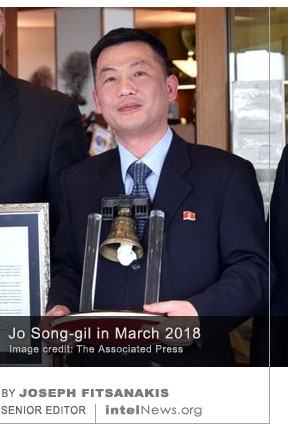
North Korea’s ambassador to Italy, who disappeared without trace in 2018, is believed to have resettled in South Korea. If true, this would make him the most senior official to defect from North Korea in over 20 years. Jo Song-gil (pictured), 48, a career diplomat who is fluent in Italian, French and English, presented his diplomatic credentials to the Italian government in May of 2015. In October 2017 he became his country’s acting ambassador, after Italian authorities expelled Ambassador Mun Jong-nam from the country.

Jo comes from a high-ranking family of North Korean officials with a long history in the ruling Workers Party of Korea. His father is a retired diplomat and his wife’s father, Lee Do-seop, spent many years as Pyongyang’s envoy in Hong Kong and Thailand. It is believed that Jo had been permitted to take his wife and children with him to Rome, a privilege that is bestowed only to the most loyal of North Korean government official. But in November of 2018, Jo suddenly vanished along with his wife and children. The disappearance occurred a month before Jo was to be replaced as acting ambassador to Italy. At the time of Jo’s disappearance, South Korean media reported that the diplomat and his family “were in a safe place” under the protection of the Italian government, while they negotiated their defection. However, this was never confirmed.

On Tuesday of this week, a social media post by a South Korean parliamentarian claimed that Jo and his wife were living in South Korea under the protection of the government, but provided no evidence of this claim. Yesterday, this information appeared to be confirmed by another South Korean parliamentarian, Jeon Hae-cheol, who chairs the Intelligence Committee of the Korean National Assembly (South Korea’s parliament). Jeon said the North Korean diplomat had been living in South Korea since the summer of 2019. He added that Jo had arrived in South Korea after having “repeatedly expressed his wish to come to South Korea”.

This information has not been officially verified by the South Korean government. Additionally, the South Korean National Intelligence Service has not issued a statement on the matter. If this information is confirmed, it would make Jo the most senior North Korean official to have defected since 1997. That year saw the sensational defection of Hwang Jang-yop, Pyongyang’s primary theorist and the ideological architect of juche, the philosophy of self-reliance, which is North Korea’s officially sanctioned state dogma. Until his death from heart failure in April 2010, Hwang had been living in the South with around-the-clock security protection.

Some reports have suggested that Jo’s teenage daughter refused to follow her parents to South Korea and that she was “repatriated” to North Korea in February of 2019, at her own request. Her whereabouts remain unknown.

Author: Joseph Fitsanakis | Date: 08 October 2020 | Permalink

Italian police seize largest amphetamines shipment ever found, bearing ISIS markings

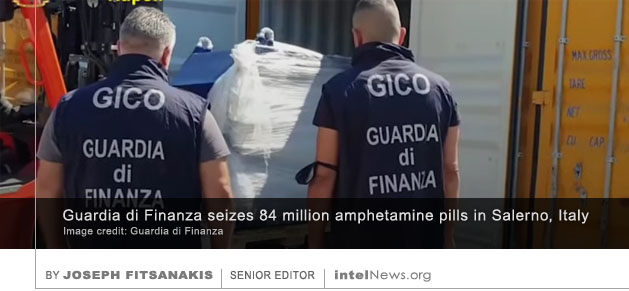
Guardia di Finanza Italian policePolice in Italy have announced the seizure of the largest shipment of amphetamines in counter-narcotics history, containing drugs believed to have been manufactured by the Islamic State in Syria. The drugs shipment  was intercepted at the port of Salerno, located south of Naples in southwestern Italy.

Italian police announced on Wednesday that it had made “the largest seizure of amphetamines in the world”, both in terms of quantity and street value. The latter is estimated at approximately $1 billion. Drug traffickers are rarely known to transport such large volumes of drugs in a single shipment, due to the risk of capture by the authorities. However, the lack of supply in Europe due to the coronavirus pandemic has prompted suppliers to take unusual risks, according to experts.

The amphetamines —approximately 84 million tablets— were found hidden inside three containers filled with paper cylinders. More pills had been placed inside the hollow parts of agricultural machinery products, according to police. The confiscated tablets are marked with the logo for the drug Captagon, which is better known by its generic name, Fenethylline. Captagon was a popular drug in the Middle East in the 1990s, and today amphetamines produced by the Islamic State bear its logo, according to the United States Drug Enforcement Administration.

The drug is regularly given to Islamic State volunteers prior to battles and terrorist attacks, in order to help reduce their inhibitions, including susceptibility to fear, and to prevent them from feeling physical pain. Security agencies in the Middle East refer to the substance as “the jihad drug”. It is particularly prevalent in Syria, which has become the global leader in the production of illicit amphetamines in the past decade.

Italian police said the shipment was most likely intended for distribution by “a consortium of criminal groups”, who would then traffic the substance to illicit markets across Europe. It would be unthinkable for a single distributor to be able to afford a $1 billion single purchase, according to officials. The largest buyer among these distributors was probably the Camorra —the organized crime syndicate based in the region of Naples. The Camorra has international links through which it can channel the illicit drugs in much larger volumes than other crime syndicates, according to experts.

Asked about the clues that led to the seizure of the amphetamines, a spokesman for the Italian police said the force knew when the shipment was coming in, due to “ongoing investigations we have with the Camorra”. He added, “we intercepted phone calls and members, so we knew what to expect”.

Author: Joseph Fitsanakis | Date: 02 July 2020 | Permalink

Former CIA officer connected with abduction of Muslim cleric flees Europe

Sabrina De SousaA former officer in the United States Central Intelligence Agency, who was convicted of involvement in the 2003 abduction of a Muslim cleric in Italy, says she fled Europe for the United States in fear of her safety. Sabrina De Sousa, 63, was a diplomat at the US consulate in Milan, Italy, when a CIA team abducted Hassan Mustafa Osama Nasr from a Milan street in broad daylight. Nasr, who goes by the nickname Abu Omar, is a former member of Egyptian militant group al-Gama’a al-Islamiyya, and was believed by the CIA to have links to al-Qaeda. Soon after his abduction, Nasr was renditioned to Egypt, where he says he was brutally tortured and raped, and held illegally for years before being released without charge.

Upon Nasr’s release from prison, Italian authorities prosecuted the CIA team that abducted him —apparently without Italy’s permission or consent. They were able to trace the American operatives through a substantial trail of evidence they left behind, including telephone records and bill invoices in luxury hotels in Milan and elsewhere. In 2009, De Sousa was among 22 CIA officers convicted in absentia in an Italian court for their alleged involvement in Nasr’s abduction. The US government has refused to extradite the 22 officers to Italy to serve prison sentences. However, those convicted are now classified as international fugitives and risk arrest by Interpol and other law enforcement agencies, upon exiting US territory.

De Sousa was arrested in Lisbon, Portugal, in 2015. Portuguese authorities threatened to extradite her to Italy, but in 2017 the Italian government partially commuted her sentence to house arrest and reduced it from seven to four years. There were reports at the time that Italy had bowed to diplomatic pressure from Washington. On Monday, however, Italian newspaper Il Corriere della Sera said that De Sousa had fled Europe and returned to the US in fear for her personal safety. The former CIA officer told the paper that she decided to return to the US after senior American officials, including CIA Director Gina Haspel and Secretary of State Mike Pompeo, visited Italy earlier this month. Pompeo traveled to Rome for an official visit on October 1, while Haspel met with senior Italian intelligence officials on October 9.

De Sousa told Il Corriere della Sera that Haspel’s visit to Italy “verified for the Italian government that the American administration had washed its hands of my situation”. For this reason, and “terrified of the consequences that I could face” in Italy, “I decided to leave”, said De Sousa. She did not elaborate on the precise connection between her partially commuted sentence and Pompeo and Haspel’s visit to Italy. She added that recent changes to the US Whistleblower Act made it possible for her to openly discuss further details on her case, but did not elaborate. Her Italian lawyer, Andrea Saccucci, spoke to the Reuters news agency and confirmed that his client had left Europe for the US.

Author: Joseph Fitsanakis | Date: 30 October 2019 | Permalink

Italy arrests Russian ex-foreign ministry official for espionage following US request

Naples International AirportItaly has arrested a Russian business executive and former foreign ministry official who is wanted by the United States for carrying out espionage against an American aviation firm. Alexander Yuryevich Korshunov, 57, who is a former official in Russia’s Ministry of Foreign Affairs, was reportedly arrested on August 30 at Naples International Airport in Italy. On Thursday, the US Department of State filed a criminal complaint against Korshunov, accusing him of trade secret theft. According to the complaint, Korshunov’s espionage benefited a Russian state-owned aviation company. He was allegedly assisted by 59-year-old Maurizio aPolo Bianchi, an Italian citizen, who remains at large.

The US government claims that the two men conspired to steal blueprints for the design of gearbox accessories used in jet engines. The company they allegedly stole the information from is GE Aviation, a company based in the US state of Ohio. Bianchi reportedly used to work for one of GE Aviation’s subsidiaries in Italy and dealt with clients from Russia and China, among other countries. But he eventually left the company and joined another firm that contracted with Aviadvigatel, a subsidiary of United Engine Corporation. The latter is a Russian-owned aerospace company that employed Korshunov. During his work for Aviadvigatel, Bianchi is accused of having employed a number of current and former employees of GE Aviation as consultants. But the work that Bianchi carried out for his new company compromised trade secrets belonging to GE Aviation, according to the US Department of Justice. Moreover, the Department claims that both Bianchi and Korshunov, who supervised Bianchi’s work on behalf of Aviadvigatel, were aware that they were exploiting trade secrets that did not belong to them.

There is no information on Bianchi’s whereabouts. If convicted, the two men face up to 10 years in prison each. On Thursday, the Russian President Vladimir Putin dismissed the charges against Korshunov as biased and said they were likely motivated by “unfair competition” practices by American companies. The Italian government has issued no public comment about Korshunov’s arrest.

Author: Joseph Fitsanakis | Date: 06 August 2019 | Permalink

Italian police find ‘combat-ready’ air-to-air missile in raids on far-right groups

Air to air missile ItalyPolice in Italy have found an air-to-air missile in “perfect working order” alongside dozens of guns during raids on homes belonging to members of far-right groups. The raids took place in several northern Italian cities and were coordinated by the Digos, a special unit of the Turin Municipal Police that deals with organized crime and terrorism. Aside from Turin, synchronized raids took place in Varese, Novara, Forli and Milan. According to reports in the Italian media, the raids were part of a large-scale investigation into an extensive network of Italian far-right groups whose members provided logistical and material support to Russian-backed separatists in southeastern Ukraine.

At least three men were arrested in connection with the raids, two of them in Forli and one in Galarate, a small town near Varese on the Italian-Swiss border. They were named as Alessandro Monti, 42, a Swiss national, and Fabio Bernardi, 51, an Italian national. A third man, Fabio Del Bergiolo, 50, also an Italian national, is reportedly a retired customs officer who in 2001 run for office with Forza Nuova, a neo-fascist Italian grouping. Until 2014, Forza Nuova activists were known to have close links with Svoboda, the far-right Ukrainian paramilitary group. But in the past five years, the Italian neo-fascist group’s leaders have openly sided with Ukraine’s pro-Russian rebels. Italian police reported that they found several guns in Bergiolo’s home, including nine unspecified “assault weapons” and 29 hunting rifles, as well as pistols and ammunition. But the most worrying find was an air-to-air guided missile at an airport hangar, which was placed inside a box that belonged to one of the three men. The missile is designed to be fired from an aircraft to target another aircraft. It is reportedly a Matra Super 530F, which was manufactured by France in 1980. According to the police report, it is “in perfect working order”. The most recent legal owner of the missile was the Qatar Air Force. It is not known how it ended up in the hands of the three suspects, but it is believed that they have been seeking to sell it in the black market.

The police raids took place less than two weeks after a court in Genoa sentenced three men for traveling to Russia and taking up arms alongside pro-Russian separatists in Ukraine’s Donetsk and Luhansk regions. The three men were identified in court reports as Antonio Cataldo, an Italian citizen, Olsi Krutani, from Albania, and Vladimir Vrbitchii, who is from Moldova. The three men received jail sentences ranging from 16 months to 34 months. As a reminder, last September security agencies in Eastern Europe voiced concern about the rise of far-right paramilitary groups whose members allegedly have access to increasingly heavy weaponry, including in some cases armored vehicles and tanks.

Author: Joseph Fitsanakis | Date: 16 July 2019 | Permalink

Italy rebukes France for blocking EU resolution calling for end to Libyan war

khalifa haftarSeveral European Union member states, led by Italy, have criticized France for blocking a joint resolution calling on all warring factions in Libya to cease all hostilities and return to the negotiations table. The latest round of hostilities was sparked by an all-out attack by a group calling itself the Libyan National Army (LNA). The commander of the LNA is Field Marshal Khalifa Haftar, an old adversary of the Libyan leader Muammar al-Gaddafi, who lived in the United States under Washington’s protection for several decades. In 2011, following an uprising that toppled Gaddafi, Haftar returned to Libya and launch a military campaign from the eastern city of Tobruk. Since that time, he has led the LNA in a war of attrition against the United Nations-backed Government of National Accord (GNA), which is based in the Libyan capital Tripoli.


Last week, Haftar launched an all-out attack to defeat the GNA and take Tripoli —a move that many observers have been expecting for several months. With the LNA receiving substantial military assistance from Israel, Saudi Arabia, and the United Arab Emirates, among other countries, most observers expected that Haftar would be the ruler of Tripoli within days. But his troops were unexpectedly pushed back by GNA troops on Monday, and have been unable to enter Tripoli from the south, as was their initial plan. Meanwhile the EU attempted on Wednesday to issue a joint statement calling on all warring sides to put down their weapons and enter into negotiations. But France blocked the draft statement, prompting heavy criticism.

On Thursday, Italy’s Deputy Prime Minister Matteo Salvini criticized France for blocking the EU statement “for economic and commercial reasons” and warned that he would “not stand by and watch” France continue to support “a party that is fighting” in the Libyan Civil War. Salvini expressed the view that the North Atlantic Treaty Organization’s military intervention in Libya in 2011, which was strongly supported by France, was “triggered more by economic and commercial interests than by humanitarian concerns”. Unlike France, which has been a strong supporter of Haftar, Italy backs the UN-supported GNA and Libya’s legitimate Prime Minister, Fayez al-Sarraj.

In 2017, two leading international legal scholars accused Haftar of having ordered his troops to commit war crimes. Ryan Goodman, a professor and former special counsel to the general counsel of the United States Department of Defense, and Alex Whiting, a Harvard University law professor who served as an international criminal prosecutor at the International Criminal Court, said that in September of 2015, Haftar openly urged his troops to “to take no prisoners” in battle. The Libyan warlord denies these charges against him.

Author: Joseph Fitsanakis | Date: 12 April 2019 | Permalink