North Korean ambassador to Rome missing since November, says Seoul

Jo Song-gilThe acting ambassador of North Korea to Italy has been missing for two months and there are reports that he may be under the protection of a Western country. Jo Song-gil (pictured), 48, a career diplomat who is fluent in Italian, French and English, presented his diplomatic credentials to the Italian government in May of 2015. In October 2017, he became his country’s acting ambassador after Italian authorities expelled Ambassador Mun Jong-nam from the country. The expulsion came in response to North Korea’s nuclear test in September of that year, when Pyongyang announced the detonation of a hydrogen bomb that could be loaded onto an intercontinental ballistic missile.

Jo is believed to be from a high-ranking family of officials and diplomats with a long history in the ruling Workers Party of Korea. His father is a retired diplomat and his wife’s father, Lee Do-seop, spent many years as Pyongyang’s envoy in Hong Kong and Thailand. It is believed that Jo had been permitted to take his wife and children with him to Rome, a privilege that is bestowed only to the most loyal of North Korean government official. Sources in the Italian government were quoted by British media on Thursday saying that Pyongyang had notified Italy’s Ministry of Foreign Affairs in October that Jo would be replaced in December. On Thursday, however, Kim Min-ki, a South Korean member of parliament, told reporters in Seoul that Jo had been missing since November. Kim added that he and a group of other parliamentarians had been briefed on the mater by officials from the National Intelligence Service, South Korean’s primary external intelligence agency. He went on to say that Jo’s wife and children were believed to have vanished with him and that South Korean authorities had not made contact with them since their disappearance.

Meanwhile, South Korean press reports stated on Thursday that Jo and his family “were in a safe place” under the protection of the Italian government, while they negotiated their defection. But Italian officials told the BBC that the Ministry of Foreign Affairs had “no record of an asylum request made by Jo” or other members of his family. Citing an anonymous “diplomatic source”, the Seoul-based JoongAng Ilbo said that the former ambassador and his wife were in the process of negotiating their defection to a Western country, along with an offer of political asylum. The paper did not name the country, but said that the missing family did not intend to remain in Italy. IntelNews regulars will recall the last defection of a senior North Korean diplomat in August 2016, when Thae Yong-ho, second-in-command at the North Korean embassy in London, defected to South Korea with his family.

Author: Joseph Fitsanakis | Date: 04 January 2019 | Permalink

Italian mafia may be supplying weapons to ISIS, say investigators

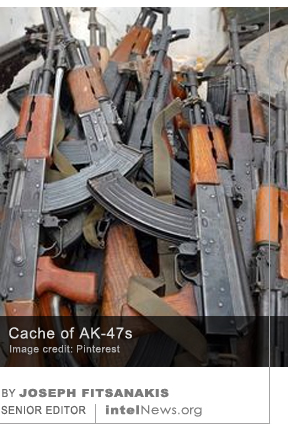
AK-47Organized criminal groups in southern Italy may be supplying assault weapons to groups and individuals that are associated with the Islamic State, according to European investigators. British newspaper The Guardian said last week that security officials in Italy, Britain, and elsewhere in Europe have traced weapons used by Islamists to at least one arms cache that entered the European black market through a Sicilian crime family with links to the mafia.

According to The Guardian, the initial link to the supply of weapons seems to originate with an organized criminal family in Catania, on Sicily’s eastern coast. The family, known locally as the “Ceusi”, is part of the “Santopaula” clan, which is the dominant criminal network in that part of Italy. Investigators have confirmed that two years ago the Ceusi family purchased a cache of 160 deactivated AK-47s from AFG Security Corporation, a Slovakia-based European weapons dealer. The purchase of the weapons, for $40,000, was legal. But the Sicilian mafia then illegally reactivated the weapons by removing the deactivating metal pins that had been inserted into the weapons’ barrels. The reactivated weapons were then supplied to the ’Ndrangheta, the Italian organized crime network that operates in the region of Calabria, in the Italian mainland. In turn, the ’Ndrangheta, which specializes in the trafficking of contraband to and from Europe, sold many of these reactivated weapons to a smuggling ring headquartered in the Egyptian port of Alexandria.

It was the Egyptian network, say investigators, that sold the AK-47s to Islamist militants in Egypt’s Sinai Peninsula, who have close connections with the Islamic State in Syria and other Islamist groups. A few of the weapons even ended up in the hands of European Islamists in France and elsewhere. Much of the intelligence regarding the AK-47s comes from telephone intercepts, said The Guaridan. But the newspaper cautioned that concrete links between the Mafia and the Islamic State have not yet been established. Nevertheless, the paper said that, according to European investigators, “organized criminals are increasingly open to trading with extremists”, and there are mounting “signs of an even closer relationship between organized criminals and Islamists” operating in North Africa and the Middle East.

Author: Joseph Fitsanakis | Date: 26 July 2016 | Permalink
Italian spy chief paid secret visit to Syria: news reports

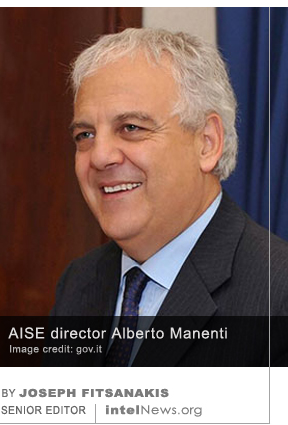
Alberto ManentiThe head of Italian intelligence paid a secret visit to Syria earlier this month, a week after his Syrian counterpart visited Rome, according to reports from the Middle East. The Dubai-based newspaper Gulf News, which first reported the alleged behind-the-scenes exchange, said the visits focused on counter-terrorism cooperation between Syria and the European Union. The paper said that the initial contact was made in late June by Major General Deeb Zeitoun, head of Syria’s General Intelligence Directorate, who paid a secret visit to Rome. General Zeitoun’s visit was allegedly in response to an official invitation issued by the Italian government. The general is believed to have stayed in a secluded private villa, which was provided by the Italian External Intelligence and Security Agency, known as AISE. He subsequently met with several Italian intelligence officials, including AISE Director, General Alberto Manenti.
A week later, Manenti secretly traveled to Syrian capital Damascus, where he stayed for several days. According to Gulf News, General Manenti met with his Syrian counterpart and other senior intelligence officials, as well as with Syrian President Bashar al-Assad. The main purpose of the secret meetings was to explore the potential for enhanced collaboration between Syria and the European Union on counter-terrorism issues. It appears that the Syrian government is willing to share intelligence on citizens of the EU who have traveled to Syria and have joined the ranks of the Islamic State, as well as other al-Qaeda-inspired groups in the country. Damascus is even willing to give EU intelligence personnel access to captured Islamist fighters that are being held in Syrian government facilities.

In return, however, the Syrians are asking that the EU enters negotiations on possibly normalizing diplomatic relations with Damascus. Contacts between the EU and Syria were severely disrupted at the outbreak of the Syrian Civil War and remain officially non-existent to this day. According to Gulf News, the Syrians told General Manenti that full intelligence cooperation in the area of counter-terrorism will ensue as soon as the EU normalizes diplomatic relations with the government in Damascus. The Italian intelligence official is believed to have told the Syrians that Rome will press the EU to move toward re-establishing relations with Damascus, in return for concrete steps taken in Syria toward “political transition” in the war-torn country.

Author: Joseph Fitsanakis | Date: 18 July 2016 | Permalink

Russian, Portuguese intelligence officers arrested in Rome on espionage charges

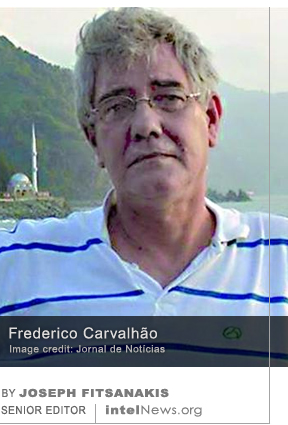
Frederico CarvalhãoTwo intelligence officers, one Russian and one Portuguese, have been arrested by Italian authorities on charges of espionage. The arrests took place in Rome on Monday by Italian police, who were reportedly accompanied by Portuguese counterintelligence officers. It is suggested in Portuguese media that the two men were arrested in the act of exchanging classified documents and money. The Portuguese intelligence officer has been identified in news reports as Frederico Carvalhão, a section chief for Portugal’s Security Information Service, which is tasked with domestic security and counterintelligence. The Russian intelligence officer has not been identified, but is believed to be an employee of Russia’s Foreign Intelligence Service, known as SVR. Interestingly, the Russian officer does not have diplomatic status and was therefore arrested, since he holds no diplomatic immunity.

A press release by the Portuguese government prosecutor said that Carvalhão had been arrested “along with a foreign subject linked to an intelligence organization” after a lengthy investigation into “concerns that [classified] information was being exchanged for money”. It is believed that Portuguese authorities began investigating Carvalhão in 2015, and now believe that he frequently traveled abroad to meet his Russian handler. He is thought to have been recruited by the Russians in 2014. According to Portuguese media reports, the documents that Carvalhão appears to have been giving the SVR contain information about the European Union and the North Atlantic Treaty Organization, of which Portugal is a member.

Carvalhão is said to have flown from Lisbon to Rome on Friday of last week in order to meet his SVR handler. The two men were meeting in a café on Saturday when they were arrested. The Portuguese government prosecutor said that Saturday’s arrests resulted from “rigorous collaboration between Portuguese and Italian authorities”. He also thanked Eurojust, a European Union agency based in the Netherlands, which focuses on cross-national judicial cooperation between European Union member-states. Security officers also raided Carvalhão’s home in Portugal, where they allegedly seized “documents and cash”. Both he and his alleged Russian hander remain in detention in Rome, while Italy is preparing to extradite them to Portugal.

Author: Joseph Fitsanakis | Date: 26 May 2016 | Permalink | News tip: C.W.

Portuguese appeals court orders extradition of ex-CIA officer to Italy

Sabrina De SousaAn appeals court in Portugal has ruled that a former officer of the Central Intelligence Agency is to be extradited to Italy, where she faces charges of helping kidnap a man as part of a secret operation sponsored by the United States government. Sabrina De Sousa, 59, was an accredited diplomat stationed at the US consulate in Milan, Italy, in 2003, when a CIA team kidnapped Hassan Mustafa Osama Nasr from a Milan street in broad daylight. Nasr, who goes by the nickname Abu Omar, is a former member of Egyptian militant group al-Gama’a al-Islamiyya, and was believed by the CIA to have links to al-Qaeda. Soon after his abduction, Nasr was renditioned to Egypt, where he says he was brutally tortured, raped, and held illegally for years before being released without charge.
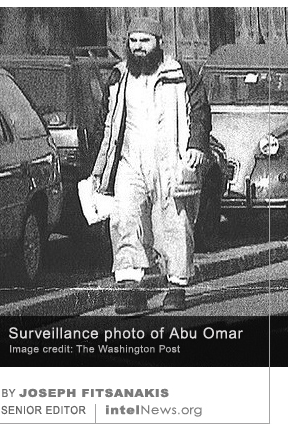
Upon Nasr’s release from prison, Italian authorities prosecuted the CIA team that abducted him. They were able to trace the American operatives through the substantial trail of evidence that they left behind, including telephone records and bill invoices in luxury hotels in Milan and elsewhere. In 2009, De Sousa was among 22 CIA officers convicted in absentia in an Italian court for their alleged involvement in Nasr’s abduction. Since the convictions were announced, the US government has not signaled a desire to extradite those convicted to Italy to serve prison sentences. However, those convicted are now classified as international fugitives and risk arrest by Interpol and other law enforcement agencies, upon exiting US territory.

De Sousa was arrested at the Portela Airport in Lisbon, Portugal, in October of last year. She spent two nights in jail before being released. However, her passport was seized by Portuguese authorities until they decided whether to extradite her to Italy to face her conviction. After a decision was made to extradite De Sousa, her lawyers filed an appeal. Last week, however, her appeal was denied, which means that she is to be extradited after May 4. It appears that De Sousa will now have to travel to Italy in order to be given official notice of her conviction, as well as the sentence, according to European legal conventions. Following that, she will probably have to return to Portugal to serve her sentence. Her lawyer said, however, that De Sousa plans to challenge her conviction at the Supreme Court of Cassation, Italy’s highest court of appeal.

Author: Joseph Fitsanakis | Date: 26 April 2016 | Permalink


European court of human rights censures Italy over CIA abduction case

Abu Omar NasrEurope’s highest human rights court has ruled against Italy in the case of an Egyptian man who was abducted from Milan in 2003 by the United States Central Intelligence Agency. Hassan Mustafa Osama Nasr, known as Abu Omar, is a former member of al-Gama’a al-Islamiyya, an Islamist group founded in the 1970s, which aimed to overthrow the Egyptian government and replace it with an Islamic regime. Members of the group have been implicated in the assassination of Egyptian President Anwar Sadat in 1981, as well as in numerous attacks on tourist facilities in Egypt in the 1990s. Once al-Gama’a al-Islamiyya was declared illegal in Egypt, Italian authorities offered Nasr political asylum, after he successfully argued that he would be subject to torture if arrested in Egypt.

But in 2003, the CIA, which believed that Nasr was involved with al-Qaeda-linked groups in Europe, abducted him from Milan in broad daylight. After his abduction, Nasr was delivered by the CIA to Egyptian authorities under Washington’s “extraordinary rendition” program. He was then imprisoned in Egypt for four years without trial. Following his release in 2008, Nasr said he was brutally tortured and raped by his Egyptian captors and was never given access to a lawyer. Regular readers of intelNews will recall that the Nasr abduction prompted international headlines after an Italian court convicted 23 Americans and two Italians for Nasr’s kidnapping. The American defendants, most of whom are believed to be CIA officers, were tried in absentia. Washington has since refused to extradite them to Italy.

On Tuesday, Italy was found guilty of human rights violations in the Nasr case by the European Court of Human Rights, the highest court of justice sanctioned by the Council of Europe. The court said that the Italian state imposed “the principle of state secrecy […] in order to ensure that those responsible [for Nasr’s abduction] did not have to answer for their actions”. Consequently, those responsible for the abduction were “ultimately […] granted immunity”, said the court, implying that the Italian executive sabotaged the Italian trial in order to allow for the alleged CIA officers to escape justice. The court also ordered Italy to pay Nasr €115,000 ($127,000) in restitution.

Author: Joseph Fitsanakis | Date: 24 February 2016 | Permalink

Portugal court rules to extradite ex-CIA officer wanted in Italy for kidnapping

Sabrina De SousaA court in Portugal has ruled to extradite a former officer of the United States Central Intelligence Agency to Italy, where she faces charges of kidnapping a man as part of a secret operation. Sabrina De Sousa, 59, was an accredited diplomat stationed at the US consulate in Milan, Italy, in 2003, when a CIA team kidnapped Hassan Mustafa Osama Nasr from a Milan street in broad daylight. Nasr, who goes by the nickname Abu Omar, is a former member of Egyptian militant group al-Gama’a al-Islamiyya, and was believed by the CIA to have links to al-Qaeda. Soon after his abduction, Nasr was renditioned to Egypt, where he says he was brutally tortured, raped, and held illegally for years before being released without charge.

Upon Nasr’s release from prison, Italian authorities prosecuted the CIA team that abducted him. They were able to trace the American operatives through the substantial trail of evidence that they left behind, including telephone records and bill invoices in luxury hotels in Milan and elsewhere. In 2009, De Sousa was among 22 CIA officers convicted in absentia in an Italian court for their alleged involvement in Nasr’s abduction. Since the convictions were announced, the US government has not signaled a desire to extradite those convicted to Italy to serve prison sentences. However, those convicted are now classified as international fugitives and risk arrest by Interpol and other law enforcement agencies, upon exiting US territory.

De Sousa was arrested at the Portela Airport in Lisbon, Portugal, in October of last year. She spent two nights in jail before being released. However, her passport was seized by Portuguese authorities until they decided whether to extradite her to Italy to face her conviction. The Reuters news agency said on Friday that De Sousa would “be surrendered to Italian authorities” so that she could be informed of the Italian court’s decision to convict her in 2009. The news agency was reportedly told by a Portuguese court official that De Sousa would have to travel to Italy in order to be given official notice of her conviction, as well as the sentence, according to European legal conventions. Following that, she would have to return to Portugal to serve her sentence. Her lawyer said, however, that De Sousa planned to challenge her conviction at the Supreme Court of Cassation, Italy’s highest court of appeal.

Author: Joseph Fitsanakis | Date: 18 January 2016 | Permalink

Portugal detains ex-CIA operative wanted for 2003 kidnapping

Sabrina De SousaA former officer in the United States Central Intelligence Agency, who is wanted by Italian authorities for her alleged role in the abduction and rendition of a suspected Islamist militant in Italy, has been arrested by police in Portugal. Sabrina De Sousa, 59, was an accredited diplomat stationed at the US consulate in Milan, Italy, when a CIA team kidnapped Hassan Mustafa Osama Nasr from a Milan street in broad daylight. Nasr, who goes by the nickname Abu Omar, is a former member of Egyptian militant group al-Gama’a al-Islamiyya, and was believed by the CIA to have links to al-Qaeda. Soon after his abduction, Nasr was renditioned to Egypt, where he says he was brutally tortured and raped, and held illegally for years before being released without charge.

Upon Nasr’s release from prison, Italian authorities prosecuted the CIA team that abducted him. They were able to trace the American operatives through the substantial trail of evidence that they left behind, including telephone records and bill invoices in luxury hotels in Milan and elsewhere. In 2009, De Sousa was among 22 CIA officers convicted in absentia in an Italian court for their alleged involvement in Nasr’s abduction. Since the convictions were announced, the US government has not signaled a desire to extradite those convicted to Italy to serve prison sentences. However, those convicted are now classified as international fugitives and risk arrest by Interpol and other law enforcement agencies, upon exiting US territory.

According to The Associated Press, Vice News and Newsweek, De Sousa was arrested at the Portela Airport in Lisbon, Portugal, on Monday. She is believed to have spent two nights in jail before being released on Wednesday. However, De Sousa’s passport was seized by Portuguese authorities, who are now trying to decide whether to extradite her to Italy to face charges for helping kidnap Nasr in 2003, and for failing to appear in court in 2009. Shortly after her conviction, De Sousa told American media that the CIA operation against Nasr in Italy “broke the law”, but had been authorized by the leadership of the CIA. The latter, she said, “abandoned and betrayed” those who carried out Nasr’s abduction, leaving them “to fend for themselves”.

In 2013, another convicted CIA operative, Robert Seldon Lady, who is believed to have been the CIA’s station chief in Milan at the time of Nasr’s kidnapping, was detained while attempting to enter Panama from Costa Rica at a remote jungle border-crossing. Costa Rican authorities said later that “a check on his passport [had] triggered an INTERPOL alert”. However, he was released a day later. According to the Panamanian foreign ministry, Lady was released because “Panama did not have an extradition treaty with Italy and because documentation sent by Italian officials was insufficient”.

Author: Joseph Fitsanakis | Date: 05 October 2015 | Permalink

Ex-KGB spy killed in London ‘warned Italy about Russian terror plot’

Alexander LitvinenkoBy JOSEPH FITSANAKIS | intelNews.org
A witness has told a British inquiry investigating the murder of ex-KGB officer Alexander Litvinenko that the former spy may have been killed because he warned Italian authorities about an impending Russian terror plot. Litvinenko was an employee of the Soviet KGB and one of its successor organizations, the FSB, until 2000, when he defected with his family to the United Kingdom. He soon became known as a vocal critic of the administration of Russian President Vladimir Putin. In 2006, Litvinenko came down with radioactive poisoning soon after meeting former KGB/FSB colleague Andrey Lugovoy at a London restaurant. Many suspect that the Russian government is behind Litvinenko’s murder.

Speaking in a London court on Monday, Italian newspaper editor and politician Paolo Guzzanti said he believed Litvinenko was murdered by the Kremlin because he was helping Italian authorities assess a series of Soviet and Russian intelligence operations in the country. Guzzanti was speaking as the former president of the so-called Mitrokhin Commission, a parliamentary board set up in 2002 to investigate past intelligence operations by the Soviet KGB in Italy. Most of the work of the Commission stemmed from the revelations in the Mitrokhin Archive, named after Vassili Mitrokhin, who for three decades was the archivist in the KGB’s First Chief Directorate. Mitrokhin defected to the Britain in 1992, taking with him a treasure trove of documents about Soviet intelligence activities that took place abroad during the Cold War.

Guzzanti told the inquiry that Litvinenko had cooperated with the Mitrokhin Committee and had even shared information with one of its consultants, Mario Scaramella, about ongoing attempts by the FSB to organize terrorist strikes in Italy. According to Guzzanti, Litvinenko informed Scaramella that Russian intelligence operatives were helping transport weapons from Ukraine to Italy in order to assassinate Guzzanti and thus sabotage the work of the Mitrokhin Committee. Based on Litvinenko’s information, Scaramella accused Alexander Talik, a Ukrainian former officer of the KGB who lived in Naples, Italy, of helping Russian intelligence operatives smuggle guns into the country. Talik and a number of his accomplices were promptly arrested by Italian authorities after they found several weapons and grenades in their possession. According to Guzzanti, Litvinenko’s role in stopping the alleged assassination attempt against him and other members of the Mitrokhin Committee was what led to the Kremlin’s decision to murder the former KGB spy.

At the end of Monday’s proceedings, the inquiry directors announced the would adjourn until the next provisional hearing, which has been scheduled for July 27.

Ex-CIA officer seeks Italian pardon for role in abduction operation

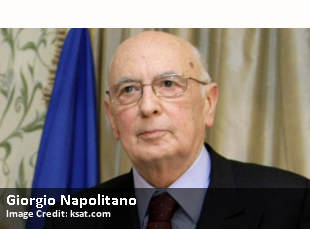
Giorgio Napolitano By JOSEPH FITSANAKIS | intelNews.org |

A former officer of the United States Central Intelligence Agency (CIA), who has been convicted in absentia in Italy for his role in an abduction operation, has contacted the Italian president seeking a formal pardon. Robert Seldon Lady was the CIA station chief in Milan in February 2003, when a team of 23 Americans, most of them CIA operatives, abducted Mustafa Osama Nasr. The CIA suspected the Egyptian-born Nasr, also known as Abu Omar, of working as a recruiter for a host of radical Islamist groups, including al-Qaeda. In 2005, Italian authorities, which had not authorized Nasr’s kidnapping, convicted Lady, along with 22 other Americans, of abduction. The convictions were delivered in absentia, as the Americans had earlier left the country. Washington has refused to extradite them to Rome. Earlier this week, Lady wrote a letter to the President of the Italian Republic, Giorgio Napolitano, saying he had never intended to “disrespect Italy’s sovereignty” and asking for the President’s “personal forgiveness and pardon”. In his letter, Lady argues that he operated “under orders from senior American officials” with the aim of protecting lives, adding that US intelligence activities had been able to “stop numerous plans and targets of terrorists operating in Milan and elsewhere in Italy”. The former CIA officer also claims that the 2003 kidnapping of Nasr had taken place “in liaison with senior members of the Italian government”. He concludes by expressing his “regret” for his “participation in any activities which could be viewed as contrary to the laws of Italy”. Read more of this post

Former CIA station chief arrested in Panama ‘has been released’

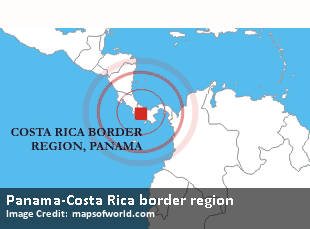
Panama-Costa Rica borderBy JOSEPH FITSANAKIS | intelNews.org |
A former station chief for the Central Intelligence Agency, who was detained in Panama last week for his alleged role in the kidnapping of a Muslim cleric in Italy, returned to the United States on Friday. The US Department of State said Robert Seldon Lady had been released by Panamanian authorities 24 hours after he was detained near Panama’s border with Costa Rica. Lady was the CIA’s station chief in Milan in February 2003, when a team of 23 Americans, most of them CIA operatives, abducted Mustafa Osama Nasr. The CIA suspected the Egyptian-born Nasr, also known as Abu Omar, of working as a recruiter for a host of radical Islamist groups, including al-Qaeda. In 2005, Italian authorities, which had not authorized Nasr’s kidnapping, convicted Lady, along with 22 other Americans, of abduction. The convictions were delivered in absentia, as the Americans had earlier left the country. Washington has refused to extradite them to Rome. Lady was crossing from Panama into Costa Rica at a remote jungle border crossing early on Thursday, when, according to Costa Rican authorities, “a check on his passport triggered an INTERPOL alert”. Following negotiations between Costa Rican and Panamanian authorities, Lady was detained by Panamanian border guards, who alerted INTERPOL and Italy. Late on Friday, State Department spokeswoman Marie Harf declined to offer details on the case, but confirmed that Lady was “either en route or back in the United States”. A Panamanian foreign ministry source told Reuters that Lady was released because “Panama does not have an extradition treaty with Italy and because documentation sent by Italian officials was insufficient”. Read more of this post

Panama arrests ex-CIA chief of station wanted by INTERPOL

Panama-Costa Rica borderBy JOSEPH FITSANAKIS | intelNews.org |

A retired 21-year veteran of the United States Central Intelligence Agency, who is wanted by INTERPOL for participating in the abduction of a Muslim cleric in Italy, has been detained by police in Panama. Robert Seldon Lady was the CIA’s station chief in Milan in 2003, when a team of 23 Americans, most of them CIA officers, abducted Mustafa Osama Nasr. The CIA suspected the Egyptian-born Nasr, known also as Abu Omar, of working as a recruiter for a host of radical Islamist groups, including al-Qaeda. On February 17, 2003, Nasr was seized in dramatic fashion by a group of CIA operatives in broad daylight in Milan. He was stuffed into an unmarked white van and eventually ended up in Egypt, where he was tortured before being released. Nasr’s case helped raise awareness of the US government’s extraordinary rendition program. Under the controversial program, suspected terrorist operatives were secretly taken to third-party countries where they were subjected to aggressive interrogation techniques. Italian authorities were irritated by Nasr’s kidnapping, which they claimed took place without the consent of the Italian government. There are also reports that the Italian intelligence services were monitoring Nasr at the time and were trying to recruit him as a source, which might explain why they were incensed when the Egyptian was snatched by the CIA without their authorization. Read more of this post

World reaction to Snowden’s spying revelations continues

Edward SnowdenBy JOSEPH FITSANAKIS | intelNews.org |
Governments around the world continue to issue sharp official reactions to the revelations of large-scale spying by the United States, as Washington attempts to minimize the diplomatic fallout from the disclosures. The President of the European Commission, Jose Manuel Barroso, told a session of the European Parliament on Tuesday that, if confirmed, the claims of US espionage against European Union institutions would be “very disturbing”. He was referring to allegations, aired last week by German newsmagazine Der Spiegel, that America spies on the communications of many of its allies, including European Union (EU) agencies, with the same intensity it spies on China and Iraq. The claims were based on documents supplied by American whistleblower Edward Snowden, a former technical expert with the Central Intelligence Agency, who is currently believed to be in Russia. Numerous EU officials have contacted the US with requests for clarification, while EU ambassadors are scheduled to hold a meeting in Brussels, Belgium, on Thursday, to discuss how to commonly respond to Der Spiegel’s revelations. Some of the strongest criticisms against US intelligence policies have been issued by German officials, as some business figures in the country are raising concerns about US economic espionage against German financial interests. Christian Social Union politician Hans Michelbach reminded participants in a German parliamentary session this week that the EU may be a political ally of the US, but “is indeed a strong competitor in the global economy”. He added that business circles in Berlin are concerned that US intelligence collection aimed at German businesses would give Washington “dishonest advantages”. In Italy, the country’s Minister of Foreign Affairs, Emma Bonino, attended a special parliamentary session on Thursday, in which she assured those present that the Italian embassy in Washington was not being spied upon by US intelligence services. She noted that Italy’s “secret services have not unearthed elements of espionage in our [Washington] embassy”. The government of India, meanwhile, expressed strong concerns on Wednesday over reports that US intelligence services have especially targeted nearly 40 diplomatic missions in Washington, including that of India. Ministry of External Affairs spokesman Syed Akbaruddin said New Delhi would “take up the issue with US authorities”. But the strongest reactions to Snowden’s revelations have come from the government of Bolivia. Read more of this post

Vatican official, intelligence operative, charged with money smuggling

VaticanBy IAN ALLEN | intelNews.org |
Three men, including a senior Vatican official and a police officer with ties to the Italian Secret Service, have been arrested on charges of plotting to smuggle millions of euros out of Switzerland. Among the men arrested by Italian police on Friday is Monsignor Nunzio Scarano, a senior accountant at the Holy See’s Institute for the Works of Religion, which is the Vatican’s highest financial institution. Along with Father Scarano, Italian authorities arrested Giovanni Maria Zito, an officer in the Arma dei carabinieri, Italy’s national military police force, who was previously detailed to the country’s domestic intelligence service, the Agenzia Informazioni e Sicurezza Interna (AISI). The third accused co-conspirator is Giovanni Carenzio, a successful securities broker based primarily in the Cayman Islands and Switzerland. All three have been charged with corruption, for plotting to smuggle nearly €20 million ($26 million) in cash, from Switzerland into Italy. According to Nello Rossi, chief prosecutor in the corruption investigation, evidence collected from targeted communications interceptions seems to indicate that the smuggled funds belonged to the d’Amico family of shipping magnates, owners of d’Amico International Shipping, which is based in Salerno, Italy. The plan, allegedly hatched last summer by the three men, was to hire a private airplane and use it to carry the €20 million in cash from Locarno, Switzerland, to Italy. The currency was to be carried in suitcases by Zito. Read more of this post

News you may have missed #762

Danni YatomBy IAN ALLEN | intelNews.org |
►►Italy postpones court decision on wanted CIA operatives. The Washington Post has published a useful update on Sabrina De Sousa, one of nearly two-dozen CIA operatives who were convicted in Italy in 2007 for the kidnapping four years earlier of Egyptian cleric Hassan Mustafa Osama Nasr. The Americans kidnapped Nasr, known as Abu Omar, from the streets of Milan without the consent of Italian authorities. The Italians, who were themselves carefully monitoring Nasr, responded by convicting all members of the CIA team in absentia, and notifying INTERPOL. But last Friday, the Supreme Court of Cassation in Rome postponed its verdict after a two-day hearing aimed at deciding whether to uphold or overturn the Americans’ convictions.
►►Ex-Mossad chief urges Israel to prepare for military action in Syria. In an interview with British news network Sky News, former Mossad Chief Danni Yatom said last week that Israel must be prepared for the possibility of military attacks on Syria, which may deteriorate into war.  He said his warning stems from the fear that Syria’s hundreds of tons of chemical weapons will fall into the hands of terrorists. “We would have to pre-empt in order to prevent it. We need to be prepared to launch even military attacks […] and military attacks mean maybe a deterioration to war”, said the former Mossad Director.
►►British spy agencies failed to predict Arab Spring. The Intelligence and Security Committee of the British Houses of Parliament has said in its annual report that British spy agencies had been surprised by the spread of unrest during the Arab Spring and failed to predict the dramatic uprisings that swept the region. The report also noted that the Arab Spring had exposed Britain’s decision to scale back intelligence assets in much of the Arab world, in favor of monitoring Iran and al-Qaeda. We at intelNews wrote about this in 2011.