Analysis: Al-Qaeda shifts strategic focus to Syria while still seeking to attack West
September 9, 2019 Leave a comment
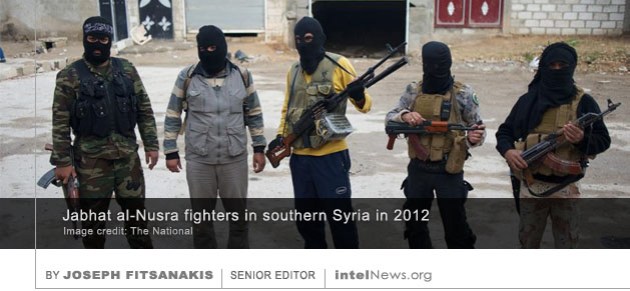 In an effort to remain relevant, al-Qaeda has shifted its strategic focus from Yemen to Syria but continues to pursue a globalist agenda by seeking ways to attack Western targets, according to an expert report. Following the meteoric rise of the Islamic State in 2014, al-Qaeda found it difficult to retain its title as the main representative of the worldwide Sunni insurgency. But in an argue published last week on the website of the RAND Corporation, two al-Qaeda experts argue that the militant group is rebounding.
The authors, Middle East Institute senior fellow Charles Listeris and RAND senior political scientist Colin Clarke, editorial that al-Qaeda followed a pragmatic and patient strategy after 2014. Specifically, the group remained on the margins and “deliberately let the Islamic State bear the brunt of the West’s counterterrorism campaign” they argue. At the same time, al-Qaeda has sought to remain relevant by shifting the center of its activity from Yemen to Syria. That decision appears to have been taken in 2014, when the group began to systematically transport assets and resources from its traditional strongholds of Afghanistan and Pakistan to the Levant, the authors argue.
Observers are still evaluating the implications of al-Qaeda’s strategic shift. Listeris and Clarke note that counterterrorism experts have yet to fully understand them. What appears certain is that al-Qaeda’s branch in Syria, the al-Nusra Front, “proved to be the most potent military actor on the battlefield” in the Levant. It did so by operating largely independently from al-Qaeda central, which allowed it to act with speed in pursuit of a strictly localized agenda that attracted many locals. At the same time, however, al-Nusra’s independence effectively separated it from its parent organization. Many al-Qaeda loyalists accused the group of abandoning al-Qaeda’s principles and left it when it rebranded itself to Jabhat Fateh al-Sham (Levantine Conquest Front) in 2016 and Hayat Tahrir al-Sham (Organization for the Liberation of the Levant) in 2017.
Al-Qaeda itself denounced Hayat Tahrir al-Sham in 2018 and today supports a number of smaller militias that operate on the ground in Syria. These smaller groups appear to be extremely professional and experienced, and are staffed by “veterans with decades of experience at al Qaeda’s highest levels”. What does this mean about al-Qaeda’s strategic priorities? Listeris and Clarke argue that Syria remains al-Qaeda’s priority. But the group remains focused on attacking the West while also pursuing guerrilla warfare in Syria, they say. This reflects al-Qaeda’s overarching narrative, namely to fight in local conflicts while pursuing the “far enemy” (the West), which it sees as a mortal enemy of Islam.
► Author: Joseph Fitsanakis | Date: 09 September 2019 | Permalink







 intelNews.org
Analysis: ISIS leader’s hideout in Turkish-controlled part of Syria raises questions
October 31, 2019 by Joseph Fitsanakis 1 Comment
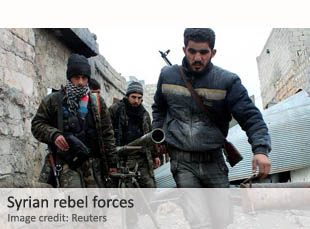
The self-proclaimed caliph of the Islamic State was found hiding in Barisha, a village in the Syrian province of Idlib, which is located just two miles from the Turkish border. The region that surrounds Barisha is under the control of Turkey and can most accurately be described as a Turkish protectorate inside Syria. The area north of Barisha has been under Turkish control since August of 2016, when Ankara launched Operation Euphrates Shield, a cross-border operation conducted by the Turkish Armed Forces in cooperation with Turkish-baked militias in Syria. In early 2018, Turkish and pro-Turkish forces extended their territorial control further south, capturing Barisha and all surrounding regions. They remain in control of the area to this day.
Turkish-occupied northern Syria is often described as a “proto-state”. It is governed by a collection of local councils of Turkmens and Arabs, with some Kurds and Yazidis also present. These councils elect representatives to the self-proclaimed Syrian Interim Government, which was formed in Turkey by Turkish-backed Syrian exiles and is currently headquartered in Azaz, an Arab-majority city of 30,000 that is under direct Turkish military control. Azaz is also the headquarters of the Turkish-backed “Free Police”, a gendarmerie-style militia that is funded, trained and equipped by the Turkish government.
In addition to the Turkish troops, the region is controlled by the Turkish-funded Syrian National Army. The 25,000 troops of the SNA —which is jokingly referred to by the locals as the “Turkish Syrian National Army”— operate completely under Turkish command. A substantial portion of the SNA’s force consists of former Islamic State fighters who switched their allegiance to the SNA once they saw the writing on the wall. Others are former members of the group that used to call itself Jabhat al-Nusra, an al-Qaeda affiliate that has become the most powerful Salafi-jihadist force in Syria after the demise of the Islamic State.
Turkish-occupied northern Syria is also the base of Ahrar al-Sham, a Salafi-jihadist group consisting of over 20,000 fighters, which is not officially aligned with al-Qaeda, but has similar goals. Since at least 2017, Ahrar al-Sham has effectively operated as a Turkish proxy militia and is in charge of dozens of check points and observation posts throughout the region. Lastly, the area is home to Hurras al-Din, yet another Salafi-jihadist group that is affiliated with al-Qaeda —though its leaders deny it. The group is able to operate in Turkish-controlled areas of Syria with suspicious ease. It was this group, Hurras al-Din, that sheltered al-Baghdadi in Barisha in return for cash.
Given Turkey’s military and political control of Idlib province, the question arises of how the world’s most high-profile terrorist leader was able to enter the region and receive protection from a militia that operates there under the watchful eye of the Turkish military. The New York Times reports that al-Baghdadi had been living in Barisha for several months before last week’s raid, and that Washington had been aware of his hideout location since the summer. Was Turkish intelligence also aware of the Islamic State leader’s whereabouts? If not, how could that be? If yes, why did it take a Kurdish spy, handled by Syrian Kurdish intelligence, to locate him and provide information to the Untited States? More importantly, what exactly is the relationship between Turkey and the al-Qaeda-linked Islamists who seem to operate freely in Idlib and provide protection to senior Islamic State officials in exchange for cash?
There are clearly more questions than answers here. If the United States is serious about combating Islamist extremism in the Middle East, it must press Ankara on these questions as a matter of urgency.
► Author: Joseph Fitsanakis | Date: 31 October 2019 | Permalink
Filed under Expert news and commentary on intelligence, espionage, spies and spying Tagged with Abu Bakr al-Baghdadi, Ahrar al-Sham, Analysis, Hurras al-Din, Islamic State, Jabhat al-Nusra, Joseph Fitsanakis, Newstex, Syria, Syrian Civil War, Turkey