Canadian judge bars Chinese PhD student from entering, citing espionage concerns

University of WaterlooIN AN UNPRECEDENTED AND potentially highly consequential decision, a judge has barred a Chinese PhD student from entering Canada over concerns he might be pressured to spy by the government of China. The case could have “ripple effects” on universities across Canada and possibly even all of North America, according to legal experts.

The central figure in the case is Yuekang Li, a citizen of China, who was accepted into the Mechanical and Mechatronics Engineering PhD program of the University of Waterloo. Li stated in his application that his goal was to return to his home country after receiving his PhD and work to “improve its public health system”. However, when Li applied for a graduate student visa, his application was denied by an officer of Immigration, Refugees and Citizenship Canada (IRCC), the government department that oversees applications for entry visas into the country.

In deeming Li inadmissible to Canada, the IRCC officer in charge of his case reportedly cited the student’s strong interest in microfluidics, a niche branch of nanotechnology with a wide range of applications in the biopharmaceutical industry. The IRCC officer also noted growing concerns in the West about the use of students and researchers as “non-traditional collectors of information” by the government in Beijing. In a number of such cases, Chinese students and researchers have been given permission by the Chinese state to work abroad with the understanding that they will deliberately collect information that will benefit China’s military-industrial complex.

Li promptly challenged the IRCC’s decision, which ended up being heard in Federal Court. Li’s legal representatives argued that the rejection of his application for a student visa relied on “an overly broad definition of espionage” and engaged in “speculation”, rather than factual evidence. But on December 22, Federal Court Chief Justice Paul Crampton sided with the IRCC.

In his decision, which was made available late last week, the judge agrees with the IRCC’s view that the graduate research Li proposed to carry out at the University of Waterloo would fall under the definition of “non-traditional espionage”. He referred to China as a “hostile actor” and cautioned that such actors “increasingly make use of non-traditional methods to obtain sensitive information in Canada or abroad, contrary to Canada’s interests”. Given that new reality, Canada’s legal understanding of what constitutes “espionage” must evolve”, Judge Crampton argues in his decision.

Author: Joseph Fitsanakis | Date: 08 January 2024 | Permalink

Alleged Islamic State informant sues Danish spy services over prison sentence

PET DenmarkA DANISH CITIZEN IS suing two Danish spy agencies, claiming that he was wrongly jailed for being a member of the Islamic State, when in fact he had been asked by his handlers to join the group as an undercover informant. The lawsuit has been brought in Copenhagen by Ahmed Samsam, a 34-year-old Danish citizen of Syrian origin. Samsam’s father, Jihad Samsam, fled to Denmark from Syria following the 1982 Hama massacre, when the Syrian military violently quelled an anti-government uprising by members of the Muslim Brotherhood.

Ahmed Samsam grew up in Copenhagen with his six siblings. He was involved in numerous criminal activities, including robbery and drugs possession. In September 2012, he traveled to from Denmark to Turkey. From there he entered Syria, intending to join the civil war on the side of the anti-government rebels. Upon returning to Denmark in December of that year, Samsam was imprisoned for a prior criminal offense. It was during his time in prison that members of the Danish Security and Intelligence Service (PET) allegedly approached him, asking him to work as an undercover informant abroad. Samsam claims that he undertook several trips to Syria as an informant between 2013 and 2015. While he was there, he claims that he spied on the Islamic State on behalf of the PET and the Danish Defense Intelligence Service (FE), which also recruited him as a spy.

Samsam eventually returned to Denmark, but in 2017 fled to Spain, allegedly to escape harassment by a rival criminal gang in Copenhagen. In June of that year, he was arrested by Spanish police near the coastal city of Malaga in southern Spain. Samsam was charged with terrorism, after police discovered several photos of himself posing with Islamic State symbols and flags on his mobile telephone. He was eventually convicted to eight years in prison, which were later reduced to six. Since 2020, Samsam has been serving his prison sentence in Denmark.

But, in a lawsuit he brought against the Danish state, Samsam claims he had engaged with Islamic State fighters in Syria at the behest of the PET and the FE, and argues that he should not be jailed for terrorism offenses. However, the Danish intelligence agencies have rejected calls to confirm or deny that Samsam had been recruited by them as an informant. Attorney Peter Biering, who represents the defendants in the case, told the court last week that forcing the intelligence agencies to identify their informants would “harm [the agencies’] ability to […] protect [their sources] and prevent terrorism”. Samsam’s attorney, Erbil Kaya, argues that the Danish state is morally obligated to admit to his client’s role as an undercover informant, even if this is formally prevented by the law of the land.

The trial is expected to conclude on September 8. Several witnesses, including government officials and investigative reporters, have been scheduled to testify in court, almost certainly behind closed doors.

Author: Joseph Fitsanakis | Date: 28 August 2023 | Permalink

Still unanswered: Trump’s motive for withholding classified documents

Trump 2016THE 49-PAGE GRAND JURY indictment, filed last week in Florida by the United States Department of Justice, contains 37 criminal charges against former president Donald Trump. The charges can be summarized into a two-fold accusation: Trump is alleged to have stolen more than 300 classified documents upon leaving the White House in January 2021. Moreover, he allegedly schemed with a group of advisors and aides in order to obstruct efforts by the government to retrieve the stolen documents. Both accusations are spelled out in stark detail in the pages of the indictment.
What remains unanswered, however, is the motive. Why did Trump allegedly take several hundred classified documents from the White House? Did he select specific documents to purloin? And, if so, why these specific documents? Lastly, why did the former president go to such pains to frustrate the government’s efforts to recover the documents? There has been intense public speculation about the answers to these questions. Yet the grand jury indictment does not appear to attempt to establish the possible motive behind the alleged crime. Nor Q Quotedoes it need to. Establishing a motive is not required in order to demonstrate the need for a trial, or indeed a conviction. Given the high stakes of this case, however, establishing a motive can provide much-needed clarity in the public sphere.
Accidental or Malicious?

It is important to clarify with precision what the grand jury indictment does not state: its pages do not contain any suggestion that Trump took possession of the classified documents in order to share them with specific individuals or entities, American or foreign. Nor does the indictment suggest that the former president intended to use the classified information in his possession for personal financial gain —for instance to promote his investment ventures at home or abroad, or to gain leverage and win over potential business partners.

So, why did Trump do it? As The New York Times explained on Sunday, the indictment does offer some hints of motives, if one reads between the lines. One possible explanation stems from Trump’s time in the White House, during which he learned to associate his access to classified information as a paramount perk that came with being president of the United States. It follows that, retaining access to classified information was a way for him to maintain control over the office of the presidency. That strong need intensified even more after January 2021, as Trump was clearly “not ready to let go of the perks of holding the highest office in the country”. Indeed, the indictment describes several examples that reveal the strong sense of ownership that the former president felt about the classified documents he kept at his private residence at Mar-a-Lago, as well as his determination to keep them in close proximity to his office and sleeping quarters.
Tertiary Motives

A plausible tertiary motive for Trump’s alleged crimes is the leverage and status that access to secrets can bestow upon an individual. It is possible that Trump viewed the classified documents as the apogee of the long list of his material prizes and trophies —as an important physical legacy of the zenith of his career. That would also explain why he allegedly fought so determinedly to keep the documents in his possession, even after he was told in no uncertain terms by the government that they did not belong to him. Moreover, as The Times notes, the former president may view his classified document collection as a way to insure his legacy —for instance as a means of rebutting critics of his policies and decisions while he was in office, or even as potential “payback against perceived enemies”.

But these motives are probably less prominent in Trump’s mind. A strong and deeply held sense of ownership of government information, no matter their classification grade, is likely the driving motive behind the alleged crimes. As The Washington Post noted in an insightful article in 2022, aides to the former president said that he appeared sincere and genuine about his conviction that the classified documents “were his, not the government’s”. When he was advised otherwise by his own aides, he noticeably “gravitated toward lawyers and advisers who indulged his more pugilistic desires”, according to the paper. His attitude was not a show. It was sincere. Moreover, there is no reason to believe that it has subsided since his indictment.

A Genuine Conviction of Ownership

Trump’s latest legal woes are rooted in his genuine belief that access to classified information is something he is owed —not simply because he served as president of the United States, but because, in his mind, he should still be in the Oval Office. These deeply entrenched beliefs are unlikely to be abandoned by the former president, regardless of the cost. More importantly, these same beliefs are passionately shared by millions of his supporters. The latter are sufficient in number to wreak havoc in the Republican Party and radically reshape American politics for years to come. If Trump avoids trial or a prison sentence, his support base will view such an outcome as a form of noble victory against the “deep state”. It is therefore likely to be energized, possibly like never before. Should Trump be jailed or seek political asylum abroad in order to evade incarceration, the American political landscape will undergo a major earthquake. Regardless of the outcome of this unprecedented saga, stormy waters seem to lie ahead.

Author: Joseph Fitsanakis | Date: 12 June 2023 | Permalink

China sentences US citizen to life for espionage following closed-door trial

Hong KongA CHINESE COURT HAS sentenced a United States passport holder to life in prison on espionage charges, following a brief closed-door trial. However, no information has been made available about the precise charges against him. Closed-door trials are frequent occurrences in Chinese courts, especially in cases relating to national security, which include charges of espionage against the state. However, life sentences are exceedingly rare for espionage cases.
The individual convicted in this case has been named in media reports as John Shing-Wan Leung, 78. He is reportedly a permanent resident of Hong Kong, a special administrative region of China, over which Beijing has near-absolute control. It is not known if Leung was a Chinese citizen at any time in his life. China does not recognize joint citizenship and requires its citizens to drop their Chinese citizenship when swearing allegiance to another country. The Reuters news agency reported on Monday that Leung was at some point a member of two American-based Chinese expatriate groups, which it described as “pro-China”. These are the United States-China Friendship Promotion Association and the United States-China Friendship Association.

Leung is believed to have been arrested in Hong Kong in 2021 by local Chinese counterintelligence officers. He has been held in prison ever since his arrest. A press release issued on Monday by the Intermediate People’s Court in Suzhou, a city located in southern Jiangsu province, 700 north of Hong Kong, said Leung had been found “guilty of espionage”. The press release added that Leung had been “sentenced to life imprisonment and deprived of [his] political rights for life”. However, the statement provided no information about Leung’s alleged crimes, or the country he was found to have spied for.

According to the BBC, the United States embassy in Beijing refused to discuss the details of this case, stating only that the United States government was aware of Leung’s conviction. An embassy spokesperson told the BBC that “the Department of State has no greater priority than the safety and security of US citizens overseas”.

Author: Joseph Fitsanakis | Date: 15 May 2023 | Permalink

Australian court releases judge’s remarks in unprecedented ‘secret prisoner’ trial

first-post-v-2AN AUSTRALIAN HIGH COURT has released the sentencing remarks in an unprecedented closed-door trial of an intelligence officer, identified only as “Witness J”, who was convicted in 2019 of a crime that cannot be revealed. The man, who is also known as “Prisoner 123458,” was given a jail sentence in November of 2019. His sentencing came following a closed-door hearing, which was described by a judge as “generally undesirable” and “unusual”. The very existence of the court case came to light only after Witness J filed a lawsuit against the jail in which he was being held, arguing that his treatment was substandard.
Witness J is believed to be in his mid-30s and to have served for many years as an intelligence officer in the Australian military, with a top secret security clearance. He is also believed to have served in Iraq, Afghanistan and East Timor with a distinguished service record. But he drew the attention of counterintelligence investigators in 2018, while undergoing a routine re-evaluation of his security clearance status. During that time he was reportedly serving as a civilian in an undisclosed country in Southeast Asia. This period, according to reports, coincided with the deterioration of Witness J’s mental health.

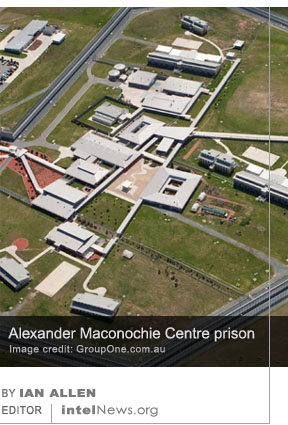
Witness J was eventually jailed in mid-May 2018 and spent a month in solitary confinement. He was then placed in a high-security wing for serious sex offenders at the Alexander Maconochie Centre prison in Canberra. This was not because he was a sex offender, but because it was determined that he would be safer there than in the other wings of the prison. In early 2019, Witness J was sentenced in a closed-door trial, which was held under the secrecy provisions of Australia’s 2004 National Security Information Act. He was released from prison 15 months into his 24-month sentence, after agreeing to plead guilty to security breaches.

Last week, the Supreme Court of the Australian Capital Territory (ACT) released the sentencing remarks of the judge in Witness J’s case, which had remained secret since November of 2019. According to ABC News, the remarks are heavily redacted in order to comply with restrictions under the National Security Information Act. The redacted document makes clear that Witness J faced a total of five charges. However, the sentencing remarks make no mention of the nature of the charges against him.

In his remarks, the judge in the case, Justice John Burns, mentions that the court had been given a report by Witness J’s doctor, which detailed his deteriorating mental state and his depression. The judge goes on to explain that he took the doctor’s report into account in sentencing Witness J. He argues, however, that despite his illness, the accused was aware of his actions and deliberately chose to conduct himself in a “grossly reckless” manner.

Author: Ian Allen | Research credit: P.C.| Date: 24 April 2023 | Permalink

United States charges Russian spy who lived in Maryland using forged identity

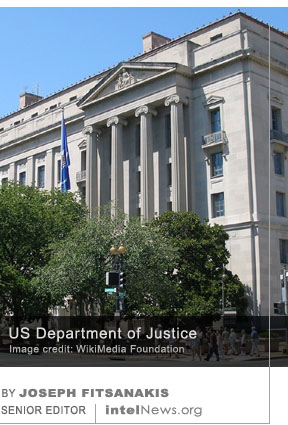
US Department of JusticeA RUSSIAN INTELLIGENCE OPERATIVE, who lived in Maryland using forged Brazilian identity documents, has been charged with espionage and other crimes by the United States Department of Justice. Victor Muller Ferreira, a Brazilian national, was stopped from entering the Netherlands in June of last year, where he had intended to join the International Criminal Court (ICC) as an intern.
Shortly after Muller was stopped at Amsterdam’s Schiphol International Airport, the Netherlands General Intelligence and Security Service (AIVD) revealed that he was in fact Sergey Vladimirovich Cherkasov, a 36-year-old Russian citizen. According to the AIVD, Cherkasov had worked for over a decade as an intelligence officer for the Main Directorate of the Russian Armed Forces’ General Staff, which is commonly known in the intelligence field as GRU.

A few days after Cherkasov returned to Brazil, a federal court in Guarulhos, a suburb of Sao Paolo, found him guilty of having used the identity of a dead Brazilian citizen to forge identity papers, which he then used to enter and leave Brazil 15 times over 10 years. The 10-year period had started in 2010, when Cherkasov had entered Brazil using his real Russian identity. But when he left the country a few months later, he did so using the forged identity that had allegedly been provided to him by Russian intelligence. Having examined the charges against Cherkasov, the court jailed him for 15 years.

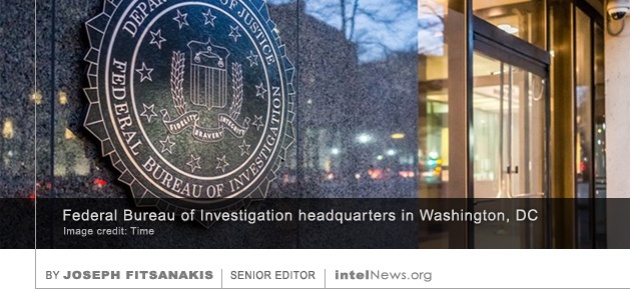
Now the United States Department of Justice has charged Cherkasov with a list of new crimes, including acting as an unregistered agent of a foreign power and repeatedly carrying out visa, bank and wire fraud. The charges resulted from an investigation that was conducted by the Federal Bureau of Investigation’s counterintelligence division, in coordination with the Bureau’s Washington Field Office.

The charges stem from the years 2018-2020, when Cherkasov used his forged Brazilian identity to enroll as Master’s student at the Johns Hopkins University’s School of Advanced International Studies. Cherkasov successfully completed his graduate degree in 2020. Two years later, he left for the Netherlands, where he hoped to enter employment in the ICC.

Author: Joseph Fitsanakis | Date: 27 March 2023 | Permalink

Separate investigations focus on ex-FBI special agent’s Russian and Albanian ties

FBIAUTHORITIES IN THE UNITED States have launched at least two separate investigations into the business dealings of Charles McGonigal, the highest-ranking former employee of the Federal Bureau of Investigation (FBI) to face criminal charges in recent times. Much has been written about McGonigal’s alleged connection with Kremlin-linked Russian billionaire Oleg Deripaska. On the contrary, relatively little is known about his purported dealings with Albanian and other Balkan officials and middlemen, some of whom appear to have intelligence links. There is also the question of whether the criminal charges against McGonigal and his alleged co-conspirator, former Soviet and Russian diplomat Sergey Shestakov, are strictly financial in nature, or may eventually expand to include an espionage angle.
McGonigal, 54, retired in 2018 after a 22-year career at the FBI, during which he served as head of counterintelligence in New York, home of one of the Bureau’s largest field offices. He was arrested on Saturday in New York, upon returning to the United States from a trip to Sri Lanka. He faces charges of conspiring with Shestakov, a naturalized US citizen, to provide under-the-table services to Deripaska. The latter is among a long list of Kremlin-linked oligarchs, who have been subject to strict US sanctions since 2018. In working for Deripaska, McGonigal is accused in the state of New York of violating US government sanctions and engaging in money laundering, among five other charges.

However, the former FBI special agent is facing nine more charges in Washington, which involve illicit activities that he allegedly engaged in while still serving in the FBI. This is in contrast with his business relationship with Deripaska, which he is believed to have entered after his retirement from the Bureau. According to the indictment, McGonigal received in excess of $225,000 from an Albanian-born American businessman, who is also a former employee of Albanian intelligence. In return, McGonigal allegedly helped promote the businessman’s interests in the US and abroad. Throughout that time, McGonigal reportedly failed to disclose his alleged financial links with the businessman, as is required of all FBI employees. Read more of this post

French prosecutors seek trial in high-stakes case involving ex-spy chief

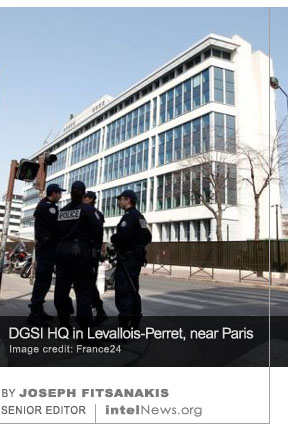
DGSI FrancePROSECUTORS IN FRANCE HAVE asked for a trial in a high-profile case involving the former head of France’s domestic intelligence agency, a former senior Paris police official and a retired appeals court judge, among others. The decade-long case has become known in France as the “Squarcini affair”, after Bernard Squarcini, who headed France’s General Directorate for Internal Security (DGSI) from 2008 to 2012.
Squarcini is a former career intelligence official, who rose through the ranks to head the Directorate of Territorial Surveillance (DST) of the French National Police. In 2008, the DST merged with the Central Directorate of General Intelligence (RG) of the French National Police, thus creating the new DGSI. Squarcini served as the first director of the DGSI until 2012, when he was dismissed by France’s socialist president, François Hollande, once the latter assumed the French presidency. It is believed that Hollande saw Squarcini as being politically aligned with Hollande’s center-right predecessor, Nicolas Sarkozy.

Upon his dismissal, Squarcini founded Kyrnos, a consulting company offering intelligence services to private-sector clients. Among Kyrnos’ largest clients was Louis Vuitton Moët Hennessy (LVMH), a Paris-based conglomerate, whose holdings include several dozen subsidiaries, among them highly prestigious brands like Louis Vuitton, Hennessy, Tiffany & Co., Christian Dior, Bulgari, and others. LVMH’s CEO and “public face” is Bernard Arnault, who is currently estimated to be the world’s richest individual by Fortune magazine.

In 2021, LVMH paid a $11.2 million fine to settle allegations that the firm hired Squarcini to acquire confidential documents relating to government investigations into several rival firms, and to spy on private individuals on behalf of LVMH. Lawyers involved in the case hailed the decision at the time as “a decisive step […] in an unparalleled case that shows how [the] intelligence services have been used for private ends”.

But the 2021 case gave birth to a series of follow-up investigations, once Squarcini’s list of surveillance targets became known. Among those targets was Francois Ruffin, a leftwing labor activist and documentary producer, who was investigating LVMH’s financial dealings for a film he was producing. Squarcini is a leading suspect in this new round of investigations, as are other former senior government officials, including a senior officer in the French National Police and a former appeals court judge.

The accused face a host of charges, among them conspiracy to defraud clients, receiving payments by private firms to influence government policies, and breaching secrecy and professional codes associated with being a civil servant. Now the French news agency Agence France Presse reports that the team of prosecutors in charge of this new round of investigations have asked the presiding judges to order a trial of the suspects. This means that the prosecutors believe they have amassed enough evidence to convict the suspects of the charges levied against them.

Author: Joseph Fitsanakis | Date: 06 January 2023 | Permalink

Lawyers of alleged Venezuelan coup mastermind claim CIA knew about his activities

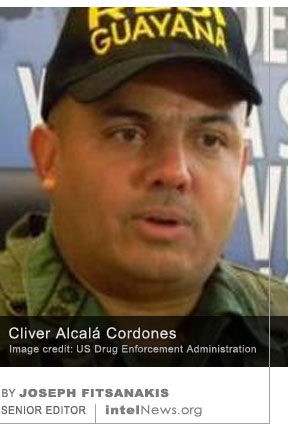
Cliver Alcala CordonesLAWYERS FOR A FORMER Venezuelan military officer, who tried to topple President Nicolás Maduro in 2020 with the help of American former soldiers, have claimed that senior officials in the United States Central Intelligence Agency were aware of his activities “at the highest levels”. The court case centers on Major General Clíver Alcalá Cordones, a retired member of Venezuela’s Bolivarian Army, who is being tried in a Manhattan court. Alcalá is accused of being a member of a drug smuggling ring that worked closely with Colombian terrorist organizations to smuggle over 250 metric tons of cocaine to the US.

Prior to his arrest for drug trafficking, Alcalá had been living in Colombia since at least 2019, from where he allegedly masterminded the so-called “enfrentamiento en El Junquito” (“El Junquito raid”), or “Operación GEDEÓN”. GEDEÓN refers to a failed coup plot against Maduro, which was carried out on May 3 and 4 by a group of up to 60 armed men. It is alleged that the coup was launched from Colombia with the support of Silvercorp USA, a private security group led by Jordan Goudreau, a Canadian-born former sergeant in the US Green Berets. At least six coup plotters, who participated in the first phase of the operation, are believed to have been killed by the Venezuela military. Many more were arrested before being able to reach a network of safe houses that had allegedly been set up their supporters inside Venezuela. At least two of the arrestees, Airan Berry and Luke Denman, are American citizens and former soldiers.

On January 28, the Associated Press reported that lawyers for Alcalá have filed a letter that claims his “efforts to overthrow the Maduro regime have been well known to the United States government”. This is because these activities were “reported to the highest levels of the Central Intelligence Agency, National Security Council, and the Department of the Treasury”, according to Alcalá’s lawyers. The letter provides no details about which officials in the US government allegedly knew about Alcalá’s activities. In an accompanying document, however, the lawyers for the accused are seeking “documents and information” containing relevant communications between a number of US officials, including former Attorney General William Barr, former Secretary of State Mike Pompeo, senior White House officials, as well as the CIA station in Colombia.

According to the news agency, Alcalá’s lawyers hope that, by providing proof that the US government knew about their client’s paramilitary activities, his argument that he was not operating illegally will be bolstered. More broadly, however, the accusation raises fresh questions about what the administration of US President Donald Trump knew about the coup plot in Venezuela, which involved several American citizens. The government of the United States has consistently rejected allegations by the Venezuelan government that the coup was planned with American assistance or knowledge. The Associated Press said it contacted the CIA for comment, but received no response.

Author: Joseph Fitsanakis | Date: 31 January 2022 | Permalink

Ex-director of Danish spy agency charged with treason in ‘unprecedented’ case

Lars FindsenIN A CASE THAT observers have described as “unprecedented”, the recently dismissed director of Denmark’s external intelligence agency has been charged with committing acts of treason against the state. Lars Findsen directed the Danish Defense Intelligence Service (FE, or DDIS in English) from 2015 until his sudden dismissal in 2020. Prior to that, he directed the DDIS’ domestic counterpart, namely the Danish Security and Intelligence Service, or DSIS. As intelNews reported at the time, Findsen was dismissed from his DDIS post in August of 2020. His dismissal was announced with a brief statement by the Danish Ministry of Defense, which said simply that Findsen had been “relieved of duty for the time being”, pending an investigation.
Now it has been revealed that Findsen was among four current and former members of the DDIS and the DSIS, who were arrested last month. The Danish government made use of an obscure secrecy clause to bar the nation’s media from reporting the arrests. As a result, Findsen’s whereabouts were not known until Monday, when a court lifted the reporting ban after an early-morning closed-door hearing. Shortly afterwards, the Danish Broadcasting Corporation, Denmark’s public broadcaster, reported that Findsen was arrested on the morning of December 8, 2021, at the Copenhagen Airport.

According to the report, Findsen has been charged with acts of treason related to disclosing state secrets to Danish journalists. Back in 2020, intelNews reported that Findsen’s dismissal was likely related to a damning assessment that had been issued by the Danish Oversight Board, known as TET, which is responsible for overseeing the work of Denmark’s spy agencies. The assessment had blasted the DDIS for effectively lying about its intelligence-collection practices while in full knowledge that they were in violation of Danish privacy law. Later that year, however, Danish intelligence agencies were severely criticized, after reports surfaced that they had secretly helped the United States spy on Western countries, including France, Sweden, Germany and Holland.

The above revelation have prompted strong criticism of the Danish spy services all over Europe. But it is not known whether Findsen’s arrest is connected with any of them. Reports said last night that the other three current and former intelligence personnel who were arrested alongside Findsen had been released on bail. Findsen, however, remains in detention, and faces charges that carry a 12-year prison sentence. Speaking to reporters following his court arraignment, Findsen said he looked forward to the opportunity to dispute the charges against him, which he described as “absolutely insane”.

Author: Joseph Fitsanakis | Date: 12 January 2022 | Permalink

Spain’s former prime minister denies knowledge of high-level spy operation

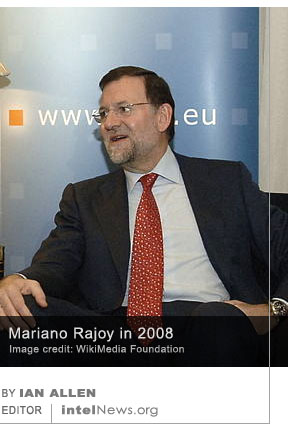
Mariano RajoySPAIN’S FORMER PRIME MINISTER, Mariano Rajoy, has denied knowledge of an alleged spy operation that prosecutors say is connected to one of the most extensive corruption scandals in Spanish political history. The alleged spy scandal relates to what is known in Spain as the Gürtel case, which centers on an extensive network of tax evasion, bribery and money laundering. The Gürtel case brought together leading business executives, criminal kingpins, and senior politicians from Rajoy’s conservative Partido Popular (PP).
In May of 2018, Spain’s highest criminal court, the Audiencia Nacional, ruled that senior PP officials had enriched themselves with kickbacks and bribes, and had laundered large sums of money with assistance from the criminal underworld. The scandal effectively brought an end to the government of Prime Minister Rajoy later that year, and has virtually annihilated the once robust electoral popularity of the PP.

In 2020, another side of the Gürtel case emerged, which became known as Operation KITCHEN. This refers to an espionage effort that targeted senator Luis Bárcenas, who also served as treasurer of the PP. It was discovered that Bárcenas had in his possession bookkeeping documents that shed light on a secret system for recording illicit bribes paid to PP administrators and senior party figures. For his implication in the Gürtel case, Bárcenas was eventually given a 33-year prison sentence, which he is currently serving.

It appears that, once senior PP executives realized that Bárcenas had these documents in his possession, and that he may share them with the authorities so as to secure a lighter prison sentence for himself, they allegedly set up an espionage operation aimed at preventing Bárcenas’ documents from ending up in the hands of the authorities.

On Monday, however, Rajoy, who served as prime minister from 2011 to 2018, claimed he had no knowledge of any espionage efforts undertaken against Bárcenas. Speaking before a parliamentary committee that is investigating Operation KITCHEN, Rajoy said he had nothing to do with the spy affair. He later told reporters: “I never had any knowledge of the existence of this operation […], so I gave instructions on something I knew nothing about? I don’t know what they [the committee] were looking for”. Rajoy also told the parliamentary committee: “I really don’t care what Mr. Bárcenas [and others implicated in the Gürtel case] might have said about me”.

The investigation into Operation KITCHEN continues.

Author: Ian Allen | Date: 14 December 2021 | Permalink

Recent conviction of Chinese spy in a US court could be game changer, say insiders

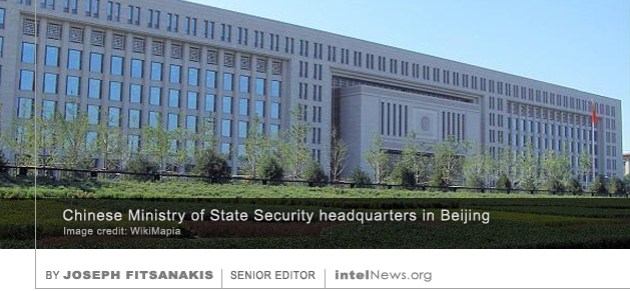
Chinese Ministry of State Security

THE RECENT CONVICTION OF a Chinese intelligence officer for espionage in a United States court could be a “seminal moment” for American counterintelligence, according to several former intelligence professionals. They spoke to The Daily Beast’s Shannon Vavra about the case of Yanjun Xu, who is also known as Qu Hui or Zhang Hui. As intelNews and others reported last month, Xu is a deputy division director in the Ministry of State Security (MSS) —China’s intelligence agency.

Xu was arrested by Belgian police in April 2018, while attempting to meet an employee of GE Aviation, a subsidiary of General Electric, whom he had allegedly tried to recruit at an academic conference in China in 2017. The Belgians extradited Xu to the United States, where he was indicted by a federal grand jury for conspiring to commit acts of economic espionage against GE Aviation. During the trial, which took place in Cincinnati, prosecutors successfully made the case that Xu’s espionage activities were part of a broader 10-year plan by the MSS to spy on aviation manufacturers around the world.

Xu’s extradition marked the first time that an employee of a Chinese intelligence agency was tried on American soil. His conviction could be a game changer, says to Bill Evanina, who was director of the United States National Counterintelligence and Security Center until earlier this year. Evanina told The Daily Beast that the case against Xu will almost certainly serve as a “legal template for future cases” by the United States government against Chinese espionage. Evanina’s view was echoed by Jim Olson, former Chief of Counterintelligence for the Central Intelligence Agency. He told The Daily Beast that Xu’s arrest, extradition and conviction “is a huge shakeup for the MSS” and its impact on how China conducts its espionage operations against the United States will be “tremendous”.

Meanwhile China has rejected all accusations against Xu. Liu Pengyu, spokesman for China’s embassy in the United States, told The Daily Beast that the charges against Xu were “pure fabrications”. He added that the Chinese state demands that Washington handles Xu’s case “according to the law and in a just manner”, so that this Chinese citizen’s “rights and interests” would be ensured.

Author: Joseph Fitsanakis | Date: 16 November 2021 | Permalink

Unusual trial of alleged Chinese state intelligence officer begins in the United States

General Electric

AN UNUSUAL TRIAL OF an alleged Chinese spy is taking place in the United States, which observers say marks the first time that an employee of a Chinese intelligence agency is being tried on American soil. The court case centers on Yanjun Xu, also known as Qu Hui or Zhang Hui. According to prosecutors, Xu is a deputy division director in the Ministry of State Security (MSS) —China’s intelligence agency.

Xu was arrested by Belgian police in April 2018 and was eventually extradited to the US. Following his extradition, he was indicted by a federal grand jury for conspiring to commit acts of economic espionage against GE Aviation, a subsidiary of General Electric, which is headquartered in the US state of Ohio. Throughout the trial, which began last week at a District Court in the city of Cincinnati, prosecutors have been making the case that Xu’s espionage activities were part of a broader plan by the MSS to spy on aviation manufacturers around the world. The alleged espionage campaign has been taking place since at least 2013, say the prosecutors.

According to the prosecutors, the purpose of the MSS’ espionage campaign is to reverse-engineer GE Aviation’s advanced gas turbine engine, which, according to one witness who testified at the trial, Beijing has been trying to steal for many years. Among other activities, Xu is accused of having tried to pay off employees of aviation contractors, in return for access to proprietary blueprints of engines and other components. In other cases, computer viruses were used in efforts to compromise secrets. In one alleged example, a project manager with French aviation manufacturer Safran testified this week that his laptop computer was infected with a malware during a 2014 business trip to China.

The trial is expected to last until the middle of November.

Author: Joseph Fitsanakis | Date: 27 October 2021 | Permalink

New Zealand judge refuses to disclose identities in rare espionage case

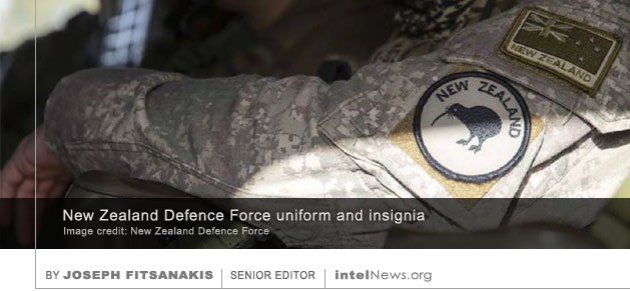
New Zealand Defence Force

A JUDGE IN NEW Zealand rejected on Monday a request by news media to lift the ban on the identity of a soldier, who was arrested nearly two years ago for allegedly spying for a foreign country. The soldier was arrested in December of 2019, and is being prosecuted under New Zealand’s 1961 Crimes Act. It is the first time in the post-Cold War era that this act has being used to prosecute someone in New Zealand.

The accused is facing a total of 17 charges, including six counts of espionage and attempted espionage, three counts of accessing a computer system for a dishonest purpose, and two counts of possessing an objectionable publication. The latter charge is believed to relate to the accused’s alleged connection with far-right and white nationalist organizations in New Zealand and possibly Australia. This claim has not been confirmed, however.

Since the arrest of the soldier, his name, as well as that of his wife and of multiple witnesses for the government, have been suppressed by the court. Importantly, the country for which the accused allegedly spied for has also been suppressed. This was done at the request of the government of New Zealand, which claims that doing otherwise could imperil “the defense and security of New Zealand”. The government also argues that naming the country for which the accused is believed to have spied could harm New Zealand’s diplomatic relations with that country.

On Monday, during a pre-trial court-martial hearing in Palmerston North, in which the suspect appeared via video-link, the chief judge in the case decided to extend the suppression of the information about the identity of those involved. The judge, Kevin Riordan, said that the name suppression would be extended at least until the next pre-trial hearing, which has not yet been scheduled. The trial was initially due to begin on October 6, but has been postponed indefinitely, due to complications arising from the use of classified evidence that the government’s lawyers intend to present during the court case.

Author: Joseph Fitsanakis | Date: 27 September 2021 | Permalink

United States reaches agreement with ex-NSA staff who helped Emirates hack targets

US Department of JusticeThree former employees of American spy agencies, who helped the United Arab Emirates hack targets around the world, including United States citizens, have agreed to cooperate with the investigation into their activities. The US Department of Justice said on Tuesday that it had reached a “deferred prosecution agreement” with the three Americans, Ryan Adams, Marc Baier and Daniel Gericke. At least two of them are believed to have worked for the US National Security Agency before transferring their skills to the private sector.

According to US government prosecutors, the three men initially worked for a US-owned private cyber firm, before being hired by another firm that is registered to the UAE, which offered them “significant increases in their salaries”. According to the book This Is How They Tell Me the World Ends, by New York Times reporter Nicole Perlroth, the UAE firm was behind Project RAVEN, a highly intrusive cyber-espionage campaign against domestic and international critics of the UAE monarchy.

As intelNews reported earlier this year, the existence of Project RAVEN was revealed by the Reuters news agency in 2019. Its extensive list of targets included foreign governments, officials of international bodies, as well as lawyers, human rights activists and suspected terrorists. Several of those targets were reportedly American citizens. Perlroth claims in her book that among Project RAVEN’s targets was former First Lady Michelle Obama.

The information released this week by the US Department of Justice details an agreement between the three defendants and the US government, according to which they are required to cooperate fully with the investigation into their activities. They are also required to pay a combined total of nearly $1.7 million to the US government as a form of restitution for violating military export-control standards. Moreover, they are banned from holding security clearances in the future, and are subject to a number of employment restrictions.

Several US news outlets described the agreement between the US government and the three defendants as the first of its kind. Meanwhile, a number of US government officials, including Bryan Vorndran, assistant director of the FBI’s Cyber Division, warned other former US government employees to not violate “export-controlled information for the benefit of a foreign government or a foreign commercial company”.

Author: Joseph Fitsanakis | Date: 16 September 2021 | Permalink