Mossad had prior knowledge of Six-Day War plans, says Israeli ex-spy chief
October 17, 2016 4 Comments
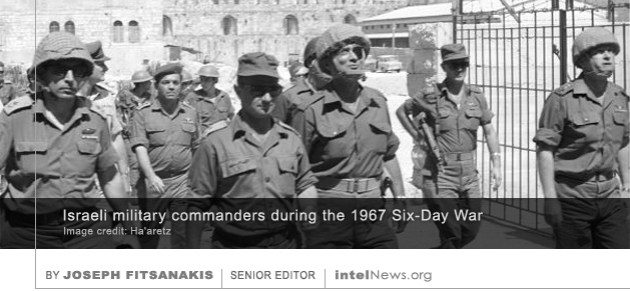 Israel’s intelligence services had access to recordings of secret talks between Arab heads of state in 1965, which helped the Jewish state win the Six-Day War, according to the former director of the country’s Military Intelligence Directorate. The brief but important conflict, which is also known as the Third Arab-Israeli War, broke out on June 5, 1967, when the Egyptian, Syrian and Jordanian armies attacked Israel. But within hours the Jewish state had managed to decimate the assailants’ air forces, and went on to deliver fatal blows to its adversaries. By the end of the war, Israel’s territory had increased threefold and Israeli troops were in control of the West Bank, the Gaza Strip and the Sinai Peninsula, among other areas.
But according to Major General Shlomo Gazit, who directed Israel’s Military Intelligence Directorate in the 1970s, Israel’s victory was sealed in September 1965. At that time, a conference of Arab heads of state was held in Casablanca, Morocco, with the participation of senior Arab military commanders and intelligence chiefs. The centerpiece of the conference was a secret meeting where preparations were made for a war with the Jewish state. Participants discussed plans for setting up a joint Arab military command to coordinate the war and shared insights on the strength and state of readiness of their respective militaries.
Major General Gazit told the Israeli newspaper Yedioth Ahronoth that Morocco’s King Hassan II, who was mistrustful of his fellow Arab heads of state, invited the Israeli intelligence services to monitor the conference. Speaking to Yedioth Ahronoth’s military correspondent Ronen Bergman, Gazit said that a team of spies from the Mossad, Israel’s external intelligence service, and the Shin Bet, its domestic equivalent, arrived in Casablanca prior to the start of the conference. Acting on the King’s orders, Moroccan authorities designated an entire floor in the luxury hotel where the conference was held for the use of the Israelis. After the conference ended, King Hassan gave the Mossad copies of secret recordings of all closed-door meetings. These were promptly transcribed and translated into Hebrew by the Research Unit of Israel’s Military Intelligence Directorate, said Gazit.
According to the former spy chief, these transcripts produced “massive amounts of intelligence”. They were combined with other sources of information and crucially helped Israel anticipate the Six-Day War. Thanks to these recordings, said Gazit, Israel “was in full knowledge of how unprepared [the Arab forces] were for war”, especially the Egyptian forces, which were “in a terrible shape”. Israeli military commanders were thus certain that the Jewish state would prevail in an armed conflict with its Arab neighbors.
The public disclosure of the fact that the Mossad had access to the content of the secret negotiations between Arab leaders in 1965 is not new. Bergman and his fellow author Shlomo Nakdimon revealed it in a 2015 article about the broader intelligence relationship between Israel and Morocco in the 1960s and 1970s. But the latest revelation highlights the significance of the secret recordings for Israel’s military posture during the Six-Day War. Indeed, Bergman reports that, after the end of the war, Meir Amit, who was the then director of the Mossad, drafted a letter to Israel’s Prime Minster Levi Eshkol, in which he described the Casablanca operation as “one of the greatest moments of Israeli intelligence”.
► Author: Joseph Fitsanakis | Date: 17 October 2016 | Permalink
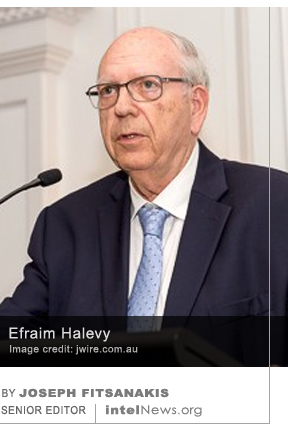 A former director of Israel’s Mossad intelligence agency has called on the Israeli government to reach out to Hamas, arguing that the Palestinian group is now ready to accept a peace settlement. Efraim Halevy directed the Mossad, Israel’s primary external intelligence agency, for five years before retiring in 2002. He is best known for helping forge a historic peace treaty between Israel and Jordan in 1994, which made the Hashemite Kingdom the second Arab country, after Egypt, to sing a peace accord with the Jewish state.
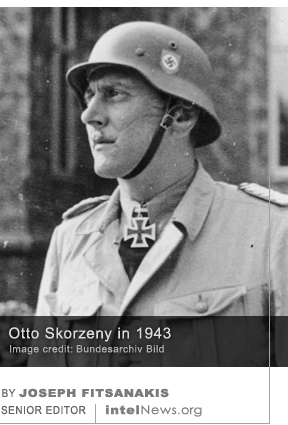 A notorious lieutenant colonel in the Waffen SS, who served in Adolf Hitler’s personal bodyguard unit, worked as a hitman for the Israeli intelligence agency Mossad after World War II, it has been revealed. Austrian-born Otto Skorzeny became known as the most ruthless special-forces commander in the Third Reich. Having joined the Austrian branch of the National Socialist German Workers’ Party at 19, at age 23 Skorzeny began serving in the Waffen SS, Nazi Germany’s conscript army that consisted largely of foreign-born fighters. In 1943, Hitler himself decorated Skorzeny with the Knight’s Cross of the Iron Cross, in recognition of his leadership in Operation EICHE, the rescue by German commandos of Italian fascist dictator Benito Mussolini, who had been imprisoned at a ski resort in the Apennine Mountains following a coup against his government.
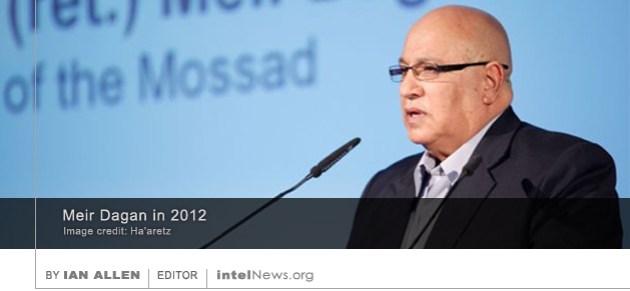 Meir Dagan, who directed the Israeli intelligence agency Mossad for a decade and emerged as a vocal critic of the Israeli government after his retirement, has died. A statement from his family said he died of liver cancer, a disease that prompted him to undergo a complex
  Authorities in a northern German town have called on the Israeli embassy in Berlin to pay for the cost of extricating a car belonging to two Israeli spies, which was stuck in a mud pit in a restricted area. According to the Hamburg-based television station NDR, the
 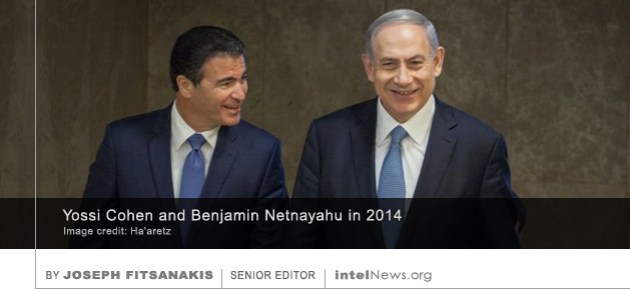 Monday brought an end to weeks of speculation in Israel, as Prime Minister Benjamin Netanyahu appointed the new director of the Mossad, the Jewish state’s national intelligence agency. At a hastily announced press conference in Jerusalem, Netanyahu
 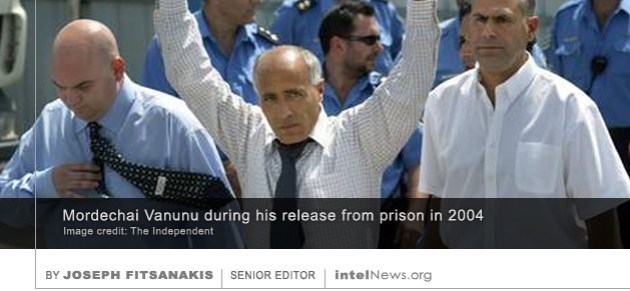 Israeli nuclear whistleblower Mordechai Vanunu, who spent 18 years in prison for revealing the existence of Israel’s nuclear program, has spoken for the first time about his 1986abduction by the Mossad in Rome. Vanunu was an employee at Israel’s top-secret Negev Nuclear Research Center, located in the desert city of Dimona, which was used to develop the country’s nuclear arsenal. But he became a fervent opponent of nuclear proliferation and in 1986 fled to the United Kingdom, where he revealed the existence of the Israeli nuclear weapons program to the The Times of London. His action was in direct violation of the non-disclosure agreement he had signed with the government of Israel; moreover, it went against Israel’s official policy of ‘nuclear ambiguity’, which means that the country refuses to confirm or deny that it maintains a nuclear weapons program.
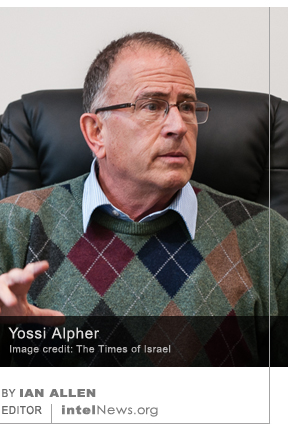 Yossi Alpher, a former Israeli intelligence officer, who was directly involved in numerous top-secret operations during his spy career, has published a new book that analyzes the overarching strategy behind Israel’s spy operations. Alpher served in Israeli Military Intelligence before joining the Mossad, where he served until 1980. Upon retiring from the Mossad, he joined Tel Aviv University’s Jaffee Center for Strategic Studies, which he eventually directed. Throughout his career in intelligence, Alpher worked or liaised with every Israeli spy agency, including the Shin Bet –the country’s internal security service.
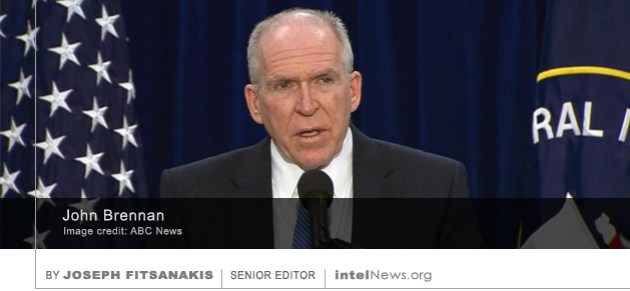 The director of the United States Central Intelligence Agency visited Israel in secret last week to discuss the Jewish state’s refusal to endorse an emerging deal with Iran over its nuclear program. Citing “two senior Israeli officials”, the Tel Aviv-based Israeli newspaper Haaretz said on Tuesday that CIA Director John Brennan arrived in Israel last Thursday. Although he was officially hosted by Tamir Pardo, director of Israeli intelligence agency Mossad, Brennan used the opportunity to hold secret meetings with several senior Israeli officials, said Haaretz. Among them were Prime Minister Benjamin Netanyahu, National Security Adviser Yossi Cohen, as well as Major General Hartzl Halevi, who heads Israel’s Military Intelligence Directorate.
 A team of officers from Israel’s Mossad intelligence agency were heading to Cyprus late yesterday to be briefed on the arrest of a dual Lebanese-Canadian citizen, who was found to be in possession of 67 thousand packages of ammonium nitrate. It is not yet clear whether the passports held by the 26-year-old man are genuine. Cypriot police said he used his Canadian passport to enter the Mediterranean island about a week ago. But he was










Hamas drone expert shot dead in Tunisia by assailants using gun silencers
December 19, 2016 by Joseph Fitsanakis Leave a comment
Zaouari was reportedly shot on Thursday in his hometown of Sfax, Tunisia’s second-largest city, located 170 miles southeast of the capital Tunis. Local media said he was shot dead at the wheel of his car, which was parked outside his home. His body was riddled with over 20 bullets, according to a police statement. On Friday, Tunisia’s Deputy Prosecutor General, Mourad Turki, said during a radio interview that several people are believed to have participated in Zaouari’s killing. Eight people had been arrested in connection with the crime, while at least two others were still at large, said Turki. All ten are believed to be Tunisian citizens. Among them is a woman, claiming to be a journalist, who has reportedly interviewed Zaouari in the past. She was allegedly arrested as she was boarding a flight from the Tunis-Carthage International Airport to the Hungarian capital Budapest. Additionally, officials from Tunisia’s Interior Ministry said that four rental vehicles had been seized in connection with Zaouari’s killing, and that two weapons equipped with silencers had been found in one of the vehicles.
A statement issued on Saturday by the Qassam Brigades, the armed wing of Hamas, said Zaouari had been a part of Hamas for a decade, and blamed his killing on the Mossad, Israel’s external intelligence agency. Hamas leaders said that Zaouari’s contribution to the organization would be celebrated during a specially designated “day of mourning”, and that his killing would be avenged. “The enemy must know the blood of the leader Zaouari will not go in vain”, said a statement issued by Hamas on Saturday. Israel has not responded to Hamas’ accusations. Tzachi Hanegbi, the Minister in the Prime Minister’s Office in charge of National Security and Foreign Affairs, said late on Saturday that Israel was “not connected” with Zaouari’s killing and added that “none of those people arrested are our allies”.
► Author: Joseph Fitsanakis | Date: 19 December 2016 | Permalink
Filed under Expert news and commentary on intelligence, espionage, spies and spying Tagged with assassinations, Hamas, Israel, Mohamed Zaouari, Mossad, News, Sfax (Tunisia), Tunisia, unmanned aerial vehicles