News you may have missed #0176

  • Hungarian Cold War double agent dies at 71. István Belovai, a former Lieutenant-Colonel in the Hungarian People’s Army Military Strategic Service (HPAMSS), who secretly began working for the US in 1984, has died in Denver, Colorado. Belovai revealed to the CIA details of the so-called Conrad spy ring. He was arrested by Hungarian security agents in 1985 and fled to the US upon his release from prison, in 1991, after being warned that his life was in danger.
  • US military spies to train Iraqi counterparts. The 201st Battlefield Support Battalion is training Iraqis on how to “coordinate spying from human sources, intercept cell phone and other electronic messages, do counterintelligence work, manage linguists, and monitor and target enemy positions, among other specialized tasks”.
  • Swiss secret service chief calls for more spies. Markus Seiler, the head of the new Swiss Federal Intelligence Service, which combines the country’s foreign and domestic intelligence services, has called Switzerland “a stomping ground for secret services”, and has called for more counterintelligence personnel. He has also said that the intelligence services plan a greater presence in Swiss embassies around the world.

Bookmark and Share

US Looks Away from Worsening Philippines Rights Record

Lumbera

Lumbera

By JOSEPH FITSANAKIS and IAN ALLEN | intelNews.org |
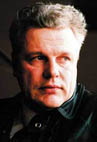
Just days after Filipino prizewinning poet and dramatist Bienvenido Lumbera caught a Naval Intelligence Security Force agent spying on him outside his home, another Filipino intellectual has come forward with allegations of government spying. Pedro “Jun” Cruz Reyes, professor of creative writing at the University of the Philippines in Diliman, Quezon City, said he has been the subject of surveillance investigations by government agents since 2006. Such incidents are not a new phenomenon in the Philippines. In 2005, the US State Department noted in its annual human rights report that the Philippines National Police was the country’s “worst abuser of human rights” and that government security elements often “sanction extrajudicial killings and vigilantism”. However, the report adds that these practices are utilized “as expedient means of fighting crime and terrorism”, which may explain why no discernable action has been taken by US authorities to prevent them. In an article published today in The Foreign Policy Journal we examine the recent record of US-Philippine relations. Continue reading at The Foreign Policy Journal

Bookmark and Share

US moves to shield operatives in CIA abduction case

Hassan Nasr

Hassan Nasr

By JOSEPH FITSANAKIS | intelNews.org |
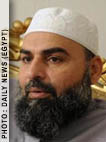
The US government has moved to officially prevent Italian authorities from prosecuting an American Colonel who in 2003 was involved in the illegal kidnapping of a Muslim cleric in Milan. If the Reuters report is accurate, it will be the first time that Washington moves officially to shield its covert operatives from prosecution in the Italian court system. Colonel Joseph Romano is one of 26 Americans, many of them CIA agents, believed to have been involved in the daylight abduction of Hassan Mustafa Osama Nasr from a Milan street. Nasr, who is also known as Abu Omar, says he was brutally tortured and held illegally for years without charge in Egypt, where he was renditioned by his American abductors. Read more of this post

News you may have missed #0095

  • New revelations about Bulgarian domestic spying case. It appears that Operation GALLERY (a.k.a. Operation GALERIA), by the Bulgarian State Agency for National Security (DANS), was primarily aimed at the Bulgarian tabloid newspaper Weekend and journalist Dimitar Zlatkov. Journalist Ognyan Stefanov, who was nearly beaten to death after authoring an article implicating DANS officials in illicit trafficking activities (see previous intelNews coverage), appears to have been simply collateral damage.
  • Taliban use CIA-supplied mines against US-led forces in Afghanistan. Evidence from the US Defense Department, Canadian forces in Afghanistan and the Taliban itself suggest that the increased damage to NATO tanks by Taliban forces has come from anti-tank mines provided by the US to the jihadi movement in Afghanistan in the 1980s.
  • Massive domestic spying revealed in Russia. From January to June this year, Russian intelligence agents surreptitiously opened 115,000 letters, listened in on 64,000 personal phone conversations, and broke into 11,000 private homes according to information from Russia’s Supreme Court.

Bookmark and Share

Swedish NATO troops covertly approached on Facebook

By IAN ALLEN | intelNews.org |
Members of Sweden’s armed forces serving with NATO’s International Security Assistance Force in Afghanistan have been systematically approached via online networking application Facebook, and asked to provide details on NATO’s military presence in the country. According to Sweden’s Dagens Nyheter newspaper, several such incidents have occurred in recent weeks, leading Swedish intelligence officials to the conclusion that the online courting is part of a wider intelligence operation directed against NATO. The incidents have been confirmed by Mårten Wallén, who heads the Information Security Unit of Sweden’s Military Intelligence and Security Service (MUST). Read more of this post

Canada aggressively infiltrated by spies, claims new report

Jim Judd

Jim Judd

By IAN ALLEN | intelNews.org |
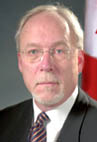
The Canadian Security Intelligence Service (CSIS) has warned that operations by foreign intelligence agents inside Canada are intensifying. In its annual public report to Canada’s House of Commons, the spy agency says foreign spies operating in Canada are hoping to gain access to military technologies employed by NATO, of which Canada is a member. Foreign operatives are also interested in information on several business sectors ranging from biotechnology and agriculture to oil exploration, aerospace engineering and mining, says the report. The 36-page document, which includes a lengthy introduction by CSIS director Jim Judd, does not mention specific nations as responsible for these operations. But a Reuters report from Canada reminds that China has traditionally been high on CSIS’s list of suspects. Informed observers may recall that in 2005 a Chinese government defector claimed there were at least 1,000 accredited and covert Chinese spies operating in Canada.

Romania-Ukraine spy scandal turning into full diplomatic row

Achim & Zikolov

Achim & Zikolov

By JOSEPH FITSANAKIS | intelNews.org |
The spy scandal that erupted between Romania and Ukraine earlier this week is gradually turning into a full-scale diplomatic war, fuelled by longstanding tensions between the two countries. On March 5, Romania responded to the discovery of a Ukrainian-handled spy ring in the country by expelling Ukraine’s Military Attaché from Bucharest. On May 6, Ukraine reciprocated by expelling two Romanian diplomats, a Military Attaché stationed in Kiev and a Consular Vice-Secretary stationed in Cernauti. The two officials were accused by Ukraine’s Ministry of Foreign Affairs of spreading “separatist feelings in the Romanian community in Ukraine” and “secretly funding organizations that spread anti-Ukrainian ideas”. The alleged secret activities appear to relate to the 250,000-strong Romanian-speaking minority living in the Chernivtsi region of Ukraine. Read more of this post

Update: Bulgarian spy reportedly a double agent

By JOSEPH FITSANAKIS | intelNews.org |
The latest news from Bulgaria is that a Bulgarian former military attaché arrested in the recent Romanian spy scandal was in fact a double agent who was covertly working for the Romanian Intelligence Service (SRI). On February 28, Romanian counterintelligence agents arrested Petar Marinov Zikolov (or Zikulov) along with Romanian noncommissioned officer Floricel Achim, on charges of supplying classified military information to Ukrainian embassy officials. Zikolov, who was Bulgaria’s military attaché in Romania from 1998 to 2000, is said to have acted as an intermediary between Achim and the Ukrainians. But fresh reports from Bucharest suggest that the Bulgarian former diplomat was apprehended by Romanian counterintelligence agents in 2008 and agreed to surrender information about “everything he had been doing in Romania” as well as detailed lists with names of “collaborators from foreign states”. Read more of this post

Romania uncovers spy ring involving Bulgaria, Ukraine

Achim & Zikolov

Achim & Zikolov

By JOSEPH FITSANAKIS | intelNews.org |
Last week, Romania’s President, Traian Băsescunt, surprised observers by abruptly and without explanation cancelling a scheduled high-level visit to Ukraine. The reason for the cancellation has now become apparent, with the announcement by the Romanian authorities of a Ukrainian-handled spy ring in Romania’s capital Bucharest. Specifically, on February 28, agents of the Romanian Intelligence Service (SRI) arrested Floricel (or Florichel) Achim and Petar Marinov Zikolov (or Zikulov) for allegedly handing classified information to Ukrainian embassy officials. Achim is a noncommissioned officer in the Romanian military, whereas Zikolov is Bulgaria’s former military attaché to Romania. Romanian prosecutors, who have charged the arrestees with espionage and treason, claim that the two were handled by Ukrainian intelligence agents from 2002 to 2007. Read more of this post

Comment: Former Serb head spy was CIA collaborator

Jovica Stanišić

Jovica Stanišić

By JOSEPH FITSANAKIS | intelNews.org |
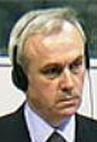
From 1990 until 1998, Jovica Stanišić was the Director of Serbia’s State Security Service, a notorious intelligence unit operating within Serbia’s Interior Ministry. As intelligence chief for Serbian President Slobodan Milošević, Stanišić was responsible for thousands of agents, who were seen as forming the core of Milošević’s security state. In 2003, following the assassination of Serbian Prime Minister Zoran Đinđić, who had extradited Milošević to The Hague, Stanišić was arrested and delivered to The Hague. He is currently being tried by the International Criminal Tribunal for the former Yugoslavia (ICTY) for his role in war crimes during the Yugoslav Wars. Jovica Stanišić has denied any wrongdoing and, remarkably, his defense rests on his claim that he was in fact “the CIA’s man in Belgrade” from 1991 until 1998.

Read more of this post

NATO spy convicted by Estonian court

Herman Simm

Herman Simm

By IAN ALLEN | intelNews.org |
Herman Simm, the Estonian spy who handed classified NATO material to Russia, has been convicted to 12.5 years’ imprisonment and ordered to pay $1.6 million for damages he caused while spying for the Russians. Simm, a high-level official at the Estonian defense ministry, who once headed the country’s National Security Authority, was arrested last November along with his wife and charged with spying for Russia for over 10 years. At the time of his arrest, Simm’s spying activities were described by Western counterintelligence officials as perhaps “the most serious case of espionage against NATO since the end of the Cold War”. Read more of this post

Belgian intelligence concerned about increasing spy presence

Alain Winants

Alain Winants

By IAN ALLEN | intelNews.org |
Despite Belgium’s strategic location and central role in the Cold War, the Belgian secret services have historically had a very limited presence in the country. Their postwar function has been primarily one of information analysis, and it was not until 2006 that they were given powers to intercept communications, conduct authorized breaking-and-entry operations, or detain and question suspects. This situation is changing, however, as the Belgian Federal Parliament prepares to consider a bill on “special intelligence methods” that will further expand the powers of Belgian intelligence services. Last week, Alain Winants, Director of Belgium’s State Security Service (SV/SE) said his agents required expanded investigative powers to combat the increasing presence of foreign spies in the country. Read more of this post

French intelligence operatives’ trial resumes in Belgrade

Petrušić

Petrušić

By JOSEPH FITSANAKIS | intelNews.org |
The trial of a three-member group of French intelligence operatives arrested in Yugoslavia in 1999, on charges of planning to assassinate Yugoslav President Slobodan Milosevic, has resumed for a fourth time in the Serb capital Belgrade. The sensational charges against the three are not unique. Although the intelligence history of NATO’s 1999-2000 war in Yugoslavia has yet to be written, the limited information currently available points to significant intelligence and espionage activity by several European nations in the former Yugoslavia. Most notably, in August 2000, the Yugoslav army captured a covert group of two British (Adrian Pragnell and John Yore) and two Canadian (Shaun Going and Liam Hall) operatives who were captured on Yugoslav soil reportedly without visas and in possession of materials for making sophisticated explosives. All four were eventually released by the post-Slobodan Milosevic Yugoslav government. In another case, a team of four Dutch undercover commandos was intercepted while attempting to cross into Serbia from Montenegro.  Read more of this post

Estonian sleeper agent may have been double spy, say Germans

Herman Simm

Herman Simm

Last month, Estonian counterintelligence agents arrested Herman Simm, a high-level official at the Estonian defense ministry, on charges that he spied on behalf of Russian intelligence for nearly 30 years. At the time, Western counterintelligence officials said Simm, who was in charge of handling all of Estonia’s “classified and top secret material on NATO”, was at the center of “the most serious case of espionage against NATO since the end of the Cold War”. But the complexity of this espionage affair has now increased, with German weekly magazine Der Spiegel reporting that Simm was also a paid informant of the Bundesnachrichtendienst (BND), Germany’s foreign intelligence service. Read more of this post

CIA holds symposium on Polish Cold War asset Col. Kuklinski

As intelNews reported on December 10, Dariusz Jablonski’s documentary War Games, about the life of Polish spy Ryszard Kuklinski, was shown at the CIA headquarters during a “Symposium on the Polish Martial Law” held on December 11. Kuklinski, a Polish Army Colonel who spied for the US and NATO from 1972 until 1981, supplied his handlers with microfilms of over 40,000 documents detailing Soviet tactical plans for Poland and the rest of Europe. Read more of this post