UK spy agency to launch offensive cyber operation against anti-vaccine propaganda

GCHQ

BRITAIN’S SIGNALS INTELLIGENCE AGENCY is preparing to launch a major offensive cyber operation against state-sponsored propaganda aimed at undermining research on the COVID-19 vaccine. According to the London-based Times newspaper, which published the information about the purported cyber operation, it will be aimed mostly against disinformation campaigns coming out of Russia.

The alleged disinformation campaigns appear to be targeting research taking place at Oxford University, which seeks to create an effective vaccine against the novel coronavirus. A main theme in these campaigns promotes the claim that the vaccine will turn those who take it in to chimpanzees. Dozens of memes around this theme are said to have flooded Russian social media websites, with English-language translations making the rounds on Facebook, Twitter and Instagram.

The Times reports that the British government considers shutting down the alleged Russian disinformation campaign a strategic priority, which grows in significance the closer British scientists get to their goal of creating a successful vaccine against the pandemic. London has therefore ordered the British Army’s 77th Brigade, which specializes in information operations, to launch an online campaign that will counter deceptive narratives about a potential vaccine against the coronavirus.

Whitehall has also mobilized the Government Communications Headquarters (GCHQ), Britain’s signals intelligence agency, which focuses on cyber-security, to launch offensive operations against the sources of the disinformation, says The Times. The paper cites a government source as saying that the spy agency will be using tools originally developed to monitor and incapacitate websites and other online platforms used by the Islamic State for recruitment.

According to the paper, the operational mandate of the 77th Brigade and GCHQ prevents them from tackling disinformation and misinformation originating from ordinary social media users, rather than state agencies. Additionally, the offensive cyber campaign cannot target websites that are based in Britain’s so-called Five Eyes allies, namely Australia, New Zealand, Canada and the United States. Instead, British spies are required to notify their Five Eyes counterparts, so they can take action instead.

Author: Joseph Fitsanakis | Date: 09 November 2020 | Permalink

Austrian government signals major overhaul of spy service, following Vienna attack

BVT AustriaAUSTRIAN GOVERNMENT OFFICIALS SIGNALED on Thursday the beginning of a major overhaul of the country’s intelligence community, in response to this week’s terrorist attack in Vienna, which killed four people. Another 20 people were wounded by a lone gunman, who used an automatic weapon to spread panic in the Austrian capital before he was shot dead by Austrian police.

The gunman was later identified as Kujtim Fejzulai, an Austrian citizen of Albanian extraction, who was born in North Macedonia and held citizenship there too. The shooter was known to Austrian authorities, as he had been previously convicted of trying to travel to Syria to join the Islamic State. He had been imprisoned as an Islamic radical, but had been released after allegedly duping Austrian judges, who believed he had reformed.

In the days following the attack, it emerged that Slovakian authorities had notified Austrian security agencies in July that Fejzulai had tried to purchase ammunition in Slovakia. On Wednesday, Austria’s Director General for Public Security, Franz Ruf, said that Austrian intelligence authorities “sent questions back to Bratislava”, but then there had been a “breakdown” in the system. Austrian Minister of the Interior Karl Nehammer added that “something apparently went wrong with the communication in the next steps”.

Nehammer and others, including Austrian Vice Chancellor Werner Kogler, called for the establishment of an independent commission to examine the Fejzulai case and “clarify whether the process went optimally and in line with the law”. The Austrian Chancellor, Sebastian Kurz, said on Thursday that the country did not have “all the legal means necessary to monitor and sanction extremists”, adding that he would initiate the creation of a panel that would supervise a “realignment” of the intelligence agencies. He was referring to the Office for the Protection of the Constitution and Counterterrorism, known by the initials BVT. He did not provide details.

Author: Joseph Fitsanakis | Date: 06 November 2020 | Permalink
COVID-19 is changing the map of cyber-crime activity, says British spy agency

GCHQ - IA

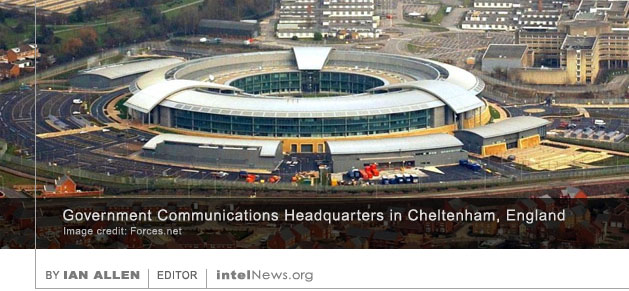
THE CYBER-SECURITY BRANCH of Britain’s signals intelligence agency has said in a new report that the coronavirus pandemic is changing the map of cyber-crime by illicit actors, including state-sponsored hackers. The unclassified report was released on Tuesday by the National Cyber Security Centre (NCSC), which is the cyber-security branch of the Government Communications Headquarters (GCHQ). Founded over a century ago, the GCHQ is responsible for, among other things, securing the communications systems of the British government and the country’s armed forces.

In its latest Annual Review, the NCSC warns that “criminals and hostile states” are exploiting the COVID-19 pandemic in order to challenge the national security of Britain and its allies. In an introductory note included in the report, NCSC director Jeremy Fleming says that the balance of cyber-threats has changed in 2020 as a result of the pandemic. According to the report, British cyber-security agencies saw a 10% rise in serious cyber-threat incidents in 2020. More than a third of these incidents were related to COVID-19, and many targeted Britain’s healthcare sector.

The report suggests that attacks against the British National Healthcare Service and vaccine research facilities constitute a rapidly emerging cyber-espionage risk. The majority of these attacks were carried out by state-sponsored actors, including Advanced Persistent Threat (APT) 29, which is also known as “Cozy Bear” and “The Dukes”. According to Western intelligence services, APT29 is a Russian state-sponsored cyber-espionage outfit, which has been known to target facilities involved in the development of coronavirus-related vaccines.

Other cyber-threat actors have no connections to foreign governments, but are instead motivated by profit. The NCSC said it had managed to disrupt over 15,000 campaigns by cyber-criminals to use coronavirus as a bait in order to trick unsuspecting Internet users into downloading malicious software or providing personal information online. Some cyber-criminal networks contacted clinics and other businesses who were in desperate need of personal protective equipment, coronavirus testing kits, and even purported cures against the virus, said the NCSC. Some of these unsuspecting victims were offered fictitious quantities of coronavirus-related equipment, which were never delivered.

Author: Ian Allen | Date: 05 November 2020 | Permalink

US forces are secretly helping the Taliban fight the Islamic State in Afghanistan

Taliban

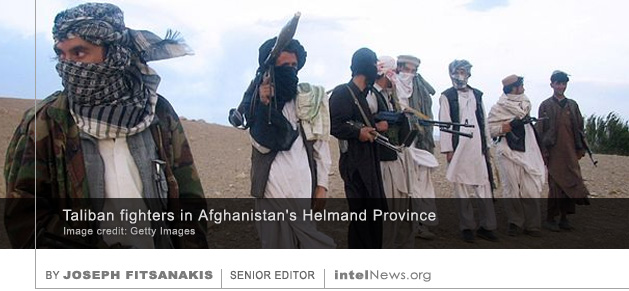
UNITED STATES TROOPS ARE secretly re-purposing weapons that were initially used to fight the Taliban, in order to help the Taliban defeat the Islamic State in northeastern Afghanistan, according to a new report. The American military’s newfound role in Afghanistan reportedly reflects the view of the White House that the Taliban have no aspirations outside of Afghanistan, while the Islamic State seeks to challenge America’s interests worldwide.

The rumors that the US Department of Defense has been providing assistance to the Taliban as they battle the Islamic State in Afghanistan are not new. In March of this year, General Frank McKenzie, Commander of US Central Command, admitted as much during Congressional testimony. He told the US House Armed Services Committee that the Taliban had received “very limited support from us”, but declined to elaborate during open-door testimony.

What did General McKenzie imply? According to veteran military affairs reporter Wesley Morgan, US Joint Special Operations Command (JSOC) forces in Afghanistan have been instructed to provide air cover to Taliban forces as they fight the Islamic State. Morgan said he spoke to members of a JSOC Task Force in Afghanistan’s northeastern Kunar Province, who confirmed General McKenzie’s comments from back in March.

Importantly, the JSOC’s air support to the Taliban is reportedly provided without direct communication between the US forces and the Taliban. Instead, the Americans simply “observe battle conditions” and “listen in on the [communications of the] group” in order to determine what kind of air support it needs. The resources used in that capacity consist of weaponry that was initially deployed against the Taliban, but is now being secretly repurposed to assist the Taliban in their fight against the Islamic State. According to Morgan, the JSOC team in Kunar, which provides air cover to the Taliban, jokingly refers to itself as the “Taliban air force”.

Miller adds it is unclear whether the Afghan government in Kabul is aware that US forces are providing assistance to the Taliban. It is also unclear whether al-Qaeda, which is a close ally of the Taliban, is benefiting from that assistance. Recently a United Nations report warned that al-Qaeda remains “heavily embedded” with the Taliban in Afghanistan, despite assurances by officials in the administration of US President Donald Trump that the two groups are in the process of parting ways.

Author: Joseph Fitsanakis | Date: 03 November 2020 | Permalink

Austrian financier dubbed ‘world’s most wanted man’ worked for several agencies

Jan Marsalek

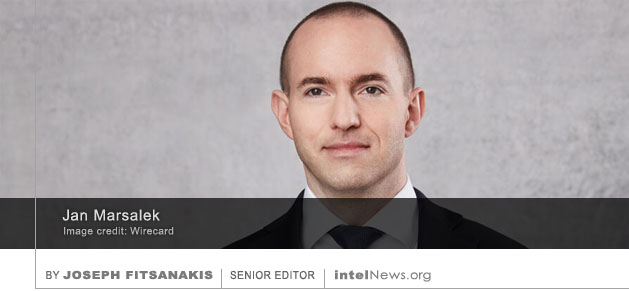
AN AUSTRIAN FINANCIER, WHO disappeared and is wanted by Western spy agencies in connection with a massive financial scandal in Germany, may have worked for several spy agencies simultaneously, according to reports. Jan Marsalek, dubbed by some as “the world’s most wanted man”, is connected with the sudden collapse of Wirecard AG in Germany last month.

Wirecard (est. 1999) was a German provider of financial services, such as mobile phone payment processing and other electronic payment transaction systems. The company also issued physical and virtual credit and pre-paid cards. But on June 25 of this year the company declared insolvency, after an audit revealed that nearly €2 billion ($2.3 billion) in cash deposits were missing from its accounts. Soon afterwards the company’s shares lost over 70 percent of their value and its management team, including its chief executive officer, Markus Braun, stepped down. Braun was eventually arrested. But Marsalek, who had worked as Wirecard’s chief operating officer since 2010, was nowhere to be found.

Marsalek, 40, was also in charge of Winecard’s operations in Asia and specifically the Philippines, where the fictitious €2 billion had reportedly been deposited. On June 18, after getting fired from his job, Marsalek told colleagues that he was leaving immediately for Manilla, in order to track down the missing funds and clear his name. However, he never arrived there, as he seemed to disappear into thin air on the way. An investigative report by The Financial Times revealed that Marsalek never made use of his airline ticket to the Philippine capital, and that the immigration records that showed him entering the country and then flying from there to China had been forged. This was later confirmed by the Philippines government.

Last Thursday, the German newspaper Süddeutsche Zeitung reported that, according to some German lawmakers, Marsalek may have operated as an informant for the Austrian Office for the Protection of the Constitution and Counterterrorism (BVT). The paper cited a number of German lawmakers, who said they were told during a briefing of the German Parliament’s Committee on Intelligence Oversight that Marsalek probably worked “for several intelligence agencies at the same time” prior to his disappearance. The lawmakers did not provide details of these allegations. Meanwhile, Marsalek’s whereabouts remain unknown.

Author: Joseph Fitsanakis | Date: 02 November 2020 | Permalink

US official who penned anonymous 2018 New York Times article reveals his identity

Miles Taylor

A UNITED STATES GOVERNMENT official, who in 2018 wrote an anonymous editorial in The New York Times claiming to be part of a secret group of insiders trying to thwart President Donald Trump’s policies, has revealed his identity. The September 2018 editorial raised eyebrows in Washington for claiming that “many Trump appointees have vowed to […] thwart Mr. Trump’s more misguided impulses until he is out of office”. The president called the article treasonous and urged the Department of Justice to investigate its source.

In 2019, the same government official published a book, titled The Warning, with the author identified only as “Anonymous — a senior Trump administration official”. In the months that followed there was intense speculation in Washington about the identity of the author. The list of possible candidates included Vice President Mike Pence, then-United Nations Ambassador Nikki Haley, and a host of senior officials in the Department of Defense.

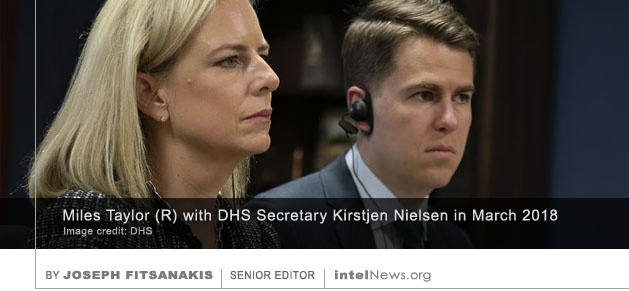
On Wednesday, the anonymous author voluntarily revealed his identity. He is Miles Taylor, a Trump appointee, who served in various posts in the Department of Homeland Security (DHS) from 2017 until 2019. When he left the DHS, Taylor was serving as Chief of Staff to DHS Acting Secretary Chad Wolf. He had previously served as Chief of Staff to DHS Secretary Kirstjen Nielsen. In August of this year, Taylor became the highest-ranking former member of the Trump administration to endorse Joe Biden for president. He now works as Head of National Security for Google.

The revelation prompted an immediate response from the White House, with the president’s press secretary Kayleigh McEnany describing Taylor as “low-level, disgruntled former staffer”. Speaking at a rally in the US state of Arizona, President Trump called Taylor a “sleazebag” and “a low-level lowlife that I don’t know”. However, the Associated Press reported late on Wednesday that “as DHS chief of staff, Taylor was in many White House meetings with the president on his border policy and other major Homeland Security issues”.

Author: Joseph Fitsanakis | Date: 29 October 2020 | Permalink

Israeli Mossad secretly secured COVID-19 vaccine from China, say sources

Yossi Cohen Mossad

THE ISRAELI EXTERNAL INTELLIGENCE agency, the Mossad, has allegedly secured a Chinese-produced vaccine against the coronavirus, according to reports on Israeli television. The report came as the Israeli government confirmed over the weekend that “several diplomatic efforts are occurring behind the scenes” to acquire various vaccines against COVID-19.

According to The Jerusalem Post newspaper, an unnamed senior official in Israel’s Ministry of Health “who is in the know” said that Israel was close to reaching agreements with developers in several countries to purchase coronavirus vaccines. On Monday, however, Israel’s Channel 12 television said “multiple sources” had confirmed that the Mossad had secured the Chinese vaccine and “brought it to Israel”, so that it could be studied by Israeli scientists.

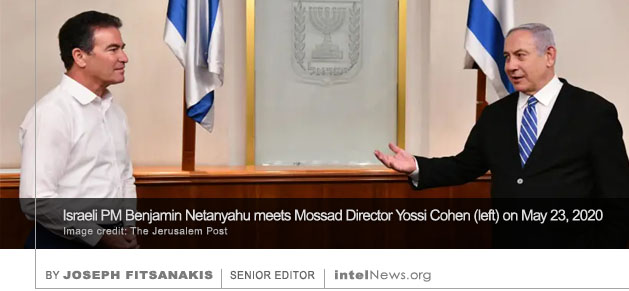
It was not immediately apparent why the Mossad, Israel’s primary external intelligence agency, was involved in the acquisition of the coronavirus vaccine. The implication in the report was that Israel’s Ministry of Foreign Affairs, as well as the Ministry of Health, were not involved in the effort to acquire the Chinese-made vaccine. On the other hand, this should not be taken to mean that the Mossad stole the vaccine from China. As intelNews has reported, the Mossad Director Yossi Cohen previously served as head of a national committee to secure resources needed to combat COVID-19, including medicines and protective supplies.

Channel 12 news said no Israeli government officials would agree to comment on the story on record. According to one theory, the Mossad purchased the vaccine from China in secret, because Israel did not want to offend the United States at a time when tensions between Washington and Beijing are growing. Israel’s Ministry of Foreign Affairs and Ministry of Health referred questions about Mossad’s role in acquiring a COVID-19 vaccine to the Office of the Prime Minster. A spokesman there refused to comment on the story.

Author: Joseph Fitsanakis | Date: 28 October 2020 | Permalink

Trump plans to axe defense secretary, FBI, CIA directors, if re-elected, say sources

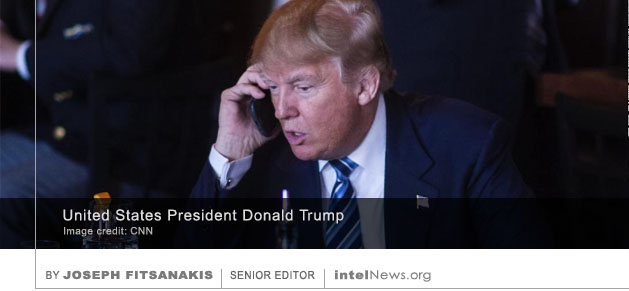
Donald TrumpIF RE-ELECTED IN NOVEMBER, United States President Donald Trump has laid out plans to replace the secretary of defense, as well as the directors of the Federal Bureau of Investigation (FBI) and the Central Intelligence Agency (CIA), according to a new report. The website Axios, which published the report on Sunday, said the US president and his senior advisors have drafted a much longer list of names of senior military and intelligence officials who will be axed in November. However, Defense Secretary Mark Esper, FBI Director Christopher Wray and CIA Director Gina Haspel top the list, said Axios.

The website cited two sources who have allegedly discussed with President Trump himself the fate of these and other officials. The sources told Axios that CIA Director Haspel is “despised and distrusted almost universally” within the president’s inner circle, whose members view her motives with “a lot of suspicion”. Another source familiar with “conversations at the CIA” told Axios that Haspel intends to step down —and possibly retire— “regardless of who wins the election” in November.

Trump is also “incensed” with FBI Director Wray, because he told Congress last month that the Bureau had not detected significant election-related fraud with either online activity or mail-in ballots, according to Axios. Additionally, the president reportedly lost trust in Defense Secretary Esper after he objected to the White House’s plan to deploy active-duty military personnel in major American cities, in response to popular protests sparked by allegations of abusive practices by law enforcement.

Axios added that, despite President Trump’s critical comments about his Attorney General, William Barr, in recent weeks, he has no “formal plans” to replace him at the present time.

Author: Joseph Fitsanakis | Date: 26 October 2020 | Permalink

Dutch hacker says he logged into Trump’s Twitter account by guessing password

Twitter IA

A DUTCH ETHICAL COMPUTER hacker and cybersecurity expert claims to have logged into the personal Twitter account of United States President Donald Trump, reportedly after guessing his password. The hacker, Victor Gevers, took several screenshots of the private interface of Trump’s Twitter account, and shared them with Dutch news media, before contacting US authorities to notify them of the breach.

Trump attributes much of his popularity and electoral success to social media, and is especially fond of Twitter as a means of communication. He has tweeted nearly 20,000 times since 2015 (including re-tweets), with at least 6,000 of those tweets appearing in 2020 alone. His personal account, which uses the moniker @realDonaldTrump, has almost 90 million followers.

But Gevers, a self-described ethical computer hacker, cybersecurity researcher and activist, said he was able to guess the American president’s password and log into his Twitter account after four failed attempts. The hacker claims that Trump’s password was “maga2020!”. According to Gevers, Trump’s account did not require a two-factor authentication log-in process, which usually requires a password coupled with a numeric code that is sent to a user’s mobile telephone. As a result, Gevers said he was able to access Trump’s private messages on Twitter and —had he wanted to— post tweets in the name of the US president. He could also change Trump’s profile image, had he chosen to do so.

The Dutch hacker took several screenshots of the webpages he was able to access and emailed them to Volkskrant, a Dutch daily newspaper, and Vrij Nederland, an investigative monthly magazine. Shortly after accessing Trump’s account, Gevers said he contacted the US Computer Emergency Readiness Team (US-CERT), which operates under the Department of Homeland Security’s Cybersecurity and Infrastructure Security Agency. He said the US president’s password was changed “shortly after”, and that he was then contacted by the US Secret Service.

Also on Thursday, a Twitter spokesman said the company’s security team had seen “no evidence to corroborate” Gevers’ claim. He added that the San Francisco, California-based social media company had “proactively implemented account security measures for a designated group of high-profile, election-related Twitter accounts in the United States, including federal branches of government”. Such measures included “strongly” encouraging such accounts to enable two-factor authentication, said the spokesman. But he did not specify whether Trump’s account had activated this feature. The White House also denied Gevers’ claim, calling it “absolutely not true” and adding that it would “not comment on security procedures around the president’s social media accounts”.

Author: Ian Allen | Date: 23 October 2020 | Permalink

United States charges six Russian intelligence operatives with hacking

US Department of Justice

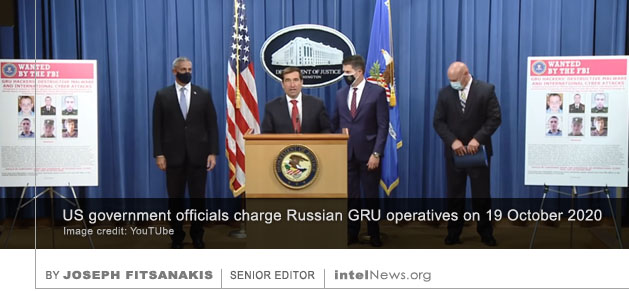
THE UNITED STATES DEPARTMENT of Justice has unsealed charges against six members of Russia’s military intelligence agency for allegedly engaging in worldwide computer hacking against several countries. The charges, announced in Pittsburgh on Monday, represent in a rare move that targets specific intelligence operatives and identifies them by name and visually. According to the US government, the six Russian operatives were instrumental in some of the most destructive and costly cyber-attacks that have taken place worldwide in the past five years.

The indictment alleges that the six Russian intelligence operatives were members of a hacker group named “Sandworm Team” and “Voodoo Bear” by cybersecurity experts. In reality, however, they were —and probably still are— employees of Unit 74455 of the Russian Armed Forces’ Main Intelligence Directorate, known as GRU. Their cyber-attacks employed the full resources of the GRU, according to the indictment. They were thus “highly advanced”, and were carried out in direct support of “Russian economic and national objectives”. At times, the group allegedly tried to hide its tracks and connections to the Russian government, by making it seem like its cyber-attacks were carried out by Chinese- and North Korean-linked hackers. However, according to the US government, its operations and targets were carried out “for the strategic benefit of Russia”.

The hacker group has been active since the end of 2015, and is alleged to have continued its operations until at least October of 2019. Alleged attacks include a major assault on the power grid of Ukraine in December of 2015, which left hundreds of thousands without electricity and heat. Other alleged attacks targeted the government of Georgia and the French national elections of 2017. The charges include alleged attacks on Western chemical laboratories that examined the toxic substance used in 2018 against former GRU officer Sergei Skripal in England.

Finally, some of the group’s alleged efforts centered on sabotaging the 2018 Winter Olympics in Pyeongchang, South Korea. Russian athletes were barred from the games, after the Russian government was accused of participating in wholesale doping of its Olympic team. Notably, none of the attacks connected with the group’s operations appeared to have directly targeted the United States —though some of the viruses that were allegedly unleashed by the group affected some American companies.

Author: Joseph Fitsanakis | Date: 21 October 2020 | Permalink

Taiwan should prepare for war with China, says US national security adviser

Robert O'Brien

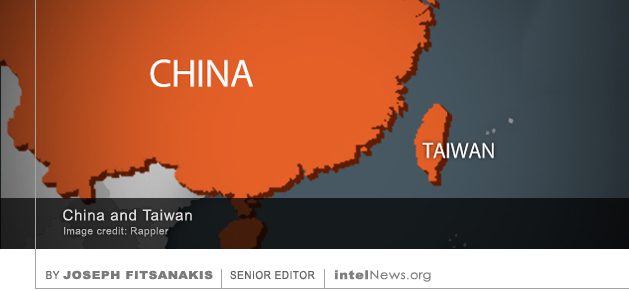
THE TAIWANESE MILITARY AND society should be prepared to prevent and deter a possible military invasion by China, according to White House national security adviser Robert O’Brien. O’Brien, the fourth person to hold that position at the White House during the presidency of Donald Trump, said last week he did not believe that Beijing was planning an all-out military invasion of Taiwan. He added, however, that the island should be prepared to deter so-called “gray zone operations” by China, as well a direct “amphibious landing” by Chinese forces.

The Reuters news agency reported last week that many in Taiwan fear a possible Chinese invasion, should the upcoming presidential election in the United States lead to political confusion and disorder in Washington. Tensions between China and Taiwan have been growing in recent months. China sees Taiwan as a renegade province, a view that contrasts sharply with the majority view in Taiwan. The island sees itself as independent from China, though fewer than 20 countries around the world have officially recognized its independent status. Earlier this month, the Chinese government said it had launched an extensive counterintelligence operation aiming to uncover Taiwanese spies. Meanwhile, Chinese government-run media aired footage last week of a military exercise that appeared to simulate an amphibious invasion of Taiwan.

Speaking at a virtual event hosted by the Aspen Strategy Group on Friday, O’Brien opined that Taiwan should “start looking at some asymmetric and anti-access area denial strategies […] and really fortify itself”. He added that the goal of such a fortification would be to “deter the Chinese from any sort of amphibious invasion or even a gray zone operation” —that is, aggressive economic and political actions that fall short of a direct military invasion. O’Brien’s comments came less than a week after Hsiao Bi-khim, Taiwan’s economic and cultural representative in Washington (effectively Taiwan’s ambassador to the US) urged the Trump administration to provide the island with “some degree of clarity” on whether the US would come to its aid, should China invade.

Author: Joseph Fitsanakis | Date: 19 October 2020 | Permalink

US military leaders say there are ‘no plans’ for domestic security role on election day

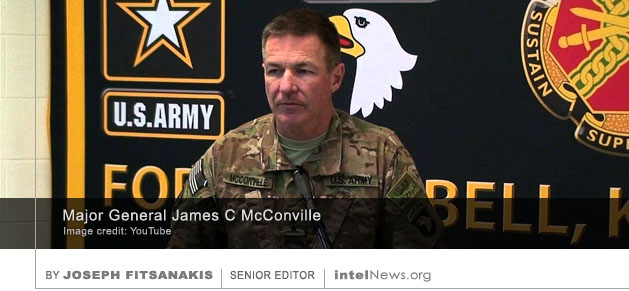
James McConvilleSenior United States military officials, including the chief of staff of the Army, have said no plans are currently in place for the country’s armed forces to have a domestic security role in next month’s elections. America is preparing for one of the most contentious and tense elections in its recent history, in which Republican President Donald Trump is facing a challenge by Democratic contender Joe Biden. Many observers have expressed concerns about the potential for violence, some of which could be perpetrated by armed assailants. In that case, it is argued, the president could deploy military personnel across the US.
These and other questions were put to senior military leaders during a congressional hearing held earlier this week by the House of Representatives’ Armed Services Committee. One of its Democratic members, Michigan Representative Elissa Slotkin, said she was concerned about the possibility of limited or widespread violence on November 3. Responding to Rep. Slotkin’s concerns, US Secretary of Defense Mark Esper recently wrote a letter, in which he stressed that “the US military has acted, and will continue to act, in accordance with the Constitution and the law”.

At the Congressional hearing this week, US Army Chief of Staff James McConville said the Army had received “no guidance to conduct any specific training” to prepare troops for domestic deployments, in case violence erupted in the streets of America. At the same hearing, Secretary of the Army Ryan McCarthy pointed out that the Army had not received any requests from government agencies to “police American streets”. He added, however, that soldiers were ready to help “protect federal property”, if asked to do so.

Author: Joseph Fitsanakis | Date: 16 October 2020 | Permalink

MI5 undercover officer named as key witness in biggest IRA trial since 1980s

Provisional IRA

A man who spent years as an undercover officer for Britain’s Security Service (MI5) has been named as a key witness in a long-awaited trial, described by experts as the largest against violent Irish republicans in 25 years. The accused include leading figures in dissident Irish republicanism, who are members of a group calling itself the New Irish Republican Army (New IRA).

The case represents the culmination of Operation ARBACIA, which was launched nearly a decade ago against dissident Irish republicans by MI5 in collaboration with the Police Service of Northern Ireland. The case centers on the evidence provided by Dennis McFadden, who has just been identified as a key witness for the prosecution. It has been reported that McFadden, born in Scotland, was a police officer before he joined MI5. He spent two decades as an MI5 officer, much of that undercover.

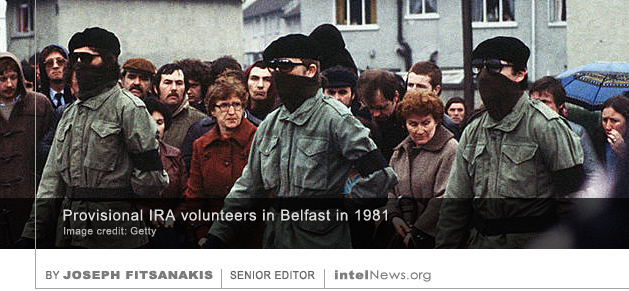
At first, McFadden joined Sinn Féin, which is widely considered to have operated as the political wing of the Provisional IRA (PIRA). From the late 1960s until 2005, the PIRA waged an armed campaign for the reunification of British-ruled Northern Ireland with the Republic of Ireland. Following the dissolution of the Provisional IRA, McFadden kept contact with dissident Irish republicans, a term used to identify those who disagreed with the Provisional IRA’s decision to end its armed campaign. McFadden joined the New IRA as soon as it was founded in 2012.

Gradually, McFadden rose through the ranks of the New IRA until he joined the group’s high command. This gave him access to the New IRA’s network of safe houses in Northern Ireland and Scotland. Many of these locations were eventually bugged by MI5, and the information acquired from these bugs is expected to be used as evidence in the trial of the New IRA’s leaders next year. Ten people —almost all in their 40s and early 50s— have been arrested as part of Operation ARBACIA. They include a 62-year-old Palestinian doctor who lives in the United Kingdom, who is accused of having participated in the preparation of terrorist acts. Some observers have also stated that the court will be hearing evidence connecting the New IRA with Arab militant groups in the Middle East.

The MI5 moved McFadden out of Northern Ireland last summer, just as the Real IRA suspects were arrested by authorities in a series of coordinated raids. He is believed to be living in a secret location under police protection. Meanwhile, the 10 suspects are being held in Maghaberry prison, a high-security complex in Lisburn, a city located a few miles southwest of Belfast.

Author: Joseph Fitsanakis | Date: 13 October 2020 | Permalink

Chinese authorities announce counterespionage crackdown with 100s of arrests

China and Taiwan

Authorities in China said on Sunday that a nationwide counterespionage operation launched earlier this year has identified “hundreds of espionage cases”, most of them involving Taiwanese intelligence agencies. In a concerted fashion, Chinese state-run media published dozens of reports over the weekend, hailing the alleged success of the project.

According to the reports, China’s Ministry of State Security codenamed the operation THUNDER 2020. It follows on the heels of an earlier counterespionage crackdown, known as THUNDER 2018, or THUNDERBOLT 2018. Last year, Chinese authorities said that the year-long 2018 operation had uncovered over 100 espionage cases throughout mainland China

The information released on Sunday includes claims that espionage activities uncovered under the THUNDER 2020 crackdown centered on “attempts to disrupt cross-Straits exchanges” —meaning efforts by China to raise support among the Taiwanese for reunification with the mainland. Other alleged espionage activities focused on encouraging “Hong Kong separatism” and on “instigating diplomatic ties between […] China and other countries”. No specific information was provided to support these claims.

In what appears to be a controlled leak, several Chinese news media reported on the case of a Taiwanese businessman identified as Li Mengju, or Lee Meng-chu. He was allegedly arrested in August of 2019 by authorities in the in southeastern Chinese city of Shenzhen, which is adjacent to Hong Kong. “Anonymous” sources in Shenzhen claim that Lee directs the “Taiwan Independence organization”, as well as another group calling itself “Taiwan United Nations Association” or “Association for the Advancement of Taiwan”. These appear to be groups that campaign against the possible reunification of Taiwan with China.

According to Chinese state-run sources, Lee was arrested “at a harbor in Shenzhen as he tried to flee after he was spotted conducting espionage activities”. He was allegedly found to be in possession of audiovisual material that had been “taken illegally” and included “secret-level military information”, such as “combat equipment, and quantity of troops”. No further information was provided by Chinese media.

Author: Joseph Fitsanakis | Date: 12 October 2020 | Permalink

North Korea’s missing ambassador may be most senior defector since 1997

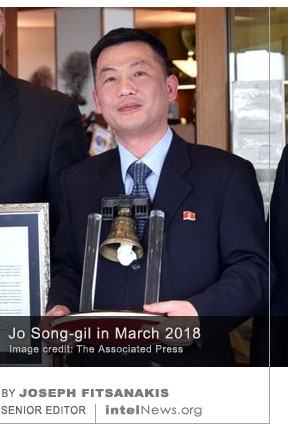
Jo Song-gil

North Korea’s ambassador to Italy, who disappeared without trace in 2018, is believed to have resettled in South Korea. If true, this would make him the most senior official to defect from North Korea in over 20 years. Jo Song-gil (pictured), 48, a career diplomat who is fluent in Italian, French and English, presented his diplomatic credentials to the Italian government in May of 2015. In October 2017 he became his country’s acting ambassador, after Italian authorities expelled Ambassador Mun Jong-nam from the country.

Jo comes from a high-ranking family of North Korean officials with a long history in the ruling Workers Party of Korea. His father is a retired diplomat and his wife’s father, Lee Do-seop, spent many years as Pyongyang’s envoy in Hong Kong and Thailand. It is believed that Jo had been permitted to take his wife and children with him to Rome, a privilege that is bestowed only to the most loyal of North Korean government official. But in November of 2018, Jo suddenly vanished along with his wife and children. The disappearance occurred a month before Jo was to be replaced as acting ambassador to Italy. At the time of Jo’s disappearance, South Korean media reported that the diplomat and his family “were in a safe place” under the protection of the Italian government, while they negotiated their defection. However, this was never confirmed.

On Tuesday of this week, a social media post by a South Korean parliamentarian claimed that Jo and his wife were living in South Korea under the protection of the government, but provided no evidence of this claim. Yesterday, this information appeared to be confirmed by another South Korean parliamentarian, Jeon Hae-cheol, who chairs the Intelligence Committee of the Korean National Assembly (South Korea’s parliament). Jeon said the North Korean diplomat had been living in South Korea since the summer of 2019. He added that Jo had arrived in South Korea after having “repeatedly expressed his wish to come to South Korea”.

This information has not been officially verified by the South Korean government. Additionally, the South Korean National Intelligence Service has not issued a statement on the matter. If this information is confirmed, it would make Jo the most senior North Korean official to have defected since 1997. That year saw the sensational defection of Hwang Jang-yop, Pyongyang’s primary theorist and the ideological architect of juche, the philosophy of self-reliance, which is North Korea’s officially sanctioned state dogma. Until his death from heart failure in April 2010, Hwang had been living in the South with around-the-clock security protection.

Some reports have suggested that Jo’s teenage daughter refused to follow her parents to South Korea and that she was “repatriated” to North Korea in February of 2019, at her own request. Her whereabouts remain unknown.

Author: Joseph Fitsanakis | Date: 08 October 2020 | Permalink