European neo-Nazis attended paramilitary training camps in Russia, article claims
June 10, 2020 1 Comment
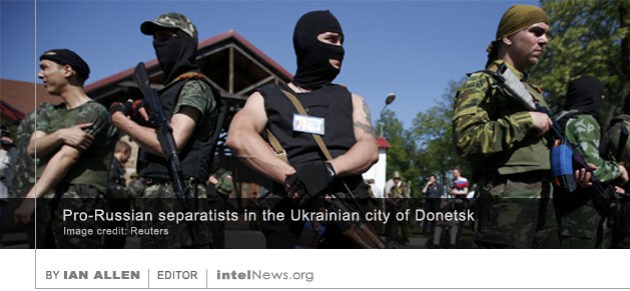 Members of neo-Nazi groups in Germany attended paramilitary training camps in Russia, which were organized by a group that the United States has designated a global terrorist organization, but which the Russian government has not banned. If true, these claims add further credence to the view that Russian far-right groups are becoming increasingly central in the worldwide network of racially motivated radical organizations.
The report was published on Friday by the German magazine Focus, which cited German “intelligence sources”. It said that the training camp was known in far-right circles as “Camp Partizan”, and was organized by a group calling itself the Russian Imperial Movement (RIM). As intelNews has reported previously, most RIM members are believed to be based in St. Petersburg, which is also the base of the group’s armed wing, the Imperial Legion. Most active members of the Imperial Legion are believed to have served in the Russian military.
Although it has been in existence since the early 2000s, the RIM drew considerable attention to its political platform after 2014, when it began to train groups of volunteers who then joined Russian-backed separatist forces in the Donbass region of eastern Ukraine. In a surprising move last April, the United States added the RIM to its list of Specially Designated Global Terrorist (SDGT) groups. That designation marked the first time in history that the US Department of State formally applied the label of terrorist to a white supremacist organization. The Department of State said at the time that the RIM had “provided paramilitary-style training to white supremacists and neo-Nazis in Europe”. The statement cited two members of the far-right Swedish Resistance Movement (SMR), who were later convicted of carrying out a string of bombings targeting immigrants in the Swedish city of Gothenburg.
Now, according to Focus, there is evidence that among Camp Partizan trainees were German rightwing extremists, who were members of two banned groups, the National Democratic Party and The Third Path. Members of these groups traveled to the outskirts of St. Petersburg, where they were allegedly trained in combat and were taught how to use makeshift weapons and explosives. Members of far-right groups from Scandinavia were also trained in the camp, and were able to use their skills as members of pro-Russian separatist militias in eastern Ukraine, according to Focus. The magazine said that the RIM’s armed wing , the aforementioned Imperial Legion, has a group of fighters in Ukraine.
Vice News reported last week that no Americans are believed to have received training in Camp Partizan. However, the website claimed that one of the organizers of the infamous 2017 Unite the Right Rally in Charlottesville, Virginia, is believed to have developed ties with the group, and even welcomed a RIM delegation to the US in 2017. Vice News spoke to intelligence experts from the Soufan Group who said that the RIM is emerging as “a critical node in the transnational white supremacy extremist movement” and that the Russian group is “going beyond networking and ideology, and is actually providing paramilitary training”.
The RIM’s relationship with the Kremlin can be described as complicated, and at times adversarial. The organization is openly critical of the administration of Russian President Vladimir Putin, which it accuses of being too liberal and too lenient on non-white immigration. However, the government in Moscow did not prevent —some argue it even facilitated— the group’s role in training Russian volunteers to join separatist forces in eastern Ukraine. The Russian government has criticized RIM views as extremist, and has at times arrested RIM members. However, it has not banned the group as a whole.
► Author: Ian Allen | Date: 10 June 2020 | Permalink
 Moscow has reacted angrily to the Czech government’s decision to expel two Russian diplomats from the country, in response to allegations that the Kremlin plotted to assassinate three outspoken Czech politicians using a deadly poison. Russian officials pledged to respond in kind to Prague’s “indecent and unworthy deed”.
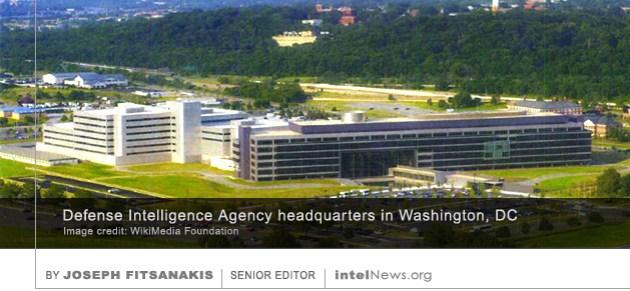 The United States Defense Intelligence Agency, a Pentagon organization tasked with collecting foreign military secrets, has rejected reports that it is spying on protestors inside the country. However, it confirmed that it has set up an “internal coordination group” to respond to “requests for information” by the Department of Defense. This development follows reports that some DIA employees communicated their concerns about being asked to spy domestically to the organization’s director last week.
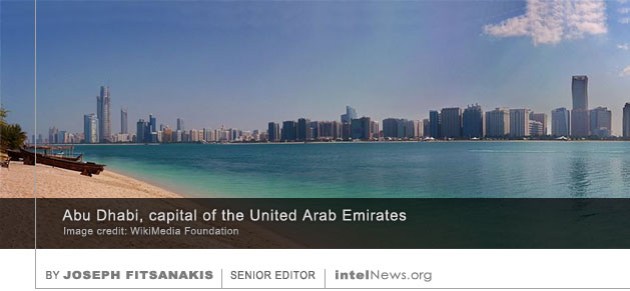 The embassy of the United States in the United Arab Emirates declined free COVID-19 testing kits for its staff, because of concerns that the private labs offering the kits had ties to China, according to a new report. The testing kits were offered by a testing facility that was set up in March in Abu Dhabi, which is the capital of the oil-rich UAE —a close American ally in the Middle East.
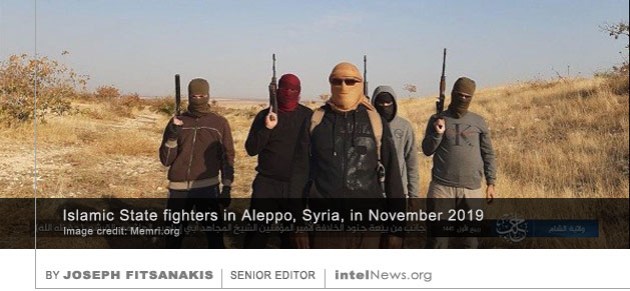 In a recent video message, the new head of the Islamic State calls COVID-19 a “great torment” from God against unbelievers, and vows that “not a single day will pass without bloodshed” due to attacks by his forces. The 39-minute video is entitled “The Crusaders Will Know Who Will Win in the End”, and began to circulate on the popular messaging application Telegram last Thursday.
 The former president of Argentina, Mauricio Macri, has been indicted as part of a widening investigation into a domestic spying program, which allegedly targeted opposition politicians, journalists and other public figures. The alleged espionage took place between 2015 and 2019, when Macri occupied the country’s highest office.
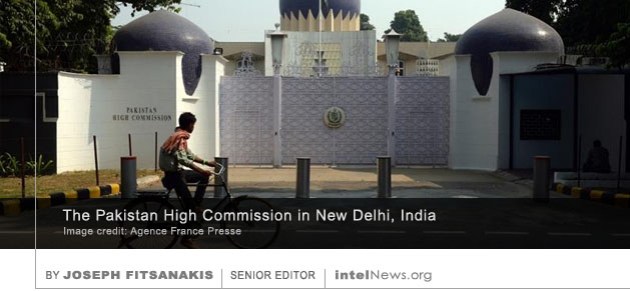 India has expelled two officials at the High Commission of Pakistan in New Delhi, after they were allegedly caught with fake Indian identity papers while trying to acquire classified documents. But the Pakistani government has rejected the allegations and subsequent expulsions as “a part of persistent anti-Pakistan propaganda” from India, and said the two officials were tortured while under detention by Indian authorities.
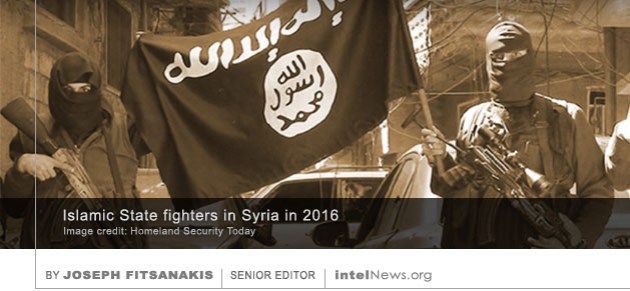 As the Islamic State continues to transfer its activities online due to the coronavirus pandemic, the group has published the first issue of a new cybersecurity magazine, aimed at helping its members evade surveillance. The Islamic State, known previously as the Islamic State of Iraq and Syria, has always been active online. But the COVID-19 pandemic has prompted it to
  The United States has alleged that the Russian military flew over a dozen unmarked aircraft to Libya, in an attempt to provide air support for Russian mercenaries who are fighting in Tripoli. If true, this development marks a major escalation of Russia’s military intervention in the Libyan civil war.
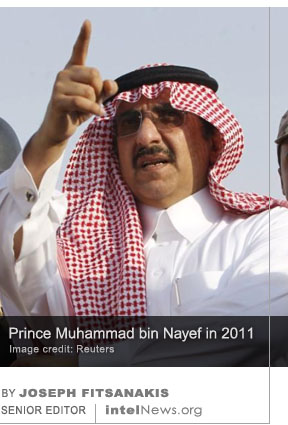 A Saudi government official, who served as a senior advisor to the oil kingdom’s former Crown Prince, has accused the Saudi monarchy of abducting his children in order to force him to end his self-exile in Canada. With a doctorate in artificial intelligence from the University of Edinburgh, Dr. Saad al-Jabri was until 2015 a rare example of a highly educated government administrator among Saudi Arabia’s ruling elite. Dr. al-Jabri rose in the ranks of the Saudi aristocracy in the 1990s under the tutelage of his patron, Crown Prince Muhammad bin Nayef (pictured). Prince bin Nayef is the grandson of Saudi Arabia’s founding monarch, King Abdulaziz, and until 2015 was destined to succeed King Abdullah and occupy the kingdom’s throne. Eventually, bin Nayef appointed Dr. al-Jabri as Minister of State and made him his most senior and trusted adviser on matters of security and intelligence.
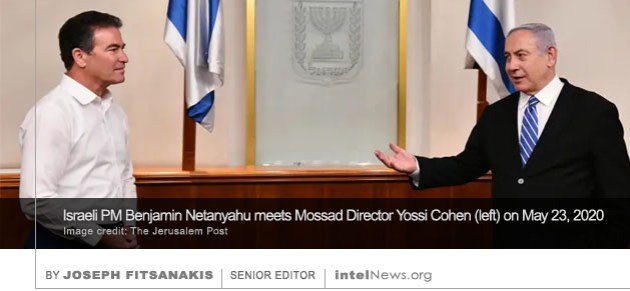 The embattled Prime Minister of Israel, Benjamin Netanyahu, met publicly with the Director of the Mossad, Yossi Cohen, and thanked him for leading the country’s procurement efforts during the COVID-19 crisis. The meeting was a rare public acknowledgement of the central role that the secretive spy agency played during the pandemic.
 The United States has warned that it might be forced to stop sharing intelligence with Australia if the country’s second most populous state enters into a much-heralded investment agreement with China. The Australian state of Victoria has said it intends to join Beijing’s Belt and Road Initiative, a worldwide investment venture that was announced with much fanfare by Chinese President Xi Jinping in 2013.
 Researchers have been able to uncover the identities and track the movements of military and intelligence personnel by using visual and geo-locational information found on a popular smartphone application for beer aficionados. The information uncovered included the home addresses of United States government personnel, some of whom were found to be working at a secret Central Intelligence Agency (CIA) facility.
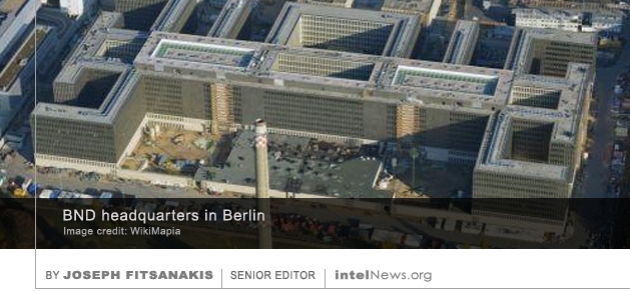 Germany’s Federal Court of Justice has ruled that the country’s intelligence agencies are not entitled to spy en masse on the telecommunications exchanges of foreign citizens. The ruling comes in response to a lawsuit filed by several journalist groups, including the German chapter of Reporters Without Borders. The groups partnered with the German-based Society for Civil Rights and argued in their lawsuit that existing law did not prevent German spy agencies from spying at will on the communications of journalists. This could potentially allow the intelligence agencies to identify trusted sources that journalists use in their work, and even share that information with intelligence agencies of other countries, they argued.







Austrian court finds unnamed retired Army colonel guilty of spying for Russia
June 11, 2020 by Joseph Fitsanakis Leave a comment
The retired colonel was arrested in November of 2018, reportedly after having recently retired following a long military career. Austria’s Defense Ministry said at the time that the arrest came after a tip given to the Austrian government by an unnamed European intelligence agency from a “friendly country”. Martin M. reportedly served in peacekeeping missions in the Golan Heights and Cyprus before being posted at one of the Austrian Armed Forces’ two headquarters, located in the western city of Salzburg. It was around that time, say prosecutors, that the unnamed man began spying for Russia. Starting in 1992, he was in regular contact with his Russian handler, who was known to him only as “Yuri”.
“Yuri” was later identified by Austrian authorities as Igor Egorovich Zaytsev, who is allegedly an intelligence officer for the Main Directorate of the General Staff of the Russian Armed Forces. Known as GRU, the organization is Russia’s primary military-intelligence agency. The Austrian government has issued an international arrest warrant for a Zaytsev.
Zaytsev reportedly trained Martin M. in the use of “sophisticated equipment”, according to the Austrian prosecutor, which he used to communicate classified information to Moscow. He is thought to have given Russia information on a range of weapons systems used by the Austrian Army and Air Force, as well as the personal details of high-ranking officers in the Austrian Armed Forces. Austrian media initially reported that the alleged spy was paid nearly $350,000 for his services to Moscow.
During his trial, Martin M. reportedly admitted that he had received payments form the Russians to provide information. But he claimed that the information he gave them was already publicly available. His legal team compared his role to that of a “foreign correspondent” for a news service. The court, however, did not accept that argument and on Tuesday sentenced Martin M. to three years in prison.
Soon after his sentencing, the defendant was released on parole, after the court counted the 18 months he has served behind bars since his arrest as part of his prison sentence. His legal team said they plan to appeal the sentence.
► Author: Joseph Fitsanakis | Date: 11 May 2020 | Permalink
Filed under Expert news and commentary on intelligence, espionage, spies and spying Tagged with Austria, espionage, GRU, Igor Egorovich Zaytsev, Martin M., News, Russia