Spies are known to use journalistic cover, claims Australian intelligence agency
August 15, 2019 2 Comments
 Foreign spies are known to pose as journalists, which is why journalists should not be exempted from national security investigations, according to testimony by a senior Australian counterintelligence official. The testimony was given on Wednesday at a public hearing held in the Australian parliament to address a series of raids of journalists’ homes and offices by Australian Federal Police in June. The raids were carried out to assist in the investigation of a leak of classified documents in April of last year. According to the leaked documents, Australian government officials have been considering the possibility of authorizing the Australian Signals Directorate (ASD) to collect information on Australians for the first time in the country’s history. The ASD is Australia’s signals intelligence agency, and is equivalent to the Government Communications Headquarters in Britain and the National Security Agency in the United States. It is currently not allowed to collect information on Australian citizens.
At the parliamentary inquiry that started on Monday, members of the media have argued that journalists should have the right to scrutinize the government’s actions and that journalism in the public interest is not harmful to the national security of Australia. But this argument was refuted yesterday by Heather Cook, deputy director-general of the Australian Security Intelligence Organisation (ASIO), Australia’s primary counterintelligence agency. Cook warned that if Australia exempted journalists from national security investigations, hostile foreign powers would exploit journalism to spy on the country. She added that the journalistic profession was being “used nefariously” by foreign intelligence agencies to spy on Australia. “In Australia today, journalism is being used as a cover by foreign intelligence actors”, said Cook, and went on to note that “there is a long history of this worldwide”. She said that journalism offers a convenient cover for spies because it provides “access to senior people and sensitive information” held by those in power.
Journalistic covers are therefore used by “foreign intelligence actors” who seek to “exploit vulnerabilities” and harm the security of Australia, said Cook. She went on to claim that members of foreign intelligence agencies regularly attempt to recruit Australian journalists for purposes of espionage. “In light of this”, said Cook, “ASIO has concern about the concept of exemptions for particular classes of people in the community, such as journalists. Broad exemptions for the media and journalists would invite exploitation by foreign intelligence actors and may increase the intelligence threat faced by Australian journalists”, she concluded. Also on Wednesday, the Australian Federal Police said that it would not rule out further raids on journalists’ offices and homes.
► Author: Joseph Fitsanakis | Date: 15 August 2019 | Permalink
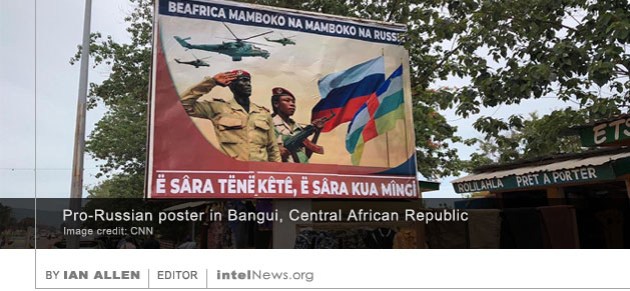 A new report by the American news network CNN has shed new light into the little-researched subject of Russian-owned private military and security operations in Africa. CNN said the report took a month to complete. It claims that a Russian tycoon by the name of
  France allowed Palestinian militants to operate freely on its soil in exchange for not carrying out terrorist attacks there, according to the former director of France’s domestic security service. The alleged deal was struck between the French government and a die-hard Palestinian militant group known as the Abu Nidal Organization, or ANO. The group’s official name was Fatah – The Revolutionary Council, but it was usually referred to by the name of its founder and leader, Abu Nidal. The group was formed in 1974 after a split in Fatah, the Palestinian armed group led by Yasser Arafat. Abu Nidal (real name Sabri Khalil al-Banna) accused Arafat and other senior officials of Fatah and the Palestine Liberation Organization (PLO) of being conciliatory toward Israel. Eventually Abu Nidal moved to Iraq and declared war on Fatah and the PLO, accusing them of betraying the Palestinian cause.
 The United States Central Intelligence Agency plans to retain a strong presence on the ground in Afghanistan, despite reports that American troops may soon be leaving the country following a deal with the Taliban. Several news outlets
 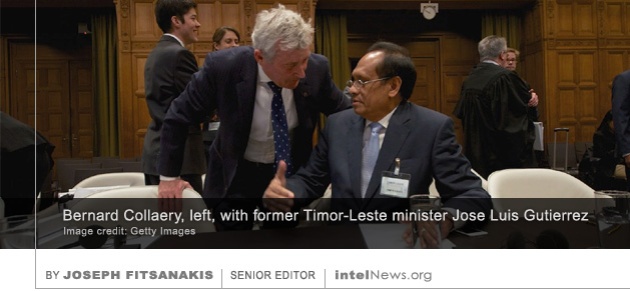 An Australian former intelligence officer will plead guilty to revealing an Australian spy operation against the impoverished nation of East Timor, which prompted international outcry and damaged Canberra’s reputation. IntelNews has covered the case of the former intelligence officer, known only as “Witness K.”
 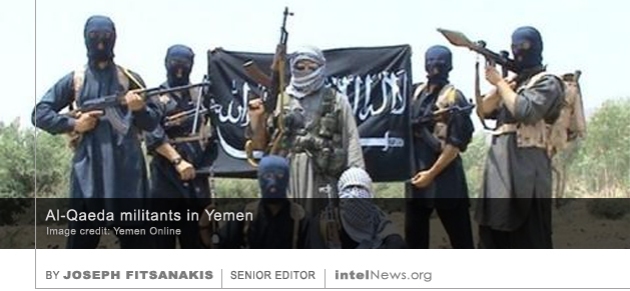 Al-Qaeda and its affiliate groups continue to be the most persistent transnational threats to the security of the West, according to experts who spoke after the alleged death of Osama bin Laden’s son, Hamza. Last week The New York Times
 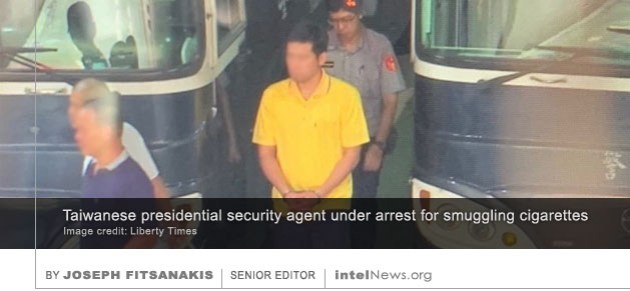 At least 70 members of Taiwan’s presidential security detail used the president’s official trips abroad to smuggle thousands of cigarettes into the country, it has been announced by Taiwan’s’s spy chief. According to
 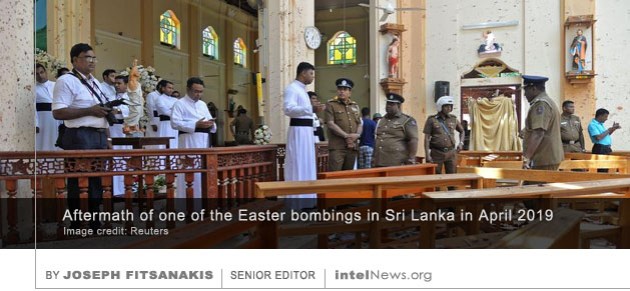 Despite its military defeat in the Middle East, the Islamic State retains the ability to launch “complex international attacks” and will likely do so this year, according to a new report by a United Nations monitoring team. These attacks will occur in “unexpected locations” around the world, says the
 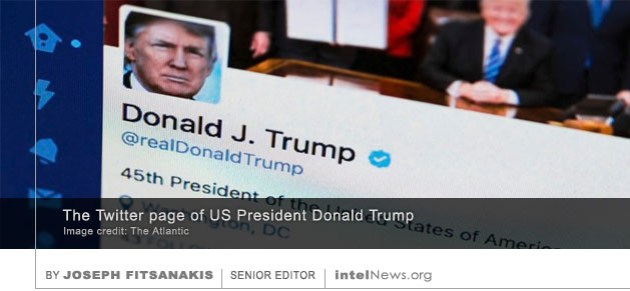 Several countries are behind organized efforts to influence electoral politics in the United States, with Russia being one among a growing list of culprits, according to experts.
 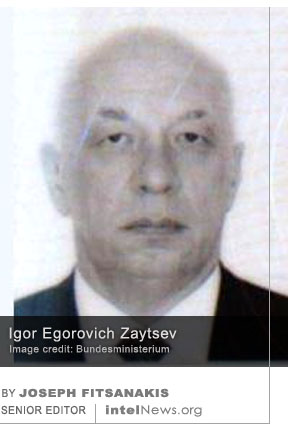 The Austrian government has issued an international arrest warrant for a Russian man who allegedly recruited a retired colonel in the Austrian Federal Army to spy for Moscow. The
 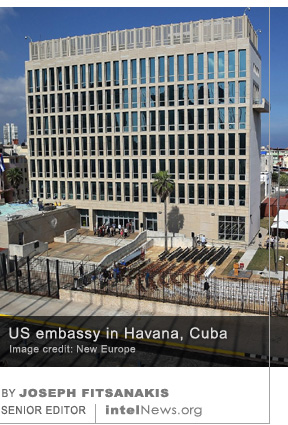 A series of alleged “sonic attacks” by a mysterious weapon may have caused the brains of American diplomats who served at the United States embassy in Cuba to shrink, according to a new scientific study. In 2017 Washington
 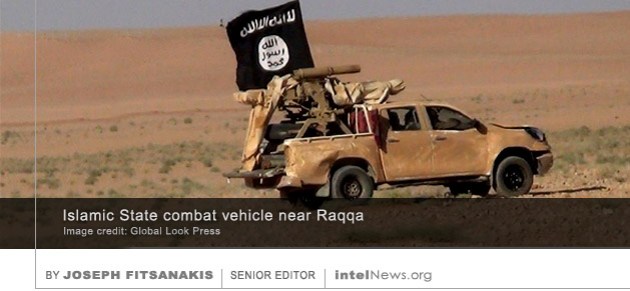 About 1,000 Islamic State fighters have returned to Iraq in recent months and are waging a low-level insurgency that threatens to destabilize rural areas and may be the forerunner of a new sectarian war, an expert has warned. Thousands of fighters belonging to the Islamic State —known also as the Islamic State of Iraq and Syria, or ISIS— crossed into Syria in late 2017. In December of that year, the Iraqi government of Prime Minister Haider al-Abadi declared victory in the war against the militant Sunni group. Since then, however, many of these fighters have been slipping back into Iraq from Syria and are now picking up arms again against the Iraqi state, which they see as being dominated by Iran-allied Shiites.
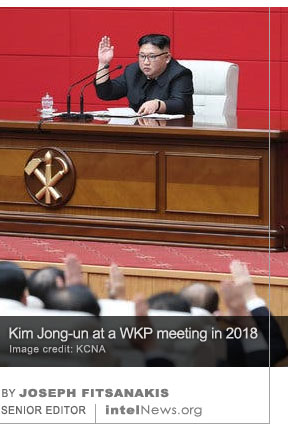 The spy agency of South Korea has dismissed media reports that North Korea had several of its top nuclear negotiators executed or sent to labor camps, but has not rejected rumors of a major reshuffle in Pyongyang. In early June, media reports in Seoul claimed that North Korea had executed at least five of its senior nuclear negotiators and imprisoned several others. Prior to these reports, rumors of executions of North Korean nuclear negotiators had circulated in international diplomatic circles since February, but no specific allegations had surfaced in the news media. That changed when Chosun Ilbo, South Korea’s highest-circulation newspaper, alleged that at least
  A Swiss court has ordered the extradition to the United States of the brother of one of the world’s leading biochemists, who spied on a British pharmaceutical firm to help a Chinese startup. The extradition is part of a large corporate espionage case centered on Yu Xue, a Chinese scientist described by US federal prosecutors as “one of the world’s top protein biochemists”. Yu specializes in drug research for cancer and other serious terminal illnesses. From 2006 until 2016 he worked in the US for GlaxoSmithKline (GSK), a leading British pharmaceutical group.








Security official confirms ‘unprecedented’ anti-corruption campaign in Iran’s judiciary
August 16, 2019 by Joseph Fitsanakis 1 Comment
Until earlier this year, the judiciary was headed by Ayatollah Sadeq Amoli Larijani, a protégé of Khamenei, who named him chief justice in August of 2009. Throughout Larijani’s decade-long tenure, there were rumors of rampant corruption in the judiciary, but Khamenei never seemed to intervene. However, in March of this year Larijani was suddenly removed from his position and replaced with Ebrahim Raeesi (pictured), a conservative former attorney general with middle-to-low-rank clerical credentials. Almost as soon as he took charge of the judiciary, Raeesi announced a sweeping anti-corruption campaign. In July, rumors began to circulate in the media that Iran’s Deputy Chief Justice, Akbar Tabari, had been arrested.
On Wednesday, Ali Abdollahi, head of the judiciary’s intelligence and security wing, said during a speech that Tabari had indeed been imprisoned for “exerting influence on some legal cases” and “having unlawful and unethical relationships”. He added that a number of other members of the judiciary had been placed under arrest in connection with the investigation on Tabari. On Thursday, Abdollahi said that the arrests had taken place under the direction of Supreme Leader Khamenei and that they would continue both inside and outside the judiciary. There would be “no delay in cleansing the inside and outside of the judiciary”, said Abdollahi. Raeesi and Khamenei have not made any public comments. But observers now believe that the unprecedented wave of arrests would never have reached the upper levels of the judiciary unless the supreme leader had personally given the anti-corruption campaign the green light.
► Author: Joseph Fitsanakis | Date: 16 August 2019 | Permalink
Filed under Expert news and commentary on intelligence, espionage, spies and spying Tagged with Ali Abdollahi, corruption, Ebrahim Raeesi, Iran, News, Sadeq Amoli Larijani