Jail for man involved in planned assassination of senior North Korean defector

Hwang Jang-yopAn appeals court in Seoul has upheld the conviction of a South Korean member of a spy cell that planned to assassinate the most senior North Korean defector to the South. The man, identified in media reports only by his last name, Park, is a South Korean citizen who allegedly helped a North Korean spy cell “based in China” plan the assassination of Hwang Jang-yop. In 1997, Hwang caused a sensation on both sides of the border when he defected to the South. A former secretary of the Korean Workers’ Party, Hwang was Pyongyang’s primary theorist and the ideological architect of juche, the philosophy of self-reliance, which is North Korea’s officially sanctioned state dogma. He was also believed to have ideologically mentored North Korean Supreme Leader Kim Jong-il, the father of the country’s current Supreme Leader, Kim Jong-un. Until his death from heart failure in April 2010, Hwang, had been living in the South with around-the-clock security protection.

In October 2010, a few months before Hwang’s death, South Korean authorities revealed that two self-confessed North Korean spies, Tong Myong Kwan and Kim Myung Ho, had allegedly admitted to posing as defectors. Seoul said that Tong and Kim, who were both 36 at the time, were on an assassination mission assigned to them by the intelligence unit of the North Korean Ministry of Defense. The two reportedly stated under interrogation that they were selected for the mission in 2004 and were trained for six years in spy trade craft, as well as techniques of assimilating in life in South Korea, which apparently included “watching South Korean soap operas to gain a better understanding of South Korean society”.

At the time of Tong and Kim’s arrest, South Korean authorities had stated that the two alleged North Korean spies had been assisted by at least two South Korean citizens. One has never been named. The other, Park, was indicted last year of providing logistical support to foreign spies who were plotting to kill Hwang, in return for ₩25 million ($21,000). His legal team appealed the sentence, saying he had been framed by the North Koreans. But on Tuesday, the Seoul High Court rejected the Park’s appeal and upheld his original 3-year jail sentence.

Author: Joseph Fitsanakis | Date: 18 May 2016 | Permalink

S. Korean spy agency admits error, says ‘executed’ N. Korean general is alive

NIS South KoreaThe intelligence agency of South Korea has admitted it made an error when it claimed earlier this year that North Korean authorities had executed one of the regime’s most prominent military figures. On February 10, South Korean newspapers printed a series of articles suggesting that Pyongyang had executed General Ri Yong-gil, who led the Korean People’s Army (KPA), holding post that was equivalent to the United States’ chairman of the Joint Chiefs of Staff. The articles said at the time that the information about General Ri’s execution came directly from the National Intelligence Service (NIS), South Korea’s primary external spy agency. The general had allegedly been executed after being found guilty of “factionalism, abuse of power and corruption”. The reports added that General Ri had turned into an alcoholic and was in poor health as a result. Speculation as to the reason for General Ri’s alleged execution brought up the possibility that he had led an opposition faction within the KPA. This, in turn, led some analysts to speculate that the administration of Kim Jong-un was close to collapse.

However, after the seventh congress of the Workers’ Party of Korea (WPK), which concluded on Monday, not only has the view of Kim’s rule as weak been overturned, but General Ri appears to have come back from the dead. On May 10, the Rodong Sinmun, the official newspaper of the Central Committee of the WPK, announced that General Ri had been appointed member of the WPK’s Central Military Commission. The announcement also said that the General would also be a candidate member of the Political Bureau of the WPK Central Committee, in accordance with the Committee’s wishes. It appears, therefore, that, not only is General Ri alive and well, but that he also features prominently the inner sanctum of the WPK’s political leadership.

Soon after Rodong Sinmun’s announcement, Hong Yong-pyo, South Korea’s Minister of Unification, told reporters in Seoul that the government would have to “check the details” of General Ri’s fate. An anonymous South Korean government official told newspapers that the NIS had assumed General Ri had been purged because he “hadn’t been seen for some time”. But critics of the government in Seoul accused the conservative administration of President Park Geun-hye of using “skewed perceptions” of the regime in Pyongyang in order to block negotiations with North Korea, and urged “some serious soul-searching” regarding the dependability of the NIS. IntelNews regulars will recall that Won Sei-hoon, who headed the NIS from 2008 to 2013, was jailed last year for interfering with national elections in order to further Park’s electoral power.

Author: Ian Allen | Date: 13 May 2016 | Permalink
South Korea announces most high-profile defection from North since Korean War

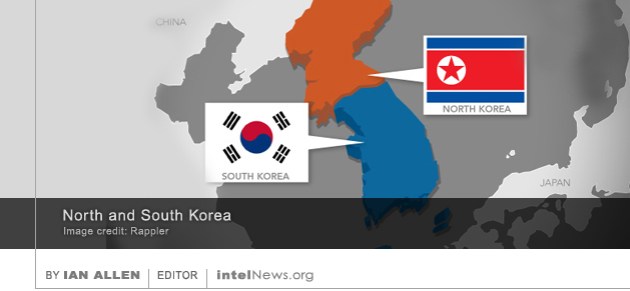
North and South KoreaA North Korean intelligence official who sought refuge in South Korea last year is the most high profile defector to the South since the end of the Korean War in 1953, according to authorities in Seoul. An announcement issued by the South Korean government last week said the defector is a colonel in the Korean People’s Army who worked for the Reconnaissance General Bureau, a military-intelligence agency that resembles the United States Central Intelligence Agency’s Special Activities Division.
The initial announcement was made by a spokesman representing South Korea’s Ministry of Unification, which is the department of the government that is responsible for working towards the reunification of Korea. He said that the agency could not find any records of defectors that were of a more senior rank since the end of all-out hostilities in the Korean War. However, he declined to provide further details about the identity of the colonel and the details of his defection. Another spokesman, from South Korea’s Ministry of National Defense, confirmed the high-profile defection but said he had not been authorized to release further information on the case. But he said that the Reconnaissance General Bureau had defected to the South “last year”, without giving a precise timeline. He added that the North Korean colonel was providing South Korea with details about Pyongyang’s intelligence operations against the South.

Prior to this latest case, the most high-profile defection to the South of a North Korean government figure was that of Hwang Jang-yop, a senior Pyongyang official who was seen as the architect of ‘juche’, the official state ideology of North Korea. During a visit to Beijing, China, in 1997, Hwang entered the embassy of South Korea and asked for political asylum. He died in South Korea in 2010.

It is extremely rare for Seoul to acknowledge defections from North Korea; the South Korean government typically cites privacy and security concerns in response to questions about defectors. The unusual step of announcing the defection of the North Korean colonel several months after the fact led some opposition liberal figures in South Korea to accuse the conservative government of trying to use the case in order to win votes in last Wednesday’s legislative elections. The election was an upset victory for the liberal Minjoo party, which managed to deny the conservative Saenuri Party a majority in the parliament.

Author: Ian Allen | Date: 17 April 2016 | Permalink

Senior South Korean officials’ cell phones hacked by North: report

NIS South KoreaDozens of cell phones belonging to senior government officials in South Korea were compromised by North Korean hackers who systematically targeted them with texts containing malicious codes, according to reports. The National Intelligence Service (NIS), South Korea’s primary intelligence agency, said the cell phone penetrations were part of a concerted campaign by North Korea to target smart phones belonging to South Korean senior government officials. Once they managed to compromise a cell phone, the hackers were able to access the call history stored on the device, the content of text messages exchanged with other users and, in some cases, the content of telephone calls placed on the compromised device. Moreover, according to the NIS, the hackers were able to access the contact lists stored on compromised cell phones, which means that more attacks may be taking place against cell phones belonging to South Korean government officials.

The breach was considered critical enough for the NIS to host an emergency executive meeting with the security heads of 14 government ministries on Tuesday, in order to update them on the situation and to discuss ways of responding to the crisis. According to Korean media, the emergency meeting took place on Tuesday and lasted for over three hours. During the meeting the NIS told ministry representatives that the North Korean operation was launched in late February and was ongoing as of early this week. It specifically targeted government officials and appeared to concentrate on their cell phones, instead of their office phones –probably because the latter are known to be equipped with advanced anti-hacking features. The government employees’ cell phones were reportedly attacked using text messages and emails containing links to web sites that downloaded malicious codes on the users’ phones.

The NIS did not specify the precise purpose of the hacking operation, nor did it explain whether the attacks were informed by an overarching strategic goal. The officials targeted work for a variety of government ministries, but there is no clarification as to whether any operational or administrative links between them exist. The NIS did say, however, that approximately a fifth of all attacks against cell phones were successful in compromising the targeted devices.

Author: Joseph Fitsanakis | Date: 10 March 2016 | Permalink

S. Korea police says professor was secret handler of N. Korea spies

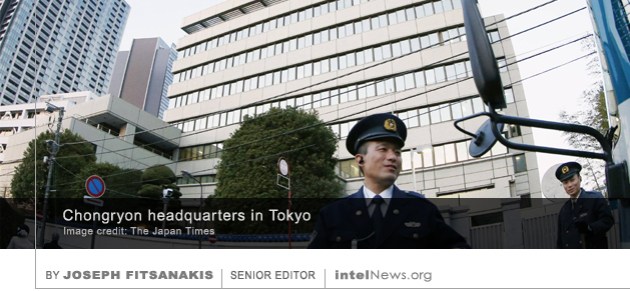
Chongryon A Korean resident of Japan, who was arrested in South Korea for credit card fraud, was allegedly a handler of North Korean sleeper agents operating in South Korea, Japan and China, according to police in Seoul. Pak Chae Hun, 49, was arrested on Tuesday at his home in Seoul by officers of the Public Security Bureau of the Metropolitan Police Department. A statement issued by South Korean police said Pak was until recently an associate professor at Korea University, a higher-education institution based in the Japanese capital Tokyo. The University is funded directly by the government of North Korea through Chongryon, a pro-Pyongyang organization otherwise known as the General Association of Korean Residents in Japan. The group represents tens of thousands of ethnic Koreans living in Japan, who are ideologically affiliated with Pyongyang.
Pak was initially investigated for purchasing computer hardware in Japan using a credit card he had obtained from a Korean company using a false identity and date of birth. But when South Korean police authorities raided his home, they found encrypted messages written on scraps of paper. Further investigations detected encrypted email messages sent to Pak from Japan. According to government sources in Seoul, the messages turned out to contain instructions from Office 225 of the North Korean Workers’ Party Korea, which is tasked with overseeing the activities of sleeper agents operating in South Korea. South Korean authorities now claim Pak was regularly receiving encrypted instructions from Pyongyang, which he relayed to North Korean agents in China and South Korea.

South Korean sources said Pak also provided North Korean agents with telephone devices, as well as cash and ATM cards, which they used to withdraw cash from banks in South Asia. Police sources in Seoul say Pak was recruited by North Korean spies over 15 years ago and regularly traveled to China to meet North Korean agents there. The former professor is now facing fraud charges, while South Korean authorities are considering the possibility of charging him with espionage, even though he was not caught in the act of spying against South Korea.

Author: Joseph Fitsanakis | Date: 03 February 2016 | Permalink

Intelligence agencies doubt North Korea bomb test was hydrogen

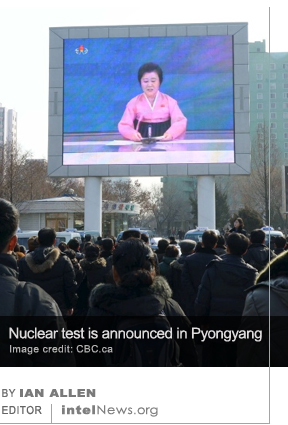
PyongyangIntelligence agencies outside North Korea, including those of South Korea and the United States, are skeptical of Pyongyang’s claims that it conducted a successful test of a hydrogen bomb. On the surface, North Korea’s announcement on Wednesday that it tested a hydrogen bomb is consistent with the policies of the Kim Jong-un administration. The North Korean leader, who succeeded his father as the nation’s supreme leader in 2012, has repeatedly said that he intends to strengthen and modernize the country’s nuclear arsenal. In December, North Korea issued several warnings that it would soon test a hydrogen bomb, nearly a decade after the regime announced its first successful test of an atomic weapon. Unlike atom bombs, which rely on nuclear fission to release energy, hydrogen bombs are based on nuclear fusion; they are far more powerful than atom bombs, which they use as a trigger to reach even more massive levels of energy release.
There was initial shock on Wednesday when Pyongyang announced it had successfully detonated a “miniaturized hydrogen bomb”. A 5.1 magnitude earthquake was registered at a site that had been used in the past by North Korea to test nuclear weapons. A few hours later, however, White House Press Secretary Josh Earnest told reporters in Washington that “initial analysis” conducted by US intelligence agencies was “not consistent” with North Korea’s claims. The explosion had been measured “in the single digit kilotons”, he said, whereas a thermonuclear device, which uses the energy from an initial nuclear device to ignite a secondary, much larger nuclear reaction, is typically measured in megatons. South Korean intelligence observers agreed that some kind of test occurred on Wednesday, but it did not display signs of a hydrogen bomb. Some South Korean officials cautioned that it could have been a failed test of a hydrogen device, or that the North Koreans could have tested only the initial trigger of a hydrogen bomb, which would be a much smaller explosion caused by fission. But Earnest insisted on Wednesday that “nothing [had] caused the US government to change our assessment of North Korea’s technical and military capabilities”.

Some media reports indicated that US intelligence agencies had expected a nuclear test by Pyongyang in 2015 or 2016, but had no specific information on a precise timeframe. It is also worth noting that assessments by US and South Korean intelligence agencies indicate that China was not informed by North Korea about an impending nuclear test and that Beijing was caught by surprise by Wednesday’s developments. China issued a statement condemning the alleged nuclear test soon after it was announced by North Korea.

Author: Ian Allen | Date: 07 January 2016 | Permalink

South Korean lawmakers accuse North of helping Islamic State

Syria North KoreaA powerful South Korean parliamentary committee has accused the North Korean government of ties to the Islamic State, an allegation that is vehemently denied by Pyongyang. On November 18, members of the Intelligence Committee of the National Assembly of Korea stated in a press conference that they believed North Korea had “possible ties to ISIS”. They were referring to the Islamic State of Iraq and Syria, which calls itself Islamic State. On Monday, North Korea’s state-run media blasted the South Korean allegations as “slander and fabrications”, and said they threatened to derail collaboration efforts between Seoul and Pyongyang.
The North Korean website Uriminzokkiri, which provides content from the Korean Central News Agency, accused Seoul of “carelessly tossing around claims of connections to terrorist groups”, in order to bring the two neighboring countries “closer to war”. Tensions remain high in the Korean Peninsula, despite an agreement that was struck in August between the two sides. In the preceding months, Pyongyang had threatened to carry out all-out invasion of South Korea, accusing Seoul of harboring aggressive intentions against it. A report in Uriminzokkiri warned that the August agreement “would be undone” if the South persisted in alleging that North Korea provided assistance to ISIS.

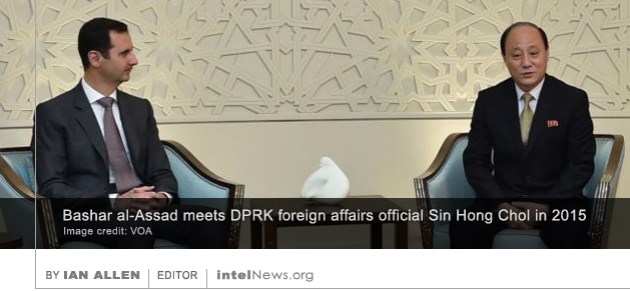
It should be noted that the Intelligence Committee of South Korea’s National Assembly has not given evidence of its claims that Pyongyang is supporting ISIS. Additionally, the North Korean regime is believed to be a strong international ally of Syrian President Bashar al-Assad, who is a primary adversary of ISIS. The two countries have longstanding military and commercial ties. It is believed that North Korean technicians aided in the construction of Syria’s al-Kibar nuclear facility, which was bombed by Israeli jets in Operation ORCHARD in 2007. Today, North Korea is among a small number of countries that maintain fully staffed embassies in Syrian capital Damascus. In September of this year, the government of Syria dedicated a park in the capital to Kim Il Sung, North Korea’s late leader.

Author: Ian Allen | Date: 10 November 2015 | Permalink

Defectors provide rare glimpses of North Korean spy operations

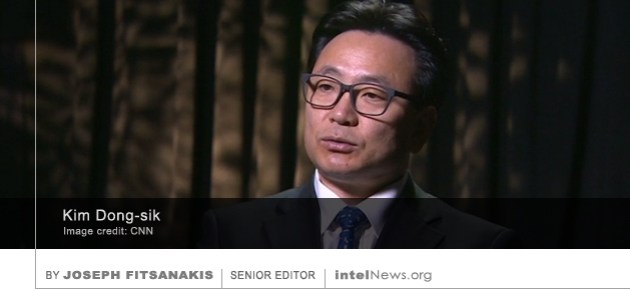
Kim Dong-sikTwo high-profile North Korean defectors, who used to work for the country’s spy agencies, have spoken publicly about the use of espionage by one of the world’s most impenetrable intelligence communities. Kim Dong-sik and Kang Myong-do told American television network CNN last Friday that human intelligence officers —the technical term for spy recruiters— are highly sought after in North Korea. Kim said he was selected for special-operations training while he was still in high school, and in 1981 he was admitted to an elite intelligence academy in Pyongyang. While there, he was trained in the use of firearms and explosives, as well as in martial arts and underwater diving, among other skills. CNN did not elaborate on the identity of the North Korean agency that trained Kim, but it was almost certainly the Special Operation Force of the Korean People’s Army, which is believed to be among the largest such outfits in the world.
It was only after years of training, said Kim, that he was told he was going to be a spy. Most likely, that meant he was detailed to the Reconnaissance General Bureau, a military-intelligence agency that resembles the United States Central Intelligence Agency’s Special Activities Division. He told CNN that he was not permitted to be captured alive by adversary agencies, and that his loyalty to the North Korean regime would be questioned if he failed to commit suicide at the conclusion of an aborted mission. Kim said his first mission abroad took him to South Korea, where he helped exfiltrate a North Korean intelligence officer named Lee Sun-sil, who had been working in the South as a non-official-cover operative for over a decade. His second mission involved trying to recruit South Koreans who were believed to be sympathetic toward Pyongyang. In 1995, however, he was captured alive during his third mission to South Korea, after failing to commit suicide as per his operational instructions. For that, he said, his entire family was executed back in North Korea, though his claim is admittedly difficult to verify.

CNN spoke to another high-profile North Korean defector, Kang Myong-do, son-in-law of the country’s former Prime Minister, Kang Song-san, who died in 2007. Kang, who was once described by The New York Times as “the most damaging defector ever to escape from North Korea”, used to work for the United Front Department, a civilian intelligence outfit that is subordinate to the ruling Workers’ Party of Korea. He told CNN that there are probably “hundreds” of North Korean intelligence officers operating in the United States at any given point, and that their main goal is to “recruit Korean-Americans who lean towards supporting North Korea”. He added that Pyongyang sees intelligence officers as crucial assets in its confrontation with its adversaries, and that it treats them exceedingly well when they are loyal. In North Korea, “spies are treated on the same level as generals”, he said.

N. Korean dictator had army chief publicly executed, say intel sources

Hyon Yong CholBy JOSEPH FITSANAKIS | intelNews.org
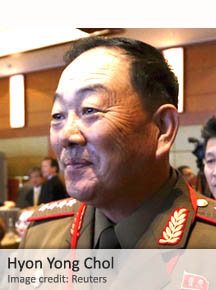
The head of the North Korean Armed Forces was publicly executed by a firing squad using antiaircraft fire, according to a briefing by South Korean intelligence officials. Representatives from South Korea’s National Intelligence Service told reporters in Seoul last week that the execution took place on April 30 in the courtyard of a military academy in North Korean capital Pyongyang.

If the report is accurate, it would mean that Hyon Yong Chol, who led the country’s People’s Armed Forces, is no more. Hyon was considered a trusted advisor to North Korean dictator Kim Jong-Un, who appointed him Minister of the People’s Armed Forces in the summer of 2014. Despite his impressive title, Hyon’s power was limited, as the head of the North Korean Armed Forces is largely a figurehead. True military power rests with the all-powerful Central Military Commission of the Korean Workers Party, and with the National Defense Commission, whose chairman, Kim Jong-Un, controls the military. Still, if the report of Hyon’s execution turns out to be accurate, it will point to the continuation of the power-struggle among different factions within the North Korean political and military hierarchy.

According to South Korean intelligence, Hyon was executed because he “dozed off” during a high-level meeting chaired by Kim, an act that was interpreted as proof of “disrespect and disloyalty”. However, there are suspicions that Hyon had directly challenged Kim on several occasions, and that the North Korean dictator suspected him of organizing an insurrection by members of the military. The NIS said during last week’s briefing that the execution was watched by “hundreds of senior North Korean officials” and that the firing squad made use of high-caliber artillery to kill Hyon, in order to make an example of his brutal killing.

It is worth noting that South Korean intelligence briefings on the North are not always accurate. Seoul claims that North Korean authorities have executed at least 15 senior officials in the past 12 months, among them Jang Song Thaek, uncle to the country’s leader, who was thought to be the second most powerful man in the country until his purported death in December 2013.

News you may have missed #890

Kim Kuk-giBy IAN ALLEN | intelNews.org
►►US DEA agents given prostitutes and gifts by drug cartels. US Drug Enforcement Administration agents allegedly had “sex parties” with prostitutes hired by Colombian drug cartels overseas over a period of several years, according to a report released Thursday by the Justice Department. Former police officers in Colombia also alleged that three DEA supervisory special agents were provided money, expensive gifts and weapons from drug cartel members. Seven of the 10 DEA agents alleged to have participated in gatherings with prostitutes and received suspensions of two to 10 days.
►►Polish lieutenant accused of spying for Russia. A Polish Air Force pilot allegedly copied several thousand flight plans for F-16 fighters and handed them to Russian intelligence. According to Polish media, the airman was arrested by authorities last November, but the information has only recently emerged. The pilot was allegedly suspended from his duties, his passport was confiscated, and he was banned from leaving the country. Some reports suggest that soon after the arrest of the lieutenant, a Russian diplomat was expelled from the country for spying.
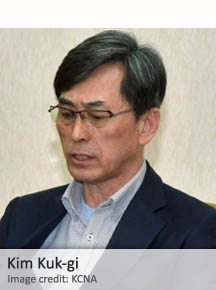
►►North Korea claims arrest of South Korean spies. North Korea said it had arrested two South Koreans engaged in espionage. The two arrested men, identified as Kim Kuk-gi (see photo) and Choe Chun-gil, were presented at a press conference in Pyongyang attended by journalists and foreign diplomats. A North Korean media report said Kim and Choe had gathered information about North Korea’s “party, state and military secrets”. It was not immediately clear where or when the two men were arrested. In Seoul, the country’s intelligence agency said the charge that the two men were working for the agency was “absolutely groundless”.

North Korean hackers operating secretly in China, says defector

Shenyang railway stationBy JOSEPH FITSANAKIS | intelNews.org
An underground network of North Korean hackers are conducting complex cyberattacks against worldwide targets from Chinese cities without the knowledge of Beijing, according to a former professor who trained them. Kim Heung-Kwang was a professor of computer science in North Korean capital Pyongyang, until his defection in 2004. He told CNN on Tuesday that part of his job was training members of North Korea’s elite cyberintelligence corps, whose task was to compromise computer systems around the world. Kim alleged that some of the hackers joined a specialized outfit called Bureau 121. It was established in complete secrecy in 1995 and ten years later it began sending its operatives abroad, especially in northern China. According to Kim, Bureau 121 set up a complex network of hackers in the Chinese city of Shenyang, in northern China’s Liaoning Province. Shenyang is the largest Chinese city near North Korea, and Bureau 121 operatives were allegedly able to effortlessly blend in the sizeable Korean community there. The former professor told CNN that the hackers “entered China separately” over time, “in smaller groups […], under different titles” such as officer workers, trade company officials, or even diplomatic personnel. They operated like typical spies, working regular jobs by day and “acting on orders from Pyongyang” by night, said Kim. They gradually set up an underground “North Korean hacker hub”, operating secretly in Shenyang for several years, relocating from place to place in order to shield their activities from computer security experts. Kim told CNN that Shenyang’s bustling, money-driven life and its good Internet facilities made it easy for Bureau 121 members to work secretly on several projects that required sophisticated telecommunications infrastructure. North Korea lacks China’s telecommunications network capabilities, said Kim, which is why Pyongyang decided in the early days of the Internet to transport its hackers to Shenyang. He added that Bureau 121 has rolled back considerably its overseas operations in recent years, due to the advancement of high-speed telecommunications networks in North Korea; but some North Korean hackers are still active in northern China, he said.

North Korean commando cells may have infiltrated US in 1990s

North Korean troops in trainingBy IAN ALLEN | intelNews.org
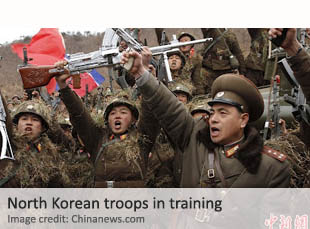
North Korean commandos, trained to attack large cities and nuclear installations, may have been secretly stationed on American soil in the 1990s, according to a declassified report from the United States Department of Defense’s intelligence wing. The report, dating from September 2004, was compiled by the Defense Intelligence Agency (DIA), which is America’s foremost intelligence organization concerned with military secrets. The report states that the North Korean commando cells were set up by the country’s Ministry of People’s Armed Forces under the command of its Reconnaissance General Bureau. Known as RGB, the Bureau is believed to have under its command an estimated 60,000 members of North Korea’s Special Forces. It is responsible for countless covert operations in South Korea, Japan, and elsewhere around the world, which include assassinations and kidnappings. Its most notorious action was the so-called Blue House Raid of 1968, in which a group of North Korean commandos infiltrated the South and attacked the official residence of South Korean President Park Chung-hui in an attempt to assassinate him. In 1983, RGB forces were responsible for a bomb attack in Rangoon, aimed at killing South Korean President Chun Doo-hwan during his official visit to the Burmese capital. The bomb killed 21 people, but Chun survived. According to the 2004 DIA report, the RGB established five “liaison offices” in the early 1990s, which were tasked exclusively with training a select number of operatives to infiltrate the US and remain in place until called to action by Pyongyang. They would become operational in the event of a war breaking out between America and North Korea, at which point they had been instructed to conduct raids on large US cities, sabotage nuclear power plants, etc. The DIA document states that the North Korean plan was put in place because Pyongyang had no other lethal means of reaching the US at the time. The report is significantly redacted and includes the warning that it contains raw information, meaning that it had not been cross-checked and could not be conclusively verified. Additionally, the document makes no mention of the fate of the RGB’s infiltration program and whether it continues to the present day.

Secret document sheds light on North Korean abduction operations

Choi Eun-hee and husband Shin Sang-okBy JOSEPH FITSANAKIS | intelNews.org
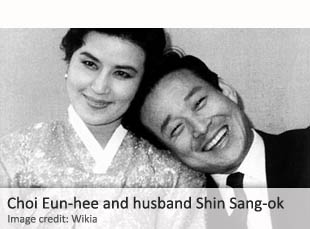
A document allegedly acquired from the government of North Korea by Western spy agencies appears to shed light on a top-secret North Korean intelligence program to kidnap dozens of foreigners in the 1970s and 1980s. That the North Korean regime engaged in systematic abduction of foreign citizens during the Cold War is not new information. International sources estimate the total number of foreign subjects abducted by North Korean intelligence to be in the dozens. They are said to include 17 citizens of Japan, as well as Chinese, South Korean, Malaysian, Italian, French and Lebanese nationals. In September 2002, during a brief period of rapprochement with Japan, North Korean leader Kim Jong-il admitted that 13 Japanese citizens had been abducted and taken to North Korea in the 1970s and 1980s. They included Megumi Yakota, a 13-year-old schoolgirl who disappeared from Japan 1977 and is believed to have died while in captivity in North Korea. The most famous case of abduction is undoubtedly that of South Korean actress Choi Eun-hee and her husband, the director Shin Sang-ok. The two were abducted by North Korean intelligence operatives in 1978 and taken to Pyongyang. They were then forced to lead the North Korean government’s efforts to develop its motion-picture industry. The two collaborated with the regime until 1986, when they managed to escape while on a visit to Vienna, Austria. On Wednesday, The Washington Times said it had seen a North Korean document “recently obtained” by Western intelligence agencies, which traces the history of the reclusive regime’s abduction unit and directly implicates its late leader, Kim Jong-il, in its creation. The paper cited “diplomatic sources familiar with the discovery”, in claiming that the document shows “how and why” Kim established the unit, called the Investigation Department, in 1977. The unit, known by its Korean acronym JOSABU, operated as part of the ruling Korean Party Central Committee. Its mission was to abduct foreigners, bring them to North Korea, and use them to train North Korean intelligence operatives in foreign languages and cultural knowledge. Some of the abductees were turned into spies and were sent abroad to conduct intelligence operations on behalf of the North Korean state. The document cited by The Times details two meetings, in September and October 1977, in which North Korean leader Kim instructed intelligence officials to establish JOSABU and explained the logic behind the proposed kidnappings. Apparently, Kim believed that if young foreigners were brought to North Korea and instructed for a period of up to seven years they could turn into “valuable intelligence agents who would be useful until the age of 60”. Not long afterwards, North Korean abduction teams were dispatched to various countries in Eastern Europe, the Middle East and Southeast Asia, according to the document. The paper notes that most of the abductees are believed to have been used for training purposes, propaganda activities, or dispatched abroad to conduct intelligence operations.

Spy satellites detect new nuclear weapons plant in North Korea

Yongbyon Nuclear Scientific Research CenterBy IAN ALLEN | intelNews.org
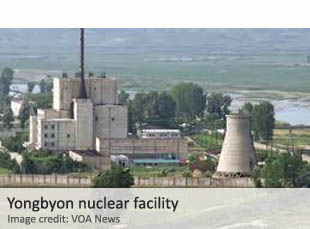
A brand new nuclear weapons production plant detected by spy satellites in North Korea would enable the recluse Asian country to double its uranium-based nuclear warheads, according to intelligence sources. South Korean daily newspaper JoongAng Ilbo said the plant was detected by spy satellites equipped with infrared cameras, which are able to sense heat emissions released by gas centrifuges. The latter are essential in separating uranium-235 isotopes from the predominant uranium-238 isotope, which constitutes over 99 percent of natural uranium and cannot be weaponized. JoongAng Ilbo quotes an unnamed South Korean intelligence official, who said the data collected by the spy satellites indicate that Pyongyang has activated a new centrifuge facility inside the Yongbyon Nuclear Scientific Research Center. Located approximately 60 miles north of the capital Pyongyang, Yongbyon is North Korea’s major nuclear facility, which was used to produce the fissile material for North Korea’s first nuclear weapon test in 2006. Prior to the establishment of the newly detected plant on the site, the facility was believed to contain around 2,000 centrifuges. The new facility is thought to have added significantly to North Korea’s existing capacity to enrich uranium, as it appears from its architecture and size that it contains several hundred operational centrifuges. South Korean and Western officials estimate that North Korea has the capacity to produce up to five nuclear warheads, though many doubt that the country’s nuclear engineers have been able to miniaturize the warheads so as to mount them on a long-rage delivery system. In 2012, a court in Ukraine sentenced two North Korean citizens to eight years in prison on charges of trying to obtain secret technical information about missile engines. News media contacted South Korean’s Ministry of Foreign Affairs, which oversees surveillance operations against the North’s nuclear program, but received no answer regarding the discovery of the new production facility.

Korean spy charged with forging Chinese files attempts suicide

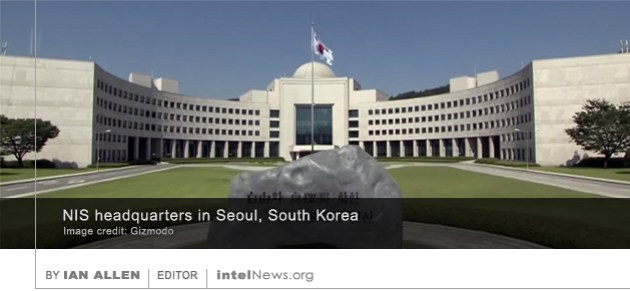
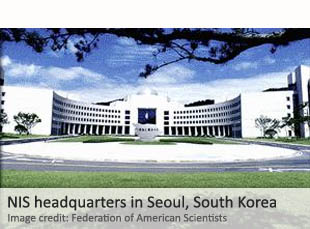
NIS headquarters in Seoul, South KoreaBy I. ALLEN and J. FITSANAKIS | intelNews.org
A South Korean intelligence officer, who was charged earlier this month with deliberately forging Chinese government documents, tried to kill himself inside a car on Sunday, according to local media. The officer, identified in reports only by his last name, Kwon, was fingered last week by South Korean media as the source of a set of documents used in a court case against a man accused of spying for North Korea. Yoo Woo-sung, a prominent North Korean defector living in the South, was arrested last year on charges of espionage. Government prosecutors accused Yoo of collecting information on at least 200 North Korean defectors living in the South while working for the Seoul city government. The prosecution produced a number of Chinese transit documents showing that Yoo had entered North Korea repeatedly from China, ostensibly in order to transport information to his handlers in Pyongyang. However, in a dramatic turn of events, the case against Yoo collapsed in August of 2013; this was followed by allegations that some of the documents presented to the court by the prosecutors had been forged. It now appears that the forged documents, which were travel records allegedly issued by the Chinese government, had been given to the prosecution by South Korea’s National Intelligence Service (NIS). Court documents surfaced last week identifying Kwon (named initially as ‘Kim’) as one of the sources of the forged documents. Kwon fervently denied the accusations, claiming that he too had been duped by a Chinese asset who gave him the forms. He also argued that that the asset was probably working for Chinese intelligence. On Sunday, however, Kwon apparently tried to kill himself at his home in a suburb of Seoul. Read more of this post