News you may have missed #441

  • US officials admit terrorist suspect was DEA informant. US government officials have told The Washington Post what the world’s media has been saying for almost a year, namely that Pakistani-American David Coleman Headley, who was arrested by the FBI in October for plotting an attack on a Danish newspaper, was working as a Drug Enforcement Administration informant while training with Islamist insurgents in Pakistan.
  • Ex-CIA officer decries Israeli policies. Philip Giraldi, a former counter-terrorism specialist and military intelligence officer at the CIA, has said in an interview that Israel’s policies in Palestine “are manifestly evil”.
  • Bomber who killed seven at CIA base was not vetted. Humam Khalil Abu-Mulal al-Balawi, a Jordanian al-Qaeda sympathiser who killed himself and seven CIA agents at a remote base in eastern Afghanistan in January had not been properly vetted, the CIA has said.

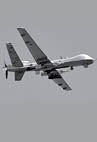
Lawsuit claims CIA uses pirate software in drone assassinations

Predator drone

Predator drone

By JOSEPH FITSANAKIS | intelNews.org |
The Central Intelligence Agency is using stolen software code in its covert Predator drone assassination program in Afghanistan and Pakistan, according to a lawsuit filed by a software company in the US state of Massachusetts. The software company, Intelligent Integration Systems, Inc. (IISi), which is based in Boston, accuses the CIA of unlawfully using proprietary coding, purchased through Netezza Corporation, a former partner of IISi. The latter claims Netezza sold the CIA a software application called Spatial, which the CIA uses to perform targeted killings through its unmanned drone program. But IISi alleges that Spatial contains stolen coding initially developed by its programmers. What is more, the company claims that the pirated coding is in fact defective, and that the CIA runs the risk of its unmanned Predator drone strikes “being off by about 40 feet”. Read more of this post


News you may have missed #434 (book news edition)

News you may have missed #433

  • White House quiet on Pollard release speculation. The Barack Obama administration is staying silent on a reported offer from Israeli Prime Minister Benjamin Netanyahu to extend a settlements freeze in the occupied areas, in exchange for the release of Jonathan Pollard, currently held in a US prison for spying on America for Israel.
  • ‘The Secret History of MI6’ published. An authorized history of the first forty years of Britain’s Secret Intelligence Service, MI6, has been published by Bloomsbury. The book is written by Professor Keith Jeffery, of Queen’s University, Belfast, based on his unrestricted access to SIS archives of the period.
  • Pakistan accuses Briton of spying. Authorities in Pakistan are holding a 70-year-old Briton on suspicion of spying for almost a month in the country’s lawless tribal areas. Nicholas Bain, who claims he is an author researching a book, is suspected of “working for a British intelligence agency”, according to a Pakistani official.

News you may have missed #417

  • US Senators question Chinese telecom hardware bid. Senior Republican senators have called for an investigation on whether US national security will be compromised by the Chinese telecommunications company Huawei seeking to sell equipment to Sprint Nextel, which provides services to the US military and law enforcement agencies.
  • Pakistan environmental chaos causes security concerns. The catastrophic floods in Pakistan, which have displaced millions of persons over the last several weeks, when combined with the other socioeconomic and political stresses on Pakistan, have the potential to further weaken an already weak Pakistani state, according to a new US Congressional Research Service report.
  • Russian base in Armenia to stay through 2044. Russia has secured a long-term foothold in the energy-rich and unstable Caucasus region by signing a deal with Armenia that allows a Russian military base to operate until 2044 in exchange for a promise of new weaponry and fresh security guarantees.

Bookmark and Share

News you may have missed #410

  • Clapper confirmed as US DNI in Senate-White House deal. Retired general James Clapper has been unanimously confirmed by the Senate as US National Intelligence Director, after a series of last-minute deals between objecting Republican Senators and the White House, which nominated Clapper several months ago.
  • Canada rejects residency request by Pakistani ex-ISI spy. The Canadian government has refused a permanent residency application by Haroon Peer, a Danish citizen, who worked for three Pakistani intelligence agencies, including the Inter-Services Intelligence directorate. Haroon is married to a Canadian-born woman and has three Canadian-born children.
  • Lebanon in shock after ex-general’s arrest on spy charges. Last week’s arrest of Fayez Karam, a well-respected retired general and politician with the Hezbollah-allied Christian Free Patriotic Movement (FPM), on suspicion of spying for Israel, has sent shock waves through Lebanon and left many wondering how deep the Jewish state has infiltrated the country.

Bookmark and Share

News you may have missed #405

  • Democracy Now on Google-CIA partnership. Democracy Now has aired an interview with John Simpson, director of Consumer Watchdog’s Inside Google project, and Noah Shachtman, of Wired magazine’s Danger Room blog, who broke the story of the Google-CIA investment partnership.
  • Ex-CIA chief downplays cyberwar with China. Retired CIA chief Michael Hayden downplayed the notion that the US is in a raging “cyberwar” with China during a speech on Thursday at the Black Hat Technical Security Conference in Las Vegas.
  • Men held over parcel bomb sent to MI6. Two men have been arrested in north Wales, after parcel bombs were sent to the offices of the British government executive at 10 Downing Street, and the headquarters of MI6, Britain’s external intelligence agency. The two men, aged 52 and 21, are believed to be related and of Pakistani origin.

Bookmark and Share

Pakistanis question validity, timing, of Wikileaks files

Hamid Gul

Hamid Gul

By JOSEPH FITSANAKIS | intelNews.org |
Senior Pakistani government and intelligence officials have reacted angrily to leaked reports, which suggest that Pakistani spy agencies are secretly working with the Taliban to oppose US-led coalition forces in Afghanistan. The accusations have emerged as part of the largest document leak in US military history, which was made public on Sunday by anti-secrecy activist website Wikileaks. Among the nearly 92,000 intelligence and military files disclosed by Wikileaks are several reports suggesting that General Hamid Gul, who headed Pakistan’s Inter-Services Intelligence (ISI) directorate in the late 1980s, is among a number of high-profile Pakistanis who regularly help the Taliban organize strikes against US-led coalition troops and their supporters in Afghanistan. But on Monday General Gul, who is a well-known critic of the 2001 US-led invasion of Afghanistan, vehemently rejected the leaked reports, calling them “a pack of lies” and “utterly wrong”. Read more of this post

Largest leak in US military history reveals Afghan war details

WikiLeaks

WikiLeaks

By JOSEPH FITSANAKIS | intelNews.org |
American, British and German military planners are scrambling to contain the political impact of a massive cache of classified reports from Afghanistan, which has been leaked by an anti-secrecy activist group. It has now become known that, several weeks ago, the group Wikileaks.org handed over a total of 91,731 classified incident and intelligence reports from the US-led occupation force in Afghanistan to American newspaper The New York Times, British broadsheet The Guardian, and German newsmagazine Der Spiegel. All three outlets agreed to examine the material, abiding by Wikileaks’ condition that they would wait until Sunday, July 25, to release it. All three news media published news of the leak almost simultaneously on Sunday night, (see here, here and here), and posted several of the files, which provide an unprecedented six-year archive (from 2004 to 2009) of day-to-day US-led military operations in Afghanistan. This unprecedented disclosure is believed to represent the largest public leak of classified material in US military history. Read more of this post

News you may have missed #392

  • Soviet spy stood ready to poison DC’s water, says Ex-KGB general. A Soviet deep-cover agent, who was in the United States from around 1963 to 1965, had orders to poison Washington DC’s water and to sabotage its power supply if war with the United States became imminent, according to Oleg Kalugin, former chief of KGB operations in North America.
  • Two interesting interviews. George Kenney, of Electric Politics, has aired two interesting interviews, one with Dr. Thomas Fingar, former US Deputy Director of National Intelligence, touching on a variety of issues, and one with Philip Alston, the United Nations Special Rapporteur on extrajudicial killings, who comments on the CIA drone attacks in Afghanistan and Pakistan.
  • Lawyers who won NSA spy case want $2.63 million. Eight lawyers, who managed to prove that Saudi charity al-Haramain was illegally wiretapped by the US National Security Agency (see here for previous intelNews coverage), are demanding millions of dollars in damages from the US government.

Bookmark and Share

News you may have missed #388

  • Political policing rising in US, ACLU report warns. A new report by the American Civil Liberties Union chronicles government spying and what it describes as the detention of groups and individuals “for doing little more than peacefully exercising their First Amendment rights”.
  • Mistrust still marks ISI-CIA ties, say US officials. John Tierney, chairman of the US House Armed Services Committee, told a Pakistani delegation that there is mistrust between the CIA and ISI, according to a report by the Pakistan Senate’s Standing Committee on Defence. Regular intelNews readers should not be surprised.
  • Britain releases secret document at heart of UKUSA agreement. Authorities in the UK have released a six-page document dating from 1946, which describes the “British-US Communication Intelligence Agreement”, known as BRUSA, later UKUSA. The deal has tied the US, UK, Canada, Australia and New Zealand into a worldwide network of electronic listening posts.

Bookmark and Share

News you may have missed #385

  • Indian, Pakistani spy chiefs meet in Islamabad. The meeting between the Director of India’s General Intelligence Bureau, Rajiv Mathur, and his Pakistani counterpart Javed Noor, took place in the aftermath of the arrest of Madhuri Gupta, second secretary at the Indian high commission in Islamabad, Pakistan, who is accused of passing on secrets to Pakistan’s ISI spy agency.
  • CIA releases documents on Korean War. The US Central Intelligence Agency has released a document collection that includes more than 1,300 redacted files consisting of national estimates, intelligence memos, daily updates, and summaries of foreign media concerning developments on the Korean Peninsula from 1947 until 1954.
  • Lebanon to probe top government officials in Israeli spy ring case. The arrest of a senior Lebanese phone firm manager, who is accused of spying for Israel, has prompted prosecutors to ask that several senior government officials be stripped of their immunity so that they can be investigated in relation to a nationwide crackdown on alleged Israeli spy rings in the country.

Bookmark and Share

News you may have missed #355

Bookmark and Share

Private US spy network still operating in Pakistan

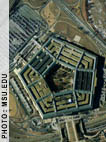
US Pentagon

US Pentagon

By IAN ALLEN | intelNews.org |
Senior US Pentagon officials continue to rely almost daily on reports from a network of contracted spies operating deep inside Afghanistan and Pakistan, according to The New York Times. Last March, when the paper revealed the existence of the network, several senior US military sources expressed serious concerns about the operation, which some say borders on illegality, and is currently under investigation by the US government. Although The Times is apparently “withholding some information about the contractor network, including some of the names of [its] agents”, it appears that the network is staffed by former CIA and Special Forces operatives. The entire operation appears to be an attempt to evade some of the stringent oversight rules under which the CIA and the US Pentagon are required to operate. Read more of this post

News you may have missed #351

Bookmark and Share