Hardline military official to take command of Pakistan’s powerful spy agency

Lieutenant General Asim MunirThe hardline former director of Pakistan’s military intelligence agency is preparing to take the helm of the country’s powerful spy agency, the Inter-Services Intelligence directorate (ISI). Lieutenant General Asim Munir, who has spent more than two decades as a career military officer, has been officially appointed as director-general of ISI. In one of his first notable assignments, Munir served as a military attaché in Pakistan’s embassy in Saudi Arabia. After being promoted to a two-star general, he was appointed commander of Force Command Northern Areas in Gilgit-Baltistan, Pakistan’s northernmost region. The area borders Jammu and Kashmir, an autonomous Indian-administered region, which the Pakistanis claim belongs to them. Gilgit-Baltistan is also a strategic geopolitical corridor that connects Pakistan with one of its major regional allies, China.

In late 2016, after concluding his service in Gilgit-Baltistan, Munir was appointed by Chief of the Pakistan Army Staff General Qamar Javed Bajwa to serve as director-general of Military Intelligence, the spy wing of the Pakistan Army. In September of this year, Munir was promoted to lieutenant general, a move that prompted rumors that he would soon become head of ISI. According to The Asia Times, which published a summary analysis of Munir’s career, his recent promotion confirmed that he was “the army chief [General Bajwa]’s guy” and that he was favored to lead the ISI. Technically it is Pakistan’s prime minister who appoints the head of ISI. But in reality the chief of the Army is the one who selects the spy agency’s director. The past four directors of the ISI have all been handpicked by Pakistan’s military leadership.

Munir’s appointment as head of Pakistan’s most powerful spy agency was due to his experience in working closely with Pakistan’s most important strategic partners, China and Saudi Arabia, said The Asia Times. The career military officer is known within army ranks as a nationalist hardliner who views the army as a central guarantor of political stability in Pakistan. He is also a practicing Muslim and has sought to strengthen the ties between Islam and the Pakistani armed forces. According to The Asia Times, Munir is expected to deepen the ISI’s involvement in Pakistan’s domestic political affairs. This is something that concerns pro-democracy and other opposition activists in the country, who have been alarmed by the recent rise to power of /Imran Khan, a former cricket player and Pakistan’s newly elected prime minister. Munir will be formally sworn in his new position on October 25, when the current director-general of ISI, Lieutenant General Naveed Mukhtar, is expected to announce his retirement.

Author: Ian Allen | Date: 19 October 2018 | Permalink

Pakistan removes judge who accused spy agency of trying to rig general election

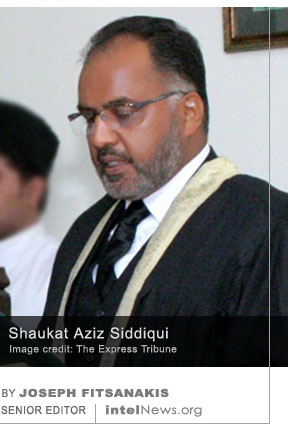
Shaukat Aziz SiddiquiThe government of Pakistan has dismissed a High Court judge who accused the country’s powerful intelligence agency of interfering with the judicial process in order to rig the outcome of last July’s general election. On July 25, the governing center-right Pakistan Muslim League – Nawaz (PML-N) was unseated by the conservative-centrist Pakistan Tehreek-e-Insaf, headed by former cricket star Imran Khan. The elections took place amidst a corruption scandal that saw Nawaz Sharif, former prime minister of Pakistan and leading member of PML-N, arrested on charges of fraud. Sharif was charged following the release of the so-called Panama papers, the massive data leak of documents belonging to Panamanian offshore firm Mossack Fonseca. The leak disclosed that Sharif and his family were owners of a large number of high-end properties in the United Kingdom and elsewhere around the world.

Shortly after the revelations, Sharif moved to Britain, where he and his children cared for his ailing wife. During his absence, he was sentenced in absentia to ten years in prison. Sharif chose to return to Pakistan on July 13, less than two weeks prior to the general election, and was arrested upon arriving in Islamabad. His supporters claim that the media spectacle surrounding his imprisonment severely hurt PML-N’s electoral performance. Last month, the High Court in Islamabad suspended Sharif’s prison sentence and ordered his release on bail, saying that the prosecution had failed to prove conclusively that the high-end properties in the UK belonged to him. Sharif’s release prompted renewed accusations of electoral rigging by PML-N supporters, who claim that Sharif could have been released from prison before the elections, and that the High Court deliberately withheld its decision until this month in order to hurt PML-N.

In July, Shaukat Aziz Siddiqui, a High Court judge, publicly added his voice to those claiming that Sharif’s arrest had been politically motivated. In a speech given before the Rawalpindi Bar Association, the High Court judge accused Pakistan’s powerful Inter-Services Intelligence Directorate (ISI) of exercising pressure on High Court judges in order to delay the decision to release Sharif on bail until after the general election. Justice Siddiqui’s charges made national headlines and prompted strong denials from the Pakistani military, which governs the ISI, and the Pakistan High Court. The latter launched an investigation of Justice Siddiqui, following a complaint issued by the country’s military leadership.

On Friday, the panel of judges that carried out the investigation on Justice Siddiqui, accused him of “conduct unbecoming of a judge of a high court” and recommended his removal from the High Court. On the same day, the Ministry of Justice of Pakistan announced that the country’s President, Arif Alvi, was “pleased to remove Mr. Justice Shaukat Aziz Siddiqui […] from his office with immediate effect”. The announcement did not elaborate on the precise reasons that led to Justice Siddiqui’s removal from the country’s High Court. Siddiqui’s firing marks the first time that a judge has been dismissed under an elected government in Pakistan. In the past, such incidents have occurred only under military dictatorships, which have ruled Pakistan for prolonged periods since the country’s independence in 1947.

Author: Joseph Fitsanakis | Date: 15 October 2018 | Permalink
Spy chiefs from Russia, China, Iran and Pakistan hold high-level meeting

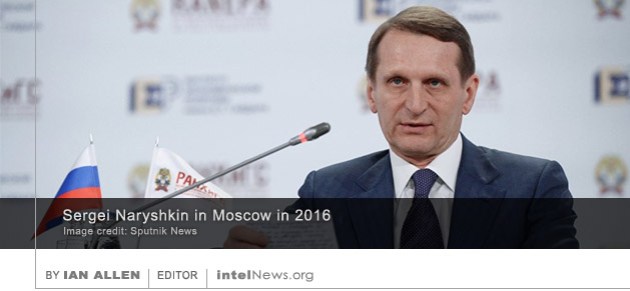
Sergei NaryshkinIntelligence directors from Russia, China, Iran and Pakistan met on Tuesday to discuss regional cooperation with particular reference to combating the Islamic State in Afghanistan. Information about the high-level meeting was revealed yesterday by Sergei Ivanov, media spokesman for the Russian Foreign Intelligence Service (SVR). Ivanov told Russia’s state-owned TASS news agency that the meeting was held in Pakistan and included the participation of SVR director Sergei Naryshkin. TASS reported that the meeting was held under the auspices of Pakistan’s powerful Inter-Services Intelligence (ISI) Directorate and was attended by “senior intelligence officials” from Pakistan, Russia, Iran and China.

Ivanov said that discussions during the meeting “focused on the dangers arising from a buildup of the Islamic State on the Afghan territory”. The Islamic State announced the formation of its Afghan province (wilayah in Arabic) in January 2015, using the term “Khorasan Province”. By July 2016, two of its most prominent leaders had been killed in coordinated drone strikes by the United States, but the group continues to launch operations to this day. Its core is thought to be made up of nearly 100 fighters from the Islamic State’s former strongholds in Syria and Iraq. According to Russian reports, security officials in China, Russia, Pakistan and Iran are concerned that the Islamic State’s Afghan command is becoming stronger as fighters from the group are leaving the Middle East and moving to Afghanistan.

Tuesday’s high-level meeting in Islamabad follows an announcement last month by the Beijing-led Shanghai Cooperation Organization (SCO) that it would adopt a more active stance on security issues in Afghanistan. Early in June, Afghan President Mohammad Ashraf Ghani described the SCO as “an important platform for anti-terrorist cooperation and enhancing regional connectivity” in Central and South Asia. President Ghani made these comments shortly before traveling to China to attend the annual summit of the SCO, of which Afghanistan is an observer country.

Author: Ian Allen | Date: 11 July 2018 | Permalink

Pakistan bars its former spy chief from leaving the country over controversial book

Asad DurraniPakistan has officially barred a former director of its powerful intelligence agency from leaving the country, after he co-authored a controversial book with his Indian counterpart. Asad Durrani is a retired Pakistani Army general who served as director-general of Pakistan’s Directorate for Military Intelligence between 1988 and 1989. From 1990 to 1992, he served as director of the Inter-Services Intelligence Directorate, arguably Pakistan’s most powerful government institution. Durrani, 77, has been severely criticized in some Pakistani circles for co-authoring a book entitled The Spy Chronicles: RAW, ISI and the Illusion of Peace, with his Indian counterpart, A.S. Daulat. Daulat, 78, headed India’s Research and Analysis Wing from 1999 to 2000.
The book, which was edited by the widely respected Indian journalist Aditya Sinha, has prompted heavy criticism of its two co-authors in nationalist circles in the two rival regional powers. But Durrani’s position became more tenuous on Monday, after the government of Pakistan announced that he had been placed under formal investigation. Pakistani Army spokesman Major General Asif Ghafoor told reporters in Islamabad on Monday morning that the revelations made in Lieutenant General Durrani’s book would be investigated by a formal court of inquiry, headed by a three-star general. He also said that Durrani had been urgently summoned to the Pakistani Army’s headquarters to answer allegations that he violated the Pakistani military’s code of conduct. Additionally, Ghafoor announced that Durrani had been placed on an official government-administered “exit control list”, which means that he is not allowed to leave Pakistan until further notice.

The Pakistani armed forces have not explained the precise reasons why Durrani is under investigation. His book makes several controversial allegations relating to Islamabad’s intelligence operations. A large part of the book contains details about Pakistan’s systematic efforts to foment armed unrest in the heavily Muslim Indian state of Kashmir, for instance by funding and training a host of Islamist paramilitary organizations that operate in the disputed region. The book also claims that the Pakistani government was aware of the whereabouts of Osama bin Laden in 2011, and that it cooperated closely with the United States to kill the co-founder of al-Qaeda. Islamabad has consistently denied allegations that it knew of bin Laden’s hideout in the city of Abbottabad, and that it gave permission to US Special Forces troops to raid his compound. If Durrani is charged with having violated the Pakistani military’s code of conduct, he could face a minimum of two years in prison.

Author: Joseph Fitsanakis | Date: 30 May 2018 | Permalink

Spy collection program using fake mobile phone apps linked to Pakistani military

Cellular telephoneThe Pakistani military is suspected of having orchestrated a lucrative intelligence collection campaign using mobile phones, which targeted diplomats from India, Israel and Australia, as well as from North Atlantic Treaty Organization (NATO) member countries such as the United States and Britain. Others targeted in the operation include officials from Iraq, Iran and the United Arab Emirates. News of the alleged spy operation was published earlier this month by Lookout Mobile Security, a security software company based in the United States.
The company said that the perpetrators of the operation managed to hack into a number of diplomats’ phones by creating a number of fake applications for Android and iOS mobile phone systems. The applications, called Tangelo (for iOS) and Stealth Mango (for Android), took control of mobile phone devices once their owners downloaded them through fake third-party app stores advertising online. According to Lookout, the two apps were designed by a consortium of freelance software developers who have close links with the Pakistani military establishment. The technical report published by Lookout points to the use of IP addresses that lead to a server housed in Pakistan’s Ministry of Education in the country’s capital, Islamabad. Lookout also said that it managed to trace the identity of the person who was the main developer of the two fake mobile phone applications. He is reportedly a full-time government employee who “moonlights as a mobile app developer”. The group that built the fake apps is known for creating legitimate apps, said Lookout, but also works for hire creating surveillanceware for mobile phone systems. In the past, the same group has been found to target military and civilian government officials in India, according to Lookout.

In its technical report, the Lookout security team describes how the Pakistani hackers collected a variety of data from their victims, by having it stealthily transmitted from compromised mobile phones to servers in Islamabad. The data included photos and videos, lists of contacts, logs of phone calls and texts, as well as detailed calendar entries. German and Australian diplomats had their travel plans stolen, and a letter from the United States Central Command to Afghanistan’s assistant minister of defense for intelligence was also acquired by the hackers. The latter also gained access to the contents of an entire database of pictures of traveler passports —many of them diplomatic— from the Kandahar International Airport in southern Afghanistan. The report said it was impossible to know for certain when Tangelo and Stealth Mango were first developed and utilized. However, the most recent version of the apps was released in April of this year.

Author: Joseph Fitsanakis | Date: 22 May 2018 | Permalink

Pakistan denies it plans to release doctor who helped CIA find bin Laden

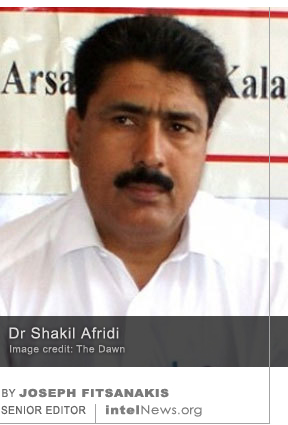
Dr Shakil AfridiAuthorities in Pakistan have dismissed rumors that a medical doctor who helped the United States Central Intelligence Agency find and kill al-Qaeda founder Osama bin Laden in 2011 is to be released from prison. Dr. Shakil Afridi was arrested in 2011, soon after bin Laden was killed in a CIA operation in the Pakistani city of Abbottabad. In the weeks following the CIA raid, it emerged that a team of local doctors and nurses had helped the American spy agency confirm bin Laden’s presence in the compound. The team of nearly 20 healthcare workers participated in a fake vaccination scheme carried out in Abbottabad, whose true purpose was to collect DNA samples from the residents of the compound where the CIA believed bin Laden was hiding.
Pakistani authorities fired 17 healthcare workers who participated in the CIA scheme and arrested its head, Dr. Afridi. Bizarrely, Dr. Afridi was arrested for having alleged links with an Islamist group that operates in the region, known as Lashkar-e-Islam. He then faced charges for alleged medical malpractice, which, according to the prosecution, resulted in the death of one of his patients. He is currently serving a 33-year prison sentence in Pakistan’s northwestern border city of Peshawar. Ever since his arrest, the US has pressured Pakistan to release Dr. Afridi, and Pakistani media often publish sensational reports about alleged covert attempts by the CIA to free the imprisoned medical doctor. Last week, Dr. Afridi was transported by helicopter from Peshawar to a jail near the village of Adiala, located near Pakistan’s border with the Indian region of Kashmir. Dr. Afridi’s move, which took place amid heavy security, sparked rumors in the media that the alleged CIA agent was about to be released and transported to America.

But on Thursday, Muhammad Faisal, a spokesman for Pakistan’s Ministry of Foreign Affairs, dismissed intense media speculation that Dr. Afridi was about to be released. He also denied that Islamabad was attempting to swap Afridi with Pakistani nationals living in the US, including Aafia Siddiqui, who is serving an 86-year prison term in the US for killing an American soldier in Afghanistan. Additionally, Faisal described as “nonsense” media reports of an alleged failed CIA attempt to organize a jailbreak in Peshawar, in order to free Dr. Afridi.

Author: Joseph Fitsanakis | Date: 4 May 2018 | Permalink

Another US diplomat detained in Pakistan over traffic accident that injured two

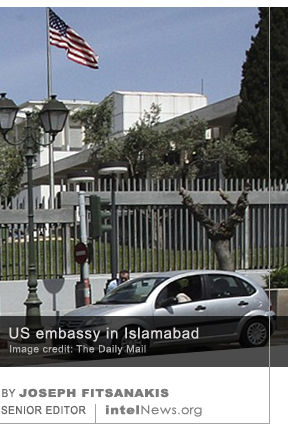
US embassy Islamabad PakistanAnother American diplomat was detained in Pakistan last week, following the second serious traffic accident involving United States diplomatic personnel in Islamabad in less than a month. The incidents are said to be contributing to ongoing diplomatic tensions between the United States and Pakistan. Many in the South Asian country remain angry about a controversial episode in 2011, when a Central Intelligence Agency officer serving at the US consulate in Lahore killed two men by shooting them in the head with a Glock pistol. The CIA officer, Raymond A. Davis, told Pakistani police that the two men had tried to rob him. He was eventually released from detention due to his diplomatic immunity, but only after the personal intervention of the then Secretary of State John Kerry, and after Washington offered monetary compensation to the two dead men’s families.

In the latest incident, Pakistani authorities detained an American diplomat on Sunday, after his Toyota SUV ran over two men riding on a motorcycle in Islamabad. The diplomat, identified in Pakistani media as the US embassy’s Second Secretary Chad Rex Ausburn, was accused by police of having been involved in a hit-and-run incident in the Pakistani capital. According to local reports, Ausburn refused to emerge from his vehicle immediately following the accident, but eventually stepped out and identified himself to police officers. They then took him into custody and impounded his vehicle, which is believed to belong to the US embassy. Ausburn was released once the Pakistani Ministry of Foreign Affairs confirmed his diplomatic status, which grants him immunity from prosecution. The two men injured in the accident are said to be in stable condition at a nearby hospital. Police have reportedly charged the driver of the motorcycle with reckless driving.

However, Pakistani authorities have also charged Taimur Iqbal Pirzada, a security adviser for the US embassy in Islamabad, with seeking to obstruct the police investigation into Sunday’s incident. Pirzada stands accused of trying to stop police officers from detaining Ausburn and impounding his vehicle. He was released on bail on Monday and is currently awaiting trial. US State Department spokesman Nolen Johnson told The New York Times on Monday that the issue involving Ausburn had been “resolved” and that the US government had been “in close contact with Government of Pakistan officials on this matter”. This past April, Pakistani authorities barred another American diplomat from leaving the country, after the car he was driving was involved in an accident in Islamabad, which left a motorcyclist dead. The US embassy’s military attaché, Colonel Joseph E. Hall, remains in Pakistan. Authorities there have demanded that the US Department of State rescinds his diplomatic immunity, so he can face a criminal trial. But the US government has so far refused to grant Islamabad’s request.

Author: Joseph Fitsanakis | Date: 01 May 2018 | Permalink | Research credit: C.F.

India arrests commando instructor who fell for Pakistani honey trap on Facebook

Garud Commando ForceIndian authorities have arrested an Indian Air Force officer for allegedly giving classified documents to two Pakistani spies on Facebook, who posed as women interested in him. The officer has been named as Arun Marwaha, a wing commander stationed at the Indian Air Force headquarters in Delhi. Marwaha, 51, is a para-jumping instructor who trains members of India’s Garud Commando Force —the Special Forces unit of the Indian Air Force. He was reportedly due to retire in 2019.
According to Indian government investigators, several months ago Marwaha was befriended by two Facebook users who claimed to be Indian women. He began chatting regularly with them on Facebook and eventually on the popular cell phone messenger service WhatsApp. Within weeks, Marwaha’s WhatsApp exchanges with the women had become intimate in nature. Before long, the Indian Air Force instructor was providing the women with classified documents in return for intimate photos of themselves. Media reports state that the classified documents related to special operations, some involving cyberwarfare, and space reconnaissance. Government investigators claim that Marwaha’s Facebook contacts were in fact male officers of Pakistan’s Inter-Services Intelligence (ISI), who targeted Marwaha in a carefully planned honey trap operation.

According to reports, the breach caused by Marwaha was discovered last month, at which time the internal security branch of the Indian Air Force launched an investigation. Marwaha was questioned for over a week before turning over his case to Delhi Police, who arrested him on Thursday. He has reportedly been charged under India’s Official Secrets Act and is facing a jail sentence of up to 14 years. Meanwhile, the Indian Air Force is investigating whether other officers have fallen victims to similar honey trap operations by Pakistan’s ISI on Facebook.

Author: Ian Allen | Date: 09 January 2018 | Permalink

Pakistan halts intelligence cooperation with US, but US embassy denies knowledge

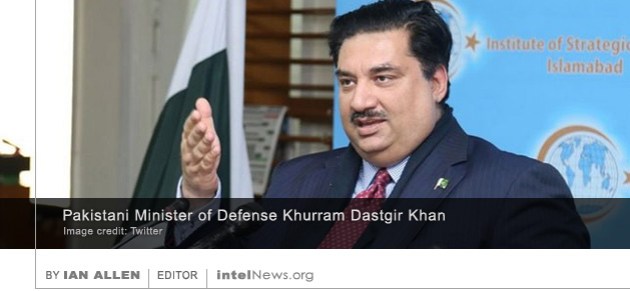
Khurram Dastgir KhanPakistan said on Tuesday that it had suspended military and intelligence cooperation with the United States in the wake of Washington’s decision to stop security assistance to Pakistan. On Tuesday, Pakistan’s Minister of Defense, Khurram Dastgir Khan, said that his country had terminated all cooperation with the US in the areas of defense and intelligence. He said that the move was a response to the announcement by US President Donald Trump last week that Washington would stop providing security assistance to Pakistan. American officials stated that the change in policy took place because Pakistan had allegedly deceived America in the global war on terrorism. On Thursday last week, the President Trump accused the Pakistani government of having given the US “nothing but lies and deceit”. Trump’s accusation was followed by an official statement by the Pentagon, which said that Pakistan should cease to provide “sanctuaries in its territory for Taliban and Haqqani network leaders and operatives”.

On Tuesday, while speaking at a conference in Islamabad, Defense Minister Khan said that Pakistan had suspended “a wide field of intelligence cooperation and defense cooperation”. He was speaking during a conference hosted by the Institute of Strategic Studies, which is a government-sponsored think-tank based in the Pakistani capital. Khan accused the US of treating Pakistan as a “scapegoat” for its military and political failures in neighboring Afghanistan. He also warned Washington that Pakistan would not allow America’s war in Afghanistan to be fought on Pakistan’s territory. He ended his talk, entitled “Contours of Security Environment of Pakistan”, with what he described as “a reminder”, saying that Washington needs Pakistan’s support in its efforts against the Taliban and the Islamic State in Afghanistan: “Logistics trumps strategy”, he said.

But the Voice of America news service reported on Tuesday that the US embassy in Islamabad had no information about Khan’s announcement concerning Pakistan’s termination of military and intelligence cooperation with Washington. A spokesman at the embassy told the news service that the embassy had “not received any formal communication regarding a suspension” of military and intelligence cooperation by Islamabad. Last week, the US Secretary of Defense James Mattis insisted that his department kept open lines of communications with the Pakistani military leadership despite the suspension of security assistance by Washington. Islamabad said that communication lines with North Atlantic Treaty Organization forces remained open, but military cooperation with Washington had been terminated.

Author: Ian Allen | Date: 10 January 2018 | Permalink

Ex-CIA contractor says Pakistan’s leaders helped him escape murder charges

Raymond Allen DavisA former contractor for the United States Central Intelligence Agency, who was released from a Pakistani prison in 2011 despite being implicated in a double murder there, says he was freed with the help of senior Pakistani officials. Raymond Allen Davis was a CIA contractor posted in the US consulate in Pakistan’s Punjabi capital, Lahore, which is also the country’s second-largest city. It has been suggested that, for a while, Davis was the CIA’s acting station chief in Lahore, thus technically the most senior American intelligence officer in Punjab.
On January 27, 2011, while driving in downtown Lahore, Davis opened fire against two men riding on a motorcycle, killing them instantly. Soon after the incident, Davis appears to have contacted the US consulate in Lahore, which rapidly dispatched a consular vehicle to remove him from the scene of the shooting. However, the vehicle was unable to reach Davis, who was surrounded by an angry crowd. Unable to pick up Davis, the car then returned to the consulate after running down and killing a motorcyclist who was unconnected with the earlier incident. Eventually Davis was arrested and charged with double murder and illegal possession of a firearm. The Pakistani government dismissed Washington’s assertion that Davis was an accredited diplomat, and was thus not subject to Pakistan’s legal system because of his diplomatic immunity. With public opinion in Pakistan heavily against Davis, the case sparked a diplomatic crisis between Washington and Islamabad. Unexpectedly, however, Davis was released in March of the same year, after the families of the two men he killed appeared in court and said they forgave him and wanted him to be pardoned. It later emerged that the families of the murdered men had been given a total of $2.4 million as compensation for their deaths.

Read more of this post

Crisis looms over Pakistan’s impending execution of alleged Indian spy

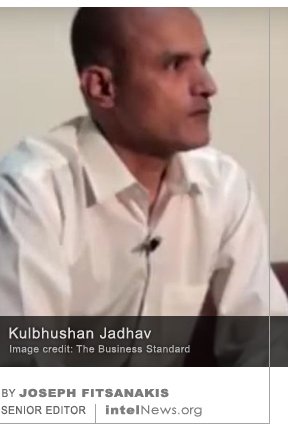
Kulbhushan JadhavAnalysts warn that South Asia may witness its worst crisis since the 2008 Mumbai attacks if Pakistan carries out its threat to execute an Indian former naval officer whom it accuses of espionage. Authorities in Islamabad say Kulbhushan Jadhav (pictured) worked for the Indian Navy until 2003, when he was recruited by India’s Research and Analysis Wing (RAW), a government intelligence agency that conducts operations abroad. The Pakistanis claim that Jadhav was arrested in southwest Pakistan in 2016, where he was engaged in funding and training secessionist militants from Pakistan’s Baluch minority. The Baluch are an Iranic people, most of whom live in a region known as Baluchistan, which is split between Iran and Pakistan. There are populous Baluch communities in the southern city of Karachi, one of Pakistan’s most populous ports. Some members of the Baluch community have secessionist aspirations and are accused of terrorism by Iranian and Pakistani authorities.

Soon after Jadhav’s arrest in March 2016, the Pakistani military released excerpts of an alleged videotaped confession by the Indian former naval officer. In it, Jadhav can be seen confessing to having worked on instructions by the Indian government to inflame ethnic divisions in Pakistan, from 2013 until his arrest. Last month, a secret military court in Pakistan sentenced Jadhav to death on charges of espionage. India, however, has rejected Pakistan’s allegations, saying that Jadhav’s confession was extracted through torture. The Indians claim that Jadhav was kidnapped by Pakistani operatives in Iran and brought to Pakistan by force. Indian officials dismissed Islamabad’s claim Jadhav was carrying his Indian passport when the Pakistanis captured him, saying that no undercover intelligence officer operating abroad would be carrying an Indian passport. New Delhi has warned of “serious consequences” if Pakistan engages in “premeditated murder” by executing Jadhav.

Some observers have noted that Jadhav was tried by a secret court martial, which signifies a radical break from standard practice. Moreover, the public announcements about his fate were made by the Pakistani military, rather than the civilian government, which is unprecedented. This leads some analysts to the conclusion that the Jadhav case is being handled solely by the military, which is trying to use Jadhav’s case to dissuade the government in Islamabad from reaching out to India with an offer for negotiations. There are also suggestions that the timing of Jadhav’s sentence might indicate that Islamabad hopes to exchange him for one or more of its intelligence officers that are being held by India.

Author: Joseph Fitsanakis | Date: 17 April 2017 | Permalink

Pakistani doctor who helped CIA find bin Laden will stay in jail, says Islamabad

Dr Shakil Afridi

A Pakistani doctor who helped the United States find al-Qaeda founder Osama bin Laden in 2011 will remain in prison, despite calls by Washington to have him released, according to a government official in Islamabad. Dr Shakil Afridi was arrested in 2011, soon after bin Laden was killed during a Central Intelligence Agency operation in a residential compound in the city of Abbottabad, located 70 miles north of the Pakistani capital. In the weeks following the CIA raid, it emerged that a team of local doctors and nurses had helped the American agency in its efforts to confirm bin Laden’s presence in the compound. The team of nearly 20 healthcare workers participated in a fake vaccination scheme carried out in Abbottabad, whose true purpose was to collect DNA samples from residents of the compound where the CIA believed bin Laden was hiding.

In February 2012, the then CIA Director, Leon Panetta, publicly admitted that the vaccination scheme had been funded by the CIA. By that time, Pakistani authorities had fired 17 healthcare workers who had participated in the CIA scheme and arrested its head, Dr. Afridi. Prior to his arrest, Dr. Afridi was employed as a surgeon by the government of the Khyber Agency, a Federally Administrated Tribal Area along Pakistan’s border with Afghanistan. Bizarrely, Dr. Afridi was arrested for having alleged links with an Islamist group that operates in the region, known as Lashkar-e-Islam. In 2012, he was given a 33-year sentence for having links with terrorist groups. When his conviction was quashed in 2013, the doctor was ordered to remain in prison, and faced new charges, this time for alleged medical malpractice, which, according to the prosecution, resulted in the death of one of his patients.

Many American officials believe that the real reason for Dr. Afridi’s arrest is his collaboration with the CIA. In May of last year, Donald Trump said that, if elected US president, he would make Pakistan free Dr. Afridi, saying characteristically that he could achieve that “within two minutes”. But his comments prompted a strong response from Islamabad. On Tuesday, Pakistan’s Minister for Law and Justice, Zahid Hamid, reiterated that Dr. Afridi would not be freed just because Washington wishes it. Speaking in response to a question from a member of the Pakistani Parliament’s upper house, Hamid said that Dr. Afridi “worked against [Pakistani] law and our national interest” and would face a trial, as planned, despite Trump’s pre-election pledge. There was no comment yesterday from the US president-elect’s team.

Author: Joseph Fitsanakis | Date: 19 January 2017 | Permalink

Pakistani man sought out assassination targets for Iran, says Germany

Reinhold RobbeAuthorities in Germany have pressed espionage charges against a Pakistani man who allegedly spied for Iran and even compiled lists of potential targets for assassination. The man, who has been identified in media reports only as “Syed Mustafa H.”, is a 31-year-old worker at the German Aerospace Center in the northern German city of Bremen. He is also reportedly a graduate of the Materials Science and Production Engineering department of the Universität Bremen. According to court documents, he is believed to have been spying for Iranian intelligence since the summer of 2015. It appears that the Federal Office for the Protection of the Constitution (BfV), Germany’s domestic intelligence agency, had been aware of the man’s espionage activities for at least a year prior to his arrest.
German media, including the newspapers Süddeutsche Zeitung and Die Zeit, as well as public broadcasters Taggesschau, WDR and NDR, report that Syed Mustafa H.’s main task was to compile lists of potential assassination targets. These included prominent Jews or German-Israelis living in northern Germany. Among them was Reinhold Robbe, a politician with the center-left Social Democratic Party (SPD), who served for a number of years as president of the German-Israeli Congress (DIG). According to reports, the Pakistani spy had compiled detailed maps of Robbe’s daily movements, which outlined his travel routines and the routes he took from his home to the DIG headquarters in Berlin. German officials believe that the type of surveillance that Syed Mustafa H. carried out against Robbe indisputably leads to the conclusion that the politician’s assassination was being planned.

Reports in the German media suggest that Syed Mustafa H.’s work was a small part of a much broader operation by Iranian intelligence. The operation aims to identify prominent individuals throughout Europe, who have Israeli connections. These individuals can be targeted during a future conflagration between Israel and Iran, or in retaliation to an Israeli intelligence operation against Tehran. If Syed Mustafa H. is found guilty of targeting Robbe, it will mark the first proven case of a German political figure who has been targeted for possible assassination by an Iranian intelligence agency.

Author: Joseph Fitsanakis | Date: 10 January 2017 | Permalink

New director appointed to head Pakistan’s all-powerful intelligence agency

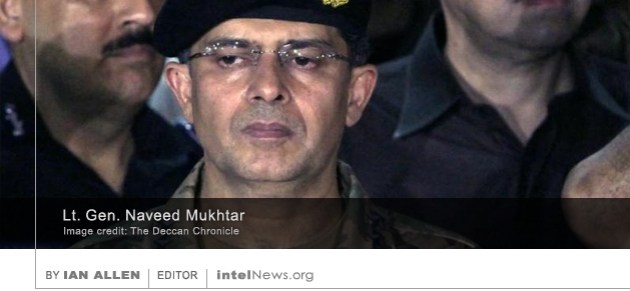
 Lt. Gen. Naveed MukhtarA new director, with considerable experience in counterterrorism, has been appointed to lead Pakistan’s Inter-Services Intelligence (ISI), believed by some to be one of the most powerful spy agencies in the world. Pakistan’s Ministry of Defense announced on Sunday that Lt. Gen. Naveed Mukhtar will be replacing Lt. Gen. Rizwan Akhtar, who has led the ISI since November of 2014. The appointment of Gen. Mukhtar comes less than a month after a major change of leadership in the Pakistani military, which saw the appointment of General Javed Qamar Bajwa as the new Chief of Army Staff. It is believed that the appointment of the new ISI director represents a personal choice of the newly appointed Gen. Bajwa.
Both the outgoing and incoming directors of the ISI are from the same generation of military officers, having been commissioned in 1982 and 1983 respectively. Both attended Pakistan’s prestigious National Defense University and earned graduate degrees at the United States Army War College in Pennsylvania. But while Gen. Akhtar specializes in counterinsurgency, and spent much of his career in Pakistan’s Federally Administered Tribal Areas, his successor, Gen. Mukhtar, has a background in intelligence with a focus on counterterrorism. Although he most recently served in Karachi, Pakistan’s largest and most populous metropolitan center, Gen. Mukhtar made his mark in the military by leading the ISI’s counterterrorism branch in the capital Islamabad. It is said, therefore, that his appointment to the directorship of the ISI may signal a turn away from running Taliban agents in Afghanistan, for which the ISI is notorious, and concentrating instead of combatting militant groups at home.

The change in the ISI’s leadership comes at a particularly complicated period in Pakistani security. The country’s relations with its neighbor and arch-nemesis India are experiencing a major crisis following the so-called ‘summer of unrest’ in Kashmir. The term refers to a period of tension between the two countries, sparked by popular unrest and violent protests by the predominantly Muslim inhabitants of the Indian-administered region of Jammu and Kashmir. The region remained under a military curfew for nearly two months, during which nearly 100 people died and over 15,000 were injured. There are some in Islamabad who believe that Gen. Akhtar was removed from the ISI because he failed to contain the unrest in Kashmir. He has now been appointed president of Pakistan’s National Defense University in Islamabad.

Author: Ian Allen | Date: 13 December 2016 | Permalink

India and Pakistan recall diplomats accused of espionage

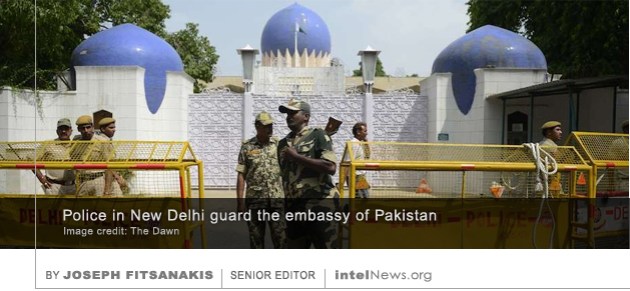
Pakistani embassy in IndiaIndia is in the process of recalling eight of its diplomats from Pakistan, after their names and photographs were published in Pakistani newspapers with accusations that they are intelligence officers. According to anonymous sources in the government of Pakistan, three of the eight recalled diplomats have already left Islamabad for New Delhi. Five more are expected to leave the country before the end of the week. The three who left Pakistan yesterday were identified in the Pakistani media as Madhavan Nanda, Vijay Kumar Verma and Anurag Singh. Pakistani media said earlier this week that the three are “undercover agents”, suggesting that they are intelligence officers posted in India under diplomatic cover.

The eight Indian diplomats were recalled less than a week after Pakistan withdrew six of its diplomats from its embassy in New Delhi. Their names were released to the Indian media by the country’s intelligence services, following the arrest of Mahmood Akhtar, a Pakistani diplomat who was detained by Indian authorities, allegedly while committing espionage. Indian authorities said Akhtar admitted he was an intelligence officer under interrogation, and identified five more Pakistani diplomats as undercover intelligence operatives. All six were accused of espionage by New Delhi, declared persona non grata (unwanted persons) and were ordered to leave the country. Observers see the recent outing of the Indian diplomats in the Pakistani media as a tit-for-tat response by Islamabad.

Interestingly, none of the eight Indian diplomats were officially declared persona non grata by Pakistani authorities. But the publication of their names and photographs in the Pakistani media were sufficient to prompt the Indian government to recall them back to New Delhi. Tensions between the two neighboring countries have been rising in recent months, mostly over ethnic and religious tensions in the disputed region of Kashmir, which belongs to India but is populated primarily by Muslims. On Tuesday, one Indian soldier and thee Pakistani civilians were killed on both sides of the border, after fire was exchanged between warring sides.

Author: Joseph Fitsanakis | Date: 09 November 2016 | Permalink