Late Taliban leader’s regular trips to Iran helped US spies track him down

Mullah Akhtar Mohammad MansourFrequent trips to Iran caused the demise of the late leader of the Afghan Taliban, Mullah Akhtar Mohammad Mansour, who was killed in a secret American operation on May 21. The death of Mansour, who had led the Afghan Taliban since July 2015, when he succeeded Mullah Mohammad Omar, was announced by the Taliban on May 26. Early reports stated that Mansour was killed while traveling to the Pakistani city of Quetta from Iran. He is believed to have been visiting family or seeking medical treatment in Iran, which he appears to have entered using a forged passport.

According to The Wall Street Journal, the United States found out in February that Mansour made regular trips to Iran, as well as the precise route that the Taliban leader took to enter the country. American intelligence agencies also received “details about the devices [Mansour] used for communications” while in Iran. They then intercepted communications from Iran that matched Mansour’s electronic signature and followed these signals across the border into Pakistan. The Taliban leader entered Pakistan’s Baluchistan province on Saturday, May 21. Once in Pakistan, Mansour entered a Toyota Corolla, believed to be a taxi, and made his way through the N-40 National Highway, heading to Quetta.

The Journal report states that the Taliban were aware that Baluchistan’s airspace is outside the Central Intelligence Agency drones’ operational area, and thus “felt more comfortable there”. Indeed, the paper claims that no CIA drones were actively targeting Mansour at the time. However, US President Barack Obama had given ordered the Joint Special Operations Command to have the Taliban leader killed. Reaper drones were deployed to launch two Hellfire missiles at Mansour’s car, which was totaled, killing the Taliban commander and his driver. According to the Journal, the White House had decided to ambush Mansour before he entered the city of Quetta, in order to prevent civilian casualties. After firing at it, the American drones hovered over the remains of Mansour’s vehicle to ensure that there were no survivors, before exiting Pakistani airspace.

Author: Ian Allen | Date: 30 May 2016 | Permalink

Analysis: Mullah Mansour’s killing will shape future of Afghan War

Mullah MansourThe American operation that killed the leader of the Afghan Taliban, Mullah Akhtar Mohammad Mansoor, on May 21, was unprecedented in more ways than one. It marked the first known effort by the United States to neutralize the leadership of the Afghan Taliban. It was also the first US drone strike in Pakistani Baluchistan, a region that is far removed from the Federally Administered Tribal Areas, where American operations have traditionally focused. Mullah Mansour’s killing also marked the most high-profile American incursion into Pakistani territory since the May 1, 2011 attack that killed al-Qaeda co-founder Osama bin Laden. Q QuoteIronically, just hours before killing Mansour, Washington was calling the Taliban to join the negotiation table for peace talks with the Afghan government. So what exactly was America’s intention in killing the leader of the Afghan Taliban?

PROSPECTS FOR A MODERATE SUCCESSOR

There is no question that Mansour represented the most intransigent and militant segment of Afghanistan’s militant Pashtuns. He consistently dismissed efforts by Washington and Kabul to strike a deal with his forces as a ploy designed to weaken the Taliban’s role in Afghan politics. So the primary outcome that the US is seeking from his death is the possibility that a more moderate figure will emerge from within the ranks of the Taliban. That, however, is far from guaranteed. Even if it does happen, it will probably come after a period of leadership struggle between different factions and tribes within the Taliban, much like the heated infighting that broke out after the announcement of the death of the Taliban’s founding leader, Mullah Mohammad Omar. There are even some who believe that the death of two successive Taliban leaders in such a short period may split the group into three or more factions.

To avoid such a prospect, the Afghan Taliban have already begun internal consultations in order to quickly enthrone a new emir. Major candidates include the late Mullah Omar’s son, Mullah Yakoub, and his brother, Mullah Abdul Manan Akhund. The list of contenders also features the late Mullah Mansour’s deputies, including Sirajuddin Haqqani, head of the Haqqani Network, which recently consolidated its forces with those of the Afghan Taliban. Many observers believe that Haqqani is Mansour’s most likely successor, as well as the most militant of all contenders for the group’s leadership.

THE END OF PEACE NEGOTIATIONS?

If the Afghan Taliban are led by Haqqani, a man described by the White House as a terrorist mastermind, the chances of seeing Afghanistan’s militant Pashtuns join peace negotiations with Kabul are slim to none. The country’s President, Ashraf Ghani, said last week that he hoped that the death of Mansour would weaken the Taliban hardliners and open the path to negotiations with his government. It is difficult to see, however, how the Taliban could sit at the table with the Afghan government and its American allies, namely the same people who just Q Quotekilled the group’s leader.

They only way that could possibly happen is if Pakistan, which is the Afghan Taliban’s state patron, compels them to do so. But such a prospect is unlikely. In the hours after Mansour’s assassination, the US Secretary of State John Kerry described it as an “action that sends a clear message to the world that we will continue to work with our Afghan partners”. Indeed, Mansour’s killing was a source of jubilation in Kabul. But there were no celebrations in Islamabad, which was notified about the US drone strike on its soil after its completion. The Pakistani position has always been that military action against the Afghan Taliban will only push them further underground. Instead, Pakistan argues that the Taliban should be brought to the table to sign a comprehensive peace treaty that will ensure ethnic rights for Afghanistan’s Pashtun population. But the prospect of that happening after Mansour’s assassination are slim, even if a more moderate figure succeeds him at the helm.

THE FUTURE OF THE AFGHAN WAR

What are, then, the prospects for peace in Afghanistan? A notable rise in violence should be expected, as various Taliban factions lash out against the government in Kabul with the aim of augmenting their standing against internal competitors. The Taliban now control more territory in Afghanistan than at any other point following the 2001 US invasion. If their alliance with the Haqqani Network survives, they will continue to be a formidable force in the country and the surrounding region, and will become increasingly difficult to defeat militarily. The group will continue to operate with considerable force even if Mansour’s position is not filled soon, as local Taliban forces have shown that they are capable of taking unilateral initiative in times like this. In the meantime, observers in Kabul and Islamabad, as well as the Afghan Taliban’s leadership in Quetta, will be wondering whether the assassination of Mansour marks the beginning of a more aggressive approach by Washington in the ongoing Afghan war. The answer to that question remains elusive, but will likely shape the future of the 40-year-old Afghan war.

Author: Joseph Fitsanakis | Date: 24 May 2016 | Permalink
Did Pakistan poison the CIA station chief in Islamabad?

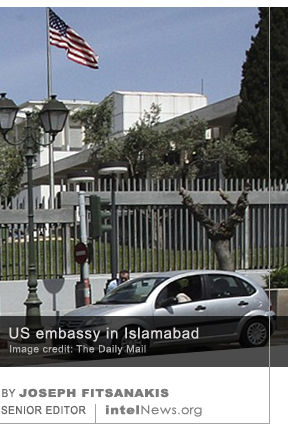
US embassy Islamabad PakistanA leading article in The Washington Post suggests that the United States Central Intelligence Agency suspected that its most senior officer in Pakistan was poisoned by the host country’s intelligence services, in an attempt to kill him. The CIA pulled its station chief from Islamabad in the summer of 2011, two months after Operation NEPTUNE SPEAR, which saw the killing in Abbottabad of al-Qaeda founder Osama bin Laden. The CIA official, who has since been identified as Mark Kelton, acted as the senior US intelligence representative in the Asian country. He had assumed the post, which was supposed to last at least two years, only seven months earlier. His abrupt removal raised questions, which were informally answered by Langley. There were rumors that Kelton’s return to the US was health-related, but that the decision to replace him was also affected by his extremely poor relations with the Inter-Services Intelligence (ISI) directorate, Pakistan’s powerful spy service.
On Thursday, however, The Washington Post’s Greg Miller said in a leading article that Kelton’s illness, which led to his replacement, had been so violent that it led him and others in the CIA to suspect that he had been poisoned. Prior to replacing him, the Agency had repeatedly flown the official back to the US for medical treatment, which proved fruitless. Eventually, some at Langley began to examine the possibility that the Pakistanis had poisoned Kelton, at a time when relations between the CIA and the ISI had sunk to unprecedented lows. Miller cites unnamed US intelligence officials who confirmed that the CIA had strong suspicions that Kelton had been deliberately poisoned. Even if the suspicions were groundless, said Miller, “the idea that the CIA and its station chief considered the ISI capable of such an act suggests that the breakdown in trust [between the two agencies] was even worse than widely assumed”.

Kelton has since recovered and assumed the post of deputy director for counterintelligence at the CIA before retiring from the Agency. The 59-year-old has since revealed his CIA background and even spoke with Miller on the phone as the Post correspondent was preparing his story. Although he declined Miller’s request for a detailed interview, the former CIA Islamabad station chief said that the initial suspicions about his poisoning “did not originate with” him. He added, however, that he would “rather let that whole episode lie”. The CIA told Miller that it had not uncovered any concrete evidence that the elements in the Pakistani government had poisoned Kelton. The embassy of Pakistan in Washington told The Washington Post that Miller’s story was “fictional and not worthy of comment”.

Author: Joseph Fitsanakis | Date: 06 May 2016 | Permalink

Were Pakistani spies behind 2009 attack that killed seven CIA employees?

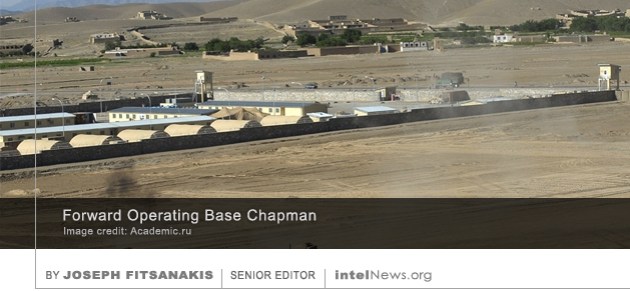
FOB ChapmanTwo recently declassified United States government documents suggest that Pakistani intelligence officers may have been behind a suicide attack that killed seven employees of the Central Intelligence Agency in Afghanistan. The attack took place at the Forward Operating Base Chapman, a US military outpost in Khost, Afghanistan. It was carried out by Humam al-Balawi, a Jordanian doctor who posed as a disillusioned member of al-Qaeda and had convinced his CIA handlers that he could lead them to the whereabouts of al-Qaeda’s deputy Emir, Ayman al-Zawahiri. During a scheduled visit to FOB Chapman on December 30, 2009, al-Balawi detonated a suicide vest, instantly killing himself and nine other people, including a Jordanian intelligence officer and seven CIA employees. The bloody incident, which marked the most lethal attack against the CIA in nearly three decades, was widely blamed on al-Qaeda and the Pakistani Taliban.
However, a set of newly released US State Department cables seem to suggest that Pakistani intelligence may have been behind the attack. The documents were released by George Washington University’s National Security Archive through a Freedom of Information Act request. One document, dated January 11, 2010, discusses the FOB Chapman attack in association with the Haqqani network, a Taliban-aligned Pashtun militant group that operates in Afghanistan but is headquartered in Pakistan. Western security observers have long considered the Haqqani network to be a paramilitary arm of Pakistan’s Inter-Services Intelligence (ISI) directorate. The January 11 State Department cable suggests that senior Haqqani network operatives met with their ISI handlers at least twice in the weeks prior to the FOB Chapman attack. Another cable, dated February 6, 2010, suggests that the ISI gave the Haqqani operatives $200,000 to step up attacks against Western forces in Afghanistan. A specific order was given at the meeting to carry out “the attack on Chapman [and] to enable a suicide mission by an unnamed Jordanian national”, presumably al-Balawi.

But an unnamed US intelligence official, who read the declassified documents, told the Associated Press news agency that the documents were “information report[s], not finally evaluated intelligence”. The material was thus “raw, unverified and uncorroborated”, said the official, and clashed with the broad consensus in the US Intelligence Community, which was that the attack was planned by al-Qaeda, not by the Haqqani network. The Associated Press contacted the Pakistani embassy in Washington, DC, about the National Security Archive revelations, but received no response.

Author: Joseph Fitsanakis | Date: 19 April 2016 | Permalink

Political rift widens in Afghanistan as head of spy service resigns

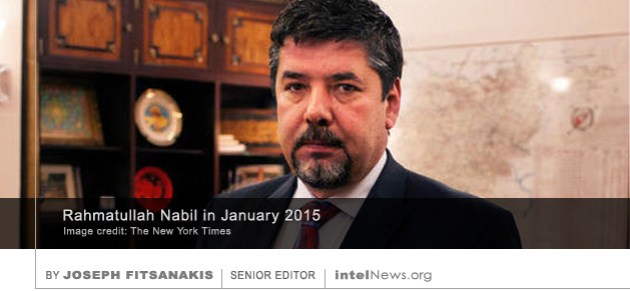
Rahmatullah NabilThe bleak landscape of Afghan national politics became even bleaker on Thursday, after the sudden resignation of the country’s spy chief, allegedly due to “disagreements” with the government in Kabul. Rahmatullah Nabil led Afghanistan’s National Directorate of Security (NDS) from 2010 to 2012 before returning to the post in 2013, while his predecessor, Asadullah Khalid, recovered from injuries suffered from an unsuccessful assassination attempt against him by the Taliban. But on Thursday afternoon, Nabil posted a resignation letter on Facebook, saying that “a lack of agreement on some policy matters” made it impossible for him to continue to lead the NDS.
Nabil’s resignation could not have taken place at a more symbolic moment: it was announced just as Afghan President Ashraf Ghani was returning home from a trip to neighboring Pakistan. The Afghan leader had attended part of the Heart of Asia regional conference, which was held in Pakistani capital Islamabad. But it is common knowledge that President Ghani’s visit was aimed at reinforcing the rapprochement between Kabul and Islamabad, as peace talks with the Taliban are about to restart. Critics of the Pakistani government accuse it of sponsoring the Taliban insurgency and believe that Islamabad’s consent is necessary for peace to prevail in Afghanistan. The Afghan government had entered negotiations with the leadership of the Taliban, but they ended abruptly in July, after it was revealed that Mullah Omar, the longtime leader of the Afghan Taliban, had been killed. Since that time, Taliban forces have taken the northern city of Kunduz, near the Afghan-Tajik border, while at the same time launching surprise raids against other cities, including Kandahar.

However, the NDS under Nabil’s leadership has staunchly opposed attempts by President Ghani to negotiate with the Taliban through the Pakistanis. In the past, Nabil had accused Islamabad of interfering in the domestic affairs of Afghanistan, while at the same time dismissing efforts by the Afghan government to reach out to Pakistan as “ill-fated”. Last week, Nabil accused President Ghani of surrendering Afghanistan’s “5,000-year history [to] Pakistan’s 60-year history”. But the President appeared conciliatory when speaking to reporters on Thursday. He praised Nabil for having done “a lot to improve information technology within NDS” and dismissed accusations that the service had been politicized. Nabil’s resignation would inevitably change the internal structure of the NDS, but such personnel changes were “common occurrences”, said President Ghani.

Author: Joseph Fitsanakis | Date: 11 December 2015 | Permalink

Pakistani spies fear up to 100 million citizen records may have been stolen

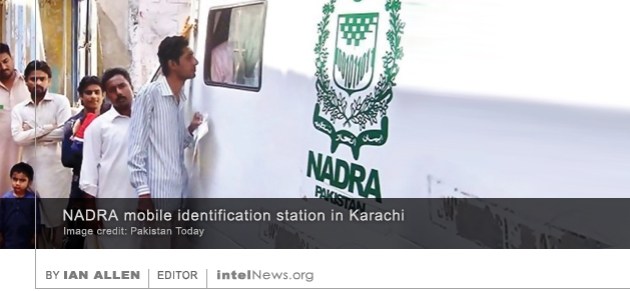
NADRAA report by Pakistan’s main intelligence agency warns that the personal records of up to 100 million Pakistanis may have been stolen by foreign intelligence agencies due to the alleged links of a software vendor with Israel. The Inter-Services Intelligence directorate (ISI), Pakistan’s premier spy agency, said that the software used by the National Data base and Registration Authority (NADRA), which issues national identity cards on behalf of the government of Pakistan, is not secure and should be replaced by an “indigenous” software product.

Established in 1998 as the National Database Organization, NADRA operates under Pakistan’s Ministry of the Interior. Its main mission is to register and fingerprint every Pakistani citizen and supply every adult in the country with a secure Computerized National Identity Card. This has proven to be a Herculean task in a country of 182 million, of whom just over half are over the age of 18. Consequently, the NADRA electronic database contains files on over 96 million Pakistanis, making it one of the world’s largest centralized databases.

But the ISI warned in a recently authored report that the NADRA database may have been compromised through the software that the agency uses to digitize and store fingerprints. According to the Pakistani newspaper Express Tribune, which published a summary of the ISI report on Monday, “the thumb-digitiser system [used by NADRA] was purchased from a French company of Israeli origin”. The report refers to the Automatic Finger Print Identification System, known as AFIS, which NADRA has been using since 2004. The software was purchased for close to $10 million from Segem (now called Morpho), a leading global vendor of identity software. The company is based in France, but the ISI report states that has connections with Israel, a country that Pakistan does not officially recognize and has no diplomatic relations with. Because of that, says the ISI report, the entire content of NADRA’s database may have been accessed by the Israeli Mossad, the United States Central Intelligence Agency, India’s Research and Analysis Wing, and other spy agencies seen as “hostile” by Islamabad.

Officials from NADRA refused to respond to the Express Tribune’s allegations, or to acknowledge that the ISI had indeed contacted the agency with concerns about the AFIS database. But a NADRA senior technical expert, who spoke anonymously to the paper, claimed that the ISI’s concerns were unfounded, since NADRA’s servers were not connected to the World Wide Web and were therefore impossible to access from the outside. Another NADRA official told the Express Tribune that Segem was the only international vendor of fingerprint recognition systems in 2004, when NADRA purchased the software product. Additionally, the Ministry of the Interior successfully sought ISI’s approval prior to purchasing the software. Last but not least, NADRA officials pointed out that the Pakistani Armed Forces are also using Segem software products.

Author: Ian Allen | Date: 15 September 2015 | Permalink

Pakistani ex-troops speak about secret infiltration of Indian Kashmir

1965 Indo-Pakistani WarFifty years after the 1965 Indo-Pakistani War, Pakistani former soldiers have spoken for the first time about their role in a secret effort by Pakistan to infiltrate India and incite a Muslim uprising. The conflict between India and Pakistan over Jammu and Kashmir is largely rooted in Britain’s decision to partition its former colonial possession into mainly Hindu India and Pakistan, a mostly Muslim state. As soon as the British withdrew in 1947, the two states fought a bloody war that culminated in a violent exchange of populations and led to the partition of Kashmir. Today India controls much of the region, which, unlike the rest of the country, is overwhelmingly Muslim. Indian rule survived an uprising by some of the local population in August 1965, which led to yet another war between the two countries, known as the 1965 Indo-Pakistani War.

Although Pakistan refuses to confirm that it was behind the opening shots of the war, much historical research has focused on Operation GIBRALTAR, a secret project by the Pakistani military to infiltrate Indian-controlled Kashmir and prompt the local population to start a rebellion against Indian rule. It is believed that the plan was devised and supervised by Major General Akhtar Hussain Malik, a hawkish military leader who was close to Ayub Khan, Pakistan’s military dictator who served as the country’s second president, from 1958 to 1969. Operation GIBRALTAR involved the use of between 7,000 and 20,000 men who were trained by the Pakistani Army before being sent to infiltrate Indian Kashmir in the summer of 1965. Moving mostly at night in units of no more than 200 men, the armed infiltrators sabotaged Indian transportation and communication systems in order to prevent Indian Armed Forces units from reaching the region.

Several of these men, who are today in their 60s and 70s, have been speaking to the BBC and to Pakistani newspaper The Dawn about their role in Operation GIBRALTAR. Among them is Qurban Ali, 71, who told the BBC that most of the men in his unit of 180 infiltrators were civilian recruits. Another GIBRALTAR veteran, Mohammad Nazeer, 64, who was only 14 when he was recruited, said that he and his fellow soldiers thought they were practicing maneuvers when they were moved toward the Indian border. Interestingly, the infiltrators were unaware that hundreds of other Pakistani military units were also operating in secret in Indian Kashmir.

Eventually, India was able to deploy over 100,000 soldiers in the contested region, while few among the local Muslim population joined the infiltrators of Operation GIBRALTAR. After several weeks of fighting, the two sides entered negotiations held in Soviet Uzbekistan. The outcome was the Tashkent Agreement, under which both sides agreed to withdraw to the pre-August borders. However, the fate of Operation GIBRALTAR weakened the position of Pakistan’s President Khan. He was deposed in a popular uprising in 1969 and died in 1974, aged 66, allegedly a broken man.

Author: Joseph Fitsanakis | Date: 07 September 2015 | Permalink

Pakistan spy chief who helped US covert activities in Soviet-Afghan war dies

Hamid GulGeneral Hamid Gul, a controversial Pakistani spymaster who helped facilitate America’s covert involvement during the closing stages of the Soviet-Afghan war, has died at the age of 72. General Gul entered military service in 1956, aged 20, and saw action in two of Pakistan’s wars with India. He rose to power within the military through his close association with General Muhammad Zia-ul-Haq, who became Pakistan’s sixth president in 1977. In 1987, shortly before President Zia died in a plane crash, General Gul was promoted to director of Pakistan’s Inter-Services Intelligence directorate, which is known as ISI. In that capacity, he oversaw the closing stages of the Soviet-Afghan war, which had begun nearly a decade later and gradually led to a resounding defeat for the Soviets.

As head of the ISI, General Gul helped the intelligence agencies of several countries, including those of Saudi Arabia and the United States, engage covertly in the war taking place across the Hindu Kush. In particular, he helped facilitate the transfer of foreign funds and weaponry to Sunni mujahedeen forces who were fighting the Soviets. It was from within the ranks of these forces that groups like al-Qaeda and the Taliban later emerged.

General Gul was never shy about his close operational links with the Afghan Taliban and al-Qaeda. He maintained close contact with al-Qaeda founder Osama bin Laden and with the late Mullah Muhammad Omar, leader of the Afghan Taliban. However, at the conclusion of the Soviet-Afghan War, Washington gradually disassociated itself from Sunni fundamentalist groups, including the Taliban. But General Gul maintained his public support for Muslim-inspired militant groups, among them Lashkar-e-Taiba, which operates in Indian-controlled Kashmir. As America began distancing itself from its former Afghan allies, and siding instead with India, General Gul’s relations with Washington worsened dramatically. In 2009, the General gave one of many controversial interviews to the media, in which he condemned the increasing military and political collaboration between the US and India. He noted that “the Americans and Israel [are] hell-bent” on positioning India to the role of overseer of “60 per cent of the world’s trade [which] passes through the Indian Ocean”, including transport routes of “Gulf oil, bound for China and Japan”.

In later years, General Gul became a vocal critic of US foreign policy in the Middle East and Central Asia, spoke out against the US invasions of Afghanistan and Iraq, and publicly supported the Taliban insurgency against the North Atlantic Treaty Organization forces in Afghanistan. He is survived by a widow and three children.

Author: Joseph Fitsanakis | Date: 20 August 2015 | Permalink

Australian spies use paid informants abroad to stop human smuggling

ASISAustralian law enforcement and intelligence agencies routinely use paid informants in Indonesia and Pakistan as part of a decade-old covert war against human traffickers in the Indian Ocean. This information has been revealed by The Australian newspaper in response to reports 1 last week that Australian authorities paid traffickers to turn around a boat transporting asylum-seekers to the country. After the reports came out, many members of the opposition Australian Labor Party blasted the government for bribing human traffickers, and calling the practice “disgraceful” and “unsustainable”. But new information published on Monday shows that, when the Labor Party was in government, it instructed the country’s law enforcement and intelligence agencies to recruit and pay informants from within the human-trafficking networks abroad.
According 2 to The Australian, the use of paid informants is part of a wider secret war between the Australian intelligence and security agencies and the trafficking networks, which began in 2001. This “covert war”, said the paper, is meant to identify the structure and operations of human-trafficking syndicates and stop the constant flow of tens of thousands of asylum-seekers to Australia. According to the paper, the Australian Secret Intelligence Service (ASIS) was the first Australian government agency to begin the practice. It was followed in 2005 by the Australian Federal Police, which also began stationing officers abroad and tasking them with running networks of informants. In 2009, ASIS received $21 million (US$16.5 million) from the Australian government to develop networks of agents in several countries where large human-smuggling cartels are known to operate. The agency used the funds to station officers in several Indonesian cities, as well as in Pakistani capital Islamabad, where it operates in coordination with the Federal Investigations Agency of Pakistan’s Ministry of the Interior.

The Australian quoted an unnamed Australian intelligence official who had access to the intelligence reports from the ASIS anti-smuggling operations. He told the paper that the use of informants who are members of smuggling gangs was the only effective way of eventually “collapsing these networks”. Meanwhile, the government of Australia has refused comment on the allegations of bribing human smugglers.

Author: Joseph Fitsanakis | Date: 17 June 2015 | Permalink: https://intelnews.org/2015/06/17/01-1716/


  1. B. LAGAN “Australia accused of bribing smugglers to take refugees away” The Times [13jun2015] 
  2. C. STEWART “Spies, police have paid Indonesian informers for years” The Australian [16jun2015] 

Hersh: Pakistanis gave CIA permission to kill bin Laden

Osama bin LadenBy JOSEPH FITSANAKIS | intelNews.org
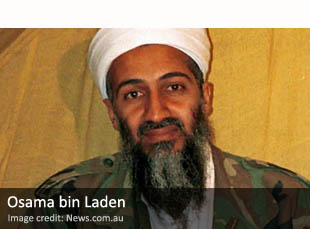
Journalist Seymour Hersh has cited senior American intelligence officials in claiming that the killing of Osama bin Laden was a joint operation between the United States and Pakistan. In a lengthy article published over the weekend in The London Review of Books, the veteran investigative reporter suggests that Pakistan had kept the al-Qaeda founder in prison for several years in the city of Abbottabad. Pakistan’s Inter-Services Intelligence Directorate —known commonly as ISI— had planned to turn bin Laden over to the US in its own time, in a quid-pro-quo move. But the Pakistanis’ plan had to be scrapped when bin Laden’s hideout was betrayed to the Central Intelligence Agency by a former ISI officer, says Hersh. His assertion agrees with previous accounts of the US raid against bin Laden, offered by security expert R.J. Hillhouse in 2011, and earlier this year by Lt. Gen. Asad Durrani, who led the ISI from 1990 to 1992.

The unnamed sources behind Hersh’s claims are an American “retired senior intelligence official” who was privy to early intelligence concerning bin Laden’s compound in Pakistan. Hersh also cites “information from inside Pakistan”, as well as two other sources from America, who have been “longtime consultants to the [US] Special Operations Command”.

The initial tip about bin Laden’s whereabouts came to the CIA in the form of a ‘walk-in’ —a term used to denote someone who voluntarily contacts an intelligence outpost, usually by simply walking into an embassy or consulate and asking to speak to the intelligence officer on duty. Hersh says the walk-in was a former high official in the ISI, who told the Agency’s Islamabad station that he could lead them to the al-Qaeda founder’s location. The retired official was successfully polygraphed and was eventually able to claim the $25 million reward offered by the US Department of State for bin Laden’s head. He and his family are now living in the Washington, DC, area, says Hersh.

The walk-in told the CIA that the compound in Abbottabad where bin Laden was living was “not an armed enclave”, as Langley had initially assumed. Instead it was a prison and was under the complete control of the ISI. The latter had managed to capture bin Laden in the Hindu Kush Mountains in 2006, by paying off some of the local tribesmen who were sheltering him. Hersh also reiterates information previously reported by intelNews, namely that the government of Saudi Arabia had entered into an agreement with Islamabad to finance the construction and maintenance of bin Laden’s prison-compound in Abbottabad.

According to Hersh, the US government eventually informed Pakistan that it had uncovered and was incessantly monitoring bin Laden’s location. Along with threats, Washington offered the ISI commanders, who were in charge of bin Laden’s security, “under-the-table personal incentives” to agree to stand aside during a US raid on the compound. Under the final agreement, struck at the end of January 2011, the Americans promised to send in a small force that would kill bin Laden, thus sparing Islamabad and Riyadh the embarrassment of the al-Qaeda founder speaking out about his previously close relations with both governments. The Pakistanis even provided the CIA with accurate architectural diagrams of the compound. Accordingly, when the US forces went into Abbottabad in May of that year, “they knew where the target was —third floor, second door on the right”, says the retired US intelligence official quoted by Hersh.

The veteran journalist adds that the American planners of the operation knew well that bin Laden had been held in virtual isolation from the outside world for years, and that he was not “running a command center for al-Qaeda operations” from Abbottabad, as the White House later claimed. Consequently, the stories about “garbage bags full of computers and storage devices” that the US Navy SEALs brought back from the compound were false. Some of the SEALs took with them some books and papers found in bin Laden’s bedroom. But most of the material that was eventually acquired by the CIA was voluntarily provided to the Americans by the Pakistanis, who took control of the compound immediately after the SEALs left and eventually razed it.

British spy testifies in disguise in alleged al-Qaeda member’s trial

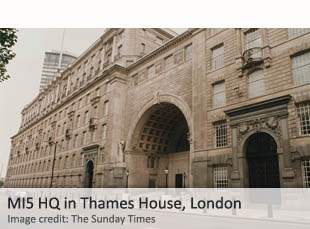
MI5 HQ Thames HouseBy IAN ALLEN | intelNews.org
A heavily disguised British intelligence officer has given evidence in the trial of the alleged leader of an al-Qaeda cell who is being tried in the United States for planning to bomb the New York subway system. Abid Naseer, 28, from Pakistan, was a studying in Britain in April 2009, when he was arrested by British police along with 12 other people for allegedly planning a series of suicide bombings in a popular shopping center in the city of Manchester. In January 2013, however, he was extradited to the US, where he also faces changes of having tried to organize suicide attacks against the New York public transportation system.

American prosecutors claim Naseer received paramilitary training in Pakistan before moving to the UK intent on carrying out terrorist attacks. Last year, the prosecution asked the judge whether six intelligence officers from the UK’s Security Service (also known as MI5), who monitored Naseer’s activities in the months leading up to his arrest, could provide evidence in court. Moreover, the prosecution requested that the MI5 officers be allowed to provide evidence without revealing their identities, since they work as surveillance operatives and are currently involved in counterterrorism investigations. The judge agreed, and the first of the six MI5 officers gave evidence this week through a video link from an undisclosed location in the Britain.

The witness concealed his identity by wearing a false goatee beard, thick spectacles and what reporters described as “a long black wig”. He was also wearing heavy make-up and was identified in court only as “serial number 1603”, according to British newspaper The Daily Telegraph. He told the court that he was part of a large team of MI5 surveillance officers who closely followed Naseer for over a month while he was allegedly planning suicide operations in Britain and the US. The physical surveillance included following the suspect as he was scouting targets in Manchester and sitting behind him on a bus traveling from Manchester to Liverpool. Naseer is defending himself in the trial and had the chance to cross-examine the MI5 officer, said The Telegraph.

Ex-spy chief says Pakistan probably knew bin Laden’s whereabouts

Osama bin LadenBy JOSEPH FITSANAKIS | intelNews.org
A former director of Pakistan’s all-powerful national intelligence agency has said that senior officials in Pakistan were probably aware that Osama bin Laden was living in the country prior to his assassination. Lieutenant General Asad Durrani led the Inter-Services Intelligence (ISI) from 1990 to 1992. He was later appointed Pakistan’s ambassador to Germany, from 1994 to 1997, and then to Saudi Arabia until 2002.

Durrani was asked during an appearance on Al-Jazeera’s flagship interview program Head to Head, on Tuesday, whether he believed that the al-Qaeda founder could have been living in Pakistan for several years without the ISI knowing about it. The former spy chief said he had no specific information on the issue. He added, however, that although “it is quite possible that [the ISI] did not know”, his personal assessment was that “it was more probable that they did”.

The former ISI strongman was then asked why the ISI would have chosen to shelter bin Laden instead of delivering him to the Americans. He responded that “the idea was that at the right time his location would be revealed” to Washington. He added that “the right time” would have depended on when Islamabad could have received “the necessary quid pro quo”. Speaking with characteristic frankness, Durrani said that “if you have someone like Osama bin Laden, you are not going to simply hand him over to the United States” without asking for something in return. In the case of Pakistan, the reward would possibly have been a bilateral agreement between the US and Pakistan to give the latter greater say over America’s dealings with neighboring Afghanistan.

High-profile US diplomat probed by FBI counterintelligence

Robin L. RaphelBy IAN ALLEN | intelNews.org
A highly experienced American diplomat, who is commonly described as “a fixture in Washington foreign policy circles”, is reportedly being investigated by counterintelligence agents of the Federal Bureau of Investigation. The Washington Post named the diplomat last week as Robin L. Raphel, who served as United States ambassador to Tunisia before being appointed as assistant secretary of state for South Asian affairs, during the administration of US President Bill Clinton. The New York Times described Ms. Raphel as one of the US Department of State’s highest-ranking female diplomats. She is considered an expert on Pakistan and until recently served as an adviser to the Department of State’s special representative for Afghanistan and Pakistan. Ms. Raphel officially retired from the Foreign Service in 2005 and joined the ranks of Cassidy & Associates, a high-powered government-relations firm based in Washington, DC, which is known to have performed lobbying assignments on behalf of the government of Pakistan. In reporting the alleged investigation of Ms. Raphel by the FBI, The Washington Post said last week that the nature of the probe was “unclear”. But it stated that FBI counterintelligence agents had searched the former diplomat’s house and office. Citing unnamed government sources, The New York Times reported that the FBI was trying to determine why Ms. Raphel had taken classified information to her house, and whether she had shared it, or planned to share it, with a foreign government. There was no mention in the article of the identity of the foreign government that may have been privy to classified information allegedly taken home by Ms. Raphel. Media reports suggested that the former diplomat had been placed on leave and stripped of all her government security clearances as part of the ongoing FBI investigation. Insiders note that it is extremely rare for such a prominent figure in Washington to become the subject of an FBI counterintelligence investigation.

CIA resumes drone strikes in Pakistan after six-month hiatus

Pakistan's Federally Administered Tribal AreasBy IAN ALLEN | intelNews.org
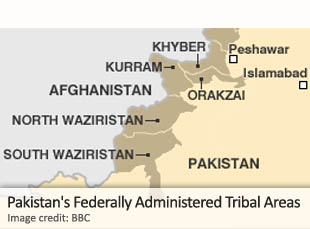
The United States Central Intelligence Agency appears to have resumed its targeted assassinations using unmanned aerial drones in Pakistan, following a nearly six-moth hiatus. The Agency launched its lethal drone program in Afghanistan and Pakistan in 2004, and intensified it in 2008 under the supervision of US President George Bush, who then passed it on to his successor, Barack Obama. Nearly 400 strikes on Pakistani soil have been attributed to the CIA in the past decade, which have killed in excess of 3,000 militants and civilians by some estimates. But, in an unprecedented move, Washington completely seized carrying out airstrikes on Pakistani soil after December 25 of last year. That changed on Wednesday, June 11, when several powerful missiles landed outside a house located a few miles outside of Miramshah, in Pakistan’s North Wazieristan Province. The area is an operational stronghold of Pakistan’s most powerful armed militant group, the Pakistani Talban, and its close affiliate, the Haqqani Network. The air strikes took out a number of vehicles that were allegedly filled with explosives and killed at least 16 people, including alleged Taliban and Haqqani commanders, as well as, reportedly, members of the Islamic Movement of Uzbekistan (IMU). Washington said that those targeted were on their way to conduct cross-border raids in Afghanistan when they were killed. As it always does in these instances, Pakistan’s Ministry of Foreign Affairs condemned the strikes as violations of the country’s sovereignty. But reports in the Pakistani media claimed that Washington had sought and received Islamabad’s approval prior to launching last week’s attacks. What prompted the change in policy? According to one local observer, the CIA had agreed to stop its aerial attacks after it was asked to do so by the government of Pakistan, which has been engaged in peace talks with the Taliban for several months. But these talks collapsed following the June 6 suicide attack on Karachi’s Jinnah International Airport by the Taliban and the IMU, which killed 36 people, including all 10 attackers. Read more of this post

Afghan officials see foreign spy agency behind bloody hotel attack

AfghanistanBy JOSEPH FITSANAKIS | intelNews.org
Afghanistan’s intelligence community believes a foreign spy agency was behind last week’s bloody attack on a luxury hotel that left nine people dead. Last Thursday evening, a group of young men entered the five-star Serena Hotel, located a few blocks away from the Presidential Palace and key government ministry buildings in Afghan capital Kabul. Three hours later, the men, who had hidden handguns in their shoes, entered the hotel restaurant and shot indiscriminately at patrons. They were eventually shot dead by Afghan Special Forces, but not before they had managed to shoot over a dozen people at point blank range, killing nine, including two Canadians, an American and a Paraguayan. Four children and a senior reporter with Agence France Presse were among the dead, while the wounded included an Afghan member of parliament. Many blamed the attack on the Taliban or the Haqqani network, an Islamist militant group responsible for countless high-profile attacks in Kabul and other Afghan cities. Soon afterwards, the Taliban issued a statement claiming responsibility for the attack, which they said was aimed at demonstrating the ease with which Afghan government security measures could be evaded. On Monday, however, a press release issued by the Office of the Afghan President said a “foreign intelligence service”, rather than an indigenous militant group, was behind the attack. The press release, which bore the signature of Afghanistan’s President, Hamid Karzai, said intelligence officials from the National Directorate for Security had briefed Afghanistan’s National Security Council about the findings of an investigation on the attack. In the statement, which was issued in both Pashto and English, the President’s Office said that neither the Taliban nor the Haqqani network “were even aware” that the attack at the Serena Hotel was going to take place. Instead, the operation “was a direct attack by an intelligence service outside the country”, said the statement. A subsequent announcement released by the Afghan government placed blame on Pakistani intelligence services, saying they were directly involved in the attack. It also stated that an unnamed “Pakistani diplomat” had been seen filming inside the Serena Hotel “a while ago”. Pakistan’s Ministry of Foreign Affairs rejected Kabul’s allegations, saying it was “highly disturbing that attempts are being made to somehow implicate Pakistan in this terrorist incident”.