Austrian intelligence service report draws international attention over Iran nuke claims
June 2, 2025 10 Comments
 ON MAY 26, THE Austrian domestic intelligence service, Direktion Staatsschutz und Nachrichtendienst (DSN) in Vienna officially presented its annual report: the Verfassungschutzbericht (VSB) [Constitution Protection Report]. The document can be downloaded [PDF] via the official homepage of the DSN.
First published in 1997 by the predecessor of the DSN and then titled Staatsschutzbericht [State Protection Report], these reports offer rare official insights into the work of Austria’s domestic intelligence service. While their form and scope have varied over the nearly 30 years of the service’s existence, their aim and structure have roughly stayed the same: the VSB informs the public about the duties of the service, and about recent developments in the fields it is tasked with, monitoring and policing, during the calendar year prior to its publication.
Featured chapters nearly always include political extremism, terrorism, espionage, proliferation of weapons of mass destruction, protection of critical infrastructure and, since their emergence, sometimes also cyber threats. Often—thought not always—the reports feature anonymized cases from the year before  and specialized essays about certain relevant topics. Traditionally the media and public give most attention to those parts of the report that deal with extremism and terrorism of all kinds inside Austria.
VSB 2024 Receives International Attention
This year, however, several paragraphs in the chapter titled “International Illicit Arms Trade and Proliferation” [“Internationaler Illegaler Waffenhandel und Proliferation”] have drawn international attention. The proliferation section—starting on page 154 of the report—deals with a number of states that can be described as partly or fully antagonistic to “the West”. In addition to Russia, China, Pakistan and North Korea, the Islamic Republic of Iran and its activities are described in the chapter. Regarding the Shia theocracy and its nuclear program, the report states (translated by the author with assistance by DeepL):
In order to assert and enforce its political claims to regional power, the Islamic Republic of Iran is striving for comprehensive armament. Nuclear weapons are intended to make the regime untouchable and to expand and consolidate its dominance in the Middle East and beyond. The Iranian program to develop nuclear weapons is well advanced. An arsenal of ballistic missiles is ready to carry nuclear warheads over long distances. [Emphasis added]
All efforts to prevent Iran’s armament with sanctions and agreements have so far proved ineffective. On the contrary: the Islamic Republic of Iran is producing weapons and weapons delivery systems on a large scale—and not just for its own use. [p.158]
Iranian intelligence services are entrusted with the development and implementation of circumvention structures for the procurement of armaments, proliferation-relevant technologies, and materials for weapons of mass destruction. They use front companies and networks inside and outside the Islamic Republic of Iran for this purpose. In particular, the [Islamic] Revolutionary Guards Corps’ widely ramified and difficult to oversee company empire serves proliferation purposes. [p.159]
The report clearly describes a program by Iran to develop nuclear weapons as a fact. It does not only suggest that it might be well advanced, but states this as a given. The report furthermore establishes that transport systems to deploy nuclear weapons—once finalized—are in place and could reach long-distance targets.
Fox News Picks Up VSB 2024
The VSB was picked up by the American media giant Fox News. The network reported on it under the title “Explosive new intelligence report reveals Iran’s nuclear weapons program still active” on May 28. The Fox News report begins by pointing out that “[t]he startling intelligence gathering of Austrian officials contradicts the assessment of the US Office of the Director of National Intelligence (ODNI)”. It goes on to note that “[t]he Austrian intelligence findings could be  an unwanted wrench in President [Donald] Trump’s negotiation process to resolve the atomic crisis with Iran’s rulers because the data outlined in the report suggests the regime will not abandon its drive to secure a nuclear weapon.”
Fox News quotes David Albright, a physicist and founder/president of the Institute for Science and International Security in Washington, DC, as saying: “[t]he ODNI report is stuck in the past, a remnant of the fallacious unclassified 2007 NIE [National Intelligence Estimate]. The Austrian report in general is similar to German and British assessments. Both governments, by the way, made clear to [the] US IC [Intelligence Community] in 2007 that they thought the US assessment was wrong that the Iranian nuclear weapons program ended in 2003.”
The Fox News report also states that “[t]he danger of the Islamic Republic of Iran as a state sponsor of terrorism [and its illegal atomic weapons program] was cited 99 times in the 211-page report that covers pressing threats to Austria’s democracy.” All in all, Fox News’ reporting paints a picture that the small European state’s intelligence service has information that contradicts the assessment of the much larger American IC and insinuates that the American assessment—and by implication the political approach to dealing with Iran—is wrong. Read more of this post
 ON JUNE 26, THE longwinded case of Austria’s counter intelligence failure regarding a possible inside threat took yet another —quite surprising— turn: the state court of Vienna (Landesgericht Wien) released from pre-trial detention (Untersuchungshaft)
  Tatverdacht) against Ott, the reasons for his further detention were not sufficiently given. In the judges’ view, all activities that could carry a pre-trial detention were committed before Ott was arrested and released for the first time in 2021. Back then, Ott had also been released after a short detention, following a decision by the same court. Briefly summarized, in 2021 the Landesgericht concluded that Ott could no longer spy against Austria as he did not have access to classified information, having been removed from the domestic intelligence agency years earlier. Additionally, since the BVT was in the process of reorganization and reformation at that point, the judges
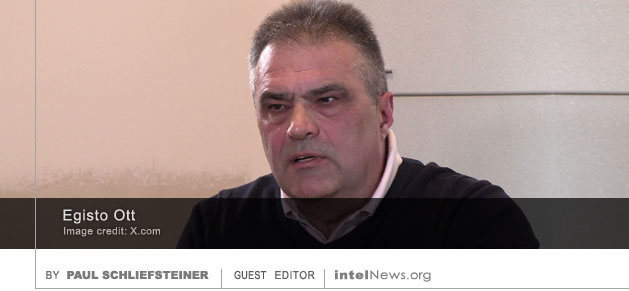
  ON GOOD FRIDAY, MARCH 29, Egisto Ott, a former member of Austria’s now-dissolved domestic intelligence agency, the Federal Office for the Protection of the Constitution and Counterterrorism (BVT), was arrested in his house in Carinthia, Austria’s southernmost state. Ott had frequently been at the center of media attention in the past year, in connection with the network surrounding the fugitive
  These included contacts in friendly foreign police services, whom Ott knew from his time as a liaison officer in Italy and Turkey. According to Gridling, these contacts were unaware that Ott had been removed from the BVT under suspicion of being unreliable and potentially even working for Russia. They therefore continued to help him when asked. Ott allegedly deceived his contacts by claiming that he needed information on cases relating to different kinds of extremism. As it turned out, according to the leaked arrest warrant, several of the individuals referred to by Ott as “suspects” in terrorism investigations were in fact Russian dissidents or intelligence defectors who were living as protected persons in Austria and elsewhere outside Russia.






 intelNews.org
Analysis: Change in sight as Austria appoints its first-ever female spy chief
December 22, 2025 by intelNews 2 Comments
During the selection process, Mayer did not simply prevail against her competitors, but virtually dominated the field: not only was she the sole candidate rated “highly suitable”—the highest mark in the application process— but all the remaining eleven applicants—among them two other women—were classified as “not suitable”, the lowest possible category.
Mayer being considered highly qualified by the section committee is not surprising, given her impressive career: after graduating from a higher technical education institute (an Austrian school form that educates teenagers from 15 to around 19 years of age) that focused on information technology—which earned her the title of an engineer—Mayer joined the Austrian uniformed police in Linz, the country’s third largest city.
In 2012, Mayer joined the predecessor of the DSN, the Bundesamt für Verfassungsschutz und Terrorismusbekämpfung (Federal Office for the Protection of the Constitution and Counterterrorism – BVT). Initially tasked with combating extremism, she was soon asked to establish a new unit (Referat in German) for the protection of critical infrastructure, which she consequently began heading in 2013. From 2020 to 2021 Mayer was the interim head of the protection and security department of the BVT. From December 2021 onwards, following the restructuring of the BVT into the DSN, Mayer took over the department of strategy, policy, resources and staff matters (Stabsangelegenheiten in German) within the new agency, before becoming its vice-director for intelligence, as mentioned earlier.
While working full-time, Mayer completed a law degree and doctorate in the same field, which was awarded to her in 2021 by the University of Vienna. According to her official biographical note, Mayer also holds a master’s degree in strategic security management from the University of Applied Sciences Wiener Neustadt.
Mayer is also an accomplished athlete: playing soccer since her teen years, she took part in the Austrian national league and joined the Austrian under-19 female national team. As a young girl she is said to have trained at length with the boys—an experience some have pointed out might have proven helpful for a career in Austria’s male dominated Ministry of Interior and the intelligence world. Over the years, Mayer has emphasized on several occasions that she hopes to inspire other women to also assume leadership roles and demonstrate that they are as capable as their male counterparts. Read more of this post
Filed under Expert news and commentary on intelligence, espionage, spies and spying Tagged with Analysis, Austria, DSN (Austria), Omar Haijawi-Pirchner, Paul Schliefsteiner, Sylvia Mayer