Iran state media claims Britain and Germany helped US kill Soleimani
January 4, 2021 Leave a comment
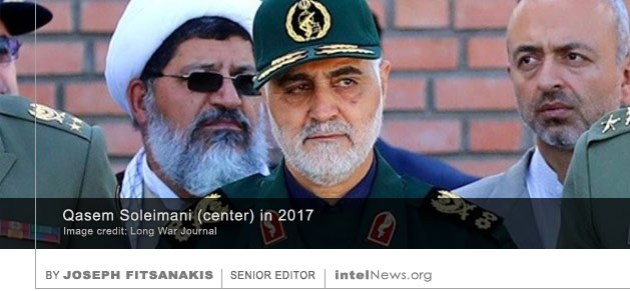 IRANIAN STATE MEDIA CLAIMED last week that several countries, including Britain and Germany, helped the United States assassinate its top paramilitary commander, Qassem Soleimani (pictured). The reports emerged on the one-year anniversary of the assassination of Soleimani, who led Iran’s Islamic Revolutionary Guard Corps (IRGC). He was killed by a drone strike on January 3, 2020, in Baghdad, Iraq. The same missile strike also killed Abu Mahdi al-Muhandis, who commanded the Popular Mobilisation Committee, an umbrella organization composed of about 40 pro-Iranian militias in Iraq.
Last week, Iran’s state-owned DEFA Press news agency reported that Tehran’s own investigation into the assassination operation showed that Washington was assisted by several countries, and even by some private security firms. According to the report, the Iranian government’s prosecutor, Ali Alqasimehr, stated that G4S, a security services contractor based in Britain, had “played a role” in Soleimani and al-Muhandis’ killing. He added that the US forces also made use of facilities at the Ramstein Air Base, located in southwestern Germany, to carry out the attack.
In addition to Britain and Germany, Iranian officials said that the governments of Qatar, Kuwait, Lebanon, Syria and Iraq assisted in the operation by providing logistical support and intelligence. According to DEFA Press, more countries are likely to be added to the Iranian government’s list of culprits, once Tehran concludes its investigation into the killing. Iranian officials have provided no evidence for such claims. It is also unclear whether Iran is considering launching revenge attacks against countries that allegedly assisted the US in its effort to kill the two paramilitary commanders.
Speaking during a commemoration event on Friday, Soleimani’s successor at the helm of the IRGC, Esmail Ghaani, said that Iran was “ready to avenge” Soleimani’s death. During the event, which was held at the University of Tehran, Ghaani warned that “someone who will retaliate for your crime […] may emerge from inside your own house”. He did not elaborate. Large commemorative gatherings to mark the one-year anniversary of the assassinations took place throughout Iran and Iraq, where Iran-backed paramilitary groups hold significant power.
Last January Iran issued a warning against Greece, saying that it would retaliate if the US used its military bases on Greek soil to attack the Islamic Republic. It was the first time that Iran had threatened to launch attacks against a member of the European Union in connection with the ongoing rise in tensions between Tehran and Washington.
► Author: Joseph Fitsanakis | Date: 04 January 2021 | Permalink
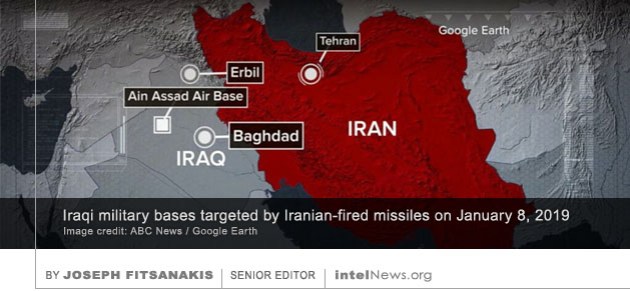 The missiles that targeted American troops in Iraq a few hours ago offer significant clues about the evolving confrontation between Iran and the United States. The attack appears to have been largely symbolic —a somewhat rushed attempt to restore some of Iran’s wounded prestige following the assassination of its military commander, Qasem Suleimani. At the same time, however, it is also the prelude to a broader regional conflict that appears increasingly unavoidable.
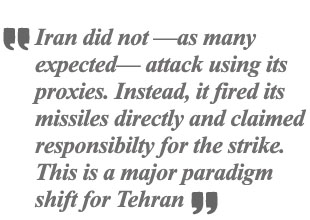 Soleimani’s killing is viewed by Tehran as too insulting to be responded to indirectly. This does not mean that Tehran will not revert to its standard method of employing proxies in the future. But the fact that it consciously chose to deviate from that time-tested method is in itself extremely important.
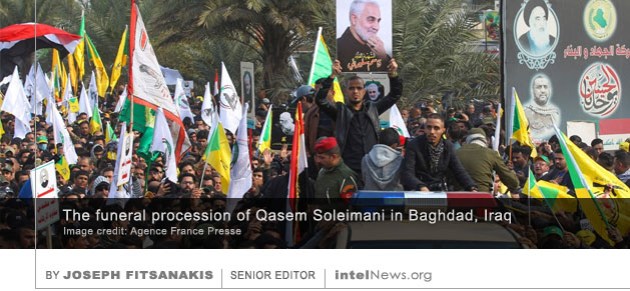 By assassinating Qasem Soleimani, a Shia celebrity and the Middle East’s most influential military leader, US President Donald Trump has made the most fateful decision of his presidency to date. Tehran has no option but to respond. When it does, the way that Mr. Trump and his administration handle the situation will largely determine the future of the Middle East and the fate of his presidency. In the meantime,
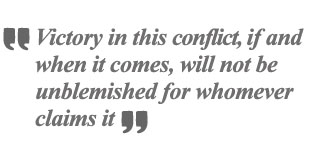 it is becoming increasingly clear that victory, if and when it comes, will not be unblemished for whomever claims it.
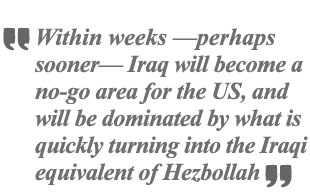 assassination. And yet, while publicly thanking Iran, Trump was likely formulating plans to kill its leading general.






 intelNews.org
Israeli ex-intelligence chief claims Israel had role in top Iranian general’s killing
December 22, 2021 by Joseph Fitsanakis Leave a comment
In the months that followed Soleimani’s assassination, Iranian state media claimed that the operation that targeted the IRGC had been aided with intelligence and logistical support by the governments of several countries, including Germany, the United Kingdom, Qatar, Kuwait and Lebanon. Meanwhile, reports by Western media alleged that “[i]ntelligence from Israel helped confirm the details” of Soleimani’s whereabouts shortly before he was assassinated. There has been no independent confirmation of these claims.
Now, however, it appears that a recently retired Israeli general, who headed the country’s military intelligence agency during Soleimani’s assassination, has claimed partial responsibility for his killing. According to the Associated Press, Major General Tamir Heyman, who until October of this year headed the Israel Defense Forces’ Military Intelligence Directorate, has become “the first official to confirm Israel’s involvement” in the controversial assassination.
Heyman is believed to have given an interview in late September to Mabalat Malam, the Hebrew-language magazine of the Israeli Intelligence Heritage Center, which is seen as closely affiliated with the Israeli intelligence community. In the interview, which is available in the current issue of the magazine, Heyman says that “Assassinating Soleimani was an achievement, since our main enemy, in my eyes, are the Iranians”. He adds that Soleimani’s killing was one of “two significant and important assassinations during my term” as head of army intelligence.
The Associated Press is among a number of news agencies that reached out to the IDF for clarification about Heyman’s comments. As of Tuesday night, the IDF had not responded to several requests for comment.
► Author: Joseph Fitsanakis | Date: 22 December 2021 | Permalink
Filed under Expert news and commentary on intelligence, espionage, spies and spying Tagged with assassinations, IDF, Iran, Israel, Military Intelligence Directorate (Israel), News, Qassem Soleimani, Tamir Heyman